How to Deadhead Flowers: Read the Stem Before You Cut
By the Windchime Walker editorial team
Photo: Jordan Rushton / Pexels
Deadheading is usually taught as one gesture: snip the dead flower, get more flowers. Gardeners who learn only that gesture cut peonies in vain, behead daylilies wrong, and wonder why some plants rebloom and others sit there insulted. The real skill is diagnostic. A flower's structure (a single stem, a cluster, a spike, or a scape) decides where the next bloom is waiting and therefore where the cut belongs. Learn to read the stem for five seconds before cutting, and deadheading becomes what it is supposed to be: a targeted instruction to the plant, not a tidy up performed on it.
An honest frame first, from Iowa State University's guidance as quoted in our research: some plants reflush strongly after deadheading, and many do not. Deadheading a rebloomer buys a second and third act; deadheading a one act plant buys tidiness and prevents self seeding, which are also worth having, but no scissors manufacture a rebloom the plant does not carry in its genetics. This page teaches the cuts by structure, gives the per plant verdicts for the flowers this site covers, and ends with the deliberate exceptions, the seedheads you leave standing on purpose.
Interactive tool
Deadheading Checklist
Check off each step as you finish it. Your progress stays on this page.
0 of 7 complete
0% done
The One Rule Under Every Cut
Whatever the structure, the object being removed is the same: the ovary, the swelling at the base of the flower where seeds form. A plant that is setting seed reads its season as finished and winds down flowering; a plant whose ovaries keep disappearing reads the season as unfinished and, if it is a reblooming type, flowers again. This is why pulling petals is cosmetic and useless: the petals are advertising, the ovary is the decision. Every cut below aims at the ovary, and the first check on any spent flower is to find the swelling behind it and make sure it leaves with the flower.
The second universal: cut just above something alive and promising, a healthy leaf, a side bud, or a branching point, because the plant's regrowth starts there. A stub of bare stem above the cut dies back and invites rot; a cut flush to the chosen leaf or bud heals clean. Tools follow the stem: fingers pinch soft growth, pruners or scissors snip stiff stems, and shears take whole plants that flower in hundreds of small blooms. Wipe blades between plants when you can; disease travels on sap, and the deadheading round visits every plant in the bed.
Single Stem Flowers: Pinch or Snip Above a Leaf
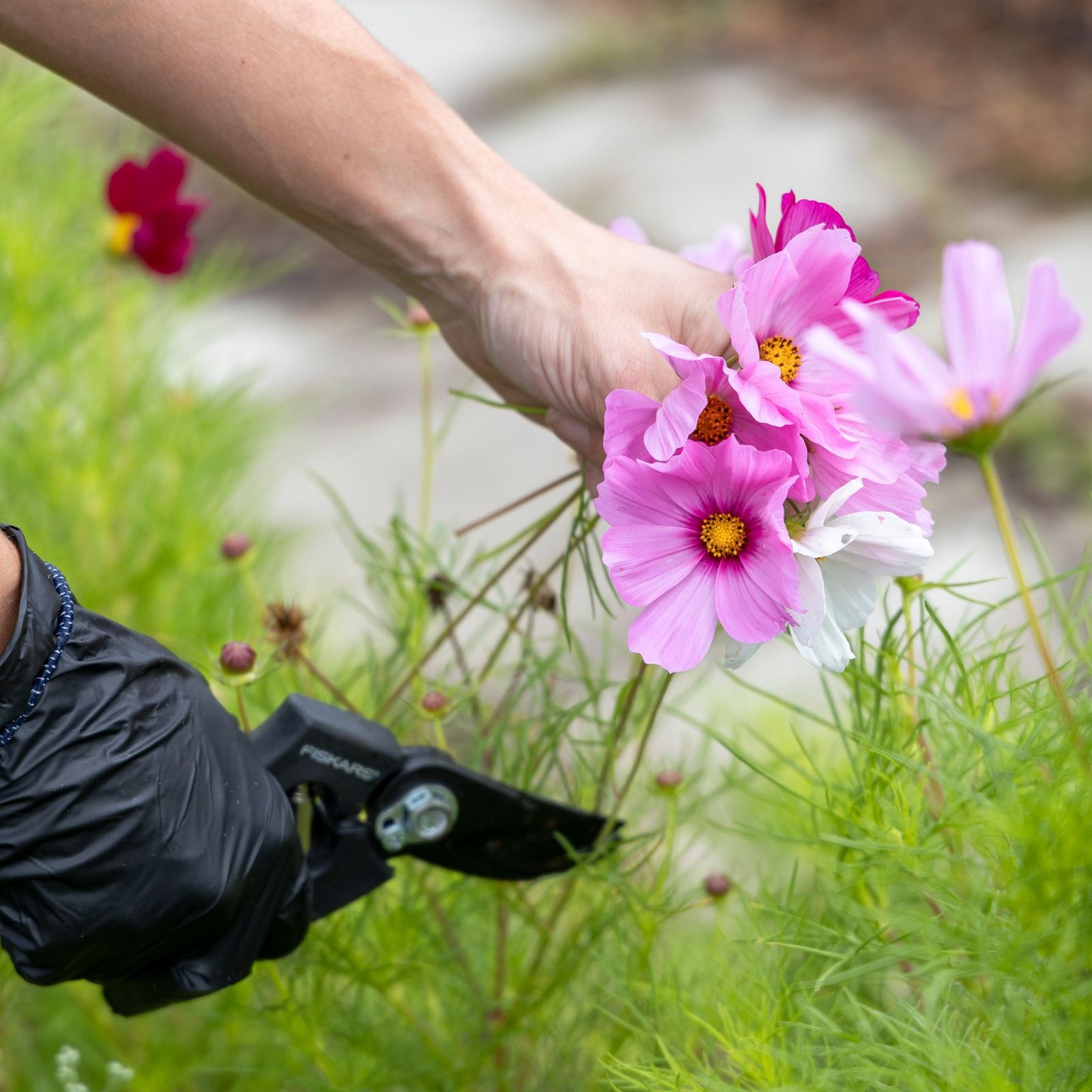
The classic structure: one flower atop one stem, with leaves or side buds below. Zinnias, marigolds, and cosmos, this site's beginner annuals, all work this way, and all rebloom generously when cut right. Pinch or snip the spent flower's stem down to the first set of healthy leaves or the side bud below it, removing the ovary and a short length of stem. The side shoots at that junction are the next flowers, already waiting; a cut made high, just under the flower head, leaves them weak and the plant leggy.
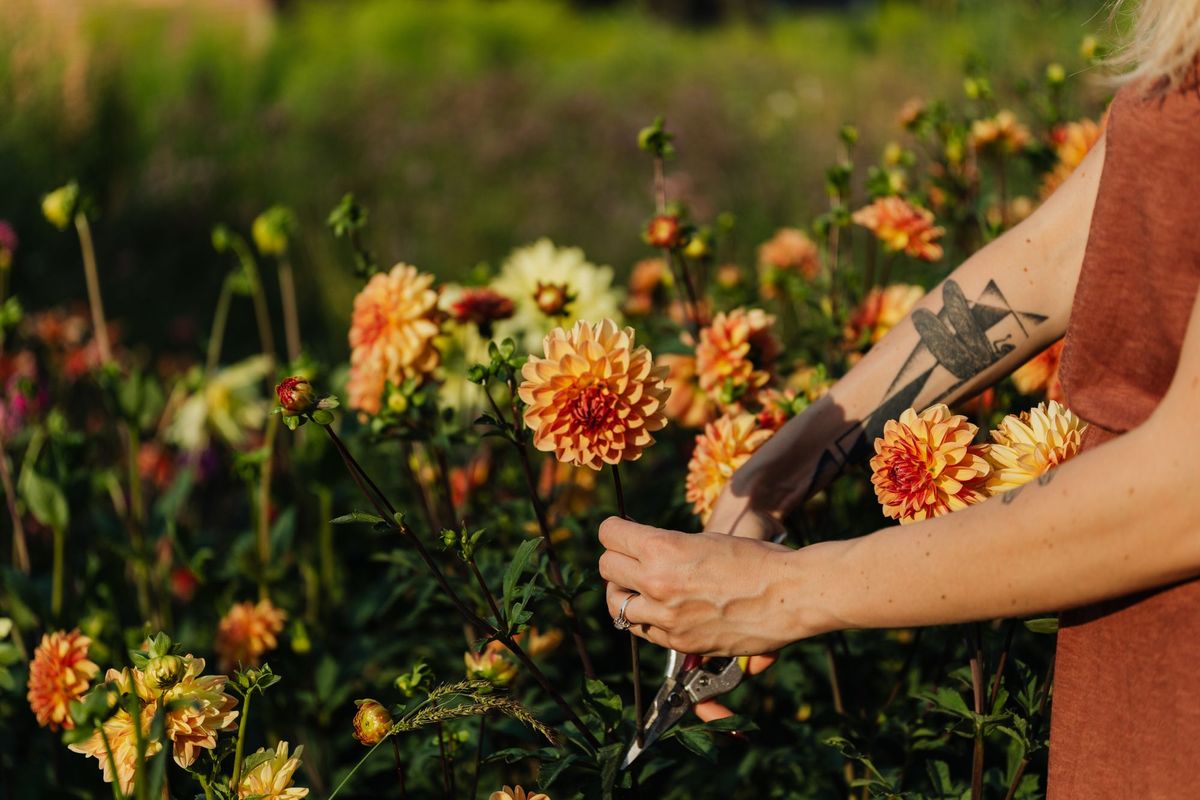
For zinnias, the same cut doubles as the harvest cut for cut flowers, deep into the plant, which is why a zinnia cut hard flowers hardest. Marigolds pinch easily between fingernails and reward a weekly round with continuous bloom; a marigold left to set seed slows visibly, the clearest demonstration in the garden of the ovary rule. Dahlias, from our dahlia guide, are single stemmed at this scale too: cut the spent bloom's stem back to a strong junction, and do it promptly, because a dahlia's seed making is expensive for the plant and the season is short.
Cluster Flowers: Shear the Whole Plant
Some plants flower as a crowd: catmint, hardy geranium, lady's mantle, and their kind produce hundreds of small blooms across a mound, and deadheading them one by one is a life sentence. The method is shearing: when the first flush fades and the mound looks tired, take shears or hedge trimmers and cut the whole plant back by about a third to a half, flowers, foliage and all, in one confident pass. The plant responds with fresh foliage within weeks and, in the rebloomers like catmint, a genuine second flush of flowers.
Shearing feels violent and is kind; these plants evolved to be grazed. Water the sheared plant if the weather is dry, and stand back. The beginner's error is timidity, snipping individual stems from a cluster plant and achieving neither tidiness nor reflush; the second error is shearing a plant that is not a cluster type, which is why the diagnosis comes before the tool in this page's method.
A woman carefully cutting dahlias in a vibrant summer garden
Spikes and Scapes: Two Special Cases
Spike flowers (salvia, snapdragon, foxglove, delphinium) bloom along a vertical stem, opening from the bottom up. When the lowest two thirds of a spike have finished, cut the spike back to the basal leaves or to a side spike forming lower down. Salvias and snapdragons, cut this way, commonly throw new spikes; foxgloves are biennial and mostly seed for next year's plants, so their spikes are left if you want the colony to continue, a decision, not a default.
Scapes are the leafless flower stalks of daylilies and hostas. A daylily flower lasts one day, but the scape carries many buds, so the daily tidy is snapping off individual spent blooms while the scape still has buds coming; when the last bud has flowered, cut the whole scape at its base. Leaving finished scapes standing is pure untidiness with no seed benefit worth having in a border. Hosta scapes are cut at the base after flowering unless you are saving seed, which beginners are not, whatever the seed catalogs whisper.
The Per Plant Verdicts
Plant
Structure
Method
Reblooms?
Zinnia
Single stem
Cut deep, to a junction
Yes, strongly
Marigold
Single stem
Pinch to first leaves
Yes, continuously
Cosmos
Single stem
Snip to a side bud
Yes
Dahlia
Single stem
Cut to a strong junction
Yes, until frost
Catmint
Cluster
Shear by a third to a half
Yes, second flush
Hardy geranium
Cluster
Shear after flush
Often, lighter
Salvia
Spike
Cut spike to basal leaves
Yes, new spikes
Daylily
Scape
Snap blooms daily, cut scape at end
No (bud count is fixed)
Coneflower
Single stem
Optional; see exceptions
Modestly
Peony
Single stem
Remove spent head only
No, one act
Tulip
Single stem
Snap head, keep all foliage
No, one act
The table is the page in miniature: method from structure, expectations from genetics. Peonies and tulips get their spent heads removed to prevent seed making and to tidy, and their foliage is left strictly alone (the tulip foliage rule from our planting guide applies with full force), because their next season is being built in the leaves, not in any rebloom.
The Deliberate Exceptions: When Not to Deadhead
The most advanced deadheading skill is restraint. Coneflower seedheads are bird food, goldfinches above all, and winter structure in the border; leave them standing and cut them down in spring. Sedum's autumn flower heads dry into rust colored architecture that holds frost beautifully and shelters insects; they stand until spring too. Self seeders you want more of (a foxglove colony, a stand of cosmos in a wild corner) must be allowed to set seed on at least some stems, or the colony ends with the season. And any plant being grown for seed saving, hips, or berries is, by definition, not deadheaded.
The weekly round, then, is a walk with three questions per plant: what is your structure, are you a rebloomer, and are you on the leave it list? Five seconds of diagnosis, one correct cut, and the bed stays in flower weeks longer than the neighbor's, not because you worked more, but because every cut you made was the one the plant was built to answer.
Building the Weekly Round
Deadheading fails as a chore and succeeds as a ritual, and the difference is attachment: gardeners who deadhead on a fixed appointment with a bucket and a beverage, walking the beds they love anyway, keep it up all season; gardeners who deadhead as an emergency response to a shabby bed do it twice and quit. Attach the round to something that already happens, the Friday evening garden walk, the morning coffee patrol, the watering check, and give it a hard edge of brevity: the round ends when the bucket is full or the beds are done, whichever comes first, and a big garden is zoned across the week rather than conquered on Sunday.
Carry the right kit and the round stays pleasant: pruners or sharp scissors in a pocket (fingers for the soft stems), a bucket that travels, and gloves for the thorny and the sappy. Snip into the bucket as you go; a bed littered with clippings to gather afterward doubles the work and halves the will. While you cut, the round does its second job, which is surveillance: the aphid colony at day two instead of day ten, the first mildew spot, the caterpillar's signature. Most experienced gardeners will tell you, if pressed, that the deadheading round is not really about dead flowers at all. It is the weekly census of the garden, disguised as a chore, and the extra blooms are its excuse.
By midsummer the round teaches its final lesson, which is triage. Not every plant earns its cutting time in a heat wave or a busy month, and the honest gardener ranks: the rebloomers by the door get cut faithfully, the far bed gets cut when the week allows, and the one act plants get their single tidy and are left to their leaves. The garden does not grade the effort; it responds to the cuts that matter, in the order they matter, and a gardener who has learned the diagnosis in this page can walk a bed in five minutes and know exactly which three cuts the week requires.
Frequently Asked Questions
What exactly should I remove when deadheading?
The spent flower and its ovary, the swelling at the flower's base where seeds form. Removing petals alone does nothing; the plant reads the ovary. Cut back to just above a healthy leaf, side bud, or junction, so regrowth starts from living tissue and no dead stub remains.
Do all flowers rebloom after deadheading?
No, and honest guidance (Iowa State's, quoted in our research) says so plainly: some plants reflush strongly, many do not. Zinnias, marigolds, cosmos, dahlias, catmint, and salvia reward the cut with more flowers. Peonies, tulips, and daylilies do not rebloom; deadheading them is for tidiness and to stop seed making.
How do I deadhead a plant with hundreds of small flowers?
Shear it. Cluster flowered plants like catmint and hardy geranium are cut back by a third to a half all over when the first flush fades, foliage and all. They return with fresh growth in weeks, and catmint typically flowers a second time. One by one snipping is the wrong tool for their structure.
Which flowers should I not deadhead?
Coneflower and sedum, whose seedheads feed birds and stand as winter structure; any self seeder whose colony you want to continue, like foxglove; and anything grown for seed, hips, or berries. Cut coneflower and sedum down in spring instead, when the new growth starts.
How often should I deadhead?
A weekly round suits most beds in summer, with daylilies wanting a quick daily snap of spent blooms during their season because each flower lasts a day while the scape carries more buds. The round is a walk, not a project: diagnose the structure, make the cut, move on.
Can deadheading hurt a plant?
Yes, in two ways: cutting foliage a bulb needs (tulip and daffodil leaves must stand 6 to 8 weeks after bloom to build next year's flower), and leaving long dead stubs that rot back into the crown. Cut the flower stem, spare the leaves, and land the cut just above living tissue.
Photo credits: Jordan Rushton (Pexels); Kaboompics (Pexels). Photos are served from this site; follow the credit to the library page for the original.