How to Garden for Beginners: Your First Season, Week by Week
By the Windchime Walker editorial team
Photo: Greta Hoffman / Pexels
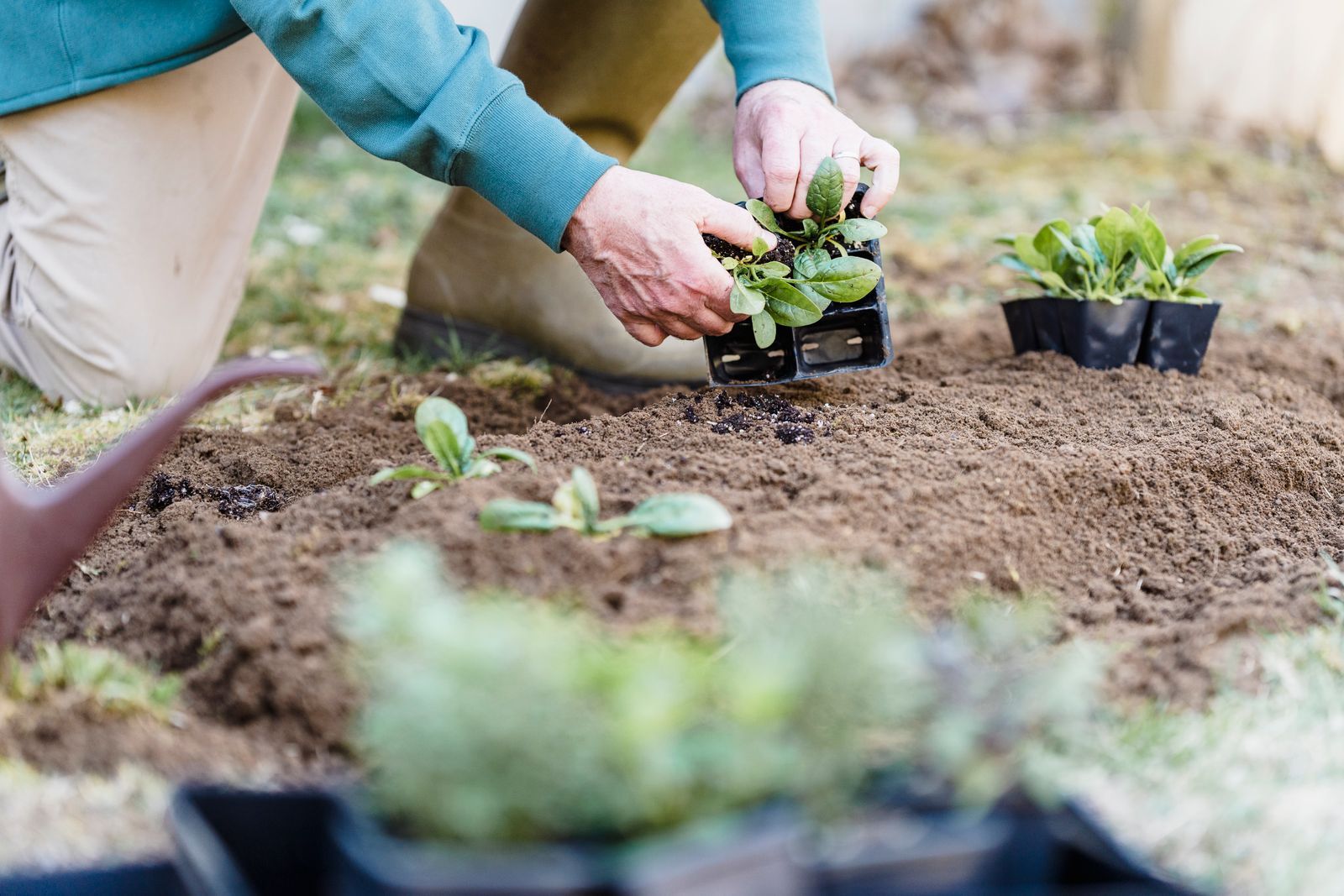
Planting day gets all the attention in beginner gardening advice, and it is honestly the easiest day of the season. Seeds are sown, transplants are tucked in, the bed looks tidy, and you go inside feeling like a gardener. Then the questions begin. Why is nothing coming up? Why are there holes in the leaves? Why did everything suddenly double in size while you were on vacation? The first twelve weeks after planting are where beginners quit, not because the garden failed, but because nobody told them what the season actually looks like from inside it.
This guide is that missing walk through. It assumes you have a small garden planted, around 100 square feet is the classic starter size, in a spot with 6 or more hours of sun. If you are still at the choosing and digging stage, our start a garden guide covers the ground before planting day. What follows here is the season itself, week by week: what you will see, what you do about it, and which of the things that look like disasters are simply Tuesday.
The First Season Week by Week Checklist on this page mirrors the weeks below. Keep it on your phone or pinned by the door, and tick each week off as it passes. A garden checked weekly almost never gets into real trouble, because every genuine problem a garden has is small in the week it starts.
Interactive tool
First Season Week by Week Checklist
Check off each step as you finish it. Your progress stays on this page.
0 of 7 complete
0% done
Before Week 1: The Three Habits That Carry the Season
Everything in the next twelve weeks runs on three habits, and none of them is a product. The first is the weekly walk: ten minutes, once a week, looking at every plant slowly. You are not working, you are noticing. Most garden problems announce themselves quietly a week or two before they matter, and the walk is how you hear them.
The second habit is deep, infrequent watering. A vegetable garden wants about 1 inch of water a week, up to 2 inches in sandy soil, per Mississippi State University Extension, delivered in one or two deep soakings rather than daily sprinkles. Deep water grows deep roots. Daily sprinkles grow shallow roots and a garden that panics in every hot spell. The third habit is restraint: most of what looks wrong in a first garden fixes itself, and the beginner who intervenes in everything exhausts the garden and themselves. Walk, water deeply, and let the plants work.
Weeks 1 and 2: The Waiting Weeks
What you will see: almost nothing, and that is normal. Direct sown seeds spend their first week or two underground spending the energy packed in the seed. Beans are quick, often up in a week in warm soil. Carrots are slow, sometimes three weeks, and their slowness has ended more first gardens than any pest, because the beginner assumes failure and digs the row up just before it emerges.
What you do: keep the seedbed evenly moist, which is the one exception to deep and infrequent watering. A crust of dry soil over a germinating seed is a lid it may not lift. Water the rows gently and often until seedlings stand up, then shift to the deep weekly rhythm. Transplants, meanwhile, may wilt each afternoon for the first few days even in moist soil. That is transplant shock, the plant adjusting its roots to new ground, and it passes in days if the soil stays moist and the plant was hardened off. A transplant that wilts at noon and stands by morning is coping, not dying.
What is normal: a few seeds never come up. Germination is a percentage, not a promise. If a whole row fails while its neighbors thrive, resow it; seed is cheap and the season is long. If one plant in six lags, ignore it. Gardens are populations, not auditions.
Weeks 3 and 4: True Leaves and First Decisions
What you will see: seedlings stop looking like generic green sprouts and start looking like their crops. The first leaves a seedling opens are seed leaves, smooth and simple. The leaves that follow are true leaves, shaped like the adult plant's, and their arrival means the plant is now feeding itself from sunlight and can be treated as established.
What you do: thin. This is the task beginners skip because it feels wasteful, and skipping it quietly ruins more crops than any bug. Crowded carrots become tangled threads, crowded lettuce never heads, crowded beans share disease. Thin to the spacing on the seed packet and in the extension tables this site uses: carrots to about 2 to 3 inches, lettuce to about 10, beans to about 3. Eat the thinnings where you can. Lettuce and carrot thinnings are salads, which softens the crime considerably.
Mulch now, too, once seedlings are a few inches tall: a layer of straw or shredded leaves over bare soil, kept an inch back from stems. Mulch holds the moisture your weekly watering delivers, keeps soil from splashing onto leaves in rain, which is how many leaf diseases travel, and smothers the first weed seeds. And start the weekly feed of your attention to the undersides of leaves, where aphids and caterpillar eggs prefer to be. You are looking, not yet acting.
Weeks 5 and 6: The Growth Surge and the First Weeds
What you will see: everything accelerates. Warm soil and long days flip a switch, and plants that crept begin to leap. Tomatoes need their stakes or cages now if they do not have them, because tying up a sprawling plant later breaks stems. Cucumbers reach for the trellis and may need a gentle steer toward it. Weeds, unfortunately, accelerate too, and this is the fortnight where the weed war is won or lost for the season. A weed pulled at 2 inches is a second of work. The same weed in week 9 is a wrestling match with a root system.
What you do: weed weekly, shallowly, ideally after rain or watering when roots slip out easily. Keep the mulch topped up where it thins. Begin watching tomatoes for suckers if you are pruning, and pinch basil above a leaf pair the moment it is tall enough, because basil pinched early becomes a bush and basil left alone becomes a flower stalk with ambitions.
What is normal: holes in leaves. A few chewed leaves on an otherwise vigorous plant is the garden sharing itself with the local insects, and it costs you nothing measurable. The threshold for action is not damage, it is momentum: a plant being defoliated faster than it grows is a problem, a plant with a nibbled edge is an ecosystem.
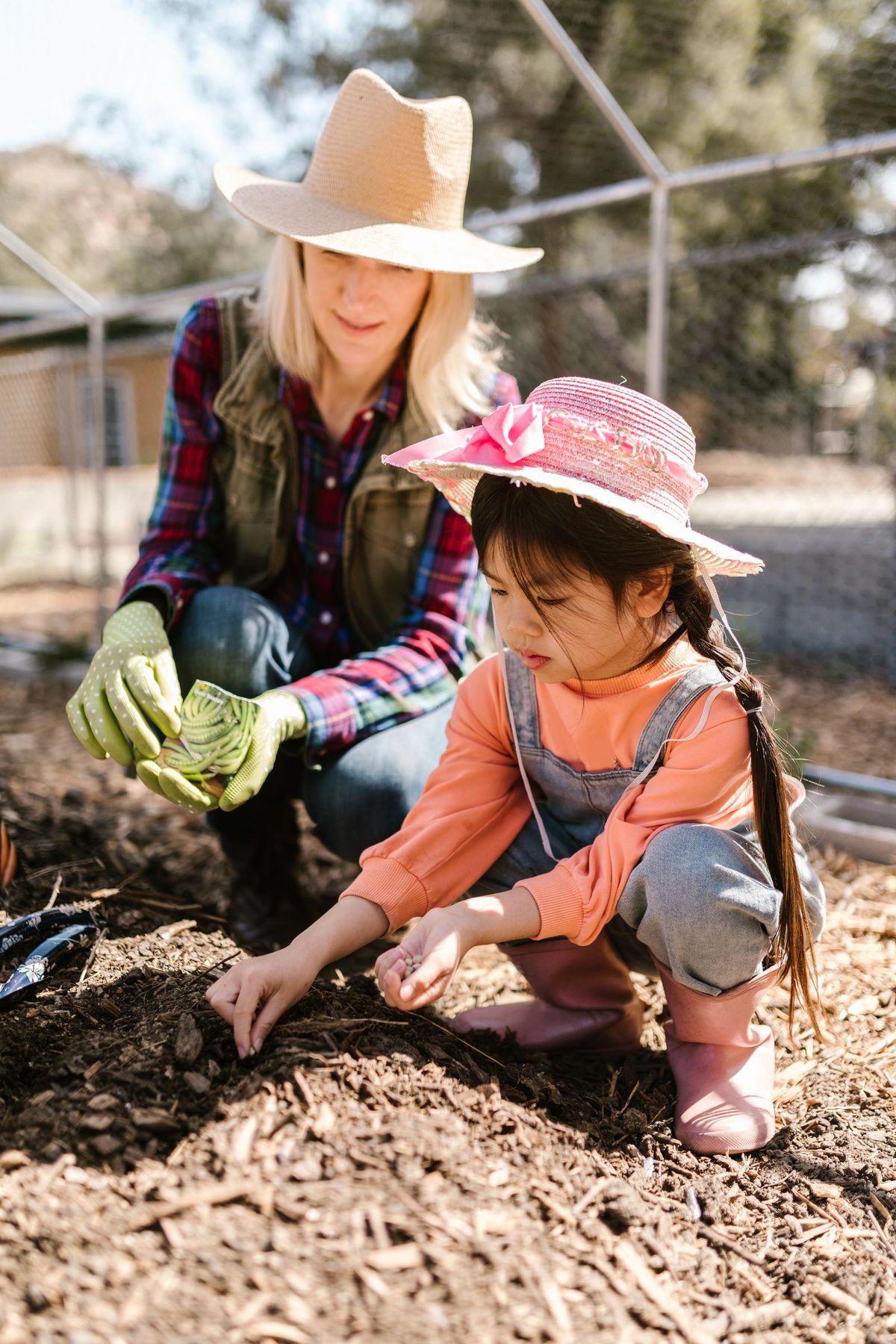
A mother and daughter planting seedlings together in a sunny garden
Weeks 7 and 8: Flowers, and What They Are Telling You
What you will see: flowers, and with flowers the garden changes jobs from growing to reproducing. Zucchini opens big yellow blooms, and beginners worry when the first flowers simply fall off. Those are male flowers, which arrive first and exist to make pollen; the female flowers, recognizable by the tiny fruit swelling behind the petals, follow a week or so later. A female flower that is not pollinated grows a small fruit that yellows, shrivels, and drops, which is also normal early in the season when bees and blooms are still finding each other.
Tomato flowers that drop without setting fruit in a heat wave are telling you about temperature, not failure: extreme heat stalls pollination, and set resumes when nights cool. Bean and pea flowers are quieter and mostly self pollinating, and cucumbers follow the zucchini pattern of males first. What you do in these weeks is mostly continuity: the weekly walk, the deep watering, the weeding, and the first real harvests of lettuce, radish, and beans arriving at the end of this stretch.
One new task arrives with the flowers: watch fruiting crops for even moisture. Tomatoes watered unevenly, drought then flood, split their skins and develop blossom end rot, a dark leathery patch on the fruit's bottom that is a calcium transport problem caused by irregular water, not a disease. Steady watering is the entire cure, and week 7 is when it starts to matter.
Weeks 9 and 10: The Harvest Rhythm Begins
What you will see: the garden starts paying you back, and a new skill replaces growing: picking on time. Zucchini harvested at 6 to 8 inches are tender and the plant keeps producing; zucchini left to become baseball bats slow the plant down, because a plant ripening seeds believes its job is done. Beans picked every two or three days keep flowering. Lettuce cut as leaves or heads makes room for the succession sowing you now start in the gaps.
What you do: harvest in the morning when plants are full of water and flavors are at their best, and harvest more often than feels necessary. Sow the next round of lettuce and beans in the spaces opening up. Keep watering deeply, and now be honest about the weekly inch: fruiting tomatoes and cucumbers in hot weather are the thirstiest things in the garden, and a rain gauge, even a tin can, tells you what the sky actually delivered instead of what you hoped.
What is normal: imperfection. A split tomato, a crooked cucumber, a lettuce that bolts and turns bitter in a hot week. Bolting is a plant's response to heat and long days, not your failure, and the fix is timing: sow the next round and let the bolted plant flower for the bees. Grocery produce is uniform because it is graded. Garden produce is food.
Weeks 11 and 12: The Garden Teaches You Its Lessons
What you will see: the season's shape becomes clear. The crop you overplanted is obvious, usually zucchini. The crop you wish you had more of is obvious too. Powdery mildew may dust the squash leaves in humid weather, white patches that look alarming and matter less than they appear to on a plant still producing. Tomato foliage may yellow at the bottom, oldest leaves first, which is often simple age and shade within the plant.
What you do: write it down. A notebook page, a phone note, three sentences: what thrived, what disappointed, what you would change. This is the most valuable gardening act of the entire season, because next year's garden, the good one, is built from this year's notes and from nothing else. Note which variety of tomato tasted best, where the shade fell in August, and which corner stayed wet. Pull spent plants as they finish, compost the healthy ones, and sow a last quick round of lettuce or radish in the gaps if your frost is still weeks away.
What is normal: tiredness, yours and the garden's. A first season that ends with notes, a few meals you are proud of, and one crop that got away from you is not a partial success. It is the complete and standard shape of learning to garden, and it is exactly what year two is for.
The Four Problems Every Beginner Meets, and Their Whole Solutions
Four troubles account for nearly every worried message a first season produces, and each has a short, complete answer. The first is yellow lower leaves, appearing on almost every crop by midsummer. Oldest leaves yellow first as the plant ages and shades them, and the plant sheds what it cannot use. Pick them off, and worry only if yellowing races upward into new growth, which points to hunger or water trouble rather than age.
The second is the pest you can see: aphids clustered on tender tips, caterpillars folding themselves into leaves. In a home garden the first treatment is water, a firm jet on a dry morning that knocks aphids off faster than they can climb back, repeated as needed, and handpicking for caterpillars, which are few, slow, and findable on the weekly walk. A garden sprayed at the first insect is a garden whose helpful insects died too, and the aphids' predators were the free control you actually wanted.
The third is the crop that does nothing. A pepper sitting still in cool soil, a tomato waiting out a cold snap: stillness in a living green plant is usually weather, and the cure is the calendar. The fourth is the crop that does everything at once, the zucchini glut and the bean flood, and its solution is social rather than horticultural: harvest small and often, freeze the surplus, and learn the names of neighbors. Every experienced gardener you meet has stood exactly where you are standing in each of these four moments, which is worth remembering in week 9 when all four arrive together.
The Season in One Sentence
Walk weekly, water deeply, thin bravely, pick promptly, and write it down: those five verbs are the whole of how to garden, and the twelve weeks above are just them, repeated in order, at the pace plants actually live.
Frequently Asked Questions
How much time does a beginner garden take each week?
For a starter garden around 100 square feet, about an hour a week covers it: a ten minute walk to look everything over, one deep watering session, and the rest on weeding and harvesting. The time is small but weekly. A garden ignored for three weeks in June needs a rescue; a garden visited weekly never does.
How often should beginners water a vegetable garden?
About 1 inch of water per week, up to 2 inches in sandy soil, according to Mississippi State University Extension, delivered in one or two deep soakings rather than daily sprinkles. The exception is a germinating seedbed, which must stay evenly moist until seedlings emerge. Deep and infrequent grows deep roots that survive hot spells.
Why is nothing coming up in my garden after a week?
Because many seeds are simply slower than a week. Beans often emerge in about a week in warm soil, but carrots can take three weeks, and cold soil slows everything further. As long as the seedbed has stayed moist and the seeds were sown at the right depth, roughly 2 to 3 times the seed's diameter, patience is usually the correct action.
What is the most common beginner gardening mistake?
Crowding, usually by skipping thinning. Seedlings sown thick and never thinned compete for light, water, and air, and crops like carrots and lettuce fail quietly because of it. Thin to extension spacing, carrots to about 2 to 3 inches and lettuce to about 10, and eat the thinnings. The second most common mistake is daily shallow watering, which trains roots to stay at the surface.
Is it normal for zucchini flowers to fall off?
Yes. Zucchini plants open male flowers first, and those fall after a day or two without making fruit. Female flowers, with a tiny fruit swelling behind the petals, arrive a little later. An early female fruit that yellows and shrivels usually just was not pollinated. Both patterns settle as the season and the bees get going.
When do beginners actually start harvesting?
Fast crops arrive around weeks 7 to 9: radishes and lettuce first, then beans and zucchini, with tomatoes and peppers following later in the summer. Harvest zucchini small, at 6 to 8 inches, and pick beans every two or three days. Frequent picking keeps plants producing; fruit left to ripen seed tells the plant its work is done.
What should I do when the first season ends?
Write three sentences: what thrived, what disappointed, and what you would change. Pull spent plants, compost the healthy material, and note where shade and wet spots actually fell. Next year's garden is built from those notes more than from any book, because they describe your yard and your habits, which are the two things no guide can know.
Photo credits: Greta Hoffman (Pexels); RDNE Stock project (Pexels). Photos are served from this site; follow the credit to the library page for the original.