Seed is how you start basil. Cuttings are how you keep it. A cutting is a clone: the new plant is genetically the plant you cut it from, with the same flavor, the same leaf size, the same resistance to the sulks that killed its neighbors. That matters because basil plants vary, and in every bed there is one plant that outgrows and outtastes the rest. This site's how-to-grow-basil-from-seed owns germination, and how-to-grow-basil owns the general plant and its pinching. This page owns propagation: taking pieces of a plant you already know is good and turning them into more of exactly that plant, for the two jobs cuttings do better than seed ever will, rescuing a favorite before frost and carrying it through winter indoors.
How to Grow Basil From Cuttings: Clone the Plant You Love
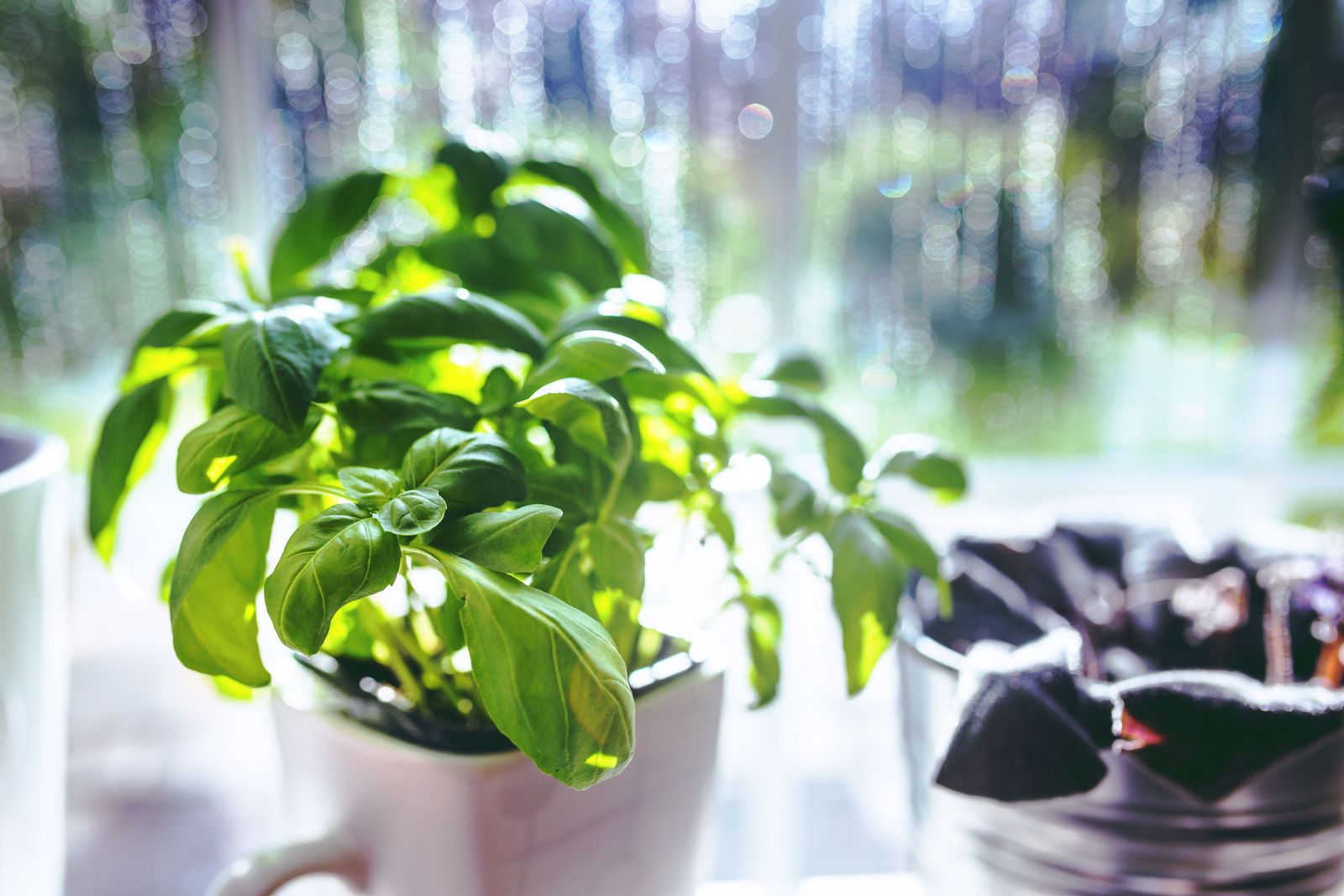
Photo: Karolina Grabowska / Pexels
Interactive tool
Basil Cutting Checklist
Check off each step as you finish it. Your progress stays on this page.
0 of 8 complete
0% done
Taking the Cutting: Stem, Node, and Timing
The method is consistent across every serious guide, and the details matter. Choose a stem 4 to 6 inches long that has not flowered; a flowering stem is spending itself on seed and roots poorly. Cut just below a node, the bump where leaves meet the stem, because that node is where the roots will form, and use clean scissors or a knife so the stem end is crushed as little as possible. Strip the leaves from the lower half of the cutting, leaving two pairs at the top: submerged or buried leaves rot, and a cutting with too much leaf loses water faster than a rootless stem can replace it. Take the cutting in the morning if you can, when stems are full of water. And take several. Published success rates for basil cuttings run about 50 to 80 percent per stem, which is not an argument against the method; it is the method's arithmetic. Six cuttings at even odds give you plants to spare, and the extras are insurance you can give away.
Water Rooting: The Jar on the Sill
Water rooting is the popular route because you can watch it work. Set the cuttings in a jar of clean water with the stripped nodes submerged and the leaves above the surface, on a bright sill out of direct sun, which would cook them. Change the water every 1 to 3 days; stagnant water goes oxygen poor and grows the slime that rots stems, and most water rooting failures trace to a jar nobody changed. Roots emerge from the nodes in about 3 to 14 days across the guides, a sprawl worth explaining rather than hiding: warm rooms and fresh, vigorous stems root at the fast end, cool rooms and older wood at the slow end, and a cutting that shows no roots at 2 weeks but still looks firm and green deserves another week before judgment. Transplant when the roots reach 1 to 2 inches, not longer. Long water roots are brittle, adapted to water rather than soil, and they break and stall at potting; a cutting moved at 1 inch of root adjusts in days. Pot into moist mix, water it in, and keep it evenly moist and out of harsh sun for the first week while soil roots take over.
Soil Rooting: The Alternative That Skips the Adjustment
Rooting directly in mix avoids the water to soil transition entirely, at the cost of flying blind. Dip the cut end in rooting hormone if you use it; basil roots willingly without it, but the hormone measurably improves the odds on older stems. Set the cutting in a small pot of moist, light mix with at least one stripped node buried, firm the mix around it, and cover the pot with a clear bag or a cut bottle to hold humidity, venting it daily so mold never gets comfortable. Keep it in bright indirect light and keep the mix moist, not wet. In 2 to 3 weeks, test with the gentlest tug: resistance means roots. Soil rooted cuttings go straight into the garden or a bigger pot with no adjustment week, which makes this the better method for production, a tray of clones for the summer bed, and the water jar the better method for a few cuttings on a kitchen sill where watching the roots is half the pleasure.
The Two Jobs Cuttings Exist For
First, the pre frost rescue. Basil dies at the first cold night, and the bed's best plant, the one you have been pinching all summer, dies with the rest unless you clone it. In late summer, take cuttings from that plant, root them, and pot them up; you have converted a doomed annual into next year's starter stock and a winter windowsill herb in one move. Second, overwintering a favorite. A potted clone brought indoors before frost, given the brightest window or a grow light and regular pinching, will live through winter as a houseplant and can itself donate cuttings in spring, so a single exceptional plant can stock your garden for years without a seed packet. Seed cannot do this: seedlings of that plant are its children, variable as children are, while cuttings are the plant itself, continued. Growers who keep a named basil, a particular Genovese with the right clove note, keep it this way, the way orchardists keep a variety by grafting rather than by planting pips.
Aftercare: Pinching the Clone Into Shape
A rooted cutting wants to grow up exactly like the stem it was, one straight shoot racing for flower, and your job is to refuse it that shape. When the clone has three pairs of leaves, pinch the tip out just above the second pair; the plant responds with two stems where there was one, and you pinch those in turn. This is the same pinching doctrine as the general basil guide, applied early, because a clone starts life as a leggy teenager rather than a compact seedling. Feed lightly once it is growing strongly, keep it watered evenly, and never let it flower if you want leaves: a basil that sets seed is a basil winding down. Cuttings root, pinch, and multiply fast enough that by midsummer the arithmetic inverts: you will have more basil than the kitchen can use, which is the correct problem, solved by pesto, by gifts, and by letting one plant flower for the bees at the very end of the season.
Frequently Asked Questions
How long do basil cuttings take to root?
About 3 to 14 days in water, and the range is real: warm conditions and young, non flowering stems root at the fast end, while cool rooms and older stems take the full 2 weeks or a little more. In mix, allow 2 to 3 weeks before the tug test tells you roots have formed. A cutting that stays firm and green is alive and working even before roots show; a cutting that goes black at the base or collapses has rotted and should be discarded. Change the jar water every 1 to 3 days, because stale water is the most common cause of failure.
Can I root basil cuttings from the grocery store?
Yes, if the stems are fresh. Grocery basil, whether a living plant in a pot or cut stems in a clamshell, can root by the method on this page: choose the firmest stems, recut just below a node, strip the lower leaves, and root in water on a bright sill. Pot grown grocery basil is usually several seedlings crowded in one pot, and separating and potting them individually is even faster than rooting. Stems that are wilted, blackened at the base, or slimy will not recover; be selective and take the best material available.
Why did my basil cuttings rot instead of rooting?
Three causes cover nearly every case. The water was not changed, so it went stagnant and the stems rotted in it; change every 1 to 3 days. Leaves were left submerged or buried, and rotted where they sat; strip the lower half of every cutting. Or the stem was flowering or old and woody, material that roots slowly and rots fast; take young, green, non flowering stems. Sterile tools and a clean jar matter more than any product: most rot arrives on the cut surface, so start clean.
When should I transplant water rooted cuttings into soil?
At 1 to 2 inches of root. Earlier than that, the roots are too few to support the plant; later, the roots become long, brittle water roots that break at potting and must be replaced by soil roots anyway, stalling the plant. Pot into moist mix, water in well, and keep the cutting evenly moist and shaded from harsh sun for about a week while it adjusts. A slight wilt in the first 2 days is normal adjustment; a collapse that does not lift by day 3 usually means the roots were damaged in the move.
Can I keep a basil plant alive all winter from cuttings?
Yes, and it is one of the best reasons to take them. Root cuttings in late summer, pot them up, and grow them indoors on your brightest windowsill or under a grow light, pinching regularly to keep them compact and leafy. Indoor basil grows slowly in winter light and will not match summer production, but it stays alive and flavors winter cooking, and in spring the same plant donates fresh cuttings for the garden. Bring the cuttings in well before the first frost; basil damaged by a cold night will not root reliably.
Photo credits: Karolina Grabowska (Pexels); Pixabay (Pexels). Photos are served from this site; follow the credit to the library page for the original.