Every basil grower knows the plant from the garden center: dark green, bushy, fragrant. Growing it from seed looks like it should be the easiest job in the spring calendar, and then the seedlings come up pale, stretch into threads, and fall over, and the grower concludes they cannot grow basil. They can. Basil seed is reliable; what fails is the seedling stage, in two predictable ways, cold and dim light, and both are preventable. This page owns that stage, from the packet to the hardened plant ready for the garden. Our how to grow basil guide owns the pinch method and the harvest that follow; this page ends exactly where that one begins, at the first pinch.
How to Grow Basil From Seed: Germination and the Seedling Stage, Done Right
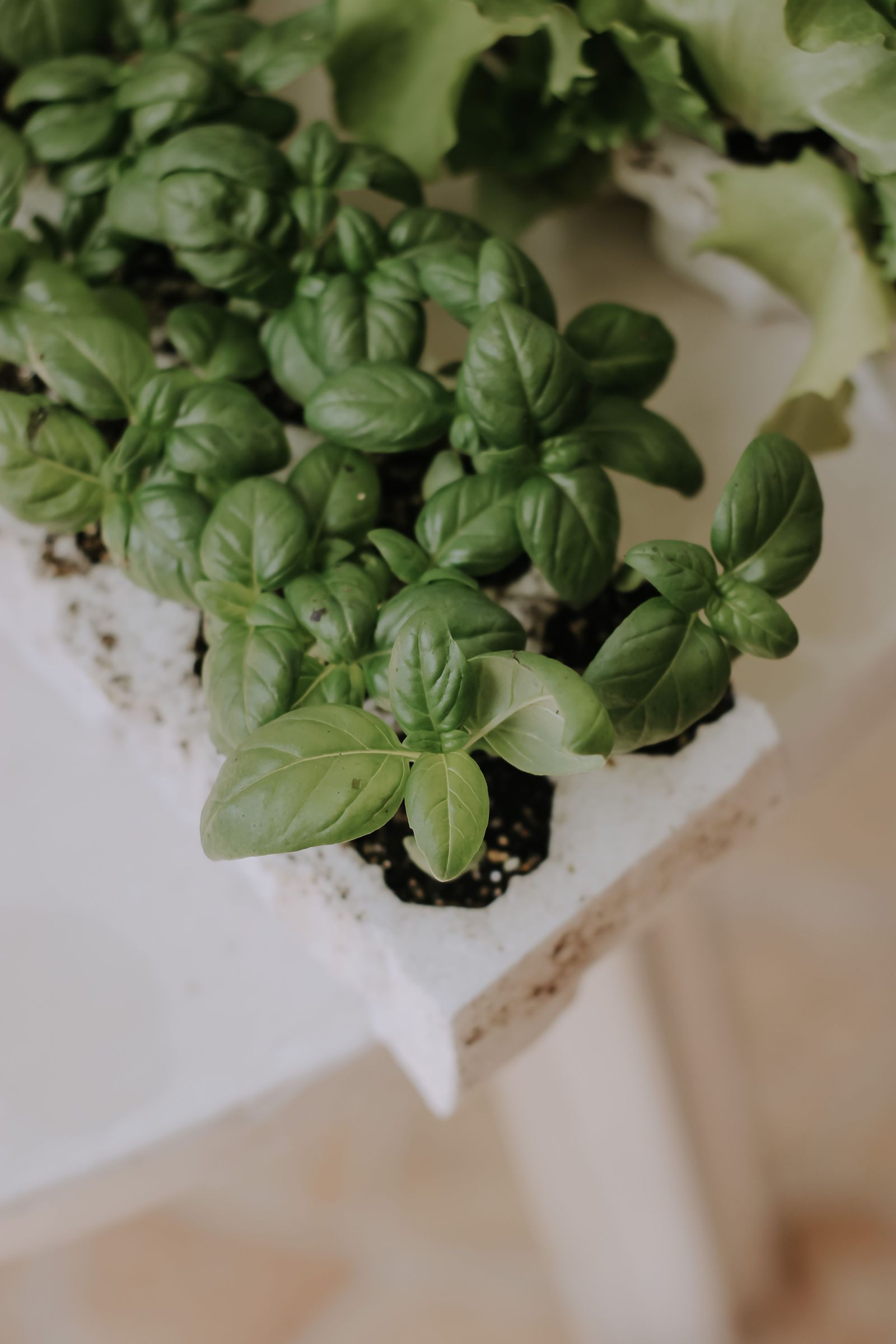
Photo: Nati / Pexels
Interactive tool
Seed Starting Date Planner: Basil From Your Frost Date
Enter your average last spring frost date and pick basil to get its indoor sowing and transplant dates from the week offsets in North Dakota State University Extension H1139. The article above flags how the H1139 basil timing compares with the 6 to 8 week consensus.
Sow tomato indoors: Fri, March 20, 2026
Move seedlings outdoors: Fri, May 15, 2026.
Sow indoors 6 weeks before last frost; set out 2 weeks after last frost.
Week offsets: North Dakota State University Extension, H1139, garden seed starting chart, source. Frost dates are averages: in any given year the last frost can land two weeks either side of the date you type, so keep an eye on the forecast as transplant day approaches.
When to Sow: the Consensus, and This Site's Conflict, Flagged
The consensus across extension and seed house guidance is to sow basil indoors 6 to 8 weeks before your last spring frost, because basil grows slowly at first and is killed by cold, so the indoor start has to be long enough to matter but the plant cannot go out early to compensate. Honesty requires flagging this site's own data: the seed starting planner on this page is built on North Dakota State University Extension publication H1139, which lists basil at 3 weeks before last frost, transplanting 2 weeks after, a far shorter runway than the 6 to 8 week consensus. The numbers are not averaged here, and the planner keeps the NDSU figure it was built on. The practical reading: NDSU's short timing suits a compact plant set out promptly in a warm late spring, and many northern growers using it are starting under strong lights where growth is fast. If your light is a windowsill, follow the 6 to 8 week consensus and give the seedlings the longer runway; a basil started too early under good light can be potted up and held, while a basil started too late simply arrives small. Either way, the non negotiable is the set out: basil goes outside only when nights are reliably above 50 degrees F, because this plant sulks at temperatures other seedlings shrug off.
Sowing: Depth, Warmth, and the Light Question
Sow seed 1/4 inch deep in a fine, moist seed starting mix. A minority of guides say 1/8 inch or barely covered, on the reasoning that basil germinates better with some light reaching the seed; the disagreement is small and the outcomes overlap, but 1/4 inch in a moist mix is the figure the mainstream guidance converges on, and it protects the seed from drying, which is the beginner's real germination killer. What basil seed demands without negotiation is warmth: germination runs 5 to 10 days at soil temperatures of 70 to 85 degrees F, and stretches toward two weeks or fails unevenly in a cool room. A heat mat under the tray, or the top of a refrigerator or another gently warm spot, is the difference between a tray that pops up together and a tray that straggles. Keep the mix evenly moist, not wet, under a clear dome or cover until the seeds crack, then remove the cover the moment green shows: seedlings left under a dome in warm moist air are the textbook setup for damping off, the fungal collapse that cuts seedlings down at the soil line overnight.
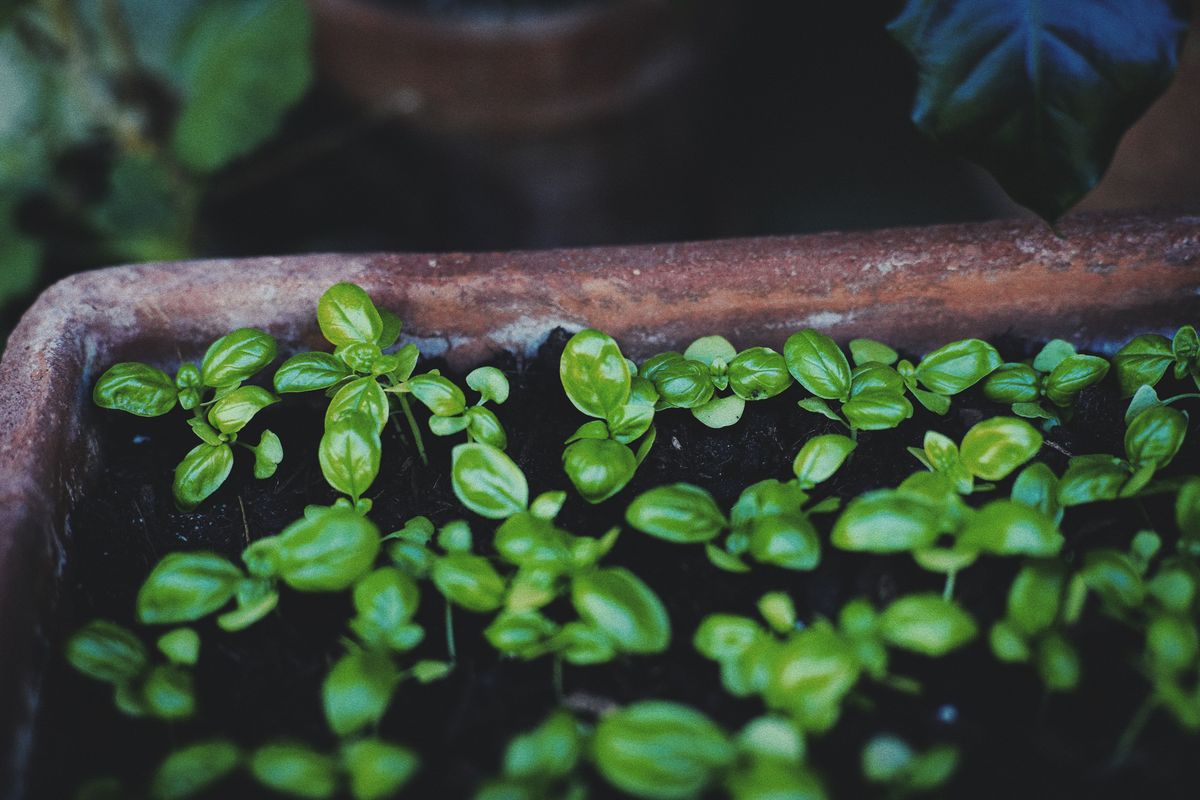
Light: Where Basil Seedlings Are Won and Lost
The stretched, pale, falling seedling is a light report, not a seed report. Basil wants 14 to 16 hours of light a day as a seedling, and it wants the light close: a simple fluorescent or LED fixture hung 2 to 4 inches above the leaves, raised as the plants grow. A windowsill, even a sunny one, delivers a fraction of that in late winter and from one side, and the seedlings answer by growing toward it, thin and leaning, until their stems cannot hold them. If a sill is truly all you have, rotate the tray daily, choose the brightest sill you own, and sow later rather than earlier, closer to the set out date, so the seedlings' indoor life is short. Stocky is the goal and it is visible: a good basil seedling at transplant is 4 to 6 inches tall with a stem you cannot call thread, leaves a true green, and internodes short enough that the plant reads as a small bush in training rather than a vine auditioning. Thin the tray to one seedling per cell once the first true leaves open, snipping the extras at the soil line; basil seed is cheap and crowded seedlings compete for the light that decides everything.
Potting Up and Feeding the Seedling
Basil started 6 to 8 weeks out will outgrow its cell before the weather allows the garden, and potting up into a 3 to 4 inch pot is a normal mid stage, not a sign of mistiming. Move the seedling when it has two sets of true leaves and roots holding the cell's mix together, handling it by a leaf rather than the stem, because a crushed stem is fatal while a torn leaf is nothing. Set it at the same depth it grew, water it in with room temperature water, and return it to close light the same day. Feeding at this stage is light: a half strength balanced fertilizer once a week, or a weak fish or seaweed feed, is ample for a plant whose flavor actually suffers from being pushed soft and lush. If seedlings stall purple or pale despite light and warmth, the usual cause is cold mix or a feed that never happened; fix the cause rather than doubling the dose.
Hardening Off a Plant That Hates Cold
Hardening off is where basil's cold sensitivity writes its final exam. A seedling moved straight from a warm light shelf into a spring garden meets sun, wind, and a 45 degree night in one day, and basil answers with bleached leaves, stalled growth, or death at temperatures that leave tomato seedlings merely annoyed. Harden over 7 to 10 days: an hour or two of morning shade outdoors on the first days, growing to full days, and always back inside for nights below 50 degrees F. Watch the forecast rather than the calendar for the set out, and if a cold snap follows planting, a floating row cover or even an upturned bucket on the coldest night is cheap insurance. Set plants out at the spacing our basil guide specifies, water them in well, and mulch once the soil has warmed, because mulch on cold soil keeps it cold and this plant wants its feet warm from the start.
The First Pinch: the Handoff
The seedling stage ends with the act that defines the plant's whole productive life: the first pinch. When the young plant has three sets of leaves and stands about 6 to 8 inches tall, pinch or snip the main stem just above the second set of leaf nodes from the bottom. The plant responds by branching from those nodes, becoming two stems where there was one, and the bushy architecture that produces a season of harvests is established. Everything after this moment, the repeated pinching that delays flowering, the harvest method, the end of season pesto salvage, belongs to our how to grow basil guide, and the seed grower who has arrived at a stocky, hardened, pinched plant has done the part of basil growing that cannot be fixed later. A leggy seedling pinched bravely will branch, but it branches on a weak stem; the stocky seedling you grew under close light branches on a trunk. That is why this stage deserved its own page.
Succession and the Seed Supply
One tray of basil, however well grown, is a beginning rather than a supply, because a basil plant's prime is measured in weeks of pinching before it turns woody and determined to flower. Growers who eat basil all summer run a succession: a small sowing every 3 to 4 weeks from the first indoor start through midsummer, each batch replacing the oldest plants as they tire, so the harvest never depends on one generation. The seedling method on this page is identical for each sowing, and the later ones can be direct sown in the warm garden, which makes the succession nearly free in effort. Saving your own seed closes the loop for the following year: let one plant of an open pollinated variety flower late in the season, harvest the dried seed heads when they brown, and store the seed dry and cool; basil seed keeps its germination well for several years, and the seedling stage you have just mastered is exactly the skill a packet of your own seed asks for. Hybrid varieties will not come true from saved seed, which is a choice, not a tragedy: buy those fresh, and save seed from the open pollinated varieties whose flavor you have already voted for with a season of pinching.
Frequently Asked Questions
When should I start basil seeds indoors?
The extension consensus is 6 to 8 weeks before last frost. This site's seed planner follows North Dakota State University H1139, which lists basil at 3 weeks before last frost; the conflict is flagged rather than averaged. Under strong close light the shorter timing works; on a windowsill, use the 6 to 8 week runway, and never set plants out until nights stay above 50 degrees F.
How deep do I plant basil seeds, and how long do they take to sprout?
About 1/4 inch deep in moist seed starting mix. Germination takes 5 to 10 days at soil temperatures of 70 to 85 degrees F; a heat mat or a warm spot evens it up. In a cool room the same tray can take two weeks and come up unevenly, which growers misread as bad seed.
Why are my basil seedlings tall, pale, and falling over?
Light, almost always: too few hours and too far away. Basil seedlings need 14 to 16 hours a day with the fixture 2 to 4 inches above the leaves. Windowsill seedlings stretch toward one sided light and collapse. Rotate the tray if a sill is all you have, and sow closer to set out so the indoor stage stays short.
Can I direct sow basil in the garden instead?
Yes, once the soil is warm and nights are above 50 degrees F, and it is the normal method in long season climates. Sow 1/4 inch deep, keep the bed evenly moist until emergence, and thin to the final spacing. The trade is time: direct sown basil harvests weeks later than transplanted seedlings in spring.
When do I pinch basil for the first time?
When the plant has three sets of true leaves and stands 6 to 8 inches tall, pinch the main stem just above the second set of nodes from the bottom. That first pinch creates the branched frame the whole season's harvest grows on, and the method from there is the pinch discipline in our main basil guide.
Why did my basil die after I planted it out on a mild day?
Probably a cold night, not the mild day. Basil is damaged below about 50 degrees F and killed by frost, and spring nights drop far below the daytime temperature the gardener enjoyed. Harden plants over 7 to 10 days, watch the forecast rather than the calendar, and cover plants for cold snaps after set out.
Photo credits: Nati (Pexels); Andreas Schnabl (Pexels). Photos are served from this site; follow the credit to the library page for the original.