The basil plant that dies on a thousand kitchen windowsills was not killed by the windowsill. It was killed at the store, where it was grown as dozens of seedlings crammed into one small pot to look lush on the shelf, and it arrived home already in a crowd it could not survive. Pot basil succeeds when three verdicts are applied on day one. One plant per pot, because a basil bush wants the whole volume. A pot of 10 to 12 inches across for a standard Genovese type, 6 to 8 inches as the floor for a compact variety, with drainage holes that actually drain. And full sun, 6 to 8 hours of it, because a pot in shade grows a leggy apology no watering pattern can fix. This page runs the whole pot system: the supermarket split, the pot and mix specification, the pinch calendar that makes the bush, the watering rhythm, and the cold floor that ends every basil story. The separate guide to basil varieties and outdoor growing owns the plant in the ground; this page owns the plant in the pot.
How to Grow Basil in a Pot: One Plant Per Pot, the Supermarket Split, and the Pinch Calendar
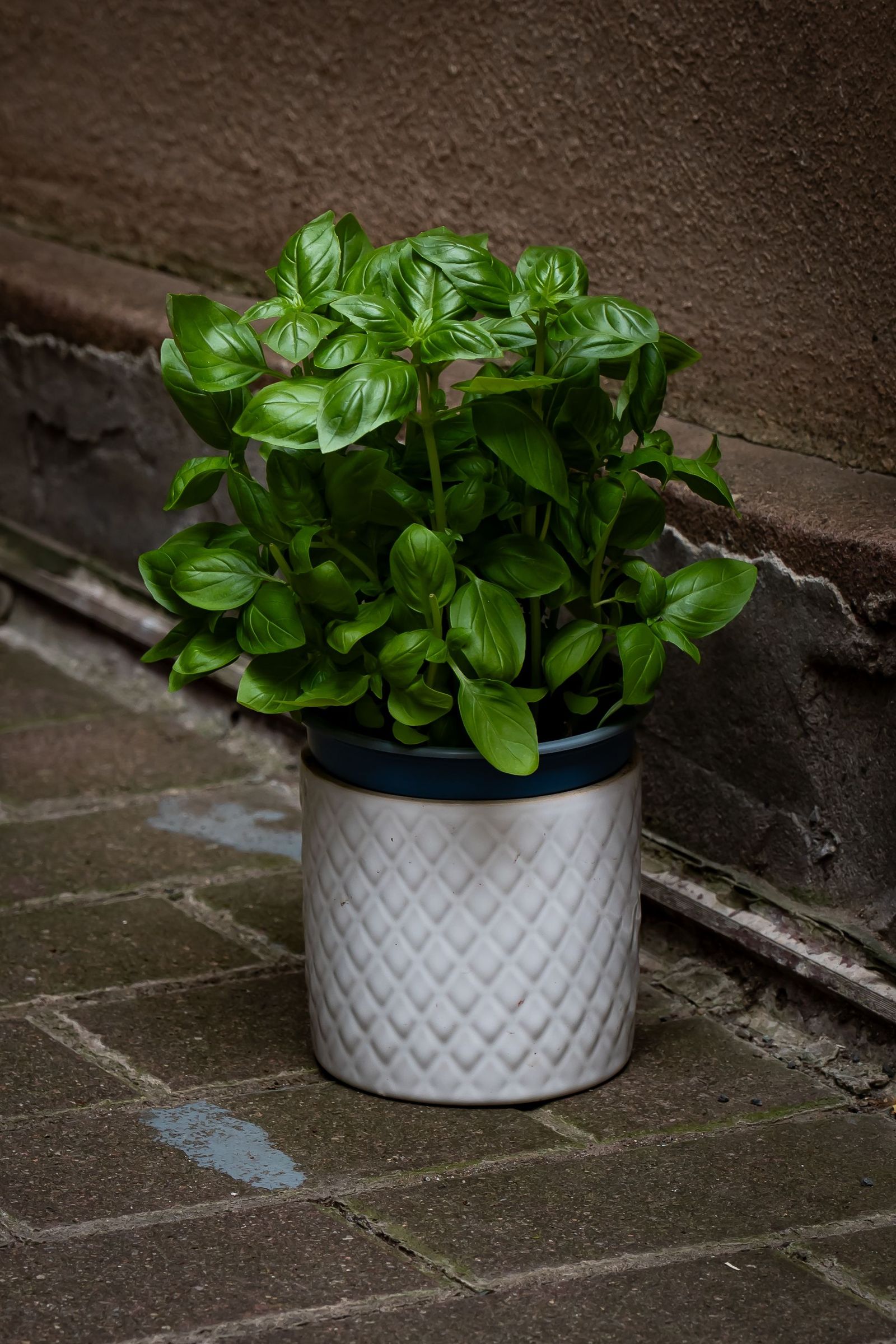
Photo: Matthias Köhler / Pexels
Basil Pot Checklist
Check off each step as you finish it. Your progress stays on this page.
0 of 8 complete
0% done
The Supermarket Split: What You Actually Bought
Lift a grocery store basil from its pot and tease the root ball apart, and the lush plant resolves into twenty or thirty individual seedlings, each a single stem, sown thick by the grower because a full looking pot sells. Grown on as one, they compete to death within weeks: the strongest few stretch, the rest yellow and collapse at the base, and the owner concludes that basil is difficult. The split is the fix, done the day the plant comes home. Water the pot, ease the root ball out, and divide it into clumps of three to five seedlings with their roots as intact as you can keep them. Pot the best clump in the center of a proper pot, and give the spares away or pot them too; a windowsill of three honest pots outlives the one crowded pot by months. Each clump is still several plants, and as they grow, thin each clump to its single strongest stem, snipping the rest at the base. From that day the plant is one basil with a whole pot of soil, and everything else on this page starts working.
The Pot and Mix Specification
The pot is a water and root budget. Ten to twelve inches across holds enough mix that a summer plant drinks on a rhythm of days rather than hours, and gives the roots the volume a foot wide bush implies; a compact or Greek basil, bred small and dense, is content at 6 to 8 inches. Depth matters less than width for this shallow rooted herb, and drainage matters more than either: holes in the bottom, a saucer that gets emptied, and no decorative outer pot holding a permanent puddle around the base. The mix should be a quality container mix, rich and free draining at once; basil is a hungry plant in a small volume, and garden soil in a pot compacts into a brick that holds water at the top and drought at the bottom. A slow release fertilizer worked in at potting, or a dilute liquid feed every couple of weeks in season, keeps the leaves large and dark; a pale, small leaved plant in a rich looking pot is usually hungry, not thirsty. Terracotta dries fast and suits a heavy handed waterer; glazed and plastic hold moisture longer and suit a forgetful one. Match the pot to your own habits and the plant forgives the rest.
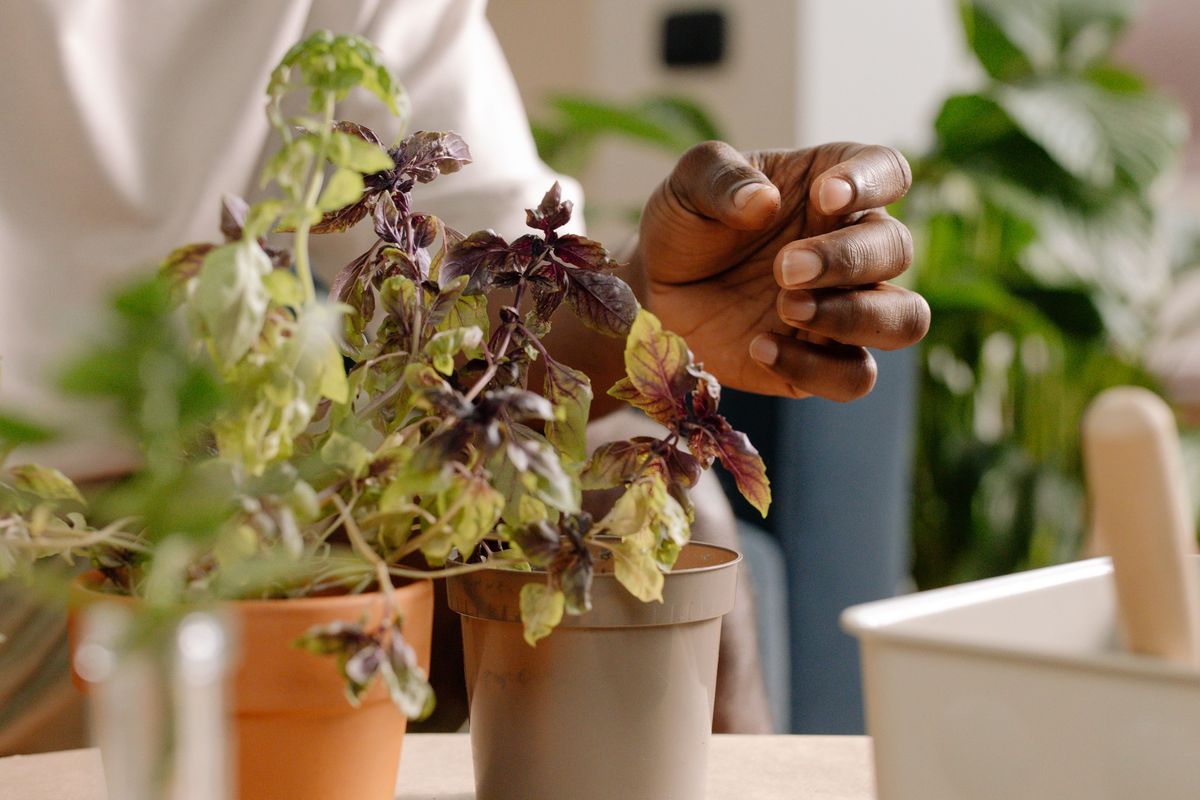
The Pinch Calendar: The Cut That Makes the Bush
A basil plant has one ambition, to flower and set seed and die, and the pinch is the weekly argument against it. The rule: when a stem has grown three sets of leaves, cut it just above the second leaf node from the base, and two new stems grow from that node where one grew before. Repeat on every stem, every week or two through the season, always cutting above a node and harvesting the cutting for the kitchen, and the plant becomes a rounded bush that produces leaves by the handful instead of a stalk that produces a flower spike. Flower buds are pinched out the day they appear, without exception; a plant allowed to flower turns its leaf flavor bitter and its energy to seed, and it is finished within weeks no matter what you do afterward. The harvest rule rides on the pinch: never take more than a third of the plant at once, always cut from the top down so the lower nodes keep branching, and pick in the morning when the aromatic oils are strongest. A leggy plant bought or grown tall can be cut back hard once, to its lowest healthy nodes, and will usually rebranch; a plant already flowering is a pesto appointment, not a rescue project.
The Watering Rhythm and the Cold Floor
Basil in a pot wants the mix evenly moist and never either extreme: check the top inch, and water at the base, thoroughly, when it has dried, which in summer sun is every 2 to 3 days for a well sized pot and daily for a small one in a heat wave. Wilting at noon on a hot day with moist mix is heat wilt and recovers by evening; wilting in the morning is thirst and gets a drink immediately. Wet foliage is the disease door, so the water goes on the soil, in the morning, and the saucer is emptied; blackened stem bases and spotted leaves are the signature of a plant watered overhead in the evening. The season's end is written in temperature: basil blackens and collapses at temperatures its tropical ancestry never prepared it for, sulking below 50 degrees F and killed outright by frost. The pot comes indoors before the first cold night, or the plant is harvested whole for pesto while it is still ahead. Indoors for winter it wants the brightest window you own and modest expectations; most growers treat pot basil as a glorious annual and start again in spring, which is not defeat but the plant's actual life cycle, honored.
Frequently Asked Questions
How many basil plants should go in one pot?
One. A basil bush fills a 10 to 12 inch pot by itself once it is pinched into branching, and two plants in that pot compete into the same crowding that kills the supermarket plant. The grocery store pot is the exception that proves the rule: it contains dozens of seedlings and should be split into clumps the day it comes home, each clump potted separately and later thinned to a single strongest stem. Compact varieties can share a wide pot at 6 to 8 inches per plant, and even then the spacing, not the pot's rim, is the limit.
How big a pot does basil need?
Ten to twelve inches across for a standard Genovese type, with drainage holes. That volume holds enough mix for a foot wide bush to drink on a rhythm of every 2 to 3 days in summer instead of twice a day, and it gives the roots room that shows up directly as leaf size. A compact variety manages in 6 to 8 inches. A pot that is too small is the commonest hidden cause of a basil that wilts daily and never sizes up; the plant is not thirsty by nature, it is under potted.
Why does store bought basil die so fast?
Because it is not one plant. The lush grocery pot is twenty or thirty seedlings sown thick for shelf appeal, and grown on together they compete for light, water, and root room until they collapse in sequence. Split the root ball into clumps on day one, pot the best clump properly, thin it to one strong stem, and the same purchase becomes a plant that produces for months. The second killer is the windowsill itself if it lacks sun; basil wants 6 to 8 hours of direct light and stretches pale and weak in a dim kitchen.
How do I keep basil from flowering?
Pinch it, weekly, before the flowers form. Cut each stem just above the second leaf node once it carries three sets of leaves, and remove any flower buds the day they appear. A flowering basil turns bitter and races to set seed and die; a pinched basil keeps branching and producing leaves. The pinch cuttings are the harvest, so the discipline pays for itself in pesto. Once a plant has flowered fully, the flavor is already changed; harvest it whole and let its pinched successor carry the season.
Can basil survive winter indoors?
It can be kept alive in a bright window, but manage expectations: basil is a warm season annual that sulks below 50 degrees F, grows slowly in winter light, and never matches its summer pace. Bring the pot in before the first cold night, give it your sunniest sill or a grow light, water sparingly as growth slows, and keep pinching any flower buds. Most growers harvest the plant whole in fall and sow fresh in spring; a wintered over plant is a head start, not a harvest machine.
Photo credits: Matthias Köhler (Pexels); cottonbro studio (Pexels). Photos are served from this site; follow the credit to the library page for the original.