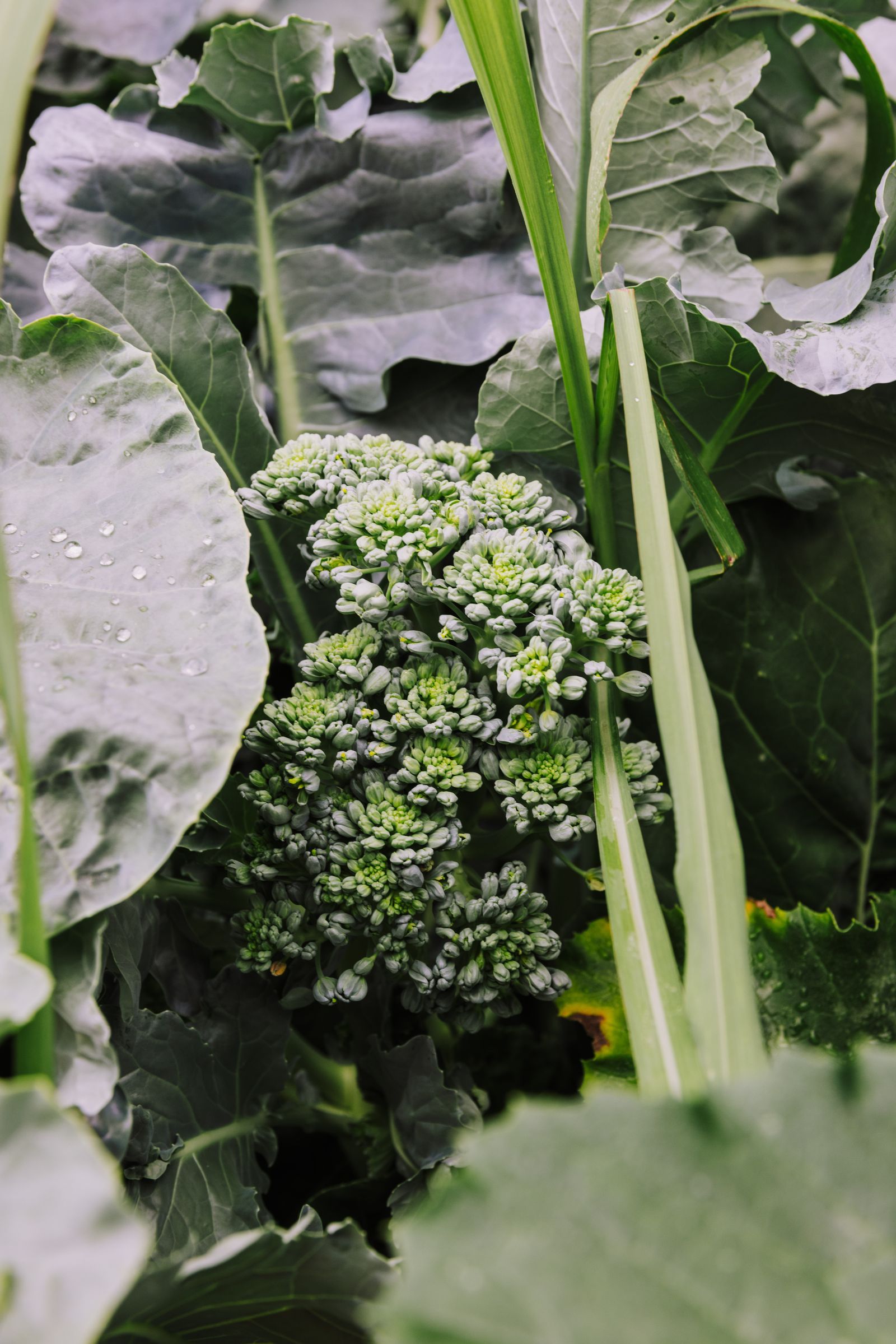
Broccoli has a public relations problem: it is sold to beginners as easy, and then it buttons, bolts, or produces a loose, bitter head the size of a golf ball, and the beginner concludes they cannot garden. The truth is more specific. Broccoli is a cool weather crop with a narrow comfort zone, and its heads must form and mature while temperatures stay cool, with the best head formation around 65 to 70 degrees. Time the crop so the head matures into cooling weather and broccoli is straightforward. Time it so the head meets a heat wave and no variety or fertilizer will rescue it. That is the whole secret, and it leads to this article's honest first advice: plant the fall crop.
A spring planting races the heat. Started early and grown fast, it can succeed, and in cool summer climates it succeeds reliably. But in most gardens, the fall planting, set out in late summer to head up in the cool of autumn, is the crop that makes big, tight, sweet heads, because every week of its maturity the weather moves in broccoli's direction instead of against it. Grow both if you like. Believe in the fall one.
The dates follow North Dakota State University Extension publication H1139 in our data: sow indoors 10 weeks before the last frost and set out 3 weeks before it, for spring; the fall crop counts the same growing time backward from the first frost. Spacing follows the University of Georgia standard in the Plant Spacing Planner on this page, 12 inches between plants in rows 36 inches apart. A wider figure exists and is flagged, not averaged: Maryland guidance quoted in our research spaces broccoli at 16 to 24 inches. Broccoli is a large plant, and gardeners with room who follow the wider figure get larger individual plants; the planner keeps the site's Georgia standard.
Interactive tool
Plant Spacing Planner: The Broccoli Bed
Broccoli is in the crop list below at the University of Georgia Cooperative Extension spacing of 12 inches between plants. Enter your bed size and give each plant the room a full head needs.
8 tomato plants fit this bed
4 plants per row across 2 rows, on a 24 inch grid. Extension spacing for this crop: 24 in between plants, 48 in between rows.
The grid uses the in-row spacing in both directions, the standard square foot layout for raised beds. In open ground, keep the wider row spacing in the note above so you can walk and weed between rows.
Spacing figures: University of Georgia Cooperative Extension, Circular 963, Vegetable Planting Chart, source.
Step 1: Start Seedlings Early, Whether Spring or Fall
Broccoli is almost always grown from transplants, because the seedling stage is slow and the timing needs precision that direct sowing blurs. For the spring crop, the NDSU H1139 schedule in our data sows indoors 10 weeks before the last frost and sets plants out 3 weeks before it; young broccoli tolerates frost, and the early start is how a head forms before summer heat. For the fall crop, sow seed in early to midsummer, in a shaded nursery corner outdoors or indoors away from heat, and set plants out about 6 to 8 weeks before the first frost, so heads mature in the cool that follows.
Harden seedlings off before transplanting, a week of increasing outdoor time, because a soft indoor plant set straight into wind and sun loses days it cannot spare. Set each plant at the depth it grew in its pot, firm the soil around it, and water it in well. A transplant that wilts for two days and recovers has spent growth the head will miss; shade cloth over new transplants in a hot late summer is a legitimate kindness for the fall crop.
Step 2: Feed and Water Like a Plant Building a Head
Broccoli is a heavy feeder by vegetable standards, because a head is a dense cluster of flower buds built quickly, and building quickly takes nitrogen and water without interruption. Work compost into the bed before planting, and in average soil, plan a nitrogen side dressing a few weeks after transplanting. The Minnesota Extension warning quoted in our research is the one to tape to the shed door: broccoli needs steady moisture. A check in growth from drought, heat, or hunger at the wrong moment produces buttoning, many small heads instead of one large one, or a plant that bolts straight to yellow flowers.
Give the crop about 1 to 1.5 inches of water a week, evenly, and mulch once plants are established to hold that moisture and moderate soil temperature. Roots are shallow enough that cultivation should be gentle or skipped entirely under mulch. The plant will tell you it is happy: leaves large, blue green, and growing visibly week to week. A pale, stalled plant in midsummer is asking for water and food in that order, and asking early enough to matter if you answer.
Step 3: Harvest the Center Head Tight, Then Live on Side Shoots
The harvest judgment is visual and absolute: cut the center head while the buds are tight, firm, and dark green, before any yellow petal shows. A head that looks perfect today is a flowering stalk next week in warm weather, so check daily as heads size up. Cut with several inches of stem, at an angle that sheds water, and the plant responds with the crop's bonus: side shoots, smaller heads on stems from the leaf joints, produced for weeks after the main head is gone. Many gardeners harvest more total broccoli from the side shoots than from the center head, and the shoots are tenderer. Pick them tight as well, every few days, and the plant keeps sending them until hard frost or heat ends the season.
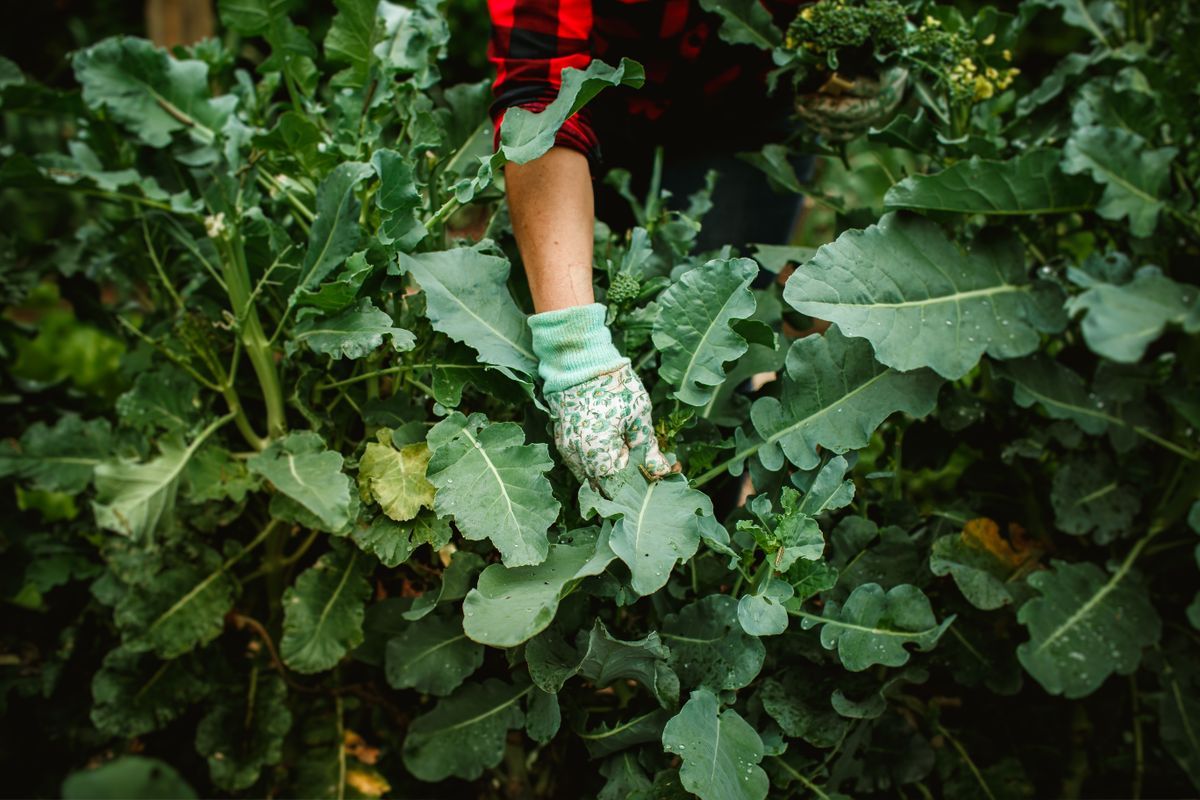
A gardener harvesting broccoli in a lush field
Step 4: Know the Failures by Name, Because Each Has a Cause
Buttoning, tiny heads on stunted plants, comes from seedlings stressed young: checked by cold snaps after transplanting, root bound in pots too long, or starved and dry at the start. The cure is upstream, in careful seedling handling and steady early growth. Bolting, the head shooting up into flowers, is heat arriving during head formation, which is the timing failure this article opened with. Loose, open heads with uneven buds are usually heat again, or a harvest waited on too long. Hollow stems trace to rapid growth and boron poor soils in some regions, and are a quality flaw rather than a failure; the broccoli is edible and the next crop, grown a touch slower, is usually sound.
Notice the pattern: broccoli's failures are nearly all scheduling and steadiness, not mystery diseases. The gardener who starts the fall crop on time, transplants carefully, and never lets the plants check for water will cut tight heads in October and side shoots into the frosts, and will wonder why anyone calls this plant difficult. It is not difficult. It is punctual, and it insists that you be punctual too.
A Worked Example: The Fall Crop on a Real Calendar
Abstract dates persuade nobody, so here is the fall crop walked through a sample garden whose first fall frost falls in mid October, a common date across a wide band of the country. Working backward from the NDSU H1139 growing schedule in our data, seed is sown in early July, in a shaded corner or indoors, where the seedlings are protected from the worst heat. The young plants grow through the hottest weeks in their pots or nursery row, watered faithfully, because a checked seedling in July is a buttoned head in October. In mid to late August, about 6 to 8 weeks before the first frost, the transplants go into the bed at the planner's 12 inch spacing, watered in deeply and shaded for their first days if a heat wave is running.
September is the growing month: steady water at 1 to 1.5 inches a week, the nitrogen side dressing early in the month, mulch down, and the plants building the large leaf canopy that a big head requires. Heads begin forming as nights cool, and the harvest watch starts: a head that firms up and tightens in early October gets checked daily, and cut the moment its buds are tight and dark, before any loosening. The center heads come off through October, and the side shoots follow into November, through light frosts that do not trouble the plants at all, until a hard freeze or the household's appetite ends the season. Compare that calendar with the spring version, where the same plant races June heat with its head half formed, and the fall crop's reputation explains itself. Broccoli is not hard. Broccoli in the wrong season is hard, and the calendar is the gardener's to choose.
Broccoli in the Rotation, and What Follows It
Broccoli belongs to the brassica family, alongside kale, cabbage, cauliflower, and Brussels sprouts, and the family shares diseases that persist in soil, clubroot above all. The practical rule for a home garden is rotation: do not plant any brassica where another brassica grew last year, and give a bed a few years between brassica crops if you can. In a small garden this is a planning habit rather than a hardship, since the family is one group among many, and a simple record of what grew where, kept season to season, is all the machinery rotation needs. Broccoli also leaves the bed at a useful moment: the fall crop clears in late autumn, freeing ground for a garlic planting or a cover of mulch and compost for winter, and the spring crop clears by early summer, in time for beans or squash to use the warm months. Heavy feeders leave a bed hungry, so whatever follows broccoli should either be fed, be a legume that feeds itself, or be planted into fresh compost. Plan the sequence and the broccoli patch keeps paying rent after the heads are eaten, which is the mark of a crop fully integrated into a garden rather than merely grown in it.
Frequently Asked Questions
Is broccoli easier to grow in spring or fall?
Fall, in most gardens. Heads must mature in cool weather, with the best formation around 65 to 70 degrees, and a fall crop heads up as temperatures fall, while a spring crop races rising heat. Cool summer climates grow fine spring broccoli; everywhere else, treat spring as the gamble and fall as the reliable planting.
When should I start broccoli?
For spring, North Dakota State University Extension H1139 sows indoors 10 weeks before the last frost and sets plants out 3 weeks before it. For fall, sow in early to midsummer and set plants out about 6 to 8 weeks before the first frost, so heads mature in autumn cool. Broccoli is grown from transplants, not direct sown, for timing precision.
How far apart should broccoli plants be spaced?
The Plant Spacing Planner on this page uses the University of Georgia standard in our data: 12 inches between plants in rows 36 inches apart. Maryland guidance quoted in our research uses a wider 16 to 24 inches. We flag the difference rather than average it; wider spacing grows larger individual plants where room allows.
How much water does broccoli need?
About 1 to 1.5 inches of water a week, given evenly, with no dry spells. Steady moisture is the Minnesota Extension warning for this crop: a growth check from drought during head formation causes buttoning or bolting. Mulch after plants establish to hold moisture and keep soil temperature moderate.
How do I know when to harvest broccoli?
Cut the center head while the buds are tight, firm, and dark green, before any yellow shows. In warm weather a ready head flowers within days, so check daily as it sizes. After the main head, harvest the side shoots that follow, also while tight, every few days for weeks.
Why did my broccoli make tiny heads or flower immediately?
Tiny heads, called buttoning, come from seedlings stressed young by cold, crowding in pots, hunger, or drought. Immediate flowering is bolting, caused by heat during head formation. Both are scheduling and steadiness failures: start on the extension dates, transplant carefully, keep moisture even, and favor the fall crop.
Photo credits: K (Pexels); Helena Lopes (Pexels). Photos are served from this site; follow the credit to the library page for the original.