A carrot is a root with a tape measure attached, and growing carrots in pots is mostly the discipline of respecting it. The governing equation comes from the Maryland extension guidance carried in the results: the container must be deeper than the mature root is long, with one and a half times the mature length as the safe figure, which means 12 inches or more of depth for standard varieties and explains every stunted pot carrot ever pulled. A single deep pot per sowing is its own system, distinct from the long troughs and grow bags of a container bed: the volume is small, the sides dry as fast as the top, and the thinning and watering both run on a tighter rhythm. This page runs the whole pot system: the depth equation and the varieties matched to it, the direct sow rule, the board trick that carries germination, the two thinnings, and the watering rhythm of a single pot. The guide to carrots in larger containers owns the troughs and beds; this page owns the individual pot.
How to Grow Carrots in Pots: The Depth Equation, the Board Trick, and the Two Thinnings
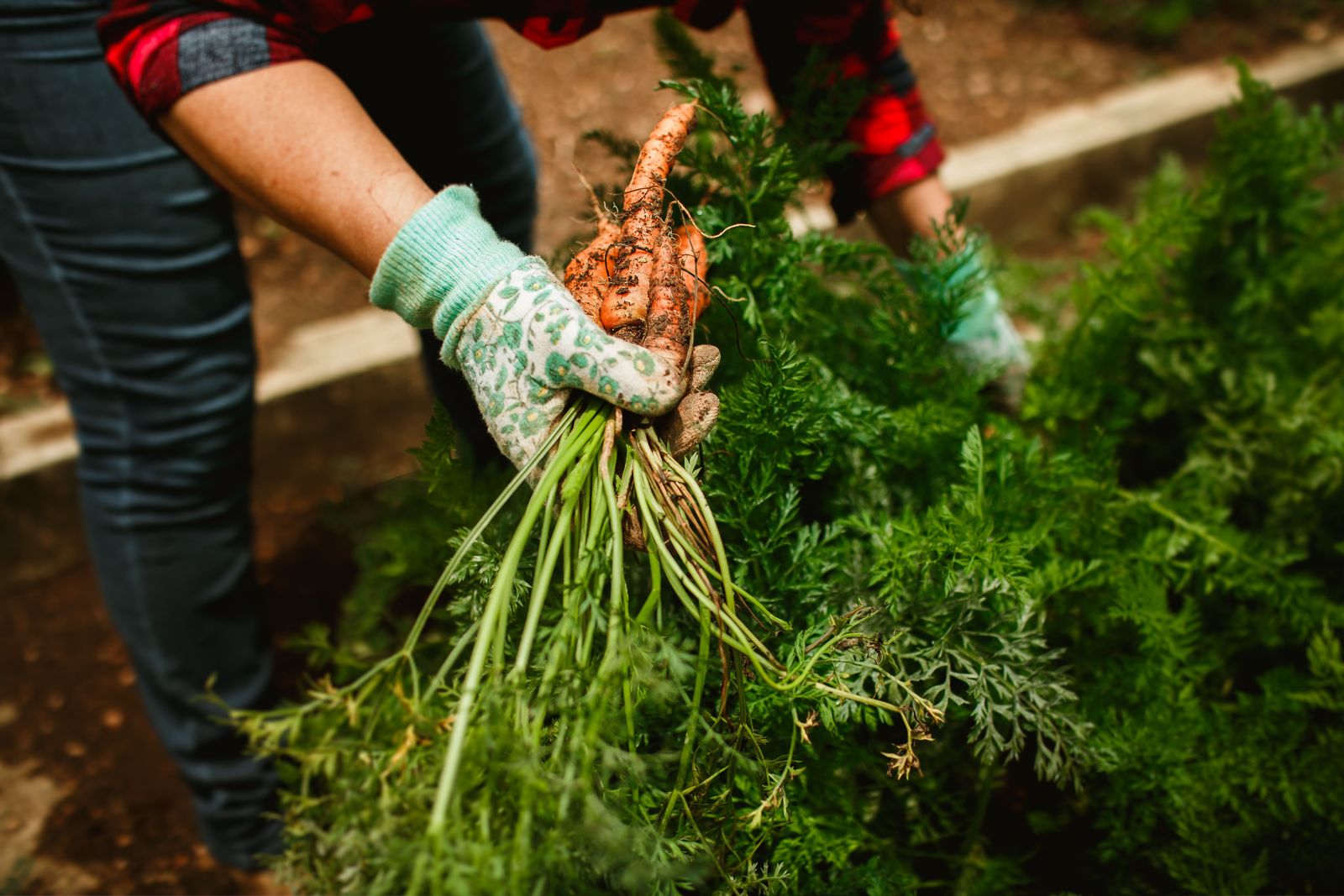
Photo: Helena Lopes / Pexels
Carrot Pot Checklist
Check off each step as you finish it. Your progress stays on this page.
0 of 8 complete
0% done
The Depth Equation: Pot Depth Against Carrot Length
A carrot root grows straight down until it meets resistance, and in a pot the resistance is the bottom. A root that reaches the bottom with growing season left flattens, forks, or stops, and the harvest is a pot of orange thumbs. The equation that prevents it: choose the variety first, read its mature length on the packet, and give it a pot at least one and a half times that deep. A Nantes type at 6 to 7 inches wants a 10 to 12 inch pot. A long Imperator type wants 16 inches or more and is honestly a poor pot choice. The varieties bred for the problem are the short and round ones: Chantenay types, broad and 5 to 6 inches long, suit a 10 inch pot, and the round Parisian types, little orange globes, crop happily in 6 to 8 inches where nothing else carrot shaped would fit. Width matters second: a pot 10 to 12 inches across carries a small stand of roots at the final spacing below, and a narrower pot is a one or two carrot novelty. Depth first, variety matched to it, and the pot carrot stops being a gamble.
Direct Sow Only: The Quarter Inch Rule
Carrots are sown where they will grow, always, because the taproot that becomes the harvest forms in the seedling's first days and any transplanting bends or breaks it, and a bent taproot is a forked carrot. In a pot that means sowing into the final container, a quarter inch deep, several seeds per station because germination is erratic, in mix that has been firmed and watered before the seed goes in. The mix itself is half the harvest: loose, stone free, and consistent to the full depth of the pot, because a carrot forks at pebbles, clumps, and the boundary between two different mixes just as it forks at the pot bottom. Fill with a sieved container mix or a mix and sand blend, and resist the gravel drainage layer at the bottom, which only shortens the root run and perches water above it. Fresh manure and rich, lumpy compost are fork factories; feed later, lightly, from the surface, and let the young root run through clean, even mix. Sow in early spring for a summer crop and again in late summer for the fall crop that sweetens in cold soil.
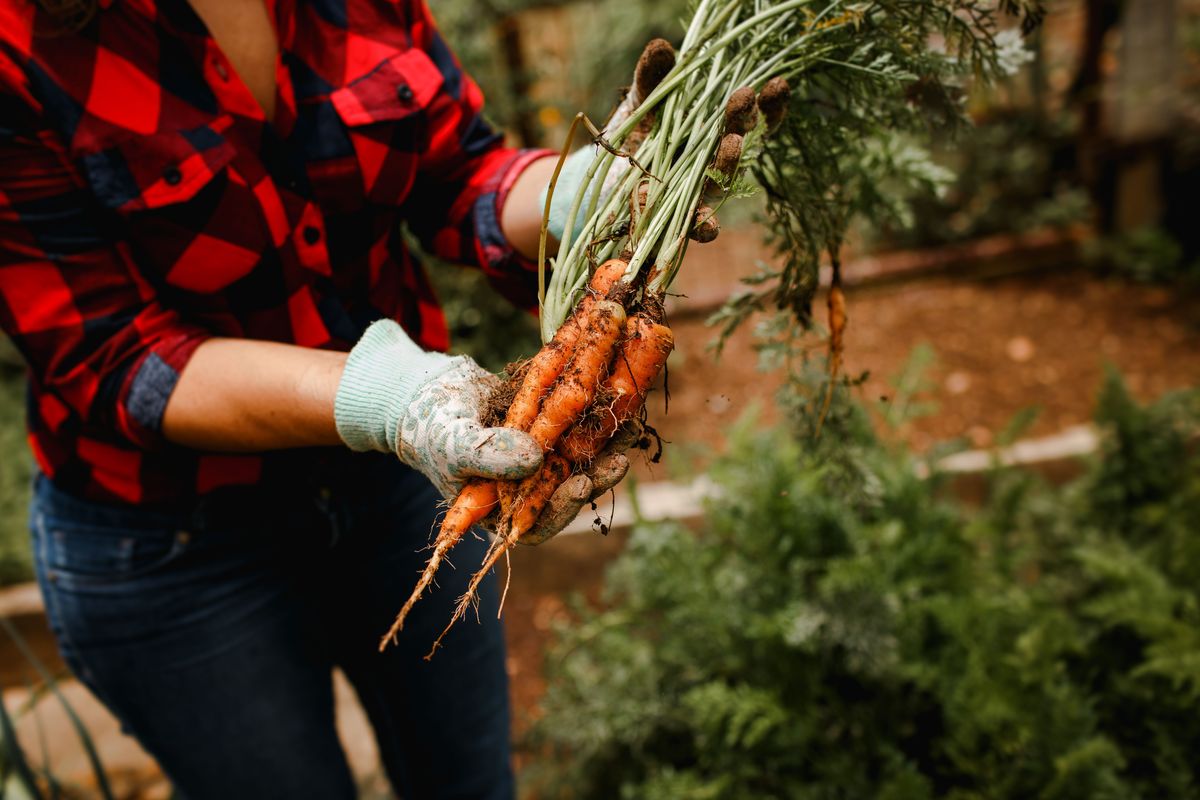
The Board Trick: Carrying a Three Week Germination
Carrot seed is slow, 10 to 21 days to germinate, and it must stay moist the whole time at a quarter inch deep, where a pot's surface dries in an afternoon. More pot carrots die as ungerminated seed in a crusted, dried out surface than from every other cause combined. The board trick is the old market gardener's answer: after sowing and watering in, lay a board, a tile, or a piece of cardboard directly over the pot surface. It holds the moisture, keeps the temperature even, and blocks the light the seed does not need yet. Lift it daily from about day seven to check; the day the first green threads show, the board comes off for good and the pot goes into full light. A clear cover or a plastic tent works the same way where boards are impractical, vented so the surface does not cook in sun. However you cover it, the principle is the moisture: a pot checked and misted twice a day by a devoted owner still dries between visits in a warm wind, and the covered pot simply removes the owner's schedule from the germination equation.
The Two Thinnings: Setting the Final 2 to 3 Inches
A pot sown thick must be thinned twice, and both thinnings are harvest decisions. The first, when the seedlings stand about 2 inches tall, takes the stand to roughly 1 inch apart, snipping the extras at the surface with scissors rather than pulling them, because pulling disturbs the shallow roots of the keepers in the pot's small volume. The second, two or three weeks later, sets the final spacing of 2 to 3 inches, and its thinnings are baby carrots, small but real, with the greens for pesto or soup. The final figure is the size decision: at 2 inches the roots size to a slender bunching carrot, at 3 inches they have room to thicken to full width, and a pot left at 1 inch grows a bundle of orange pencils. The rhythm matters as much as the figures; a late first thinning means the seedlings have already competed through their fastest root growth, and no later generosity fully repays it. Thin on time, thin with scissors, and eat the second thinning standing at the pot, which is the correct ceremonial end for it.
The Single Pot Watering Rhythm
A lone pot dries from its sides as well as its surface, terracotta fastest, and a carrot pot wants the mix evenly moist through its whole depth, because a root that grows through alternating wet and dry layers lays down a woody core and a forked shape. The rhythm in warm weather is a check every day or two and a thorough watering whenever the top inch is dry, taking care that the water reaches the bottom of a deep pot rather than wetting the top third and stopping; a pot that feels light for its size is dry deep down regardless of its surface. Mulch the surface once the tops are up, a thin layer of straw or shredded leaf, to slow the evaporation the sides do not cause. Feed lightly from midsummer, a dilute liquid feed every few weeks, since a deep pot's mix is a finite pantry and the fall crop in particular runs it down. Harvest by the shoulder: when the orange crown showing at the surface reaches the width the packet promised, loosen the pot's edge, water it, and pull; a carrot harvested by its shoulder size is never a woody surprise, and the pot can be resown the same week for the next round.
Frequently Asked Questions
How deep does a pot need to be for carrots?
At least one and a half times the mature length of the variety, per the Maryland guidance: 12 inches or more for standard types such as Nantes, around 10 inches for the shorter Chantenay types, and 6 to 8 inches for round Parisian varieties bred for shallow soil. A root that reaches the pot bottom with season left flattens or forks, so the variety and the pot are chosen as a pair, from the packet's stated length, before any seed is sown.
Can I transplant carrot seedlings into pots?
No, and this is the one absolute in carrot growing. The edible root is the seedling's taproot, formed in its first days; transplanting bends or breaks it, and a damaged taproot grows into a forked, stunted carrot. Carrots are always direct sown into their final container, a quarter inch deep, sown thick and thinned in place. If a pot fails to germinate, resow the pot; do not move seedlings from a tray to fill it.
Why do my pot carrots fork?
The root met an obstacle and split around it. In pots the usual obstacles are the pot bottom in a too shallow container, stones or lumps in the mix, the boundary of a gravel drainage layer, and rich clumps of fresh compost or manure. Sieved, even mix to the full depth, a pot matched to the variety's length, and no gravel layer remove nearly all of it. A carrot can also fork from root damage at thinning, which is why the thinnings are snipped, not pulled.
How far apart should carrots be in a pot?
Two to three inches at the final thinning. Sow thick, thin to about 1 inch when the seedlings stand 2 inches tall, then thin again to the final figure a few weeks later, eating the second thinnings as baby carrots. At 2 inches the harvest runs slender; at 3 inches the roots thicken fully. In a 12 inch pot that final spacing carries a stand of roughly a dozen to twenty carrots, depending on the figure you choose.
How long do carrots take in a pot?
Most varieties run 60 to 75 days from sowing to a full size harvest, with baby carrots pullable from about 40 days at the second thinning. Germination itself takes 10 to 21 days and is the stage the board trick protects. The fall crop, sown in late summer, grows slower but sweetens as the soil cools, and carrots in pots can be left in place and pulled as needed into the cold months in mild climates, since the pot insulates the roots nearly as well as the ground does.
Photo credits: Helena Lopes (Pexels); Helena Lopes (Pexels). Photos are served from this site; follow the credit to the library page for the original.