How to Grow Cucumbers Vertically: The Trellis Method, Start to Harvest
By the Windchime Walker editorial team
Photo: Eli Pluma / Pexels
A cucumber vine on the ground is a land claim: it sprawls, it hides its fruit until they are yellow seedy clubs, and it mildews in its own still air. The same vine on a trellis is a different crop, clean, visible, picked young, and producing in a strip of bed a foot wide. Growing cucumbers vertically is not complicated, but it is a method with an order to it, and the order matters: the right type, the trellis up before the seed, training that starts early and repeats weekly, water delivered at the base of a plant whose leaves are now a wall, and a harvest discipline that is the real secret of the whole system.
The spacing on this page is this site's standard, the University of Georgia Cooperative Extension Circular 963 figure of 12 inches between plants, the same standard our general cucumber guide uses. That guide owns the crop in full; this page owns growing it up. Our trellis building guide owns the construction of supports; here the trellis is a growing tool, and the plant is the subject.
Interactive tool
Plant Spacing Planner: The Cucumber Trellis
Cucumbers are in the crop list below at the University of Georgia Cooperative Extension spacing of 12 inches between plants. Enter your trellis length as the bed length to count the plants your vertical row holds before you sow.
8 tomato plants fit this bed
4 plants per row across 2 rows, on a 24 inch grid. Extension spacing for this crop: 24 in between plants, 48 in between rows.
The grid uses the in-row spacing in both directions, the standard square foot layout for raised beds. In open ground, keep the wider row spacing in the note above so you can walk and weed between rows.
Spacing figures: University of Georgia Cooperative Extension, Circular 963, Vegetable Planting Chart, source.
Step 1: Choose a Vining Type, Because Bush Types Stay Home
Vertical growing only works with vining varieties, the ones whose description promises long vines and indeterminate growth. Bush and compact types are bred to stay a tidy mound for containers and small beds, and no trellis will persuade them otherwise. Read the packet or plant tag for the word vining, or a mature spread measured in feet rather than inches. Slicing types and pickling types both come in vining forms; picklers picked small and often are the heaviest producers on a trellis, and a single vining slicer is enough for most households' salads. If you garden where cucumber beetles and their wilt are a yearly plague, a resistant variety earns its place at the top of the list.
Step 2: Put the Trellis Up Before the Seed Goes In
The trellis goes in first, before sowing or transplanting, because installing it afterward means driving posts and weaving netting through a thicket of fragile vines. Aim for 5 to 6 feet of climbing height; a shorter trellis folds the vines over the top by midsummer and shades the bed behind. The styles, compared honestly:
Trellis style
Strengths
Watch out for
Flat panel or netting on posts
Cheapest, stores flat, easy to train on
Netting is a one or two season material; secure the posts well
Cattle panel arch
Nearly indestructible, fruit hangs inside the tunnel for easy picking
Needs two solid bed edges or posts to anchor the arch
A frame
Freestanding, both sides reachable, shades a lettuce row beneath
Hinges and feet take the wind load; stake it in exposed gardens
String trellis from an overhead bar
The commercial method; one string per plant, cleanest airflow
The bar must be genuinely strong; strings are replaced yearly
Set the trellis on the north side of the bed where its shade falls away from shorter crops, and anchor it like you mean it: a full grown cucumber wall in a summer storm is a sail, and a trellis that goes over in July takes the crop with it.
Step 3: Plant at 12 Inches and Start Training at 8 to 12
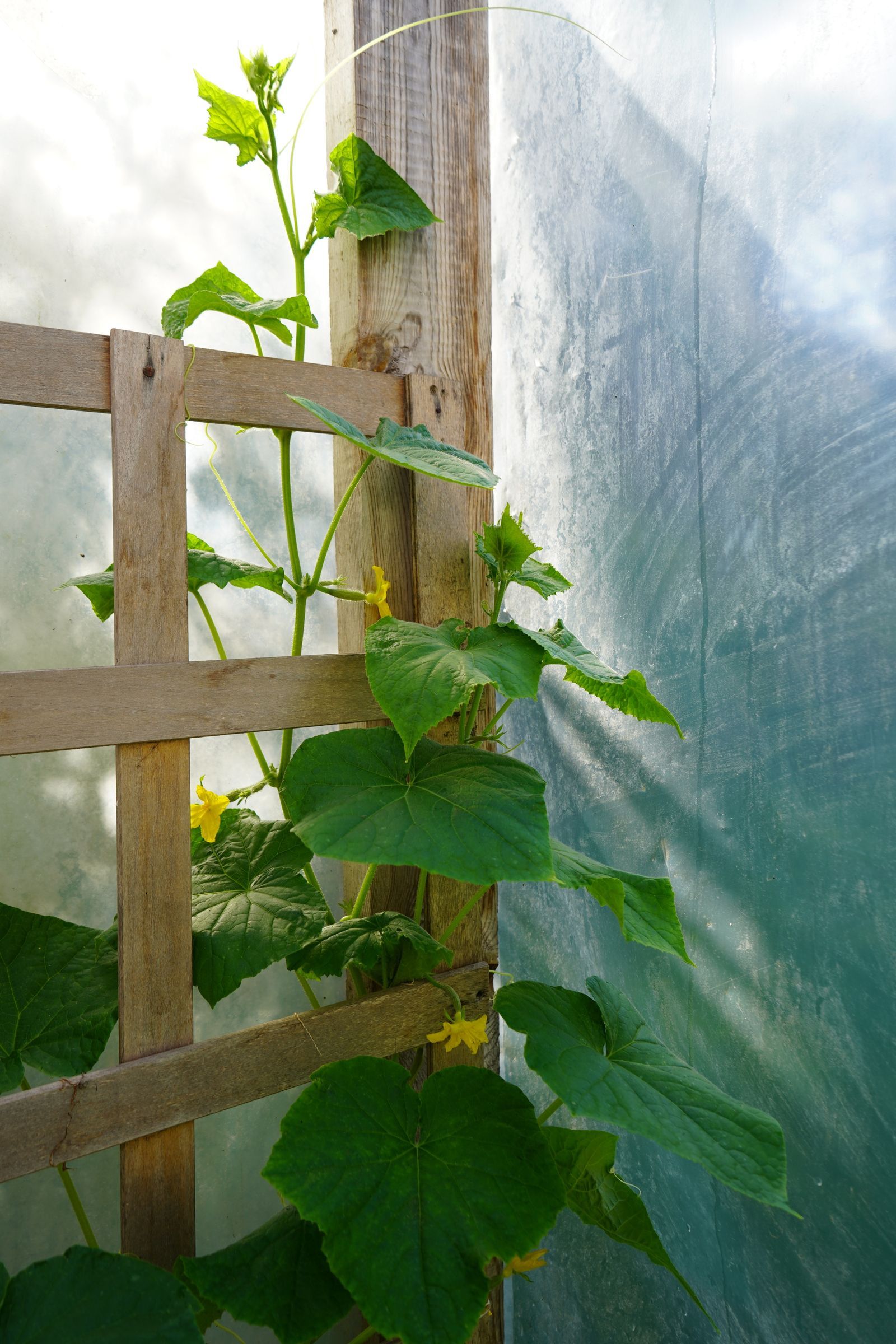
Sow or transplant along the trellis line at 12 inches between plants, the Georgia standard, which on a trellis is generous rather than crowded because the growth goes up instead of out. Water in, mulch the line once the soil is warm, and then begin the habit the whole method runs on: training starts when the vines reach 8 to 12 inches, before they have made any decisions of their own. Guide the main stem to the trellis, and secure it with soft ties, strips of cloth, tomato clips, or a loose figure eight of twine, never wire or tight string that will saw into a growing stem. A young cucumber vine sends out tendrils that grip on their own once they touch support; your job is introductions, made weekly.
A cucumber vine climbing a wooden trellis in bright sunlight
Step 4: The Weekly Training Routine
Once a week, walk the trellis with ties in your pocket. Weave or tie the main stem upward, tuck wandering laterals back to the panel, and keep growth spread across the trellis rather than bunched in one column, because bunched growth shades itself and mildews in the middle. Opinions differ on pruning cucumber laterals, and the honest beginner version is simple: on a panel or net, let the laterals grow and tuck them in; on a single string, pinch laterals to keep one clean leader, the commercial style. Either system works; mixing them by mood does not. Remove any yellowing leaves at the base as the season goes on, since the oldest leaves at the shaded bottom are where disease starts its climb, and take them out of the garden rather than dropping them in the row.
Step 5: Water the Base of a Vertical Plant
A trellised cucumber is a wall of leaves with its roots in a narrow strip, and it drinks like it. The bed rule of about an inch of water a week is the floor, not the ceiling, in hot weather for a plant carrying fruit. Deliver water at the base, by drip line, soaker hose along the trellis line, or a slow can, never by overhead sprinkling: wet cucumber foliage is an invitation to the mildews, and the whole point of the trellis was airflow and dry leaves. Mulch the line well to hold what you deliver. Wilting at noon on a brutal day, recovering by evening, is the plant rationing itself and is tolerable; wilting that greets you in the morning means the strip is dry to depth and the watering needs to increase before fruit starts turning bitter, which is drought's signature in a cucumber.
Step 6: Pick Daily, Because the Plant Is Listening
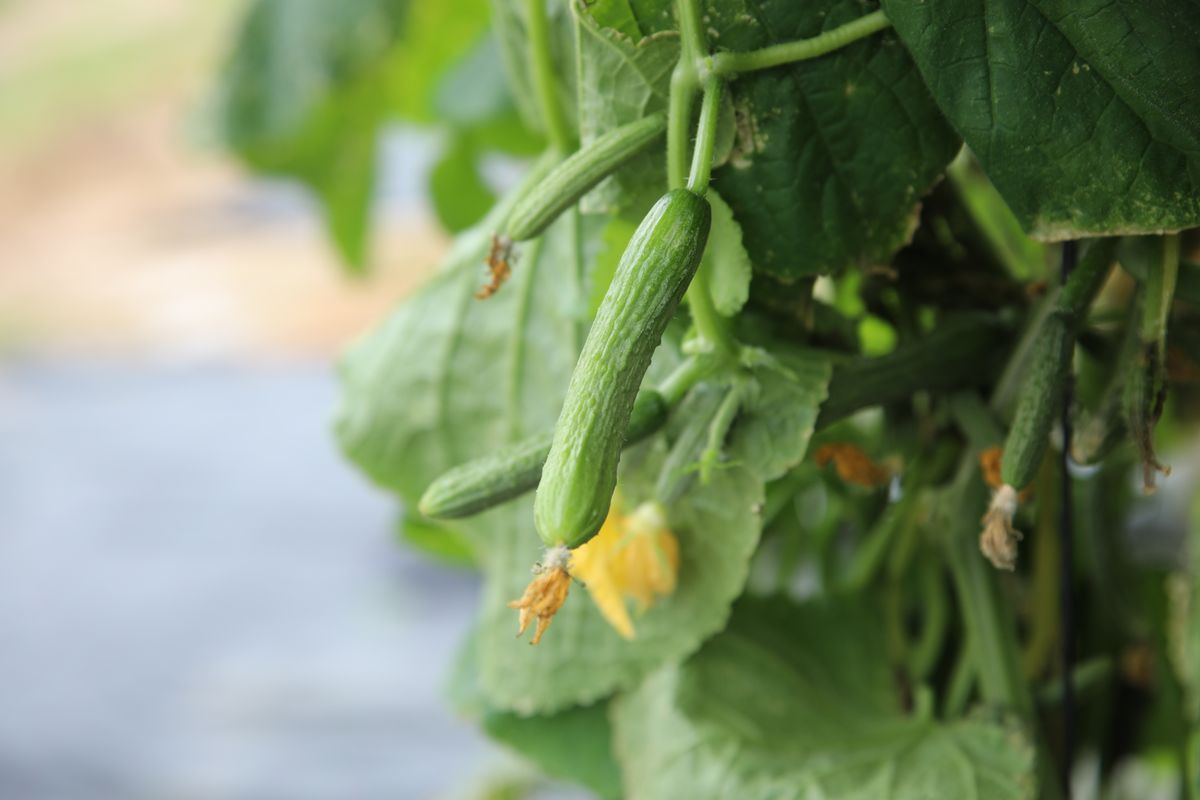
Here is the discipline that decides the harvest total. A cucumber left on the vine to grow large and seedy sends the plant a chemical message: seeds are made, the mission is complete, production can wind down. A plant picked clean daily keeps setting fruit to replace what was taken. On a trellis the fruit hangs in the open where you can see it, which removes the ground grower's excuse of the hidden cucumber that became a yellow club behind a leaf. Pick slicers young, glossy, and firm, before the seeds swell; pick picklers smaller still. In peak season this means a daily walk with a basket, and it is the pleasantest chore in the summer garden, provided you actually do it. Every missed giant you find, remove it the moment you see it, whatever its fate in the kitchen, because its job on the vine is to stop the show.
Problems on the Trellis, Read Honestly
Powdery mildew, white dusted leaves in late summer, is the tax on cucumbers nearly everywhere; the trellis delays it with airflow but does not abolish it, and resistant varieties plus base watering are the whole defense. Fruit that is fat at one end and pinched at the other was pollinated incompletely, a bee shortage problem that hand pollination with a small brush, flower to flower on a dry morning, genuinely helps in a quiet garden. Bitter fruit follows drought stress and wild temperature swings; steady water is the prevention. Vines that wilt suddenly in a day with no recovery overnight suggest bacterial wilt carried by cucumber beetles, for which there is no cure in the plant, only removal and beetle vigilance next season. None of this changes the method: vining type, trellis first, 12 inch spacing, weekly training, base water, daily picking.
Sowing, Timing, and the Succession Habit
Cucumbers are a warm soil crop with no frost tolerance worth testing: sow or transplant after the last frost, into soil that has warmed, because seed in cold ground rots and transplants set out early sit still and sulk while their roots wait for warmth. Direct sowing is the standard and the simplest, a few seeds at each station thinned to the strongest plant, though gardeners with short seasons start plants indoors in pots a few weeks ahead, transplanting young and carefully because cucumbers resent root disturbance at any age. Once the trellis is producing, adopt the succession habit that separates a six week cucumber season from a three month one: sow a second short row or a second plant a few weeks after the first, and a third if your frost date allows, because cucumber plants tire, mildew accumulates, and a young vine coming into production as the old one fades is the cheapest insurance in the summer garden. The succession plants go at the trellis's far end or on a second small panel, at the same 12 inch spacing, and the old vine is cut out at the base when its production ends, its roots left in the ground rather than yanked, so the neighbors' roots are never disturbed. Trellis, succession, and the daily pick together are the full method; each covers the others' weaknesses, and together they turn the garden's most sprawling crop into its most orderly one.
Frequently Asked Questions
Can any cucumber be grown vertically?
No, only vining types. Bush and compact varieties are bred to stay a small mound and will not climb no matter what you provide. Check the packet or tag for vining or indeterminate growth, and a spread measured in feet. Both slicers and pickling types come in vining forms.
How tall should a cucumber trellis be?
Five to six feet of climbing height is the working standard. Shorter trellises fold the vines over the top by midsummer, shading the bed and bunching growth where mildew likes it. Whatever the style, panel, arch, A frame, or string, anchor it firmly: a loaded cucumber wall catches wind like a sail.
How far apart do trellised cucumbers go?
Twelve inches between plants at this site's standard, the University of Georgia Cooperative Extension Circular 963 spacing. On a trellis that spacing is comfortable because growth goes up instead of sprawling. Use the spacing planner on this page to count plants along your trellis length before you sow.
When do I start training the vines?
When they reach 8 to 12 inches, before they sprawl and choose their own direction. Guide the main stem to the support with soft ties or clips, never tight wire, and repeat weekly: tuck laterals in, spread growth across the trellis, and remove yellowing base leaves as the season advances.
How often should I pick cucumbers on a trellis?
Daily in peak season. Fruit left to grow large and seedy signals the plant to wind down production, while a plant picked clean keeps setting fruit. The trellis makes this easy because fruit hangs visibly. Remove any overgrown cucumber the moment you find it, even if it only goes to the compost.
Why are my trellised cucumbers bitter?
Drought stress is the usual cause, often with hot weather. A trellised plant drinks heavily through a narrow root strip; keep the base watered deeply and steadily, mulch the line, and do not let morning wilt become the routine. Pinched, lopsided fruit is a different issue: incomplete pollination.
Photo credits: Eli Pluma (Pexels); dp singh Bhullar (Pexels). Photos are served from this site; follow the credit to the library page for the original.