How to Grow Dahlias: The Four Mistakes That Kill Them
By the Windchime Walker editorial team
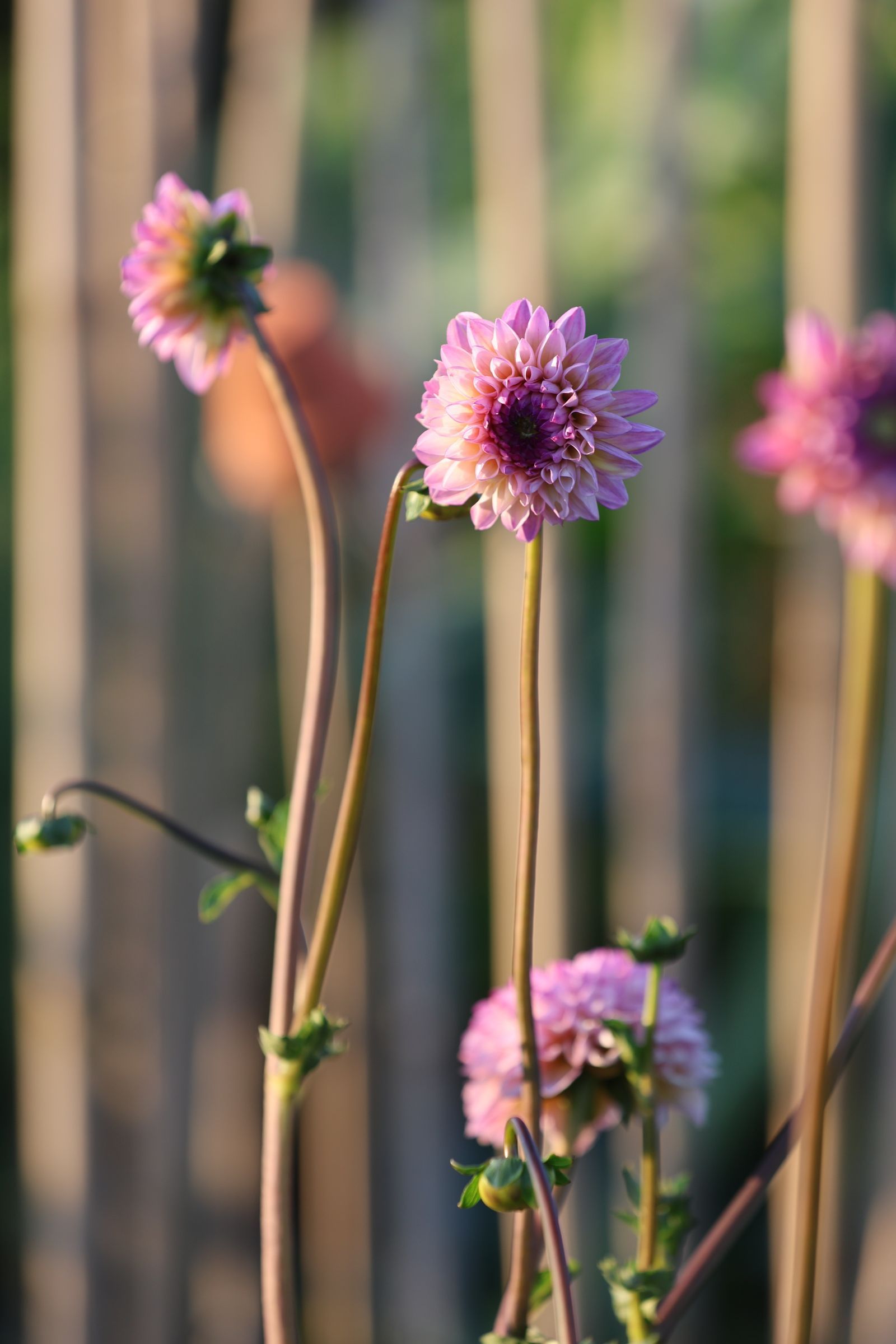
Photo: Ann Hannes / Pexels
Dahlias produce the most extravagant flowers in the beginner's reach, dinner plate blooms and tight pompons in every color except blue, from midsummer until frost. They also have a reputation for fussiness that is, on inspection, four specific mistakes wearing a trench coat. Every dahlia failure a beginner is likely to meet comes from one of four killers: planting into cold soil, watering tubers that have not sprouted yet, staking after the plant is tall, and storing tubers so their eyes are lost by spring. This guide is built around those four, in season order, because a gardener who avoids them will succeed with dahlias on the first try.
First, the plant itself. A dahlia grows from a tuber, a swollen root that looks like a small sweet potato, with the growing eye at the top where it joins last year's stem. The eye is the whole future plant; a tuber without a viable eye is compost, however plump it looks. Dahlias are tender: frost kills the foliage, and tubers left in frozen ground die, so outside the warmest gardens, roughly zone 8 and warmer with mulch, they are lifted and stored each fall. That single fact organizes the entire dahlia year, and the Dahlia Season Checklist on this page follows it from spring planting to winter storage.
Interactive tool
Dahlia Season Checklist
Check off each step as you finish it. Your progress stays on this page.
0 of 7 complete
0% done
Killer 1: Cold Soil, and the Planting Day Rules
Wait for the soil, not the calendar. Plant dahlias after your last frost, when the soil has warmed to around 60 degrees, about the time tomatoes go out. A tuber planted into cold, wet soil sits dormant in the damp and rots before it ever sprouts, and the gardener digs up mush in June and blames the supplier. A tuber planted two weeks later into warm soil sprouts in days and catches up completely. Patience at planting is the cheapest dahlia skill there is.
Plant each tuber 4 to 6 inches deep, laid on its side with the eye facing up, in full sun, in soil with compost worked in. Spacing scales with the plant: about 12 inches for small bedding types, up to 2 to 3 feet for the tall, large flowered varieties; the Royal Horticultural Society's working figure of about 2 feet apart suits most garden dahlias. If you are starting tubers early indoors in pots, as short season gardeners do, the same warmth rule applies at transplanting: the garden soil, not the greenhouse, decides the date.
Killer 2: Watering a Tuber That Has Nothing to Drink With
This is the mistake that surprises everyone: do not water at planting, and do not water until you see shoots. A dormant tuber has no roots and no leaves; it cannot use water, and sitting in wet soil is precisely the rot condition of Killer 1, self inflicted with a hose. The tuber carries enough moisture to sprout on its own. Plant it in soil that is merely moist, walk away, and wait the one to three weeks sprouting takes. Once shoots are up and growing, the rule inverts completely: dahlias in growth are thirsty, hungry plants that want deep, regular watering, about the garden standard of an inch a week and more in heat, plus mulch to hold it. Dry until shoots, generous after. Write it on the plant label if you have to.
Killer 3: Staking After the Fact
Tall dahlias grow 4 to 6 feet with heavy flower heads, and a summer thunderstorm will lay an unstaked plant flat and snap stems that do not recover their shape. The fix costs nothing but timing: stake at planting. Drive a sturdy stake beside each tuber as you plant it, while you know exactly where the tuber is and cannot spear it, and tie the stem to the stake loosely as it grows, every foot or so. The gardener who stakes in August is threading supports through a thicket, damaging roots, and propping stems that have already grown crooked toward the light. The gardener who staked in May walks past with twine twice a month. Same plant, same storm, different spring decision.
While the plants are young, add the pinch: when a dahlia has 3 to 4 pairs of leaves, pinch out the growing tip. The plant responds by branching, producing a bushier plant with more, slightly smaller flowers on stronger stems, instead of one tall stalk with a single bloom. It feels like vandalism the first time. Do it anyway; every experienced dahlia grower does.
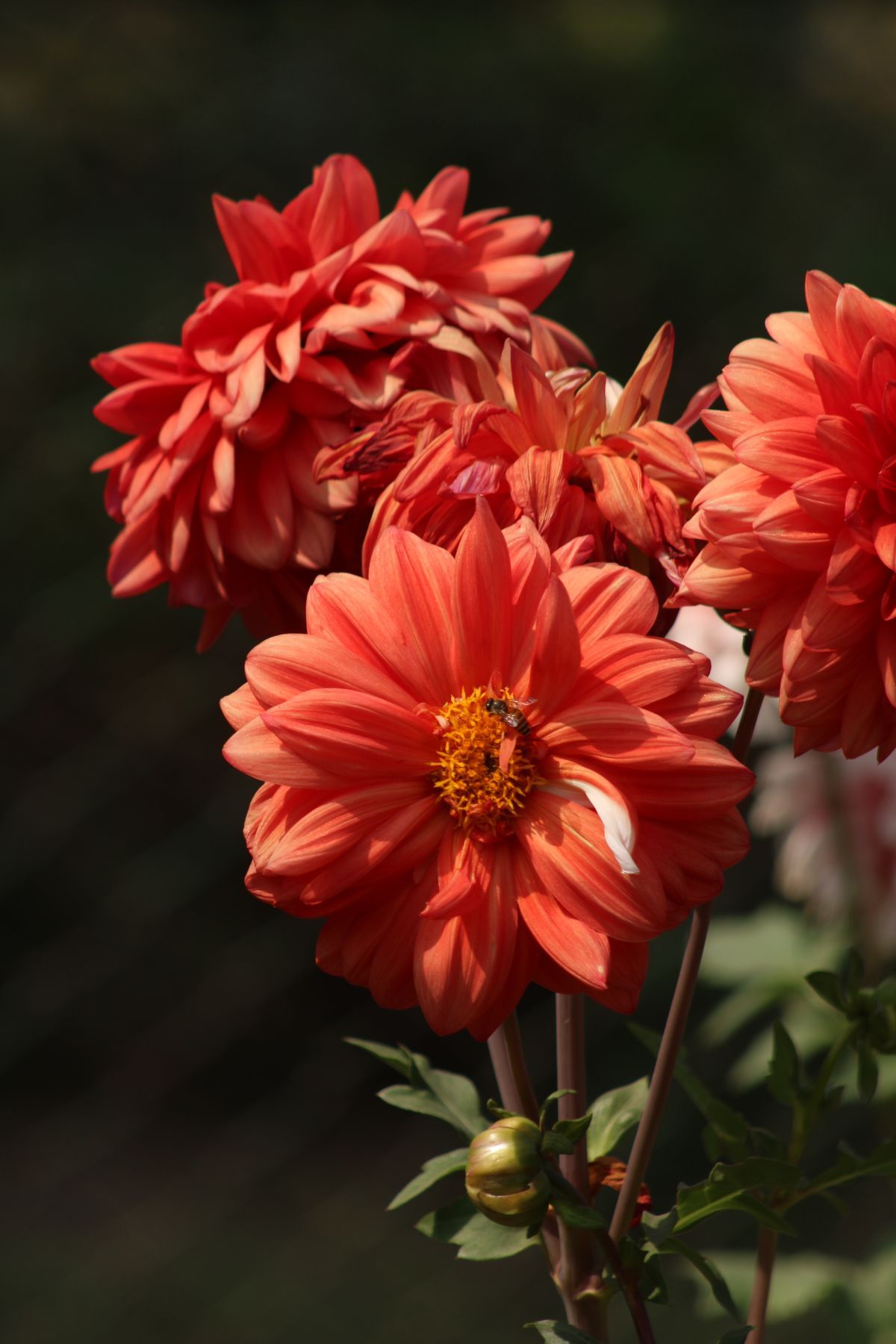
Bright orange dahlias in full bloom under sunlight
The Bloom Season: Cutting Rules and Deadheading
Flowers arrive about 90 days after planting, midsummer in most gardens, and continue until frost, improving as nights cool in fall, which is when dahlias do their best work. Cut flowers nearly fully open, because dahlia buds barely open after cutting, unlike roses or zinnias; a bud cut hopefully is a bud composted eventually. Cut in the morning, plunge stems into water promptly, and deadhead every spent bloom down to a leaf pair, because a dahlia allowed to set seed reads the season as finished and slows. A plant cut from regularly, for the vase or the compost, flowers harder than one left alone, which makes dahlias the rare crop where generosity and greed agree.
Feed lightly through the season if your soil is average: a low nitrogen fertilizer or compost side dressing, since heavy nitrogen grows the familiar leafy giant with few blooms. Watch for earwigs in the petals, slugs on young shoots, and powdery mildew late in crowded, still beds; spacing and morning watering handle most of the third, and the first two are handwork on a garden scale.
Killer 4: Storage That Loses the Eyes
After the first frost blackens the foliage, the storage season begins in cold climates. Wait a few days after the blackening, cut the stems to a few inches, and lift the tuber clumps gently with a fork. Shake off the soil, let them dry for a day or two out of sun, and store them in a cool, dark, frost free place, in boxes of barely damp peat, vermiculite, or shavings, at the cold room end of household temperatures. Check monthly: shriveling tubers want a mist of water, soft ones are rotting and come out before they spread it.
The eye is the storage point. Eyes sit at the crown, where tubers join the stem, and rough handling, deep drying, or cutting clumps apart carelessly destroys them. Divide clumps in spring, not fall, when the eyes swell and show pink and obvious, and cut so every division carries an eye and a piece of crown. A spring divided tuber with a visible eye is a guaranteed plant; the plumpest eyeless tuber in the box is a potato's cousin and will grow nothing at all. In warm gardens, roughly zone 8 and up, skip the whole operation: cut the plants down after frost, mulch deeply, and leave the tubers in the ground, dividing every few years when the clumps crowd. Know which garden you have, and the fourth killer never gets its chance.
Buying Tubers: What a Good One Looks Like
The dahlia season is decided partly at the store, because a tuber is a promise you cannot fully inspect. A good tuber or clump feels firm and heavy for its size, with no soft, mushy patches, no mold, and no shriveling like a raisin. Most important is the crown, the thickened top where the tubers join last year's stem: the eyes live there, small bumps or dimples that will swell pink and obvious in spring. A clump with a sound crown and at least one plump tuber is a plant. A single loose tuber with no crown attached is the classic disappointment of bargain bags, because the eye is on the crown it was torn from, and without an eye the tuber, however fat, grows nothing.
Buy from suppliers who sell named varieties as clumps or as tubers with crown attached, and buy in late winter for spring delivery, when selection is full. Bargain mixed bags are not forbidden, but treat them as a lottery whose prize is practice, and plant your one or two chosen varieties, the colors you actually want, as proper clumps beside them. When the tubers arrive, store them cool and barely damp until planting, and if spring dividing is planned, do it as the eyes show, with a sharp knife, a piece of crown on every division, and the cut surfaces left to dry for a day before planting. The growers who never lose a dahlia to the fourth killer are not luckier than you. They are simply buying crowns and cutting around eyes, on purpose.
Dahlias in Pots, for Patios and Small Gardens
Dahlias grow well in containers, which suits gardeners without beds and lets the tender tuber come indoors for winter without any digging at all. Choose a large pot, at least 12 inches across and preferably more for the tall types, with drainage holes that cannot clog, and fill it with a rich potting mix amended with compost. Plant one tuber per pot at the usual 4 to 6 inches deep, eye up, stake at planting with a support that reaches the plant's expected height, and follow the same water rule: nothing until shoots appear, then deep and regular watering, since pots dry faster than beds and a blooming dahlia in a pot in July may want water daily.
The smaller bedding and gallery types, bred compact, are the natural pot dahlias, flowering heavily without staking drama. Tall types in pots succeed with a sturdy stake and a sheltered spot out of the worst wind, since a top heavy pot can tip at the exact moment of glory. At frost, the pot method shows its elegance: cut the plant down, move the whole pot to a cool, frost free place, keep the mix barely moist through winter, and bring it back out in spring, dividing the clump every second or third year when it crowds. For a patio gardener, the pot is not a compromise version of dahlia growing. It is the tidy version, with the storage problem solved by a hand truck.
Frequently Asked Questions
When should I plant dahlias?
After your last frost, when the soil has warmed to around 60 degrees, about tomato planting time. Dahlias are tender tubers, and planted into cold, wet soil they rot before sprouting. A tuber planted two weeks later into warm soil sprouts quickly and catches up, so patience at planting is worth more than an early start.
How deep and how far apart do dahlia tubers go?
Plant tubers 4 to 6 inches deep, laid on their side with the eye facing up. Space small bedding types about 12 inches apart and tall, large flowered varieties 2 to 3 feet apart; about 2 feet is the Royal Horticultural Society's working figure for most garden dahlias. Stake tall types at planting, not later.
Should I water dahlias right after planting?
No. Do not water until shoots appear. A dormant tuber has no roots or leaves to use water, and wet soil around it causes rot, the most common beginner dahlia failure. Once the plant is up and growing, water deeply and regularly, about an inch a week and more in heat, and mulch to hold the moisture.
Why do I need to pinch dahlias?
Pinching out the growing tip when the plant has 3 to 4 pairs of leaves forces branching, which gives a bushier, stronger plant with more flowers instead of a single tall stalk. It also delays the first bloom slightly in exchange for many more blooms over the season. Every experienced dahlia grower pinches; it is standard practice, not an experiment.
When should I cut dahlia flowers?
Cut them nearly fully open, because dahlia buds barely open after cutting. Cut in the morning, put stems straight into water, and deadhead spent blooms regularly down to a leaf pair. Cutting and deadheading keep the plant flowering; a dahlia allowed to set seed slows down, reading the season as finished.
How do I store dahlia tubers over winter?
After frost blackens the foliage, cut stems back, lift the clumps, shake off soil, dry a day or two out of sun, and store in a cool, dark, frost free place in barely damp peat, vermiculite, or shavings. Check monthly. Divide in spring when the eyes are visible, keeping an eye and crown on every division. In zone 8 and warmer, tubers can stay in the ground under deep mulch.
Photo credits: Ann Hannes (Pexels); Jahra Tasfia Reza (Pexels). Photos are served from this site; follow the credit to the library page for the original.