How to Grow Green Beans: Bush First, Warm Soil, Pick Every Two Days
By the Windchime Walker editorial team
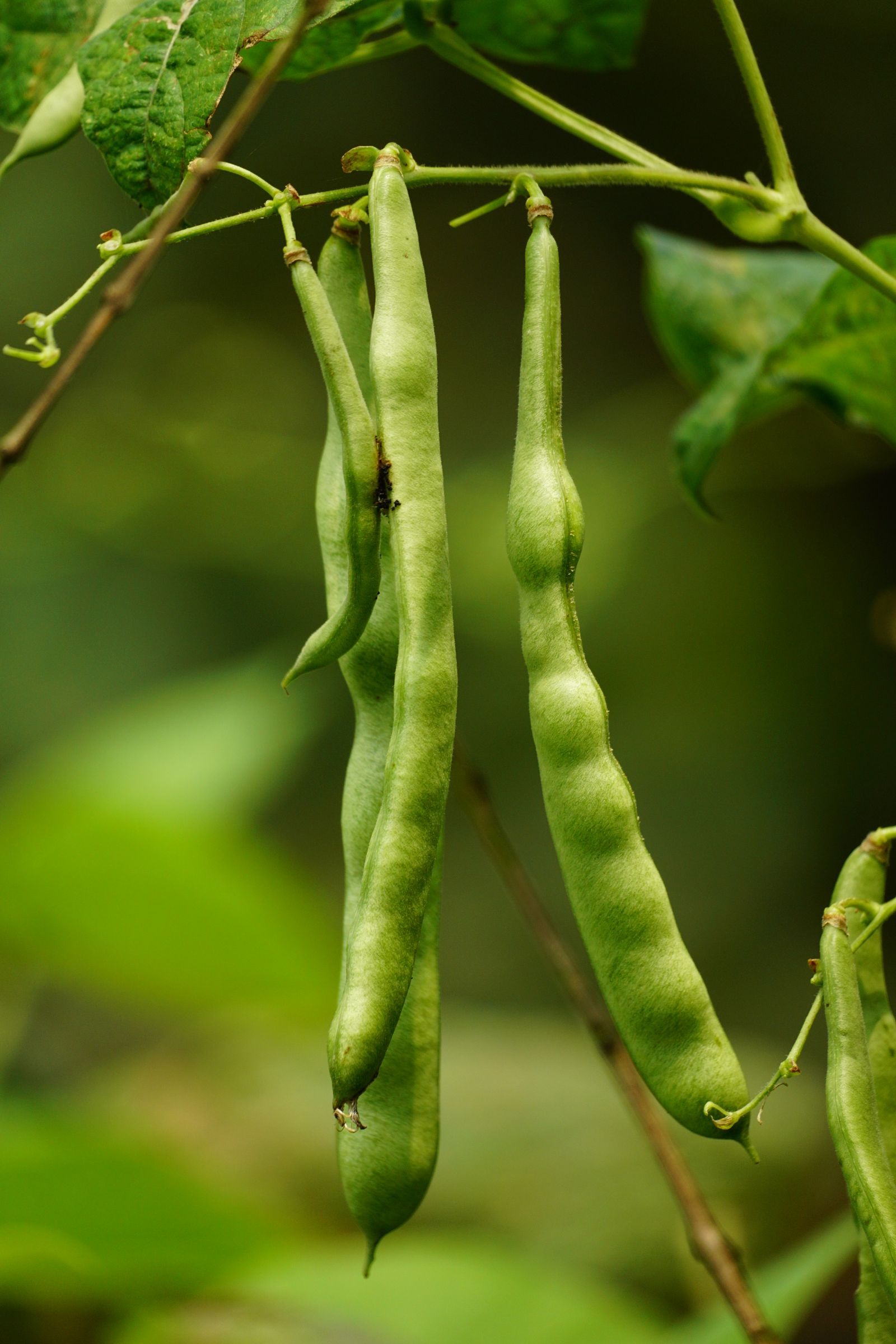
Photo: Duy Le Duc / Pexels
If a beginner could grow only one warm season vegetable, the strongest candidate is the green bean. It germinates fast, grows without staking in its bush form, asks for no indoor head start, and starts repaying the gardener in about two months, in handfuls that arrive faster than a household can eat them. Its failures are almost all scheduling failures: sown too early into cold soil, or picked too late. Both are fixed by information, which is what this page is for.
The first choice is bush versus pole. Pole beans climb, need a trellis or poles, and produce over a long season from a small footprint. Bush beans grow as compact plants about knee high, need no support at all, and deliver their crop in a concentrated burst. For a first planting, choose bush beans: no structure to build, no climbing to manage, and the burst harvest suits the succession plan below. Graduate to pole beans in year two if your space is tight and your trellis hand is steady.
The figures here come from the University of Georgia Cooperative Extension. Circular 1006, read for this article, plants beans after frost once soil reaches at least 55 degrees, about 1 inch deep, with harvest at 45 to 60 days. On spacing, our two Georgia sources differ, and we flag it rather than average it: Circular 1006's text puts plants 6 inches apart in rows 3 feet apart, while Circular 963, the standard in this site's spacing data, puts bush beans at 2 to 4 inches, and the Plant Spacing Planner on this page uses 3 inches with rows 36 inches apart. Planted at either figure, beans thrive; choose one and garden on.
Interactive tool
Plant Spacing Planner: The Bean Row
Bush beans are in the crop list below at the University of Georgia Cooperative Extension spacing of 2 to 4 inches between plants. Enter your row or bed size and plan one succession sowing at a time.
8 tomato plants fit this bed
4 plants per row across 2 rows, on a 24 inch grid. Extension spacing for this crop: 24 in between plants, 48 in between rows.
The grid uses the in-row spacing in both directions, the standard square foot layout for raised beds. In open ground, keep the wider row spacing in the note above so you can walk and weed between rows.
Spacing figures: University of Georgia Cooperative Extension, Circular 963, Vegetable Planting Chart, source.
Step 1: Wait for Warm Soil
Beans are a warm season crop with a hard rule: the seed rots in cold soil instead of sprouting. Wait until after your last frost, and until the soil itself has warmed to at least 55 degrees per University of Georgia Circular 1006; most gardeners find that a week or two after the last frost date, the soil is ready and the seedlings grow away fast instead of sitting in the ground as bird food. A bean sown into warm soil emerges in about a week and never looks back. A bean sown three weeks earlier into cold soil is a bean you will sow again.
Beans are always direct sown, never transplanted; their roots resent disturbance and the seed is large, cheap, and fast, so there is nothing to gain indoors. There is also nothing to gain from soaking seed overnight, a persistent garden myth for beans: in warm soil they hydrate on their own schedule, and soaked seed planted into cool soil rots faster, not slower.
Step 2: Sow 1 Inch Deep at the Planner Spacing
Sow seed about 1 inch deep, firm the soil over it so seed and soil make full contact, and water the row in if the weather is dry. The spacing planner on this page lays out the bush bean row at the site's Circular 963 standard, 3 inches between plants in rows 36 inches apart, with the Circular 1006 alternative of 6 inches noted above; both are defensible because they come from the same extension service's publications for different purposes, and beans are forgiving of the difference. In raised beds, rows can close up somewhat, since you never walk between them, and a bed of bush beans at close spacing shades its own soil and holds moisture beautifully.
One piece of old wisdom is worth keeping: beans fix nitrogen in partnership with soil bacteria, and in soil where beans have never grown, a powdered inoculant for peas and beans, dusted on the seed at sowing, can help the partnership start. In most home gardens where beans or peas have grown before, the bacteria are already resident and the inoculant changes little. It is cheap, harmless, and optional; the warm soil is none of those three.
Step 3: Grow Them Lean and Evenly Watered
Beans are light feeders, and this is where beginners overdo kindness. Rich soil and heavy nitrogen fertilizer grow lush, dark, leafy plants that flower late and set few pods; the plant, supplied with nitrogen it would otherwise have to work for, invests in leaves. Average garden soil with compost worked in before planting is plenty. If your soil is poor, a light feeding at planting is the whole job.
Water wants the opposite treatment: steady and even, about 1 inch a week, with the critical window at flowering and pod set, when drought makes blossoms drop and pods come out stringy and curved. Mulch the rows once the plants are up and the soil is thoroughly warm; mulching cold soil early keeps it cold, which is the one timing nuance worth remembering. Bush beans have few pests worth a beginner's worry: Mexican bean beetles in some regions, answered by handpicking and row cover early, and rust or blight in wet seasons, answered by watering at the base and never working among wet plants, which spreads disease leaf to leaf on your hands.
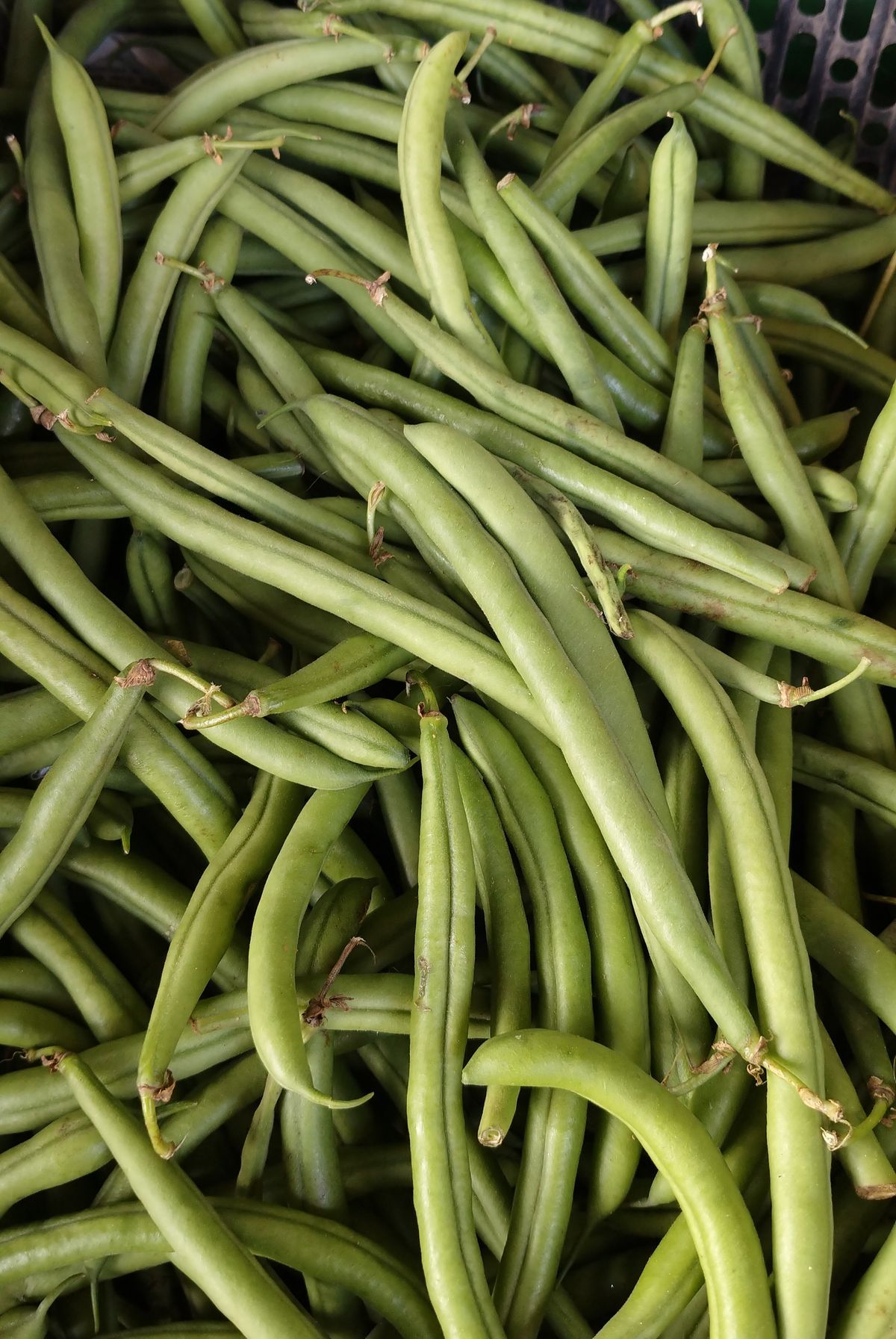
A pile of freshly picked green beans
Step 4: Succession Sow, Because One Planting Is a Feast and a Famine
A bush bean planting produces for about two to three weeks, then fades. The beginner who sows the whole packet at once drowns in beans for a fortnight and has none for the rest of summer. The fix is succession: sow a short row, or a section of bed, every 3 to 4 weeks from the first planting until about two months before your first fall frost, counting back the 45 to 60 days to harvest from University of Georgia Circular 1006. Each sowing takes ten minutes and a handful of seed, and the garden produces a steady, kitchen sized supply from early summer to frost. Write the sowing dates on the packet or a garden label; succession systems fail by forgetting, not by gardening.
Step 5: Pick Young, Pick Often, Pick Every Two Days
The harvest rule for green beans is the title of this section, and it is not an exaggeration. Pick pods when they are firm, smooth, and about the thickness of a pencil, before the seeds inside swell and show through the pod wall. A pod left to bulge turns tough and stringy, and worse, it signals the plant that its work is done, and production slows. Picked clean and often, a bush bean plant keeps flowering and setting new pods to replace them. In the height of the season, that means walking the row every two days, basket in hand, looking under the leaves where the pods hide in their own shade. Miss a week on vacation and you will return to a row of seedy pods and a plant winding down; pick them all anyway, compost the overgrown ones, water well, and a succession sowing already in the ground will cover the gap. This is why the succession plan and the picking rule are one system: the rows overlap, so no single failure reaches the table.
Eat beans the day they are picked when you can, blanch and freeze the surplus at the peak rather than the end, and at season's close, let the last succession's plants stand until frost and turn them under where they grew. The roots leave their nitrogen partnership in the soil for whatever follows, which is the bean's final, quiet payment to the garden.
Pole Beans: The Year Two Graduation
When a beginner returns for a second season with a trellis in mind, pole beans are the natural next crop, and the differences from bush beans are worth stating plainly. Pole beans climb 6 feet or more and need their support standing before the vines go looking for it: poles in a teepee, a fence panel, netting on posts, or a row of string from a crossbar. Sow them the same way, after frost into soil at 55 degrees or warmer per University of Georgia Circular 1006, a few inches apart along the trellis line, and they will do the climbing themselves, twining counterclockwise and asking only to be pointed at the support in their first wandering days.
The trade between the types is footprint against patience. Pole beans produce more beans per square foot of ground than any bush planting, and they produce steadily over a long season rather than in a burst, which suits a household that eats beans a few times a week rather than freezing a glut. They also start slower, take longer to first harvest, and concentrate the picking at heights that need a step stool for the top of the trellis. Bush beans remain the better first crop and the better freezing crop; pole beans are the better fresh eating crop for a small garden with vertical room. Many experienced gardeners grow both, bush rows in succession for the freezer and one trellis of pole beans by the kitchen door for dinner, and that combination, arrived at in year two or three, is close to the complete green bean strategy.
The End of the Season, and Saving Your Own Seed
Beans are among the easiest vegetables for saving seed, and the practice closes the crop's loop satisfyingly. Choose the healthiest plants from your best row, mark them, and let their pods mature fully on the vine until the pods are dry, tan, and rattling. Pick them before a wet spell, shell the beans out, and let them dry further indoors until a bean dented with a fingernail feels like a stone. Stored cool, dry, and dark in a labeled jar, bean seed keeps its germination for several years, and each generation you save is a generation slightly more adapted to your soil and your season, which is how the old named varieties came to exist in the first place.
At the season's true end, after frost blackens the vines, the bean patch has one more gift. Cut the plants at soil level rather than pulling them, and leave the roots in the ground: the nodules on those roots, where the nitrogen fixing partnership lived, stay in the soil and release their nitrogen as they decay, feeding whatever you plant there next. Turn the tops under or compost them, note in your garden records where the beans grew, and rotate next year's legumes to a different bed, because beans and peas grown in the same soil year after year accumulate their specific diseases. The crop that asked for warm soil, lean feeding, and picking every two days turns out to pay the garden back in its own currency, and the gardener who notices that is no longer quite a beginner.
Frequently Asked Questions
Should beginners grow bush beans or pole beans?
Bush beans first. They need no trellis or support, grow as compact plants, and produce their crop in a concentrated burst that suits succession sowing. Pole beans yield over a longer season from a small footprint but require a sturdy structure and more management. Start with bush beans and add pole beans when you want the vertical harvest.
When should I plant green beans?
After your last frost, once the soil has warmed to at least 55 degrees, per University of Georgia Cooperative Extension Circular 1006. Beans are direct sown, never transplanted, and seed sown into cold soil rots instead of sprouting. A week or two after the last frost date, soil is usually warm enough for fast, even germination.
How deep and how far apart do bean seeds go?
Sow about 1 inch deep. For spacing, the University of Georgia publishes two figures: Circular 963, this site's spacing standard, puts bush beans 2 to 4 inches apart (the planner uses 3 inches) in rows 36 inches apart, while Circular 1006's text says 6 inches apart in rows 3 feet apart. We flag the difference rather than average it; beans thrive at either.
How long do green beans take to harvest?
About 45 to 60 days from sowing, per University of Georgia Circular 1006, depending on variety and weather. A bush bean planting then produces for roughly two to three weeks. Succession sowing a short row every 3 to 4 weeks, until about two months before the first fall frost, keeps the harvest steady all summer.
How often should I pick green beans?
Every two days in the height of the season. Pick pods when they are about pencil thick, before the seeds swell visibly inside. Pods left to mature turn tough and signal the plant to slow production, while picking clean and often keeps the plant flowering and setting new pods.
Why are my bean plants all leaves and no beans?
Usually too much nitrogen. Beans fix their own nitrogen with soil bacteria and are light feeders; rich soil or heavy fertilizer grows leaves at the expense of pods. Average soil with compost worked in before planting is enough. Drought at flowering also drops blossoms, so keep water steady at about 1 inch a week during bloom and pod set.
Photo credits: Duy Le Duc (Pexels); Ram Kondisetti (Pexels). Photos are served from this site; follow the credit to the library page for the original.