How to Grow Green Onions: Three Starts, One Forgiving Crop
By the Windchime Walker editorial team
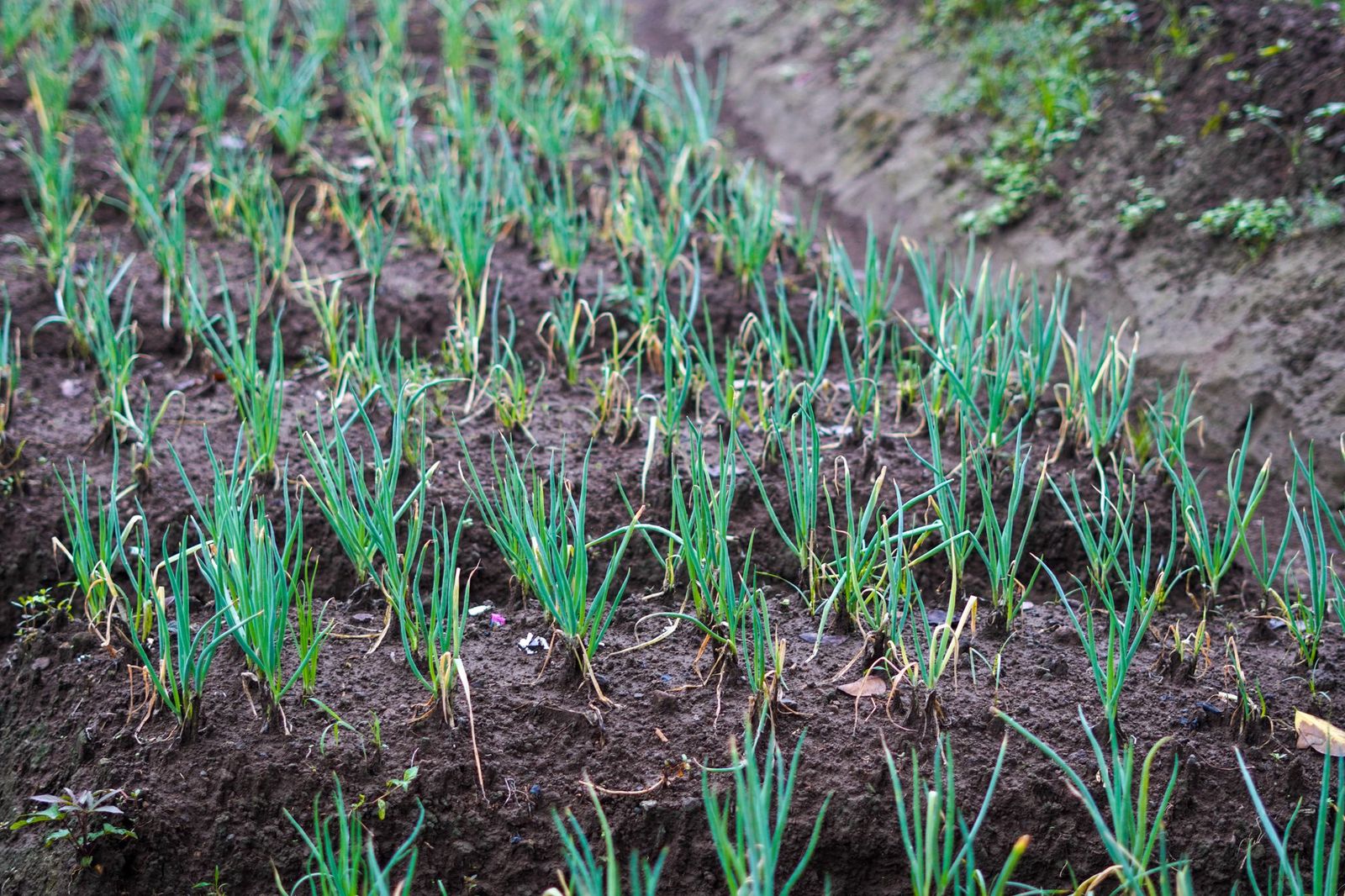
Photo: Robbi F / Pexels
Green onions are the crop that forgives the beginner everything: thin soil, late sowing, irregular watering, partial shade that would shame a tomato. They are also three crops wearing one name, and most guides blur them. You can sow seed, you can plant sets, or you can regrow the white ends of the green onions you already bought for dinner. Each start has a different clock and a different best use, and choosing between them honestly, instead of pretending they are interchangeable, is the whole skill this humble crop has to teach.
The spacing on this page follows the University of Georgia Cooperative Extension Circular 963, this site's standard for green onions: plants 3 inches apart in rows 18 to 36 inches apart. The Plant Spacing Planner on this page is set to that standard (using the middle of the row range), so a succession sowing planned here matches the row in the garden. Depths and days below come from the same extension tradition the teardown recorded: seed a quarter inch deep and 60 to 80 days to harvest size, sets fastest of all, and tops ready to cut at about 6 inches tall.
Interactive tool
Plant Spacing Planner: The Green Onion Row
Green onions are in the crop list below at the University of Georgia Cooperative Extension spacing of 3 inches between plants in rows 18 to 36 inches apart. Enter your row size and plan one small succession sowing at a time.
8 tomato plants fit this bed
4 plants per row across 2 rows, on a 24 inch grid. Extension spacing for this crop: 24 in between plants, 48 in between rows.
The grid uses the in-row spacing in both directions, the standard square foot layout for raised beds. In open ground, keep the wider row spacing in the note above so you can walk and weed between rows.
Spacing figures: University of Georgia Cooperative Extension, Circular 963, Vegetable Planting Chart, source.
The Three Starts, Compared Honestly
Seed is the cheapest start and the slowest: 60 to 80 days from sowing to full sized green onions, with the seedlings spending their first weeks as threads that look like grass and weed exactly as easily. Seed is the right start for gardeners planting a real row, growing a specific variety (including the bunching types that never bulb and are grown for this purpose), or sowing the succession rows that keep a household in green onions all season. Its cost is patience and one careful weeding.
Sets, the small dry bulbs sold for onion planting, are the fastest start: planted shallow, they sprout within days and reach cutting size weeks ahead of seed. Sets are the right start for a first crop, a child's garden, a late start, or anyone who wants proof within the month. Their limits are variety (whatever the bin holds) and a tendency to bulb or bolt rather than stay a slim green onion if left too long; harvest them on the early side.
Kitchen scraps are the most satisfying start: the white root end of a store green onion, saved with an inch or two of stem, roots in a jar of water within days and grows a new green top. Moved to soil once the roots show, a scrap becomes a modest green onion, slimmer than a seed grown one, and can be cut and regrown a few times before it tires. Scraps are the right start for a windowsill, a first experiment, and zero budget gardening. They are not a way to plant a row, and no guide should pretend otherwise.
Sowing Seed: The Quarter Inch Rule
Sow seed a quarter inch deep, in rows or in a band across a bed, and keep the surface evenly moist until the threads appear, which takes a week or two. Green onion seed is small and the seedlings are finer; a dry crust on the surface in that first fortnight is the main germination killer, and a light cover of fine compost or a board laid over the row until sprouting (lifted the moment green shows) holds the moisture the seed needs.
Thin seedlings to the final 3 inch spacing in stages as they grow, eating the thinnings from the moment they are worth snipping. Or do what most home gardeners honestly do: sow a little thick, harvest by pulling alternate plants as they size up, and let the thinning and the harvesting be the same act spread over weeks. The Georgia spacing in the planner describes the plants you leave standing, and a row managed by pull harvesting arrives there by appetite rather than by measuring.
Planting Sets and Scraps
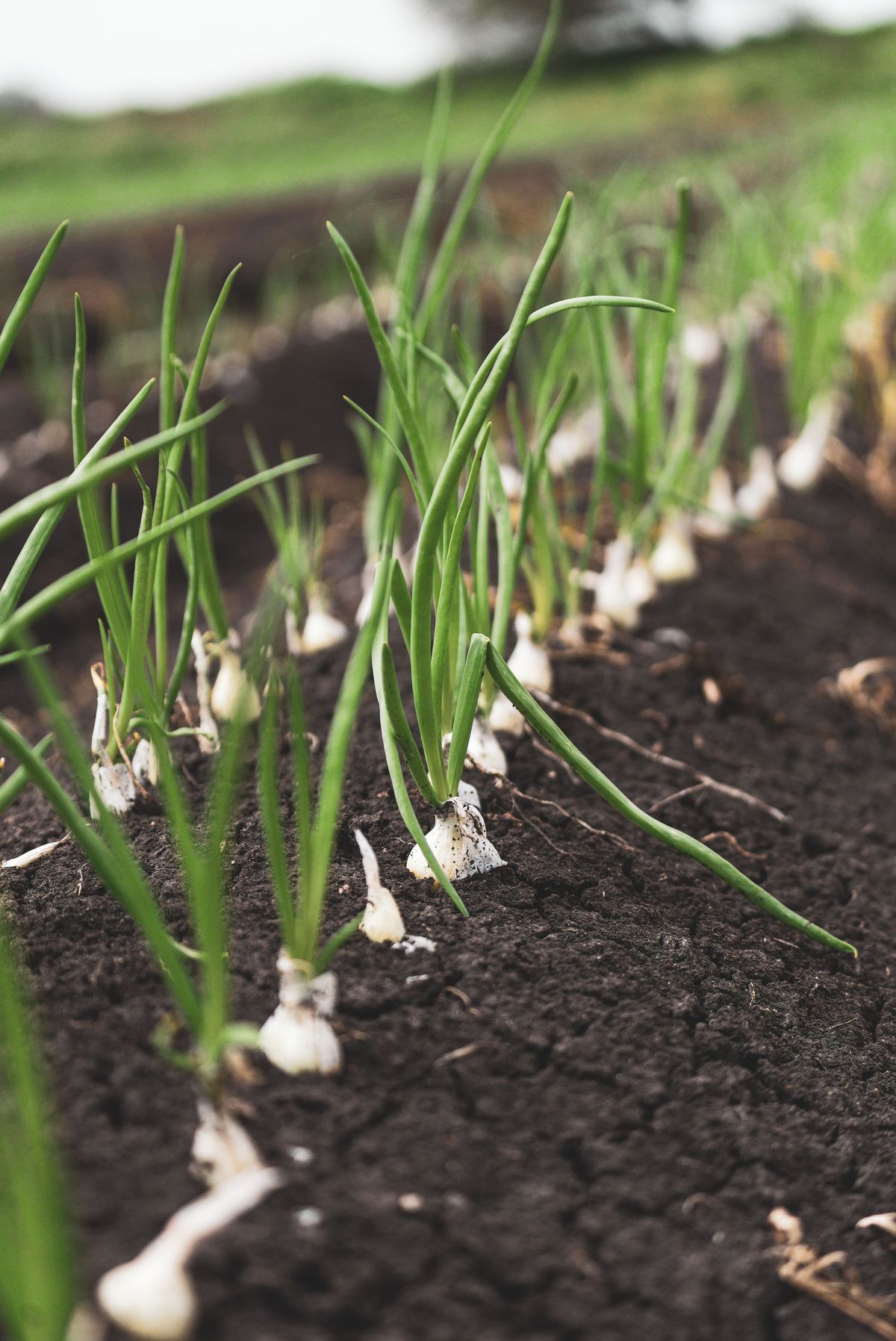
Sets go in shallow: press each small bulb into loosened soil so its tip sits at or just below the surface, root end down, 3 inches apart, and water in. A set buried deep spends its energy climbing; a set at the surface stands up and grows within the week. In a pot or a bed corner, a dozen sets is a garnish supply for a month, and the fastest confidence builder in this entire article.
Scraps root first in water on a windowsill, changed every couple of days, until the roots are an inch or so long and a new green shoot is clearly growing; then they move to soil or a pot, planted so the roots are buried and the cut end sits at the surface. Water them in and treat them as the light feeders they are. Expect two or three good cuttings from a scrap before it fades, and succession plant new scraps as the old ones tire; the grocery store becomes a slow, free seed supplier.
Green onion shoots sprouting from rich dark soil, seen close up
The Growing Routine: Almost Nothing, Done Regularly
Green onions ask for steady moisture and little else. About 1 inch of water a week keeps the rows growing evenly; drought checked plants grow woody and hot flavored, while drowned ones rot at the base, so the middle path of even moisture is both the yield and the flavor decision. A light side dressing of compost mid season, or a balanced feed for a long succession row, keeps the green growth coming; heavy feeding grows soft, floppy tops.
Weeding is the one real labor, and it matters most for the seed grown rows, because onion seedlings cannot compete with weeds and their thin leaves shade nothing. A mulch between rows, once the plants are up and visible, cuts the weeding to a fraction. In beds shared with other crops, green onions are the good citizens of the garden: slim, shallow, quick, and out of the way, ideal for edging a bed or filling the gaps between slower vegetables while they size up.
Two Harvests: Pull, or Cut and Come Again
The pull harvest takes the whole plant, white shank and all, when the tops reach about 6 inches and the shank has thickened to pencil width or better. Pull in the morning, in batches as the row sizes unevenly, and the pulled plants are the thinnings that finish the spacing. This is the harvest for cooking, where the white part carries the flavor.
The cut harvest takes only the green tops, snipped a couple of inches above the soil, and leaves the plant to regrow them. A cut plant returns two or three more cuttings, each a little less vigorous, which suits a garnish gardener perfectly: a small pot or row segment near the kitchen door, cut weekly, outproduces its size all season. The honest summary: pull for meals, cut for garnish, and succession sow either way, because every green onion planting is a countdown and the next row should always be a few weeks behind the current one.
Succession: The Small and Often Rhythm
The crop's speed makes it the perfect succession subject: a short row or a pot every 3 to 4 weeks from early spring through late summer keeps the supply continuous without a glut. Seed in spring, sets when you need speed, scraps whenever the kitchen provides them; the starts rotate and the harvest does not stop. A fall sowing in mild climates overwinters as a standing garnish. Keep the rows labeled with sowing dates, because three identical green rows of different ages are a memory test no one passes, and the oldest row, harvested first, is the one quietly going to seed.
Green Onions Beyond the Row: Pots, Edges, and the Windowsill
The row is the crop's classic form, but green onions may be the most container suited vegetable in this entire site. A single 8 to 10 inch pot holds a garnish supply at the 3 inch spacing; a window box along a kitchen window is a cutting garden that never needs a trip outside in the rain; and a row of pots on a balcony rail outproduces the same money spent on almost any herb. Use a free draining potting mix, water when the top inch dries, and feed lightly every few weeks, because a pot's small soil volume spends its nutrients quickly and the onions will tell you with pale, slow growth when the account is empty.
In the ground, the crop's slimness makes it the garden's best edge and filler. A green onion border along a bed's front edge is ornamental in its upright green way and edible at a snip's notice; the gaps between young tomato or pepper plants, empty for the season's first half, carry a full green onion harvest before the big plants claim the light; and the corners of raised beds, too awkward for most crops, suit a square foot patch of onions exactly. Interplanting this way is not a compromise made for small gardens; it is how market gardeners have always stacked a fast, slim crop into the slow crops' spare room.
The windowsill scrap garden deserves its own honest paragraph, because it is many people's first garden of any kind. A jar of water, the saved ends of a bunch of green onions, a bright sill: roots in days, green in a week, a cutting in two. It teaches the whole cycle (root, grow, harvest, regrow) at zero cost and zero risk, and it converts a remarkable number of skeptics into gardeners, who then arrive at the seed row with confidence already installed. Treat it as the gateway it is, and when the scraps tire after their few cuttings, compost them without guilt; they have done more work than most plants ever do.
Saving the Last Row for Seed and Soup
A green onion planting's final act deserves a plan, because the row that outgrows the garnish stage is not a failure but a different harvest. Plants left standing thicken their shanks and deepen in flavor, becoming the cooking onion's lean cousin, excellent in soups, stir fries, and the stock pot, whites and greens together. Left longer still, a plant or two will flower and set seed, and while bunching types are the seed saver's usual subject, any green onion allowed to seed teaches the full cycle and provides next spring's first sowing for the price of patience. Mark the seed bearers so the succession rows around them are not harvested by mistake, and let the row's ending be a decision rather than a discovery: pulled young for garnish, grown on for the pot, or stood over for seed, each ending honorable, and the gardener who rotates through all three across a season has learned the crop entire.
Frequently Asked Questions
What is the fastest way to grow green onions?
Sets. The small dry bulbs sprout within days and reach cutting size weeks before seed. Kitchen scraps root almost as fast but yield slimmer plants for a few cuttings. Seed is the slowest start at 60 to 80 days, and the right one for full rows and specific varieties.
How far apart do green onions go?
Plants 3 inches apart in rows 18 to 36 inches apart, per University of Georgia Cooperative Extension Circular 963, the standard in the planner on this page. In beds and pots, the 3 inch plant spacing is the figure that matters; rows can tighten to fit the space.
How deep do I sow green onion seed?
A quarter inch deep, kept evenly moist until the fine seedlings emerge in a week or two. Sets plant shallower still, tip at the surface. Depth is the common beginner error in both directions: seed buried an inch deep struggles, and sets buried deep waste weeks climbing.
When are green onions ready to harvest?
When the tops reach about 6 inches and the white shank is pencil thick or better. Pull whole plants for cooking, or cut the green tops a couple of inches above the soil and let the plant regrow for garnish cuttings.
Can I really regrow green onions from scraps?
Yes, a few times. Root the white end, with roots attached, in water on a windowsill, then plant it in soil once roots are about an inch long. Expect slimmer regrowth and two or three cuttings before the scrap tires; succession plant fresh scraps as old ones fade.
How often should I plant green onions?
Every 3 to 4 weeks in small batches, spring through late summer, for a continuous supply. The crop is fast and each planting is a countdown; the next row should always be a few weeks behind the one you are harvesting.
Photo credits: Robbi F (Pexels); Los Muertos Crew (Pexels). Photos are served from this site; follow the credit to the library page for the original.