The herb collection on a sunny step fails in a predictable way: every pot watered on the same round, every plant in the same mix, until the rosemary rots in the moisture the basil is begging for and the basil bolts in the drought the thyme prefers. The fix is to stop treating the pots as a row and start running them as a fleet sorted by water. The culinary herbs divide cleanly into two tribes. The Mediterranean tribe, rosemary, thyme, sage, oregano, marjoram, lavender, evolved on lean, stony, sun baked ground and wants a gritty, fast draining mix and a genuine dry interval between drinks. The leaf tribe, basil, parsley, cilantro, chives, and mint, grows fast, soft, harvestable tissue and wants a richer mix and even moisture. This article is the outdoor fleet system; our bed guide grows herbs in the ground, and our indoor guide runs the windowsill case. Here the subjects are the sort, the one herb per pot rule, and the overwintering fork that ends the season. Run the checklist above as the fleet audit.
How to Grow Herbs in Pots: Two Water Tribes, One Herb Per Pot, and the Fleet System
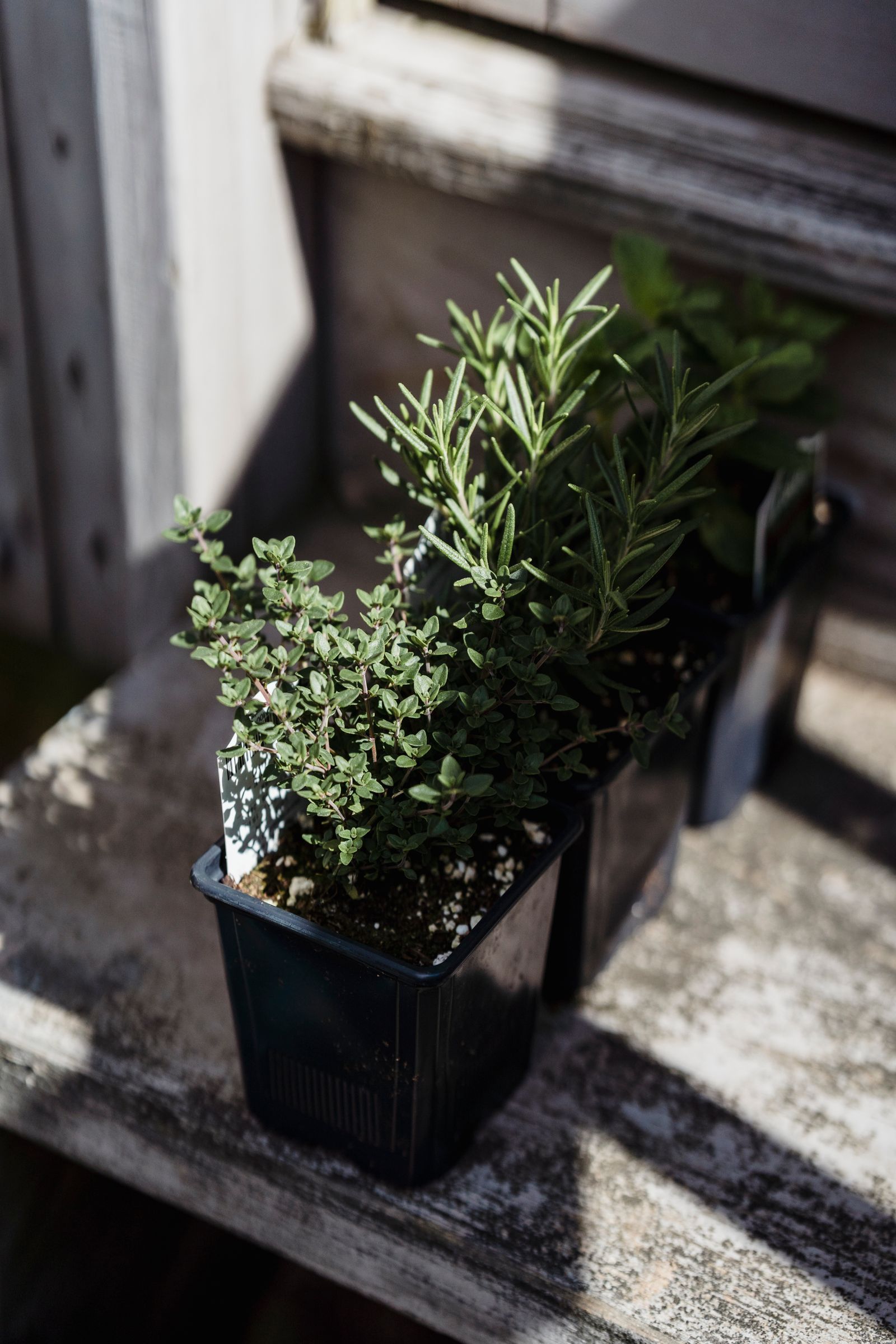
Photo: Greta Hoffman / Pexels
Herb Pot Fleet Checklist
Check off each step as you finish it. Your progress stays on this page.
0 of 8 complete
0% done
The Two Tribes: Sort by Water Before Anything Else
Walk the fleet with two watering cans in mind, because the tribes' rhythms genuinely differ. Mediterranean pots are checked and watered only when the top inch or two is dry, and in cool weather a rosemary or thyme pot may go a week or more between drinks; their mix carries a third or more grit, perlite, or coarse sand by volume so that a thorough watering drains in seconds and the roots never sit wet. Leaf tribe pots are checked at the top inch and watered as it dries, which in summer means every 1 to 3 days for basil and mint, and their mix is a standard rich potting mix that holds moisture evenly, often with a mulch cap on the surface. The tribes also divide by pot material: terracotta, which breathes and dries fast, suits the Mediterranean tribe so well it is nearly their native soil in container form, while plastic and glazed pots hold the moisture the leaf tribe prefers. Group the pots physically by tribe on the step or bench, and the watering round becomes two passes with two rules, instead of a dozen individual judgments made badly at speed. Most herb pot failures are tribe errors: a lavender watered like a basil, a parsley potted in cactus mix, each plant correctly cared for by the wrong plant's rules.
One Herb Per Pot: The Growth Rate Argument
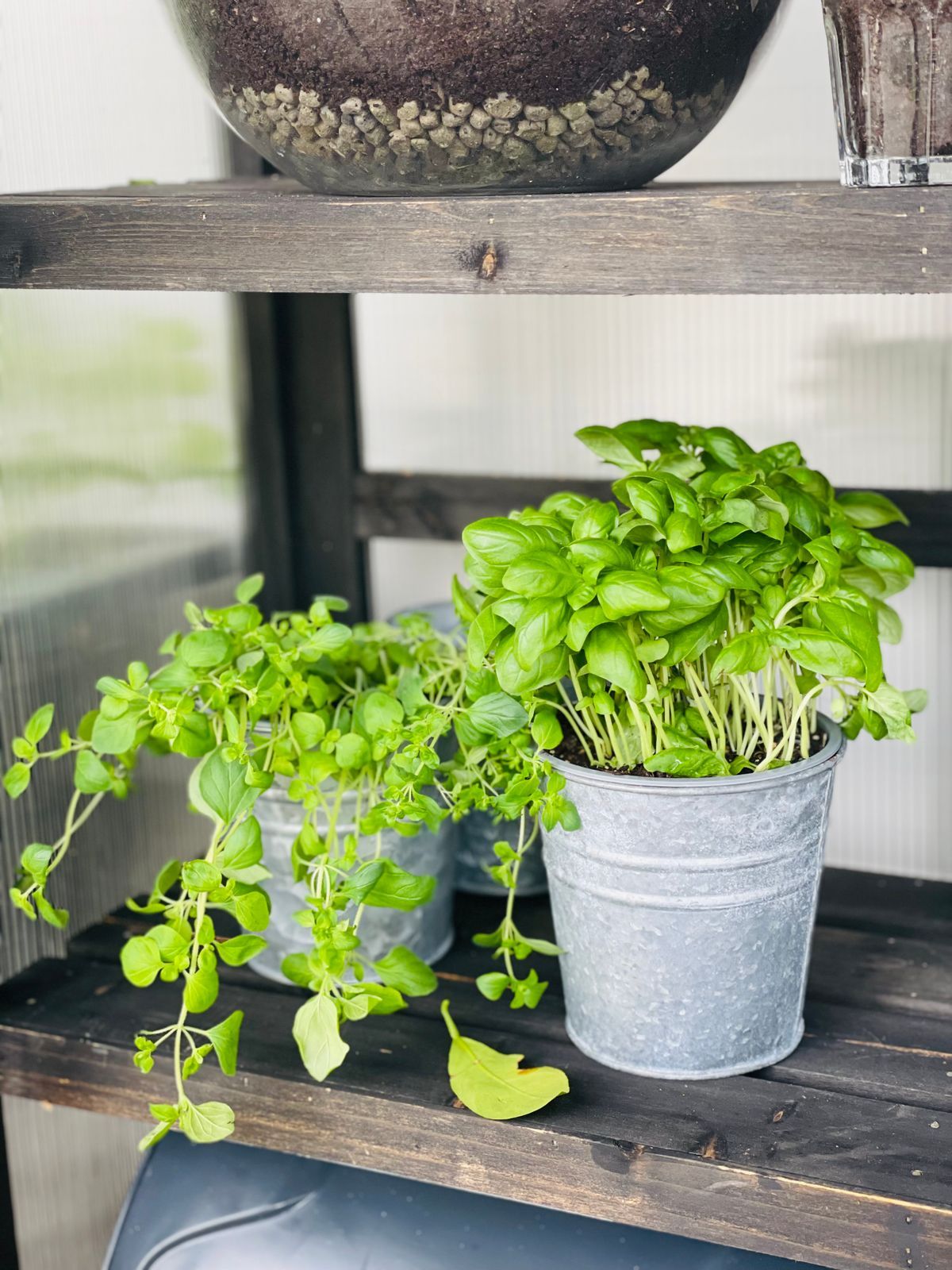
The mixed herb planter, several herbs artfully combined in one trough, is the garden center's prettiest bad idea. Herbs grow at wildly different rates and with different ambitions: mint runs, oregano sprawls, basil rockets and dies young, rosemary creeps for a decade. In a shared container the fastest root system takes the water and the strongest canopy takes the light, and within a season the planter is a monoculture of whichever herb bullied best, with the rest surviving as garnish. One herb per pot gives every plant its own water rhythm, its own mix, its own feed, and its own harvest pressure, and it lets the fleet be rearranged as plants grow, the tall rosemary to the back, the young basil forward into the sun it needs. Pot sizes follow the plant: 8 to 10 inches suits most single herbs for a season, rosemary and other long lived woody types graduating to 12 inches and beyond as they size up, mint always in a pot of its own for the containment reason this site repeats in every mint context: it spreads by runners and will colonize any bed or shared planter it can reach. A fleet of single pots also quarantines trouble; the aphid colony or the mildewed basil is one pot carried away, not a planter condemned.
Feed, Harvest, and the Pinching Discipline
Herbs are grown to be cut, and the fleet system feeds and harvests by tribe again. Leaf herbs under constant harvest want steady, modest nitrogen: a half strength balanced liquid feed every 2 to 3 weeks in the season keeps basil, parsley, and mint producing the soft growth you are taking, and a starved leaf herb announces itself with pale, small leaves no watering corrects. Mediterranean herbs want the opposite restraint: lean treatment, a light feed once or twice a season at most, because lush feeding grows soft, floppy, less aromatic growth on plants whose flavor concentrates under hardship. Harvest itself is a watering input, since a hard cut removes the leaf area that drinks; a freshly scalped pot runs a longer interval for a few days and then shortens sharply as the soft regrowth comes in, which is why the fleet is checked by hand rather than watered by rote. Pinching is the discipline that keeps the leaf tribe productive: basil pinched above a pair of leaves branches instead of bolting, cilantro and parsley are succession sown rather than pinched, and every flowering stem removed from a leaf herb buys weeks of harvest. Woody herbs are cut the other way, never into bare old wood, a third of the growth at a time at most.
The Overwintering Fork: Who Comes Inside
The fleet's year ends in a sort, and it is a fork, not a uniform move indoors. The tender tribe members, basil above all, are annuals in any cool climate: they end with the first frost, and the correct winter move is a final harvest and the compost, not a windowsill decline. True perennials split by hardiness and by pot physics. A pot freezes harder than a bed, so a herb hardy in your ground may not be hardy in your pot; the standard protections are to sink the pot into the ground for winter, cluster pots against a sheltered wall and mulch around them, or bring the borderline plants, rosemary in cold zones, bay, lemon verbena, into a cool bright space and water them barely, on the Mediterranean winter rule of almost nothing. Indoors, the survivors want the brightest window or a grow light and the driest discipline of their year, because the indoor combination of low light and kind watering kills more overwintered herbs than cold does. Come spring the fleet rebuilds: fresh mix or a top up for the perennials, new annuals sown, divisions of chives and mint taken while they are free. Sort by water, pot singly, feed by tribe, and winter by hardiness: a herb fleet run that way stops being a row of struggles and becomes the most productive square meter of the garden.
Frequently Asked Questions
Which herbs grow best in pots?
All the common culinary herbs grow well in pots when sorted by water. The Mediterranean tribe, rosemary, thyme, sage, oregano, and lavender, wants gritty mix, terracotta, and a dry interval between drinks. The leaf tribe, basil, parsley, cilantro, chives, and mint, wants rich moisture holding mix and even watering every 1 to 3 days in summer. Mint should always have a pot to itself because it spreads by runners and takes over shared plantings and beds alike.
Can I plant several herbs together in one pot?
You can, and the planter will spend the season becoming one herb. Growth rates differ too much: the fastest roots take the water, the strongest canopy takes the light, and the slower herbs dwindle. Mixed planters also force one watering rhythm on plants from two different water tribes. One herb per pot, grouped physically by tribe for watering, is the system that keeps every plant on its own rhythm and lets you quarantine a troubled pot without condemning a planter.
How often should potted herbs be watered?
By tribe and by check, not by one schedule. Mediterranean herbs are watered when the top inch or two of their gritty mix is dry, which can be weekly in cool weather. Leaf herbs are watered as the top inch dries, every 1 to 3 days in summer for basil and mint, less in cool spells. Terracotta pots dry faster than plastic. A hard harvest briefly lengthens any pot's interval, then regrowth shortens it again, which is why the fleet is checked by hand each round.
What size pot does each herb need?
An 8 to 10 inch pot suits most single herbs for a season. Long lived woody herbs, rosemary especially, graduate to 12 inches and larger as they size up over years. Basil and mint reward the larger end immediately, since both drink fast and a bigger soil volume stretches their watering interval. Every pot needs drainage holes, and mint needs a pot of its own regardless of size, as containment.
How do I overwinter potted herbs?
Sort them. Tender annuals like basil end at first frost with a final harvest. Hardy perennials can stay out with protection, pots sunk in the ground or clustered and mulched, because a pot freezes harder than a bed. Borderline plants such as rosemary in cold zones come into a cool, bright space and are watered barely through winter. Indoors the killers are low light and overwatering, not cold; give the brightest light you have and the driest discipline of the year.
Photo credits: Greta Hoffman (Pexels); LOUISE strømstad brinkmann (Pexels). Photos are served from this site; follow the credit to the library page for the original.