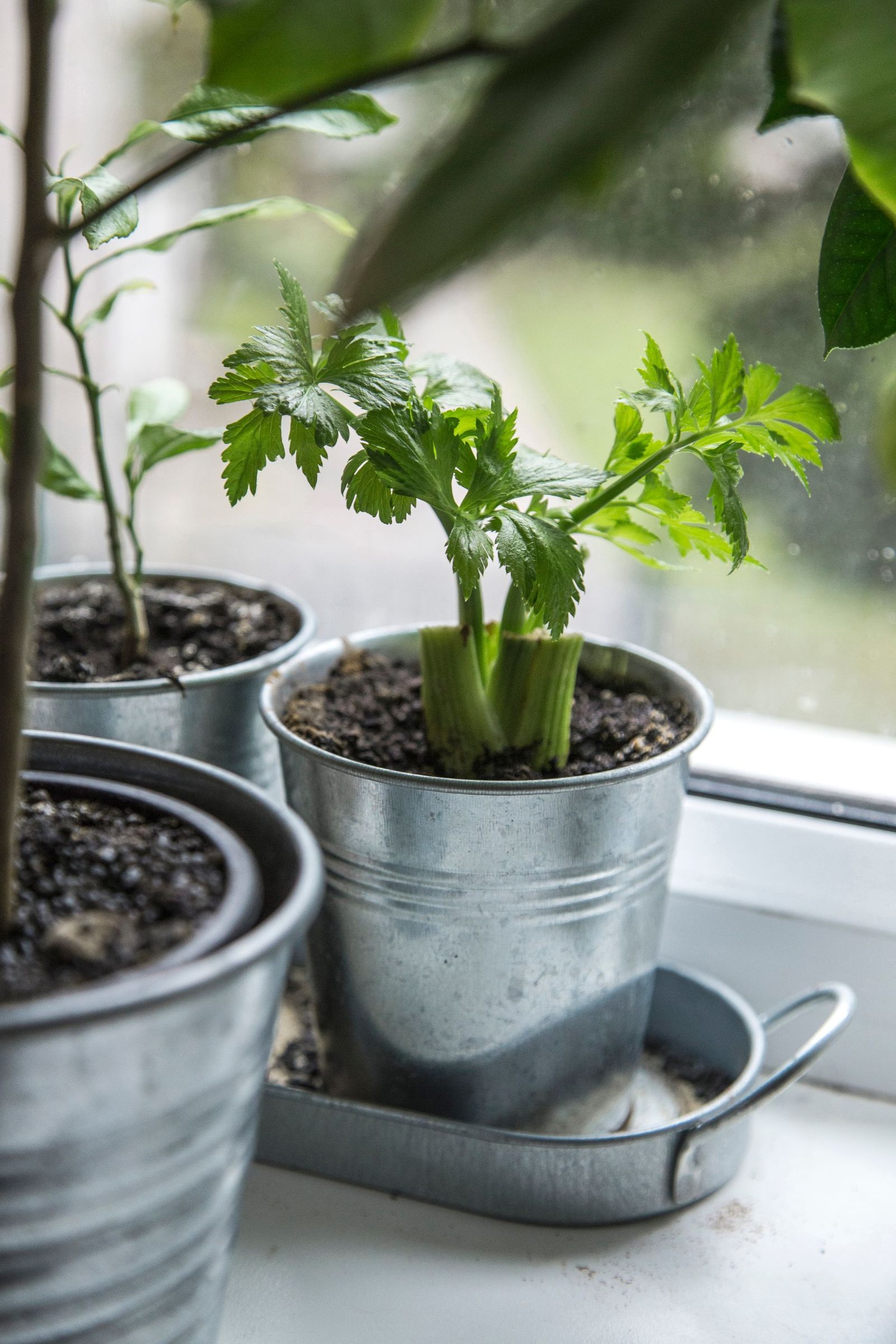
Indoor herbs fail for one reason far more often than all the others, and it is not water, soil, or the plant you chose. It is light. A kitchen windowsill feels bright to us because our eyes adjust to it, but most culinary herbs evolved under Mediterranean sun, and the dim end of a counter, a north facing window, or a spot a few feet back from the glass gives them a fraction of what they need. They respond politely at first, then unmistakably: stems stretch long and weak, leaves grow small and pale and far apart, flavor thins, and the plant leans hard toward the window as if asking to be moved. Almost every indoor herb disappointment, including the famous two week death of the supermarket basil, is a light story with a watering footnote. So this guide starts with light and treats it as the decision that comes before pots, soil, and even the herbs themselves.
Get light right and the rest of indoor herb growing is forgiving. Herbs in pots by a bright window ask for little: a container that drains, a mix that does not stay soggy, water when the soil has dried at the top, a pinch here and a harvest there. Get light wrong and no amount of careful watering rescues the plant. Work through this guide in order, light, pots, herbs, planting, care, harvest, and you will set up a windowsill garden that is still producing when the outdoor beds are frozen.
Before you plant anything, walk the setup in order with the Indoor Herb Setup Checklist below. It covers the light check, drainage, mix, and one pot per herb decisions in the sequence this guide teaches them, so nothing essential gets skipped in the enthusiasm of a garden center visit.
Interactive tool
Indoor Herb Setup Checklist
Check off each step as you finish it. Your progress stays on this page.
0 of 6 complete
0% done
Light First: Hours, Direction, and the Grow Light Fix
Most culinary herbs need at least 6 hours of direct sunlight a day to grow compact and flavorful, and 8 to 10 hours is better still. Direct means the sun itself lands on the leaves for those hours, not that the room is bright. Start by auditing your own windows honestly. Stand where the pots will sit and count, over a day or two, how many hours the sun actually reaches that spot. Buildings, trees, eaves, and the season all steal hours; a sill that gets sun from 9 in the morning until noon delivers 3 hours, whatever the room feels like at lunch. Winter shortens the count and weakens the light further, which is why herbs that coasted through summer stall in December.
Window direction predicts the count before you measure it. A south facing window gives the brightest light and the most hours, and it is the first choice for sun lovers like basil, rosemary, thyme, and oregano. East facing windows give gentler morning sun for part of the day, and west facing windows give afternoon sun; either can support the more tolerant herbs, especially in summer. A north facing window gives no direct sun at all in most homes, and herbs there will stretch no matter how well you water them. If your audit finds less than about 4 hours of direct sun on your best sill, believe the audit. Richters, the herb nursery whose guide anchors much indoor herb practice, warns plainly that herbs do not tolerate windows with less than 4 hours of direct sunshine, and that supplementary lighting is a necessity in most homes rather than an upgrade.
A grow light is the fix, and it is a simpler fix than it used to be. A basic LED or fluorescent fixture on a timer, hung or stood a short distance above the plants, turns a dim counter into the sunniest spot in the house and lets you grow herbs in a kitchen with no good window at all. Run it on a steady daily schedule long enough to make up what the window lacks; a plant under a light for a consistent stretch every day grows compact and bushy, while the same plant in weak window light stretches no matter how lovingly it is watered. Two habits help any setup, with or without a lamp: rotate each pot a quarter turn every few days so growth stays even instead of leaning, and pinch and harvest regularly, because frequent trimming is what keeps indoor herbs dense instead of lanky. Leggy, stretched stems are never a mystery. They are the plant's light meter, and they are asking for more.
Pots, Drainage, and Potting Mix
With light settled, the pot is the next decision, and one rule outranks all others: the pot must have drainage holes. Herbs forgive a missed watering far more readily than they forgive roots sitting in water, and a pot without holes guarantees the second fate eventually, no matter how careful you are. Put a saucer under the pot to protect the sill, and empty the saucer after watering so the plant never stands in its own runoff. Decorative outer pots are fine as a sleeve over a plain draining pot inside them, as long as you lift the inner pot out to water and drain it before putting it back.
Size the pot to the herb's mature size, not to the seedling in your hand. As a working floor, choose pots at least 6 inches deep and about 6 inches across for most herbs, and go larger for vigorous growers. Separate pots, one herb per pot, beat the charming mixed planter almost every time, because herbs argue about water: basil likes steady moisture, while rosemary and thyme prefer to dry out more between drinks, and a shared pot forces one watering pattern on plants that want different ones. Separate pots also let you rotate, move, and eventually replace a single herb without disturbing the rest.
Spacing still matters indoors when several seedlings share a larger container or a window box. University of Maryland Extension gives basil spacing as 12 inches between plants in its home garden guidance, and that figure is the honest cure for the supermarket basil problem: those lush grocery pots are many seedlings crowded into one small pot, competing for light, water, and root room, which is why they collapse within weeks on a sill. If you buy one, slide it out, divide it gently into separate clumps, and repot each clump into its own pot, or thin a shared box so plants sit about 12 inches apart. Given room and light, a divided supermarket basil outgrows the crowded original many times over.
Fill the pots with bagged indoor potting mix, not soil dug from a garden bed. Garden soil compacts in a pot, drains poorly, and brings weed seeds and disease indoors. A good potting mix is light and fluffy, built from peat moss or coconut coir with perlite or vermiculite to hold air and let excess water escape, and it gives roots the fast draining, never soggy home herbs want. Pre moisten the mix before potting so it is evenly damp, fill to about an inch below the rim so watering does not overflow, and set transplants at the same depth they were growing before.
The Easiest Herbs, Ranked for a First Windowsill
Choose herbs you actually cook with, that stay reasonably compact, and that tolerate container life and dry indoor air. Ranked by forgiveness for a beginner, start at the top of this list and add a new herb only when the ones before it are thriving.
First, chives. Nearly indestructible indoors, tolerant of an east or west window, happy with regular snipping, and perennial, so one pot returns year after year. Second, mint, with a warning attached: mint is vigorous to the point of conquest outdoors, which is exactly why it belongs in its own pot indoors, where its enthusiasm becomes a virtue and it flavors drinks and desserts for months. Third, parsley. It germinates slowly from seed, so buy a plant or be patient, and then it produces steady leaves for a long season and tolerates a little less light than the sun lovers. Fourth, basil, the herb everyone wants most and the one with the clearest terms: give it the brightest spot you have, warm conditions away from cold window drafts in winter, steady moisture, its own pot with the 12 inch spacing logic above, and pinch the tips constantly, and it will produce generously all summer. Fifth, thyme and oregano together, the dry loving Mediterranean pair: small leaved, compact, content in smaller pots, and happiest when you water them less than the basil, letting their soil dry more between drinks. Sixth, cilantro, with an asterisk: it is a cool season herb that bolts quickly in heat, so grow it in succession, sowing a little every few weeks and harvesting young, rather than expecting one plant to last. Rosemary is the herb to graduate to rather than start with; it wants the strongest light, resents wet soil, and sulks in dim rooms, and it rewards a bright sill and a neglectful watering hand once established.
Start with two or three herbs from the top of the list. A common first trio is chives, parsley, and basil, which between them cover most weeknight cooking and teach you the three care patterns, tolerant, steady, and sun hungry, that nearly every other herb follows.
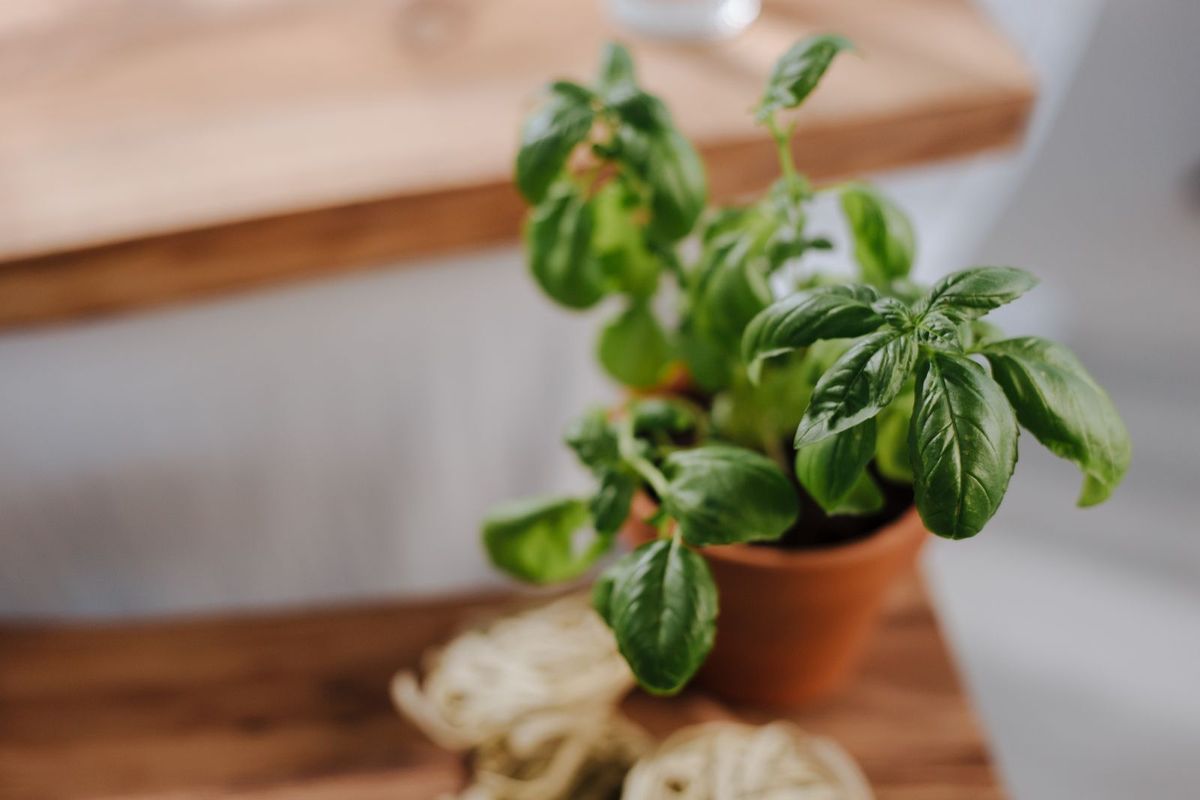
Fresh basil plant growing in a terracotta pot indoors
Planting: Seed, Starts, and the Supermarket Rescue
You can begin from seed or from young plants, and for a first windowsill, starts are the faster teacher. A nursery transplant skips germination entirely and gives you a harvestable plant weeks sooner. Look for compact, deep green plants with no yellowing lower leaves and no roots circling thickly out of the drainage holes. At home, water the plant in its nursery pot, tip it out with the root ball supported, tease the outer roots gently loose if they are wound tight, set it in its new pot at the same depth, firm mix around it, and water until a little runs from the bottom.
Seed is cheaper and offers far more variety, and some herbs, cilantro and parsley among them, are traditionally sown rather than transplanted. Sow into moist mix at the depth the packet states, cover the pot with a clear lid or wrap to hold humidity until sprouts appear, then remove the cover and move the pot into your brightest light immediately, because seedlings stretch within days in weak light. Expect slow, uneven germination from many herbs; parsley in particular takes its time. Thin seedlings so the survivors get the spacing they need rather than a thicket of rivals, using the basil figure of 12 inches as your reminder that herbs want more room than beginners instinctively give them.
The supermarket rescue deserves its own paragraph because it is how many indoor gardens actually begin. That basil, and often a supermarket cilantro or mint, is not one plant; it is a crowd of seedlings sown thickly to look lush on the shelf. Left crowded, they starve each other and collapse. Divided into separate pots, given light and steady water, they become real plants. Treat any grocery herb as a bundle of starts at a discount, divide it the day you bring it home, and it will repay you all season.
Daily Care: Water, Food, Air, and Warmth
Water by the soil, not by the calendar. Check with a finger: when the top inch or two of mix feels dry, water thoroughly until it runs from the drainage holes, then empty the saucer. Basil and parsley will ask more often; thyme, oregano, and rosemary want to dry further between drinks, which is the practical reason they live in their own pots. Overwatering is the most common care mistake after low light, and it announces itself with yellowing, drooping leaves over wet soil, the same signature it has in every container. When in doubt, wait a day; a slightly thirsty herb recovers in an hour, while rotted roots do not recover at all.
Feed lightly. Herbs grown for leaves do not want rich soil or heavy feeding, which can push soft growth with diluted flavor. A water soluble indoor plant fertilizer at modest strength every few weeks during active growth, and less in winter when growth slows, is plenty; or work a slow release fertilizer into the mix at potting time and let it carry the season. Keep temperatures in the ordinary room range most herbs prefer, roughly 60 to 75 degrees Fahrenheit, and keep tender basil away from cold drafts and from direct blasts of heating or air conditioning, which dry leaves and stress plants. Grouping pots together slightly raises the humidity around them, which helps in heated winter rooms; a shallow pebble tray with water under the pots does the same. Turn the pots, pinch the tips, and look at the plants while the kettle boils, and problems will be caught at the one leaf stage instead of the whole plant stage.
Harvesting So Plants Keep Producing
Harvest is not the end of the plant's work; done right, it is the signal to grow more. Begin harvesting once a plant is established and bushy, and never take more than one third of the plant at a time, so it keeps enough leaf to power regrowth. Cut in the morning if you can, when leaves are full of moisture and flavor. For basil and mint, pinch or cut stems just above a pair of leaves; the plant responds by branching from that point, growing bushier instead of taller, which is the whole secret of a long basil season. Pinch off basil flower heads the moment they form, because a flowering basil shifts its energy to seed and its leaves turn bitter. For chives and parsley, cut outer stems low, a few at a time, and let the center keep growing. For thyme and oregano, snip sprigs from the top and outer edges. Herbs started from seed are usually ready for first light harvests in about 8 to 12 weeks under good light, while transplants are ready much sooner. A windowsill that is harvested little and often will out produce one that is admired and left alone, every time.
If a plant outproduces your cooking, preserve the surplus instead of letting it bolt or fade: freeze chopped leaves in ice cube trays with a little water or oil, dry sturdy herbs like thyme and oregano in small bundles, or simply cook more ambitiously that week. And when a plant finally declines after a long season, replace it without sentimentality. Indoor herbs are a rotation, not a monument, and a fresh pot of basil in the brightest spot is a better monument than a leggy survivor in the dark.
Frequently Asked Questions
How much light do herbs need indoors?
At least 6 hours of direct sunlight a day for most culinary herbs, and 8 to 10 hours is better. A south facing window is the best natural source; east and west windows give part day sun and suit tolerant herbs like chives, parsley, and mint. Below about 4 hours of direct sun, most herbs stretch and fail slowly, and a grow light on a daily timer is the reliable fix rather than a luxury.
What are the easiest herbs to grow indoors?
Chives, mint in its own pot, and parsley are the most forgiving trio for a first windowsill, followed by basil where you can give it strong light and warmth, and thyme and oregano where you can give them light and a light watering hand. Start with two or three, learn their rhythms, and add herbs like cilantro in succession sowings and rosemary once your brightest spot is proven.
How often should I water indoor herbs?
When the soil tells you to. Water thoroughly until it drains from the bottom whenever the top inch or two of mix feels dry, then empty the saucer. Basil and parsley dry out faster and ask more often; thyme, oregano, and rosemary prefer to dry more deeply between waterings. There is no honest fixed schedule, because pot size, light, and room heat change the answer week by week.
Why are my indoor herbs leggy and stretched?
Almost always too little light. Long bare stems with small, widely spaced leaves are the plant reaching for light it is not getting. Move the pots to your brightest window or add a grow light, rotate them every few days, and pinch the growing tips to force branching. A leggy plant can be cut back and regrown in better light; in the same light, it will simply stretch again.
How big a pot does basil need, and how far apart should plants be?
Give basil its own pot, roughly 6 inches deep or more, and real root room. University of Maryland Extension spacing for basil is 12 inches between plants, which is the figure to use in a shared window box and the reason a crowded supermarket basil pot should be divided into separate plants. One plant with room, light, and regular pinching will out produce a dozen seedlings strangling each other in a single small pot.
Photo credits: Milada Vigerova (Pexels); Ron Lach (Pexels). Photos are served from this site; follow the credit to the library page for the original.