How to Grow Herbs: The Mixed Herb Garden, Sorted by Water
By the Windchime Walker editorial team
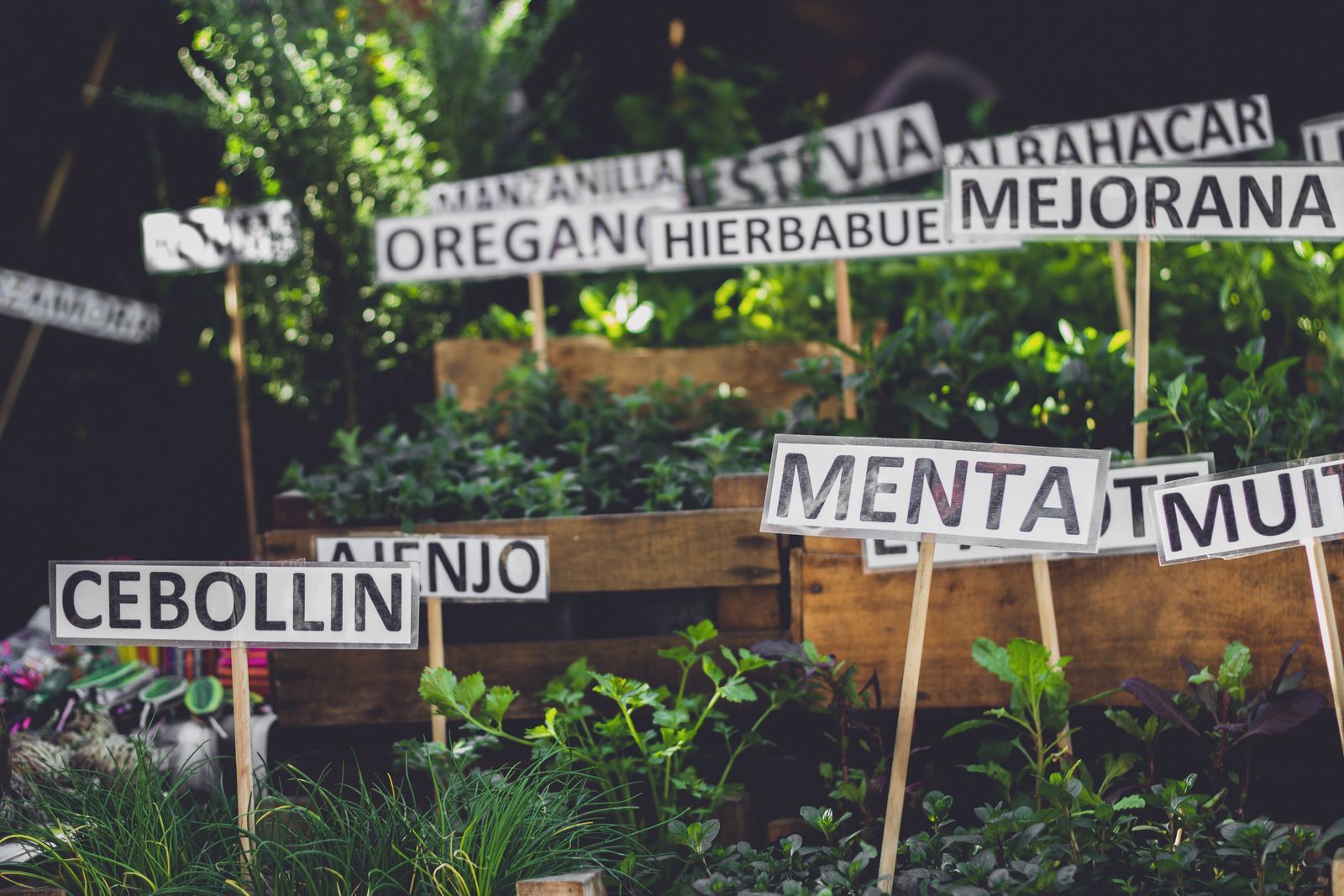
Photo: Noemí Jiménez / Pexels
Most herb gardens do not fail from neglect. They fail from a seating plan. The beginner plants the whole herb collection in one handsome bed, waters it as one plant, and watches the basil sulk in dry soil while the rosemary rots in wet, or the reverse, all season. Herbs are not one crop; they are two crops wearing one name. The Mediterranean perennials evolved on dry hillsides and want lean soil, sharp drainage, and long drinks spaced far apart. The soft annuals and leafy herbs evolved in richer, damper ground and want steady moisture. Plant them together and you are watering two deserts and one swamp with the same can.
This page builds the outdoor herb garden the way that actually works: a thirsty bed and a dry bed, planted separately, with each herb's spacing and harvest rhythm in one table drawn from this site's own herb guides. Our indoor herb guide owns the windowsill case; the single herb guides own their plants in depth. This page owns the mixed garden outside the kitchen door.
Interactive tool
First Herb Garden Checklist
Check off each step as you finish it. Your progress stays on this page.
0 of 7 complete
0% done
The One Rule Before All Others: Mint Gets Its Own Pot
Say it as law, because it is: mint is never planted in a bed with other herbs, or in open ground you care about, ever. Mint spreads by runners with genuine ambition and will be the only herb in that bed within two seasons, having eaten the parsley's space and billed you for the removal. Grow mint in a pot, sunk in the ground if you like the look, and enjoy it without fear. Every other rule on this page is a preference compared to this one.
The Two Beds: Group by Water, Not by Recipe
The thirsty bed (steady moisture)
The dry bed (lean, sharp drainage)
Basil
Rosemary
Parsley
Thyme
Cilantro
Oregano
Chives
Sage
Mint (in its own pot, placed nearby)
Lavender (guided fully in our lavender guide)
Both beds want sun: 6 to 8 hours for most culinary herbs, and the dry bed wants the sunniest, best drained ground you have. The thirsty bed goes where the hose reaches easily and the soil holds compost rich moisture; the dry bed goes on the slope, the gravelly corner, the raised edge, anywhere water leaves quickly. If you have one bed only, put the dry herbs at its high, sunny end in a gritty pocket and the thirsty herbs at the low end, and water the low end. It is a compromise, but a working one, which is more than the undifferentiated herb bed ever offers.
Step 1: Start With Two or Three Herbs You Actually Cook
Grow what you cook is the oldest herb advice and still the truest. A beginner's dry bed of rosemary and thyme and a thirsty pot of basil will be harvested weekly; a collection of twelve herbs bought for completeness will be weeded weekly and cooked from twice. Start with two or three, learn their rhythm for a season, and add one herb at a time as your cooking asks for it. Buy starts for the perennials, which are slow and fiddly from seed; sow the annuals, basil and cilantro, which grow fast and resent transplanting less when young. Cilantro bolts in heat by design, so sow it little and often in spring and fall and treat summer cilantro as a rumor.
Step 2: Space and Plant at the Site's Standards
Herb
Spacing
Life
Harvest note
Basil
12 inches (University of Maryland Extension)
Annual
Pinch tips constantly; never let it flower unbothered
Parsley
8 to 12 inches
Biennial, grown as annual
Cut outer stems at the base
Chives
About 12 inches, in clumps
Perennial
Snip leaves; divide clumps every few years
Rosemary
2 to 3 feet
Perennial (pot it below zone 7)
Never cut more than a third of the plant at once
Thyme
9 to 12 inches
Perennial
Shear lightly after flowering
Oregano
12 to 18 inches
Perennial
Cut before flowering for best flavor
Sage
18 to 24 inches
Perennial
Replace when it turns woody and sparse, about year 4
Plant perennials at their mature spacing even though they look lost; a rosemary at 2 to 3 feet is a shrub being honest about its future. Work compost into the thirsty bed generously and into the dry bed sparingly, with grit or coarse sand if the soil is heavy, because the dry bed's whole personality is drainage. Water everything in well at planting, then split the routines: the thirsty bed gets the finger test and regular deep drinks, the dry bed gets watered at planting and then largely left alone once established, even in dry spells that send you out with the can for everything else.
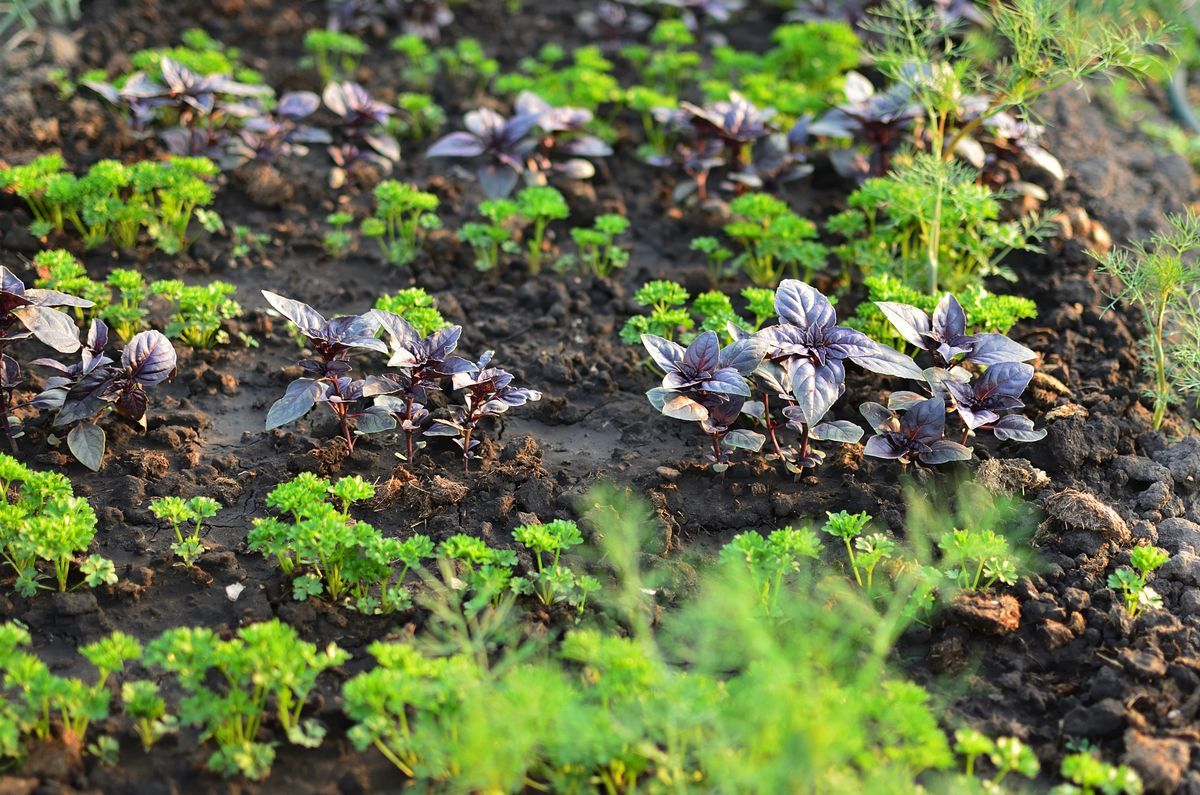
Herb plants growing in garden soil in neat rows
Step 3: The Harvest Rhythm That Keeps Herbs Producing
Herbs are harvested into productivity; the cutting is the care. Basil is the clearest case: pinch the growing tips above a pair of leaves every week or so, and the plant branches into a bush; let it run and it flowers, turns bitter, and quits. The rule for soft herbs is little and often, a few sprigs taken regularly rather than a shearing. For perennials the guardrail is proportion: never take more than about a third of the plant at one cutting, and stop heavy harvesting of perennials in late summer in cold climates so the plant hardens before winter. Cut in the morning after the dew dries, when the aromatic oils that are the entire point of the crop run strongest. Herbs cut for drying are taken just before flowering, when flavor peaks; herbs for the kitchen are taken whenever the pan asks, which is the better system.
Step 4: Feeding, Mulch, and the Lean Soil Doctrine
The two beds eat differently, like everything else about them. The thirsty bed appreciates compost annually and a mulch of shredded leaves or straw to hold its moisture. The dry bed gets no rich feeding at all: Mediterranean herbs grown soft and lush in rich, wet soil taste of less and rot more readily, and their flavor concentrates in lean, bright, thirsty conditions. Mulch the dry bed with gravel or stone if you mulch it at all; an organic mulch holding moisture against a rosemary's crown in winter is a quiet killer in wet climates. When a dry bed herb looks pale and tired, the suspect list starts with too much water and too much kindness, not hunger.
Winter, and the Perennial Promise
The dry bed perennials are the garden's elders: rosemary survives winter in the ground in zone 7 and warmer and overwinters in a pot below that, thyme and oregano and sage are hardier still, and chives die back and return like a rumor confirmed every spring. The thirsty annuals end with frost, which is their nature and not a failure; basil blackens at the first cold night with theatrical finality. Parsley often overwinters once and flowers in its second year, after which it is a seed plant, not a salad. Plan the herb garden as a perennial skeleton with annual guests and it improves every year, which is more than most beds can claim.
The Third Bed: Herbs in Containers
Between the thirsty bed and the dry bed stands the pot collection, and for many beginners it becomes the main herb garden, because containers let each herb keep its own water law. Mint lives here by statute, in its own pot, where its runners meet a wall instead of a garden. Basil in a pot on a hot patio can be watered daily without drowning a rosemary two feet away in its own gritty mix. A pot is also the winter solution for the tender end of the dry bed: rosemary in cold country overwinters in a pot in a sheltered spot, and bay, which many herb gardens include, is a pot plant anywhere frost bites. Group the pots by thirst as you would the beds, thirsty cluster near the door and the hose, dry cluster in the sunniest bake, and the container herb garden runs on the same two bed logic with better drainage and no digging. Our pots guide owns container technique in full; the herb specific point is simply that herbs, being small, long lived, and harvested by the handful, are the best suited plants in the garden to container life.
Preserving the Harvest You Cannot Eat Fresh
A herb garden at midsummer produces faster than a kitchen spends, and preservation is how the surplus becomes the winter's cooking instead of the compost's. The soft, leafy herbs freeze best: basil, parsley, and cilantro chopped and frozen in a little water or oil in ice cube trays keep a flavor that drying destroys, because their aromatics are fragile and flee from heat and air. The dry bed herbs dry best, as their low moisture heritage suggests: thyme, oregano, sage, and rosemary hung in small bunches in a warm, dark, airy place, or laid on a screen, until crisp, then stripped and jarred away from light. Mint dries well for tea and freezes acceptably for cooking. Harvest for preserving at the flavor peak, just before flowering for most, in the morning after the dew dries, and process the same day; herbs wilted on the counter for a weekend preserve their disappointment faithfully. Label every jar and tray with the herb and the month, because February you will not remember which green cubes are basil and which are cilantro, and the two are not interchangeable in a soup.
Frequently Asked Questions
What is the biggest mistake in a first herb garden?
Planting every herb in one bed and watering it as one plant. Herbs split into a thirsty group (basil, parsley, cilantro, chives) and a dry group (rosemary, thyme, oregano, sage) with opposite water and soil needs. Group by water appetite, or the basil sulks while the rosemary rots. And mint always gets its own pot, without exception.
How much sun do herbs need?
Most culinary herbs want 6 to 8 hours of direct sun. The dry bed in particular wants the sunniest, best drained ground you have. Leafy herbs like parsley and cilantro tolerate a little afternoon shade in hot weather, and cilantro prefers cool seasons entirely.
How far apart do I plant herbs?
From this site's standards: basil at 12 inches per University of Maryland Extension, rosemary at 2 to 3 feet because it becomes a shrub, sage at 18 to 24 inches, oregano at 12 to 18, thyme at 9 to 12, parsley at 8 to 12. Perennials look sparse at planting and correct by their second year.
Should I grow herbs from seed or buy plants?
Buy starts for the perennials (rosemary, thyme, sage, oregano), which are slow from seed, and sow the fast annuals (basil, cilantro) directly or buy them as cheap starts in spring. Start with two or three herbs you actually cook with and add one at a time.
How do I keep basil from flowering and turning bitter?
Pinch the growing tips above a leaf pair every week or so, starting when the plant is young. Pinching forces branching and delays flowering; a basil allowed to flower sets seed, turns bitter, and winds down. Harvest little and often, and never take the plant down to bare stems.
Do herbs need fertilizer?
The thirsty bed appreciates annual compost. The dry bed wants the opposite: lean soil and no rich feeding, because Mediterranean herbs grown lush in rich wet soil lose flavor and rot more easily. If a rosemary or thyme looks tired, suspect too much water before hunger.
Photo credits: Noemí Jiménez (Pexels); Aleksandr Gorlov (Pexels). Photos are served from this site; follow the credit to the library page for the original.