How to Grow Horseradish: Containment First, Crop Second
By the Windchime Walker editorial team
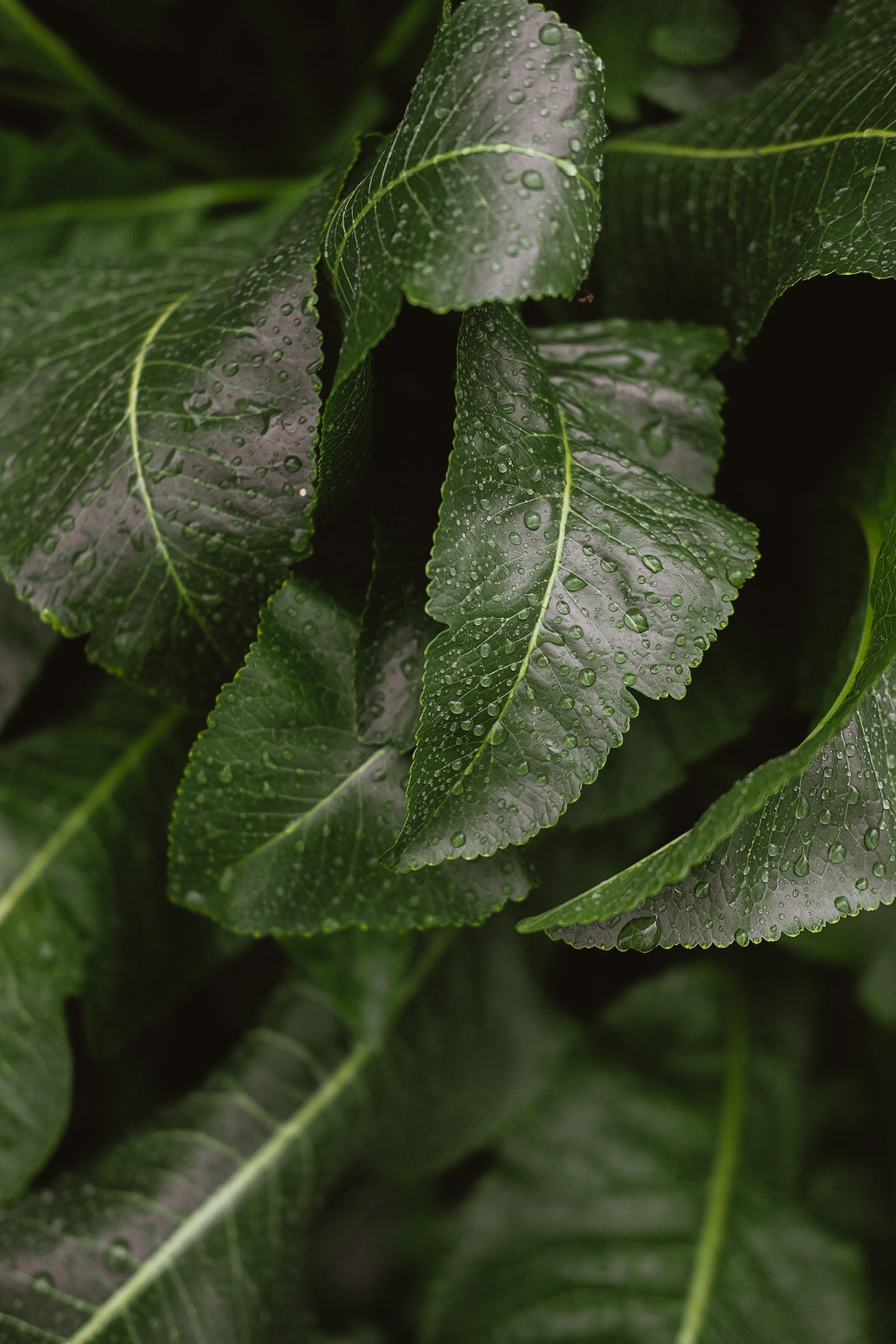
Photo: Shuvalova Natalia / Pexels
Horseradish is the easiest crop in this garden to grow and the hardest to un-grow. The plant is a hardy perennial with a deep, determined root system, and any fragment of root left in the soil becomes a new plant, which is why every honest guide leads with a warning. Grow it carelessly in a bed corner and within a few years you do not have a horseradish patch with a garden around it; you have a horseradish colony with a garden problem. Grow it contained, on purpose, and it is a nearly free condiment for decades: plant once, dig annually, and never buy a jar again.
The figures on this page come from Utah State University Extension's Horseradish in the Garden, read in full for this guide and recorded in this site's garden data: root pieces planted 2 to 3 inches deep, 1 foot apart, at a 45 degree angle; soil pH 6.0 to 7.5; 1 to 2 inches of water a week; yield of 3 to 7 pounds per square yard; 4 to 6 plants enough for a household. Everything here is built on those numbers.
Interactive tool
Horseradish Planting and Containment Checklist
Check off each step as you finish it. Your progress stays on this page.
0 of 8 complete
0% done
Step 1: Build the Containment Before You Own the Plant
Decide where horseradish is allowed to live for the next twenty years, because that is the real timescale. The options, in order of security:
A large container. The simplest containment: a big pot or half barrel, at least 12 inches wide and deep at the RHS minimum, bigger being easier to water and harvest. Container horseradish is dug by tipping the pot out, which also solves the fragment problem completely, because the whole root system is in your hands.
A buried bottomless pot. Sink a large pot with the bottom removed into the ground in a dedicated corner; the walls corral the roots sideways while the taproot runs down. Harvest means digging inside the pot's circle and treating anything outside it as an escapee to remove on sight.
A buried pipe section. Utah State describes containment in buried pipes, about 12 inches wide and 24 inches long, one plant per pipe. The pipe forces a straight, deep, easily dug root, which is why commercial style growers like the method: the harvest comes up like a carrot instead of a mining expedition.
Open ground, honestly assessed. A far corner where spread does not matter, mowed around, away from beds. This works on larger properties and fails in small gardens, because the definition of far enough keeps being revised by the plant.
Step 2: Plant the Sets at 45 Degrees
Horseradish is planted from root pieces called sets or thongs: pencil thick side roots cut from a main root, or bought from a nursery in spring. Utah State's planting standard: pieces 2 to 3 inches deep and 1 foot apart, set at a 45 degree angle with the crown end, the square cut end, up and the angled cut end down, and the crown finishing 1 to 2 inches below the surface. The two cut shapes are a deliberate code: root pieces are cut square at the top and slanted at the bottom when they are harvested and trimmed, so the planter can never plant one upside down, because an upside down set wastes its season growing the wrong way. Plant in early spring into worked, deeply loosened soil; this is a root crop, and a root that hits a hardpan forks around it. The pH band is 6.0 to 7.5, and a soil test before planting is worth it for a crop that will occupy the spot for decades.
Step 3: Feed and Water for Root, Not Leaf
Utah State's water figure is 1 to 2 inches a week, penetrating 18 to 24 inches deep, which tells you the shape of the job: deep, thorough drinks that reach where the root is going, not daily sprinkles. In most climates, spring rain does much of this and summer irrigation tops it up. Feeding is modest and specific: 1 teaspoon of nitrogen fertilizer (21-0-0) per plant at 4 weeks and again at 8 weeks after planting, per the Utah State schedule. More nitrogen than that grows a magnificent canopy over a mediocre root, the horseradish version of all hat and no cattle. Keep the patch weeded in its first season while the crowns establish; an established plant's huge leaves shade its own ground and the weeding mostly ends.
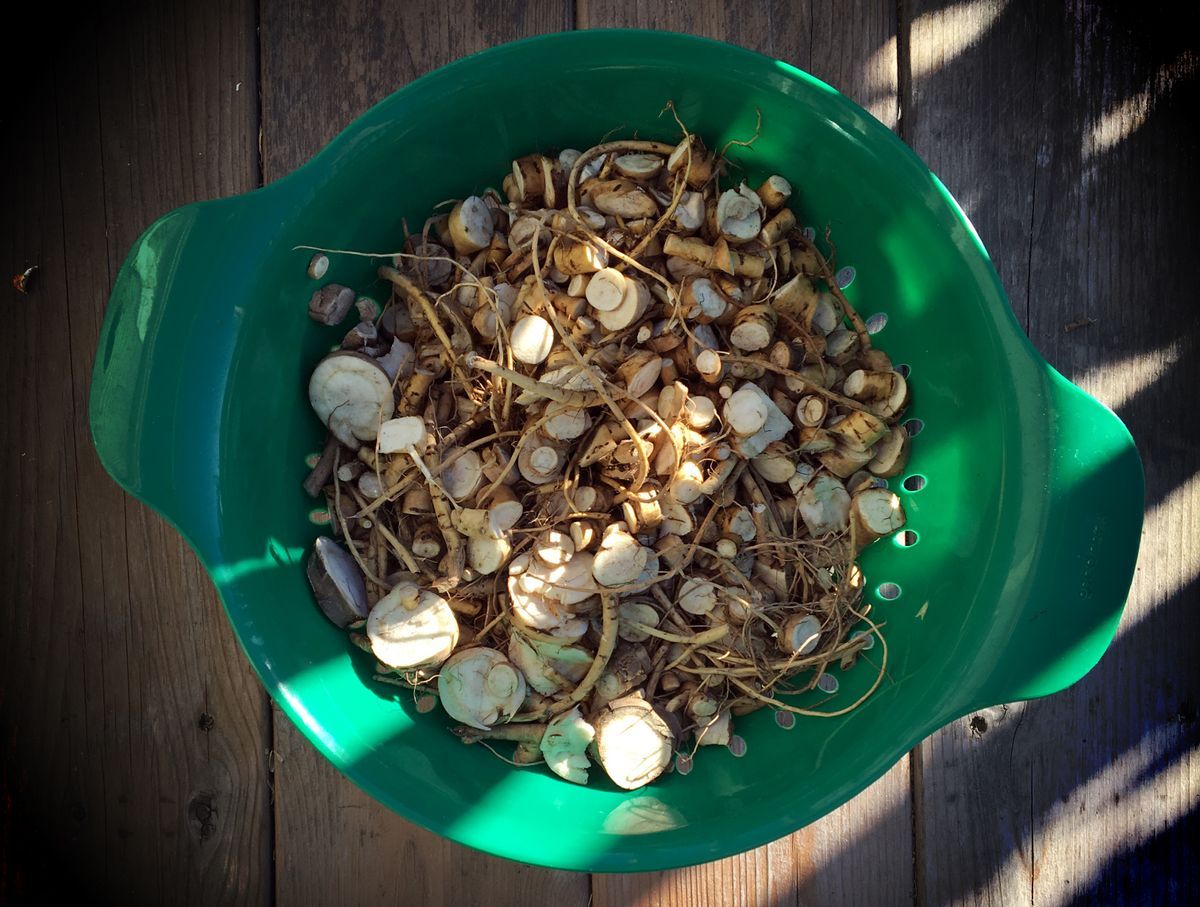
Freshly dug roots gathered in a green colander on a sunny day
Step 4: Lift and Trim for Straight Roots, Mid Season
The quality trick that separates straight, thick, single roots from a forked tangle is a mid season routine the old growers call lifting or suckering. When the leaves are well grown, gently lift the crown with a fork and rub or cut away the small side shoots and fibrous side roots forming along the top of the main root, leaving the crown's best growth and the root's clean downward run, then settle the soil back. Gardeners commonly do this twice in the season. The logic is the same as the scape cut in garlic: the plant's budget is finite, and every side root is a tax on the main root you actually grate. Do not skip the gloves for this job if your skin is sensitive, and keep every trimmed fragment out of the soil and off the compost's cold edges, because fragments are plants.
Step 5: Harvest After Frost, and Dig Like It Matters
Horseradish is harvested in autumn after several frosts, which improve and sharpen the flavor, or in early spring before growth resumes. Utah State's yield expectation is 3 to 7 pounds per square yard, and 4 to 6 plants are enough for a household, which matches the root's intensity: a little horseradish goes a long way and keeps. Dig with a fork, deeply and wide, because the roots run 18 to 24 inches down and snap if levered carelessly. And here is the commandment that the whole containment philosophy hangs on: dig all of the roots. Every piece left behind is next year's spread, so the harvest dig is also the containment audit. Whatever you cannot account for, mark the spot and watch it in spring.
At harvest, trim the harvest into next year's planting stock: the main roots go to the kitchen, and the pencil thick side roots get cut into sets, square end up, slanted end down, for replanting. A patch renews itself this way indefinitely, one reason horseradish patches outlive the gardeners who planted them.
Storage and the Grating Warning
Unwashed roots keep in the refrigerator for weeks, and for longer storage Utah State's method is burial in moist sand in a cool place, holding flavor for up to about 3 months. Peel and grate only what you will use, and grate it with ventilation and a little respect: freshly grated horseradish releases its heat as a volatile oil that builds after grating, and the first breath over a fresh pile is an experience every grower has exactly once before learning to lean back. Prepared horseradish is simply the grated root with vinegar, added early for mild or later for hot, because vinegar stops the reaction that builds the fire. The garden part of that recipe ends at the dig; everything after is cookery, and it keeps in the cold for months because the root was sound, contained, and fully dug.
Sourcing Sets, and the One Variety Question
Most gardeners grow the common horseradish type their nursery or seed house lists, and the honest news is that variety choice matters less for this crop than for almost any other in the garden: the species is the species, selected over centuries for root heat and vigor, and named selections differ modestly in habit and pungency. What matters more is the stock itself. Buy sets from a nursery or seed supplier rather than accepting a chunk of root from a neighbor's patch of unknown history, not because the neighbor's plant is inferior, but because root pieces are also how soil borne problems travel between gardens, and a patch you will live with for twenty years deserves a clean start. If you do accept a gift root, and gardeners will offer, because everyone with a patch has surplus, plant it in the container option for its first years where any surprise it carries stays contained. Planting stock keeps briefly: sets held cool and barely moist for a few weeks before planting are fine, sets dried to kindling or rotted in a warm bag are compost. From your second year onward the patch supplies its own sets at harvest, trimmed from the side roots as step 5 describes, and the sourcing question answers itself forever, which is the deep economic charm of this crop: one purchase, one containment build, and a condiment supply measured in decades.
Living With the Patch: Neighbors, Rotation, and the Long View
A contained horseradish patch asks little of its neighbors and gives one warning worth posting: do not rotate other crops through its ground and expect the ground to forget. Volunteers from missed fragments will appear in that corner for years, which is fine where the corner stays the horseradish corner and a genuine nuisance where next year's carrots were planned. Keep the patch a permanent address, like an asparagus bed or a rhubarb plant, and site its companions accordingly: tall or tough neighbors that tolerate an annual autumn excavation next door. The dig itself is the patch's one violent day, and beds beside it should hold crops that are finished by then, or perennials that shrug at a fork working a foot away. Escapees found wandering get dug the moment they are identified, roots and all, bagged rather than composted in a cold pile, because a horseradish fragment in finished compost is a planting, not a disposal. Managed with that much respect, the plant is not a thug but a tenant with a long lease and excellent rent. Managed without it, it is the previous owner's story that the new gardener tells with gestures. The difference is entirely decided on planting day, which is why this guide spends its first step on pipes and pots instead of roots.
Frequently Asked Questions
Will horseradish really take over my garden?
If planted uncontained in open ground, yes, eventually. It regrows from any root fragment left in the soil, spreads outward yearly, and is extremely hard to eradicate once established. Plant it in a large container, a buried bottomless pot, or a buried pipe section of about 12 inches wide and 24 inches long, per Utah State University Extension, and dig all roots at harvest.
How do I plant horseradish root pieces?
In early spring, set pencil thick root pieces 2 to 3 inches deep and 1 foot apart at a 45 degree angle, square cut end up and angled end down, crown finishing 1 to 2 inches below the surface, per Utah State University Extension. The two cut shapes exist so a set can never be planted upside down.
How much water and fertilizer does horseradish need?
Water at 1 to 2 inches a week, soaking 18 to 24 inches deep, so deep and thorough rather than frequent and light. Feed modestly: 1 teaspoon of nitrogen (21-0-0) per plant at 4 and 8 weeks after planting on the Utah State schedule. Excess nitrogen grows leaves at the root's expense.
When do I harvest horseradish, and how much will I get?
In autumn after several frosts, which sharpen the flavor, or in early spring before growth starts. Expect 3 to 7 pounds per square yard, and know that 4 to 6 plants supply a household. Dig deeply with a fork, and dig all of the roots: anything left is next year's unwanted spread.
How do I keep the roots straight instead of forked?
Mid season, lift the crown gently and rub or trim away side shoots and fibrous side roots along the top of the main root, then settle the soil back; growers commonly do this twice a season. Deep, loosened soil at planting prevents the forking that hardpan causes.
How long does harvested horseradish keep?
Roots keep for weeks refrigerated, and stored buried in moist sand in a cool place they hold their flavor for up to about 3 months, per Utah State University Extension. Grate only what you need; prepared horseradish with vinegar keeps longer in the refrigerator.
Photo credits: Shuvalova Natalia (Pexels); Denise Cusack (Pexels). Photos are served from this site; follow the credit to the library page for the original.