A hydrangea cutting is the most reliable free plant in the shrub garden, because the species roots with an eagerness most shrubs do not offer, provided two things are right: the wood is taken in its window, and the cutting never dries while it has no roots. Everything else is refinement. The main window is late spring into early summer, when the new season's shoots are softwood, green and flexible but snapping cleanly rather than bending like string. A second window runs midsummer to early September with semi hardwood, the same shoots partly firmed, which roots a little slower and overwinters a little stronger. This page runs the full system: the cutting itself, the hormone and medium, the humidity tent that does the actual work, and the calendar that ends not at rooting but at a planted shrub the following spring. One relative is excepted at the end: climbing hydrangea, which is propagated by layering, not cuttings, and pretending otherwise wastes a season. Run the checklist above as the build order.
Home / Flowers and Houseplants
How to Grow Hydrangeas from Cuttings: The Softwood Window, the Humidity Tent, and the Following Spring
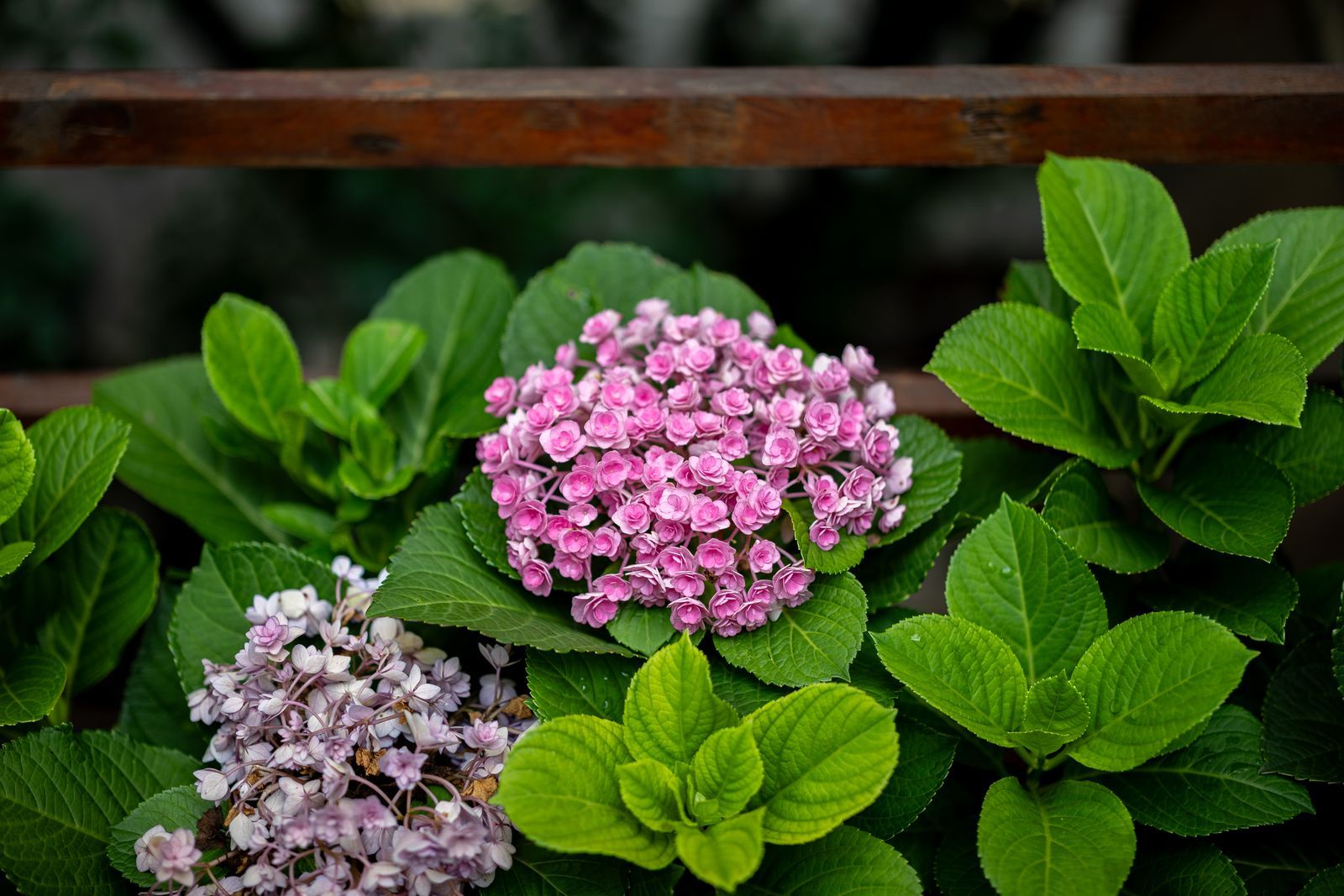
Photo: Bảo Minh / Pexels
Hydrangea Cutting Checklist
Check off each step as you finish it. Your progress stays on this page.
0 of 8 complete
0% done
The Cutting: Non Flowering Wood, Below the Node, Leaves Halved
Take cuttings in the morning from a plant that was watered the day before, choosing shoots that carry no flower bud, because a flowering shoot spends its energy on the bloom and roots reluctantly. Each cutting runs 4 to 6 inches with at least two sets of nodes. Cut just below a node with clean, sharp pruners, since the node zone carries the tissue that roots most readily, and strip the leaves from the lower half of the stem. The top pair of leaves stays, and with the bigleaf types it gets cut in half across the blade, the signature move of hydrangea propagation. Halving the leaves looks brutal and does two jobs at once: it halves the water the rootless cutting loses through its leaves, and it halves the weight and sail that rock the cutting in its medium. Work in small batches and keep finished cuttings in a damp cloth or a bucket of shade while you take more; a softwood cutting that wilts in the taking is a cutting already lost. The parent plant gives generously in a good year, and taking a dozen cuttings for a six plant need is the correct arithmetic, because even a well run system does not root every stick.
Hormone, Medium, and the Pot
Rooting hormone is genuinely useful here rather than ritual: a gel, liquid, or powder at 0.1 to 0.3 percent IBA, the softwood strength, dipped on the cut end and the stripped node zone, measurably improves rooting speed and uniformity in hydrangea. The medium is the opposite of garden soil: sterile, lean, and airy, with perlite alone or perlite cut with coir or fine peat the standard mixes, because a rootless cutting in rich wet soil rots before it roots, and the medium's only jobs are to hold the stem upright, hold moisture evenly, and hold no pathogens. Moisten the medium before sticking, poke the hole with a pencil so the hormone is not wiped off on the way in, firm gently, and set the cuttings so the stripped nodes are buried and the leaves of neighboring cuttings barely touch. A 4 inch pot takes three or four cuttings comfortably. Label with the variety name and the date, because every hydrangea in the neighborhood is about to look identical, and the following spring's planting plan depends on knowing which is which.
The Humidity Tent: The Weeks That Decide Everything
A rootless cutting loses water through its leaves and cannot replace it, so the system's heart is keeping the air around it saturated until roots exist. Cover the pot with a clear plastic bag propped off the leaves on sticks, or a clear dome, and set it in bright indirect light, never direct sun, which cooks a tented pot in an hour. Inside the tent the leaves stay turgid on the moisture the medium gives up, and the cutting spends its stored energy on root initials instead of survival. Open the cover every few days for fresh air and a check: the medium should stay evenly moist, condensation is expected, mold is not, and any cutting that blackens at the base comes out immediately before it spreads. Softwood cuttings root in 2 to 6 weeks in the window; the test is a gentle tug, where resistance means roots, and the confirmation is new leaf growth, which no rootless cutting can fake for long. Only then does the cover come off, in stages over several days, because a cutting moved from saturated air to room air in one step wilts like a cutting again. Harden first, then pot on individually into a real potting mix, and the plant graduates from patient to shrub in training.
The Following Spring: The Calendar After Rooting
Rooting is the middle of this system, not the end, and most cutting losses happen in the months after the tent comes off. A cutting rooted in June is a small rooted plant by late summer, and it should be potted on, fed lightly, watered as a young container shrub, and kept growing into fall. It is not planted out as a finished shrub that first season in cold climates, because its root system is months old, not years. Overwinter the young plants in their pots in a sheltered spot, a cold frame, an unheated garage against a wall, or pots sunk in the ground and mulched, protected from the freeze thaw cycling that heaves small root balls. Plant out the following spring, after frost, into the shrub's permanent position, watered on the establishment rhythm of a new shrub, and the clone of your parent plant begins its real life, flowering typically in its second or third year depending on type and whether it blooms on old or new wood. Semi hardwood cuttings taken late follow the same calendar shifted: rooted by fall, overwintered as the priority, planted the next spring. And the exception that proves the system's honesty: climbing hydrangea roots from cuttings so reluctantly that the standard method is layering, pinning a low stem to the soil the parent already touches, and severing it a year later with roots of its own. Use cuttings where cuttings work, layers where they do not, and a named hydrangea becomes as many hydrangeas as you have fences for.
Frequently Asked Questions
When is the best time to take hydrangea cuttings?
Late spring to early summer, when the new shoots are softwood: green, flexible, and snapping cleanly rather than bending. Take them in the morning from non flowering shoots on a plant watered the day before. A second window runs midsummer to early September with semi hardwood, the same shoots partly firmed up; these root a little more slowly but overwinter strongly. Cuttings are 4 to 6 inches long, cut just below a node, with the lower leaves stripped and the top leaves halved.
Do hydrangea cuttings need rooting hormone?
They root without it in the softwood window, and faster and more evenly with it. A gel, liquid, or powder at 0.1 to 0.3 percent IBA, the softwood strength, applied to the cut end and stripped nodes, is the standard this page uses. Poke the hole in the medium with a pencil before inserting the cutting so the hormone is not wiped off. Hormone is an improvement on a working system, not a substitute for the humidity cover, which does the decisive work.
How long do hydrangea cuttings take to root?
Two to 6 weeks for softwood cuttings in the main window, semi hardwood somewhat longer. The pot lives under a clear cover in bright indirect light with the medium evenly moist. Test with a gentle tug; resistance means roots have formed. New leaf growth is the surest sign. When roots confirm, remove the cover in stages over several days rather than all at once, because a cutting hardened suddenly from saturated air to room air can wilt and collapse.
Why do you cut hydrangea leaves in half on a cutting?
To cut the water loss the rootless cutting cannot replace. The big top leaves of a bigleaf hydrangea transpire heavily, and halving the blade halves that loss while leaving enough leaf to feed root formation. It also halves the weight rocking the cutting in its medium. Strip the lower leaves entirely, keep one or two top pairs, and halve those if they are large. The cutting looks severe and roots better for it.
Can I propagate climbing hydrangea from cuttings?
Poorly, and the standard advice is not to try as your main method. Climbing hydrangea roots reluctantly from cuttings and is propagated by layering instead: pin a low, flexible stem to the soil where it already nearly touches, wound it lightly at the contact point and cover it with soil, and leave it attached to the parent for a season. Sever and transplant it the following year with its own root system formed. The bush hydrangeas in this article are the cutting subjects; the climber plays by different rules.
Photo credits: Bảo Minh (Pexels); kuangkuang xia (Pexels). Photos are served from this site; follow the credit to the library page for the original.