How to Grow Kabocha Squash: The Winter Squash on a Calendar
By the Windchime Walker editorial team
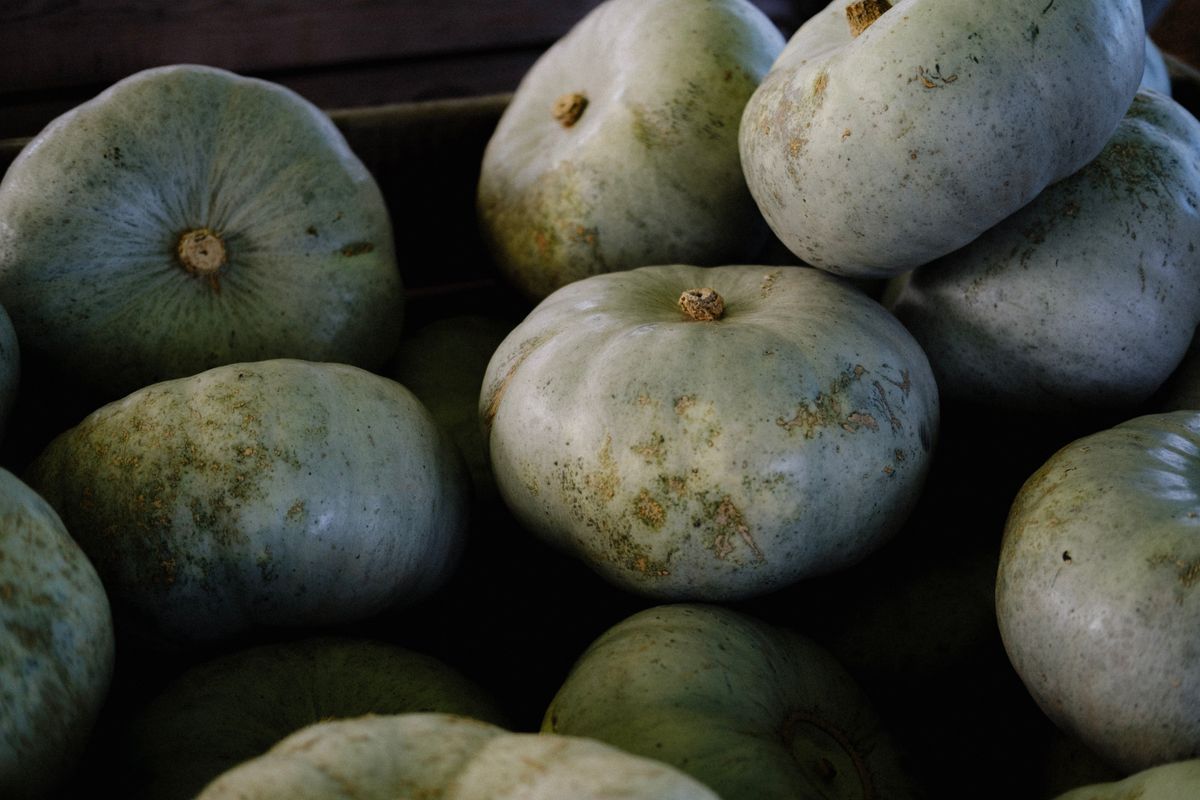
Photo: Jonathan David / Pexels
Kabocha is the sweet, dense, dark green winter squash that converts people who thought they did not like winter squash, and it fails beginners in one specific way: not by care, but by calendar. The vines are vigorous, the plant is generous, and then the frost arrives with the fruit two weeks short of ripe, because nobody counted the season backward before sowing. Kabocha needs a long, warm season, 90 to 120 days depending on variety, and every decision on this page hangs off that number: when to sow, whether to start indoors, and when to stop expecting new fruit to matter.
The spacing and storage standard here is the University of Illinois Extension winter squash guidance, read in full for this guide and added to this site's garden data: vining types in hills 5 to 6 feet apart with rows 7 to 12 feet apart, 50 to 100 square feet per hill, seed sown 1 inch deep, 4 to 5 seeds per hill thinned to the best 2 to 3 plants. Kabocha is a vining Cucurbita maxima, so the vining standard is its standard. Consumer sources sprawl from 24 inches to 6 feet for spacing; this page uses the Illinois figures throughout and says so.
Interactive tool
Plant Spacing Planner: The Kabocha Hills
Kabocha squash is in the crop list below at the University of Illinois Extension winter squash spacing, hills about 5.5 feet apart in rows about 8 feet apart. Enter your patch size and count your hills honestly before you sow: each one wants 50 to 100 square feet.
8 tomato plants fit this bed
4 plants per row across 2 rows, on a 24 inch grid. Extension spacing for this crop: 24 in between plants, 48 in between rows.
The grid uses the in-row spacing in both directions, the standard square foot layout for raised beds. In open ground, keep the wider row spacing in the note above so you can walk and weed between rows.
Spacing figures: University of Georgia Cooperative Extension, Circular 963, Vegetable Planting Chart, source.
Step 1: Count the Season Backward Before Anything Else
Take your average first fall frost date and count back your variety's days to maturity, then add about two weeks of harvest cushion. That is your latest sensible sowing date. If direct sowing after frost lands you short of that date, you start indoors, 2 to 4 weeks before last frost, in pots big enough to avoid root disturbance, because squash resents transplanting and sulks if its roots are torn or pot bound. Gardeners with genuinely short seasons should also choose the fastest maturing kabocha variety on offer; the difference between a 90 day and a 120 day variety is the difference between a harvest and a heartbreak in a cool climate. Write the count on the seed packet. Kabocha is not a crop to plant on a hopeful whim in June.
Step 2: Sow Into Thoroughly Warmed Soil
Winter squash seed goes in only after all frost danger, into soil that has genuinely warmed, around 70 degrees being the working target quoted for squash sowing. Cold soil does not kill the plan loudly; it rots seed quietly and staggers the seedlings that do emerge. Sow 1 inch deep, 4 to 5 seeds per hill, at the Illinois hill spacing of 5 to 6 feet between hills and 7 to 12 feet between rows, and sit with what that means: one hill commands 50 to 100 square feet. This is not a raised bed crop for most beginners. It is a crop for a garden edge, a sunny slope, a spot where vines can run onto mulch or grass and be mowed around. Planting kabocha in a 4 by 8 bed is the spacing version of the calendar mistake: the plant will be magnificent and entirely in the wrong place.
Step 3: Thin to the Best Two or Three, and Feed the Hill
When the seedlings are up and growing, thin each hill to the best 2 to 3 plants, snipping the rejects at the soil line rather than pulling them, so the keepers' roots stay undisturbed. Kabocha is a heavy feeder, as befits a plant building that much vine and fruit: work compost into the hill at planting, mulch the hill deeply once the soil is warm to hold moisture and suppress the weeds the vines will later hide, and side dress with compost as the vines begin to run. Water deeply at the base, about an inch a week and more as fruit sets and sizes, keeping the foliage as dry as you reasonably can, because the squash family's mildew troubles all begin with wet leaves and still air.
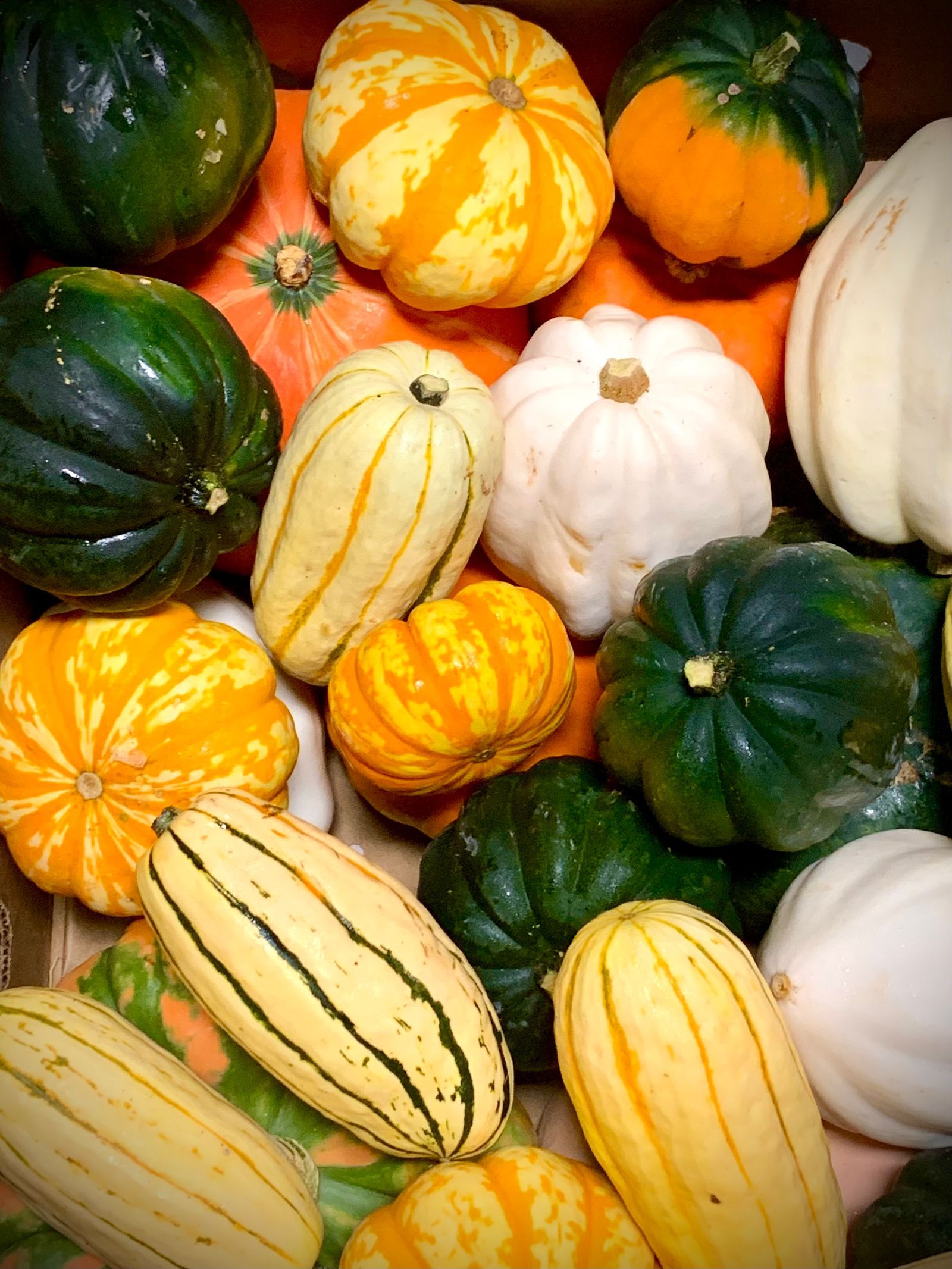
A colorful display of winter squash varieties at harvest
Step 4: Manage the Vines, Watch for the Borer
A kabocha vine's job is to cover its territory and set fruit along the way. Let the main vines run; where space is tight, redirect a vine by lifting it gently and laying it in a new direction while it is young and flexible, rather than pruning, because every leaf is feeding fruit somewhere. Flowers come in two kinds, male first and then female with a tiny squash swelling behind the petals, and fruit set depends on bees moving between them; a quiet garden can hand pollinate on a dry morning with a soft brush. The enemy to scout for is the squash vine borer, whose larva tunnels the stem base and wilts a thriving vine in a day: look for the sawdust like frass at the stem base, and know that a vine rooted at a leaf node beyond the damage sometimes carries on, which is one reason letting vines sprawl and root at nodes is insurance rather than mess. Powdery mildew late in the season is the lesser tax; by then the fruit is sizing and the plant can afford tired leaves.
Step 5: Harvest at the Hard Rind, With Stem Attached
A kabocha is ripe when its rind has reached its deep, solid mature color and is hard enough that a thumbnail cannot dent it, and the stem has begun to brown and cork. Immature fruit is watery, bland, and will not store or sweeten; there is no ripening a winter squash on the counter the way a tomato forgives you, because the sugars are made on the vine. Cut the fruit free with 2 inches of stem left attached, per the Illinois standard: a squash whose stem is torn out has an open wound where rot enters, while the intact stem seals the fruit for storage. Handle harvested squash like eggs; a bruise in the field is a soft spot in the storage room in December. Harvest everything before the first hard frost, which damages the rind and shortens storage life even when the fruit looks unmarked.
Step 6: Cure, Then Store Cool and Dry
Curing is the step that makes kabocha sweet and storable, and skipping it is the second most common beginner loss after the calendar. Cure the harvested fruit at about 70 degrees for 10 to 20 days, in a warm, airy spot out of direct baking sun: the rind hardens further, small wounds seal, and starches convert toward the sweetness kabocha is famous for. The Illinois guidance names the exceptions among winter squashes that do not need curing, acorn, sweet dumpling, and delicata; kabocha is not among them, so cure it. Then store at 50 to 55 degrees, in a cool room, a basement corner, or an unheated spare room, in a single layer where air can move rather than a stacked pile. Stored so, large hard rind winter squashes keep for months, up to about 6 months for the best keepers, and kabocha properly cured is one of them. Check the stored fruit every few weeks and promote any squash with a soft spot to the kitchen immediately; one rotting squash in a pile is a teacher with many students.
Starting Indoors, Done Carefully
Because the calendar forces many gardeners to start kabocha indoors, do it in the way that respects the plant's dislike of transplanting. Start 2 to 4 weeks before the last frost, no earlier: a squash seedling grows fast, and a plant held indoors too long becomes a leggy, root bound argument against the whole method. Sow one seed per pot in pots at least 3 to 4 inches across, so the root ball moves to the garden as an undisturbed plug. Grow the seedlings in the brightest light you have, because a kabocha raised on a dim windowsill stretches into a weak vine that the first windy day edits severely. Harden the plants off over several days before transplanting, set them out only when the weather and soil are genuinely warm, and handle the root ball like a raw egg. Water the transplants in well and shade them for the first day or two if a heat wave coincides. A direct sown hill, given warm soil, usually catches an indoor start within a fortnight, which is why the indoor route is a calendar tool and not a superiority claim: use it when the count back in step 1 demands it, and sow direct with a clear conscience when it does not.
Saving Seed From Your Best Fruit
Kabocha is open pollinated in most gardens, and saving its seed is a satisfying closing of the loop, with one rule of bee behavior to respect. Cucurbita maxima varieties cross pollinate freely with each other, so seed saved from a kabocha grown beside another maxima, a hubbard or a buttercup type, may grow out as an interesting hybrid rather than a true kabocha. Gardeners who want true seed grow one maxima variety, or accept the lottery, which many cheerfully do, since the offspring of two good squashes is rarely a bad one. To save seed: choose your best, fully mature, properly cured fruit, scoop the seeds at cooking time, rinse them clean of pulp, and dry them spread out in a warm airy spot until they snap rather than bend. Store them dry, dark, and labeled with the variety and year. The first winter dinner that begins with opening your own stored kabocha and ends with its seeds drying by the stove is the moment this crop stops being a plant you grow and becomes a plant you keep, which is the oldest relationship in gardening.
Frequently Asked Questions
How long does kabocha take to grow?
Ninety to 120 days by variety, which is why this crop is planned by counting back from your first fall frost, with a couple of weeks of cushion added. Short season gardeners should start plants indoors 2 to 4 weeks before last frost and choose the fastest maturing variety available.
How far apart do I plant kabocha squash?
At the University of Illinois Extension winter squash standard used on this page: hills 5 to 6 feet apart, rows 7 to 12 feet apart, with each hill taking 50 to 100 square feet. Sow 1 inch deep, 4 to 5 seeds per hill, and thin to the best 2 to 3 plants. The spacing planner on this page is preset to those figures.
When is kabocha ripe and ready to pick?
When the rind is a deep, solid color and too hard for a thumbnail to dent, and the stem is browning and corky. Cut with 2 inches of stem attached, never tear the stem out, and harvest everything before a hard frost, which shortens storage life. Unripe kabocha will not sweeten off the vine.
What does curing mean and does kabocha need it?
Curing is holding harvested squash at about 70 degrees for 10 to 20 days so the rind hardens, wounds seal, and starch converts to sweetness. Kabocha does need it. Acorn, sweet dumpling, and delicata are the winter squash exceptions that skip curing, per University of Illinois Extension.
How long will kabocha keep in storage?
After curing, store at 50 to 55 degrees in a single layer with air movement. Large, hard rind winter squashes stored this way keep for months, up to about 6 months for the best keepers. Check every few weeks and use any squash that develops a soft spot right away.
My vines wilted suddenly in midsummer. What happened?
The likely culprit is the squash vine borer, whose larva tunnels the stem base; look for sawdust like frass at the base of the vine. There is no easy cure for a tunneled stem, but a vine that has rooted at a leaf node beyond the damage sometimes continues. Base watering, bee friendly pollination, and scouting the stem bases weekly are the prevention habits.
Photo credits: Jonathan David (Pexels); Mathias Reding (Pexels). Photos are served from this site; follow the credit to the library page for the original.