How to Grow Lettuce in Containers: the Shallow Trough, the Succession Rhythm, the Bolt Defense
By the Windchime Walker editorial team
Photo: Letícia Alvares / Pexels
Lettuce is the container crop that forgives everything except being planted once. A single sowing of lettuce is a salad for one crowded week followed by a trough of bolting stems; the same trough sown little and often is a salad supply that runs for months. The difference is not skill, it is rhythm, and rhythm is what this page teaches: the container, the spacing, the sowing calendar, and the defenses against the one failure that ends every beginner's lettuce season early, bolting.
Our how to grow lettuce guide owns the in ground crop, beds, and varieties for soil. This page owns the pot: the trough on the railing, the windowsill box, and the watering discipline a small volume of mix demands.
Interactive tool
Lettuce Container Checklist
Check off each step as you finish it. Your progress stays on this page.
0 of 8 complete
0% done
The Container: Wide and Shallow Wins
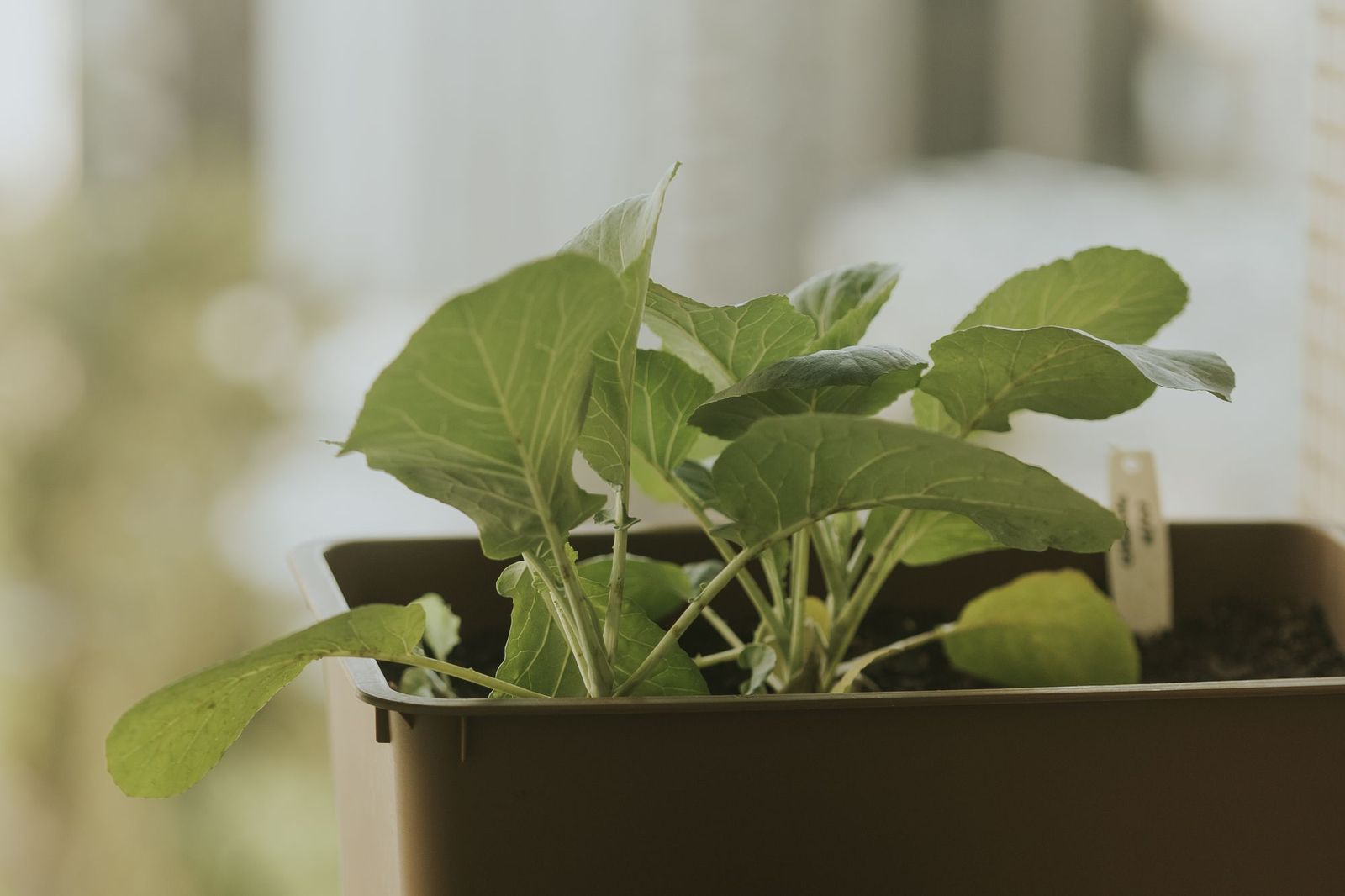
Lettuce roots are shallow and its leaves are wide, so the container geometry is the opposite of a tomato's: width matters, depth barely does. A trough, window box, or wide shallow pot at least 6 to 8 inches deep is the ideal, and a long trough beats a round pot because it takes a row, and a row is how succession sowing organizes itself. Any container with drainage holes works; the mix matters more than the vessel. Use fresh potting mix, not garden soil, and expect to refresh or replace it between seasons, because lettuce is grown in the same shallow volume repeatedly and old mix compacts and carries disease into the next sowing. A trough on a railing or a stand at waist height also earns its keep at harvest: you cut salad standing up, at eye level, where the slugs mostly are not and the aphids are easy to see.
Spacing by Type, and the Sow Thick Then Thin Method
Spacing in the trough runs 4 to 10 inches depending on the lettuce you are growing, and the types genuinely differ. Loose leaf varieties, the cut and come again backbone, sit at 4 to 6 inches and tolerate crowding best. Butterheads want about 8 inches to form their soft heads. Romaine and cos types want 8 to 10 inches and the most time. Transplants go in at their final spacing, but seed is better handled the lettuce way: sow thickly in the row, a pinch of seed along a shallow line about a quarter inch deep, and thin progressively as the seedlings grow, eating the thinnings. The first thinning at 2 inches tall is microgreens; the second is baby leaf for sandwiches; the plants that remain stand at full spacing with no gaps and no wasted weeks, because the row was producing at every stage. Seed that is sown too deep is the one germination failure to avoid: lettuce seed needs light and shallow covering, a quarter inch of mix at most, firmed gently and kept moist until it is up, usually inside a week in cool weather.
The Succession Rhythm: Little and Often, Sized to the Household
Here is the arithmetic that makes the system work. A household that eats salad four times a week needs roughly two mature heads or the leaf equivalent per week. A loose leaf plant cut correctly yields for 3 to 4 weeks before it tires. So the rhythm is: sow a short row, about a foot of trough, every 2 weeks through the cool season, and the pipeline of sowings at different ages means something is always at cutting size and nothing is bolting in a glut. Scale the row length to your household, not to the seed packet's optimism. In spring, start the first sowing as soon as the mix can be worked; lettuce germinates in cool soil and tolerates light frost once up, which makes it the earliest container crop of the year. In fall, resume sowing in late summer as nights cool, and the trough often produces until hard frost, and past it under a simple cover. Summer is the managed gap, covered in the bolting section below. Mark sowings with a date label at the row's end; in six weeks you will not remember which row is which, and the label is the whole record keeping system this crop needs.
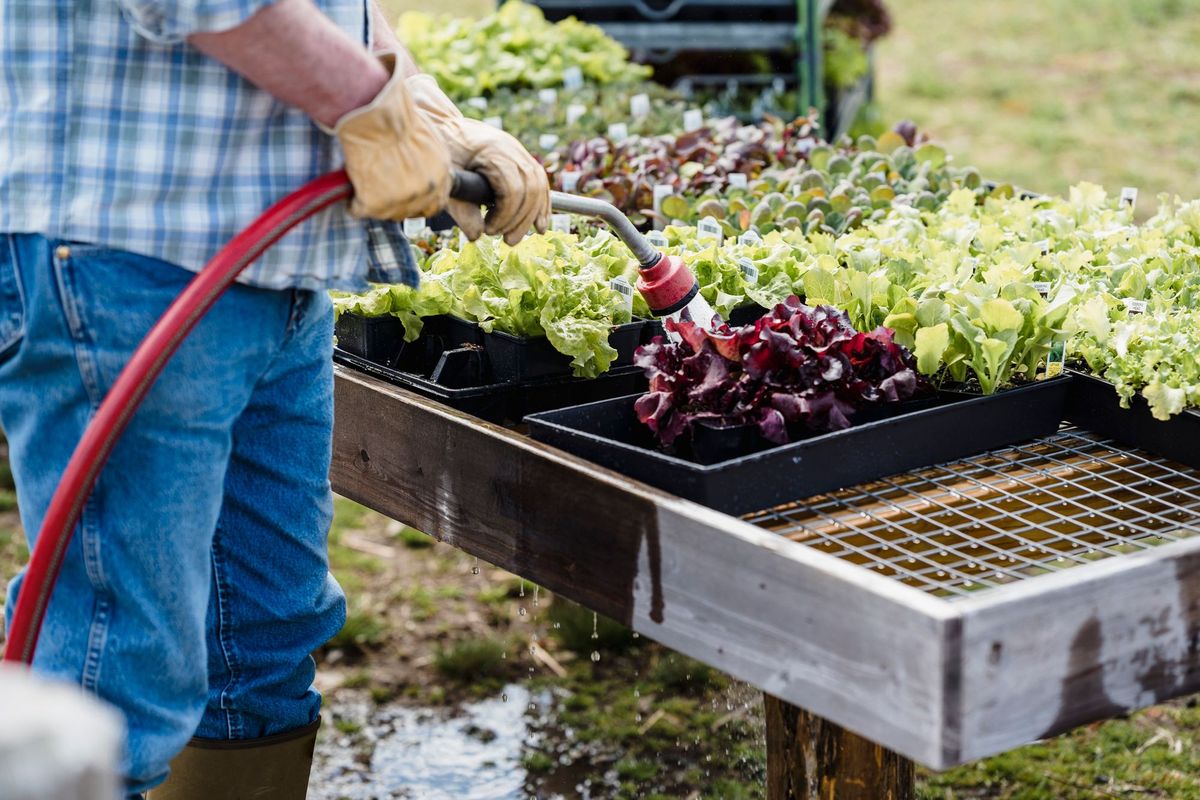
Lettuce being watered in container boxes
Water: the Container Difference
In ground lettuce forgives a dry day; container lettuce in 6 inches of mix on a sunny railing cannot, because the reservoir is a few cups of water and the leaves are mostly water themselves. The rule is steady moisture: the mix should feel like a wrung out sponge at all times, never dust dry and never soupy. In practice that means a light watering most mornings in warm weather, checking with a fingertip at an inch down, and a deeper drink when the top inch has dried. Mulching the trough surface with a thin layer of fine compost or straw once the plants are up slows the evaporation noticeably. The flavor connection is real and worth knowing: lettuce that grows fast in steady moisture is sweet and crisp, while lettuce that checks and surges on drought and flood turns bitter before it bolts, because the bitter compounds are the plant's stress chemistry. Consistent water is not fussiness with this crop; it is the flavor input.
The Bolt Defense: Variety, Shade, Timing
Bolting, the plant's switch from leaf making to flower making, is triggered by heat and long days, and it turns leaves bitter as the stem rises. It cannot be prevented forever, but it can be managed on three fronts. Variety: bolt resistant and slow bolt varieties, and heat tolerant types bred for summer, genuinely buy weeks, and in summer they are the only lettuces worth sowing. Shade: lettuce wants morning sun and is grateful for afternoon shade, so a trough that sits in sun until noon and shade after is perfectly placed, and in high summer moving the trough to the bright shade of a taller pot or a railing's shadow extends it further. Timing: the succession rhythm is itself a bolt defense, because a 3 week old sowing harvested young never lives long enough to bolt; summer lettuce should be grown as baby leaf, cut at 4 to 5 weeks, with the next row already coming. When a plant does bolt, pull it and compost it without regret; the trough space is worth more than the bitter leaves, and the rhythm means a replacement is already growing.
Harvest: Cut and Come Again, Done Right
The harvest method decides whether one sowing yields for a month or a day. For loose leaf types, cut the outer leaves individually, or shear the whole plant an inch above the crown, leaving the growing point intact; the plant regrows from the center and gives two or three more cuts. Never strip a plant bare, and never let the harvest wait for a perfect occasion: lettuce is cut when it is ready, in the morning when the leaves are crisp with overnight water, rinsed, and spun dry. Head lettuces are the exception, cut whole at maturity, which is why the succession labels matter: the head rows are one and done, the leaf rows are the annuity. The checklist below sequences the whole system, trough to table, in the order a first season actually runs.
Varieties That Behave in Pots, and the First Season Calendar
Variety choice does quiet work in a container that it does not do in the ground, because the trough's small volume amplifies stress and the forgiving varieties absorb it. For cut and come again production, the oak leaf and loose leaf types are the container standards: they regrow fast after cutting, tolerate the 4 to 6 inch spacing, and shrug off the occasional dry hour better than heading types. Butterheads are the flavor pick and worth their 8 inches where the trough is wide enough. Romaines are the divas of the container lettuce world, the most bolt prone in heat and the thirstiest, and they earn their place in the cool seasons only. In summer, switch the trough to the heat set: the varieties bred and named for it, and grow everything as baby leaf regardless of type. A first season calendar that puts it together for a temperate climate: sow the first rows in early spring as soon as the mix thaws, every 2 weeks through late spring; pause or go full baby leaf with heat varieties through the hottest weeks, moving the trough to afternoon shade; resume full sowing in late summer; and keep cutting into fall until a hard freeze, which a simple cover delays by weeks. That calendar, two troughs, and a packet habit is the entire infrastructure of a household salad supply, and it costs less than a month of bagged salad at the store.
Frequently Asked Questions
What size container does lettuce need?
A wide, shallow one: at least 6 to 8 inches deep, and as wide or long as your space allows, because lettuce roots are shallow and the harvest is in the surface area. A long trough beats a round pot because it takes a row, and rows are how succession sowing and thinning organize themselves.
How far apart should lettuce be in a container?
Four to 6 inches for loose leaf types, about 8 inches for butterheads, and 8 to 10 inches for romaine. Sow seed thickly and thin progressively, eating the thinnings as microgreens and baby leaf, so the row produces at every stage and finishes at full spacing.
How often do you water lettuce in containers?
Steadily. The mix should stay like a wrung out sponge, which in warm weather means a light watering most mornings and a check with a fingertip an inch down. Shallow containers hold little water, and lettuce that dries out turns bitter before it bolts; steady moisture is a flavor input, not fussiness.
How do I stop lettuce from bolting?
Manage it on three fronts: bolt resistant varieties, especially in summer; afternoon shade, with the trough in morning sun only; and the succession rhythm itself, harvesting summer lettuce young as baby leaf at 4 to 5 weeks before it can bolt. A bolted plant is pulled and composted; the rhythm means its replacement is already growing.
Can I grow lettuce indoors on a windowsill?
Yes, with the brightest window you have or a simple grow light, and loose leaf types are the right choice. Indoor lettuce grows slower and smaller than outdoor, so sow a little more and harvest as baby leaf. The trough, spacing, and steady moisture rules are identical; only the light is scarcer.
Photo credits: Letícia Alvares (Pexels); Greta Hoffman (Pexels). Photos are served from this site; follow the credit to the library page for the original.