If gardens had a training course, lettuce would be week one. It germinates quickly, grows visibly from day to day, forgives beginner watering, and can be harvested a few leaves at a time for weeks from a single sowing. It is also the crop that teaches the garden's two great rhythms better than any other: succession, sowing small amounts repeatedly instead of everything at once, and seasonality, because lettuce is a cool weather plant with a spring season, a summer problem, and a glorious fall comeback.
This guide grows lettuce the way experienced gardeners actually do: loose leaf varieties first, short rows sown every two weeks, plants thinned to the University of Georgia spacing of 8 to 12 inches, harvested by the cut and come again method, and a clear plan for the day the weather turns hot and the plants try to bolt.
The Plant Spacing Planner on this page carries lettuce at that Georgia spacing. Use it to size one short succession row at a time for your bed, which is the unit this whole method is built on: not a lettuce plantation, but a steady supply sized to a household's salads.
Interactive tool
Plant Spacing Planner: The Lettuce Row
Lettuce is in the crop list below at the University of Georgia Cooperative Extension spacing of 8 to 12 inches between plants. Enter your bed size to plan one short succession row at a time.
8 tomato plants fit this bed
4 plants per row across 2 rows, on a 24 inch grid. Extension spacing for this crop: 24 in between plants, 48 in between rows.
The grid uses the in-row spacing in both directions, the standard square foot layout for raised beds. In open ground, keep the wider row spacing in the note above so you can walk and weed between rows.
Spacing figures: University of Georgia Cooperative Extension, Circular 963, Vegetable Planting Chart, source.
Step 1: Choose Loose Leaf Lettuce First
Lettuce comes in four broad types, and they are not equally kind to beginners. Loose leaf lettuce forms an open rosette of leaves rather than a head, matures fastest, and allows the cut and come again harvest that keeps one plant producing for weeks. It is the beginner's lettuce, full stop. Butterhead types form soft, small, exquisite heads and are nearly as easy. Romaine forms upright, crisp heads and tolerates heat a little better than most. Crisphead types, the iceberg family, form tight heads slowly and are the most demanding of timing and cool weather; they are a year two project.
Within loose leaf, the choice is color and texture: green workhorses, red tinged varieties that make a salad look like a restaurant's, and oakleaf shapes that hold well in the bowl. Buy two varieties, one green and one red, and your salads will look grown by someone who knows things. Seed is cheap and keeps for years, so lettuce is where a beginner can afford to experiment freely.
Step 2: Time It as a Cool Season Crop, Twice a Year
Lettuce prefers cool weather and grows best in spring and fall, turning bitter and bolting, rushing to flower and seed, when heat and long days arrive. Plan for two lettuce seasons and a summer pause, rather than one long struggle.
For spring, North Dakota State University Extension H1139 starts lettuce seed indoors about 8 weeks before the last spring frost and sets transplants out about 4 weeks before it, because lettuce tolerates cool soil and light frost happily. Direct sowing works just as well for most gardeners: sow in the bed as soon as the soil can be worked in spring. For fall, sow again in late summer, counted back from your first fall frost, and expect the fall crop to be the better one: fewer pests, sweet growth in cooling air, and plants that hold in the ground like a living refrigerator as the weather cools.
The summer pause is not failure. It is the crop's nature, and the space it frees is where beans and cucumbers do their summer work. Gardeners who fight lettuce through July heat with shade cloth and hope exist, and some succeed, but a beginner's energy is better spent on the two seasons lettuce actually wants.
Step 3: Sow Shallow and Keep It Moist
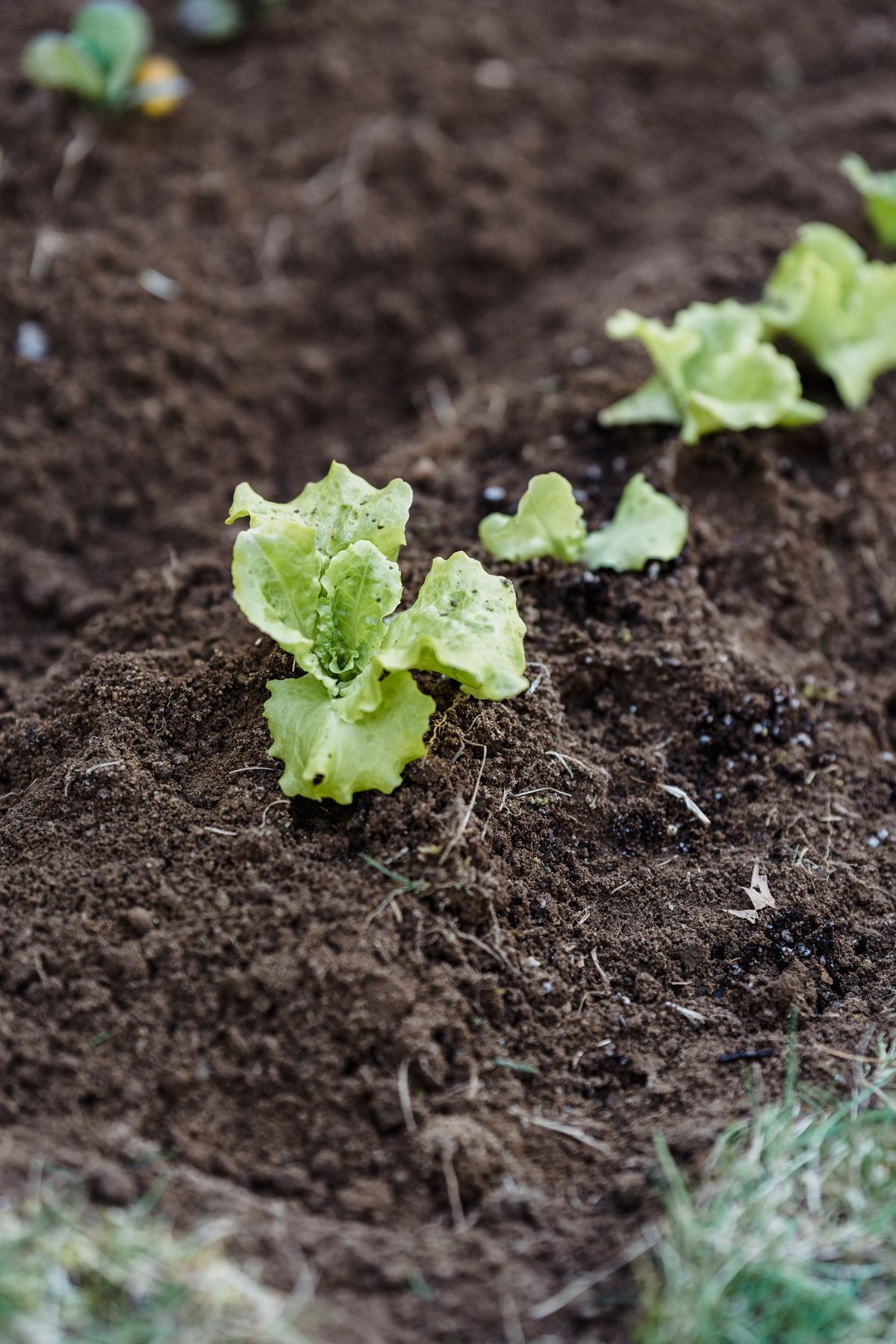
Lettuce seed is small and is sown very shallow, barely covered, following the depth on your packet; many gardeners press the seed into firmed soil and dust the lightest covering over it, because lettuce seed germinates best with a hint of light reaching it. Sow along a marked row or scatter across a small block, then water with a fine, gentle spray that will not wash the seed into piles.
The seedbed rule from the carrot patch applies here in a milder form: keep the sown surface evenly moist until germination, which for lettuce in cool soil is usually a matter of days to a couple of weeks. A light cover of burlap or a board laid over the row holds moisture on bright, windy days; lift it the moment green shows, because seedlings need light instantly. In warm fall soil, lettuce seed can sulk if the ground is genuinely hot; sowing in the evening, watering the row well, and covering it to keep it cool and moist for the first days coaxes it through.
Step 4: Thin to 8 to 12 Inches
Lettuce sown along a row comes up thick, and like carrots, it must be thinned or it never sizes up. The University of Georgia Cooperative Extension spacing for lettuce is 8 to 12 inches between plants, the range in the planner on this page. Thin in stages as the plants grow: first to a few inches apart, eating the thinnings as baby greens, then to the final spacing as the survivors fill in.
Thinning lettuce never feels like waste once you eat the thinnings, which are the most tender leaves the crop produces. A gardener who sows thickly on purpose and thins into the salad bowl has understood the crop completely. Plants left unthinned become a crowded mat of small, bitter leaves competing for water, which is the state most people mean when they say homegrown lettuce disappointed them. It was not the lettuce. It was the crowd.
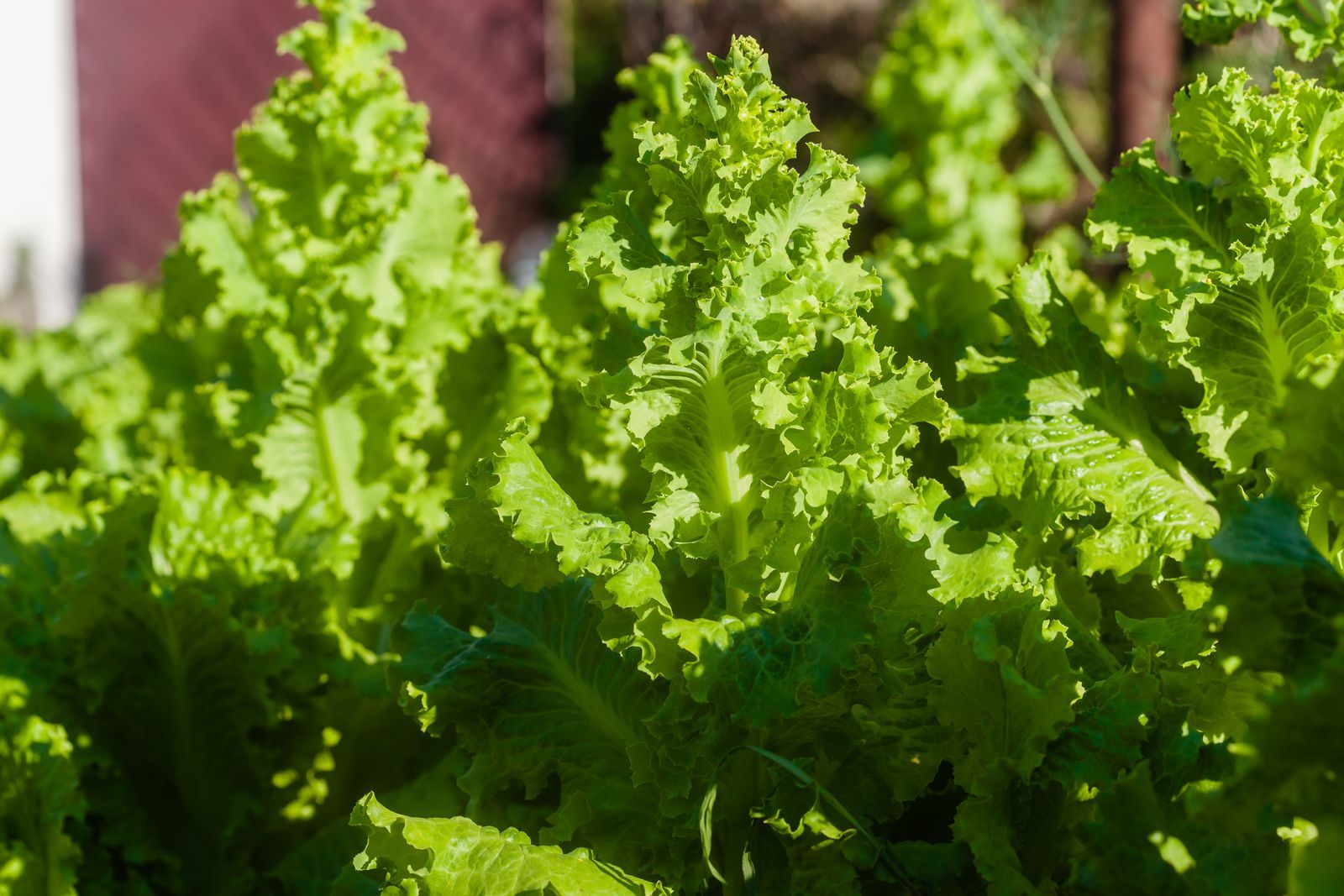
Curly green lettuce leaves growing in a sunny garden, thinned to full spacing so each plant can size up
Step 5: Sow a Short Row Every Two Weeks
This is the routine that turns lettuce from an event into a supply. A single sowing matures all at once, overproduces for a week, and then bolts or ages out. A short row, a few feet sized by the planner to your household, sown every two weeks through the spring season, produces a rolling harvest where some plants are always at their peak. When you harvest the first row hard, the second is sizing up behind it.
Write the rhythm on your calendar when you sow the first row, because June is busy and memory is not a system. Each sowing takes five minutes: mark the row, sow shallow, water gently, label with the date. Stop spring sowings when hot weather settles in, since late sowings bolt before they size, and restart the rhythm in late summer for the fall season, where the same two week drumbeat runs until frost slows everything down.
Step 6: Water Shallow Roots Steadily
Lettuce roots are shallow, so the crop drinks from the top few inches of soil and suffers quickly when that layer dries. Keep the soil evenly moist, checking with a finger near the plants and watering when the surface layer begins to dry. The garden's rule of about 1 inch of water per week is the baseline, delivered in gentler, possibly more frequent soakings than deep rooted crops need, because a shallow root zone holds less reserve.
Mulch helps once plants are big enough to allow it, holding the surface moisture lettuce depends on and keeping soil from splashing onto leaves you intend to eat. Water at the base in the morning where you can. Lettuce that swings between dry and drenched grows bitter and bolts early; lettuce kept steady stays sweet. In containers, which dry fastest of all, lettuce may want water daily in warm weather, and it will tell you by wilting at noon and recovering by evening that the pot is too small or the watering too rare.
Step 7: Harvest by Cut and Come Again
Loose leaf lettuce offers two harvests in one. For the longest production, pick the outer leaves of each plant, taking a few from each plant across the row, and leave the center growing point untouched: the plant replaces the leaves and can be picked again within days. This is cut and come again, and a row harvested this way produces for weeks.
Alternatively, cut a whole plant when it reaches full size, slicing it just above the base; loose leaf types cut this way often regrow a smaller second rosette from the stump if the season is still cool. Either method beats the beginner's instinct to wait for a grocery store head that loose leaf lettuce will never form. Harvest in the morning, when leaves are crisp and full of water, rinse gently, spin or pat dry, and refrigerate. Leaves picked at their peak and eaten the same day are the entire argument for growing lettuce at home, made in one bite.
The Bolting Plan: When Heat Arrives
Bolting is lettuce going to seed: the center elongates, leaves turn bitter with milky sap, and the plant's eating life ends. Heat and long days trigger it, and no technique prevents it forever. The gardener's plan has three moves, in order.
First, harvest hard. When a heat wave arrives or you see a plant's center beginning to stretch upward, pick that plant heavily or take it whole; leaves harvested at the first sign of bolting are still good, while leaves left a week into bolting are compost. Second, give the remaining crop what shade and water you can, and accept a pause: stop sowing, let the standing crop finish, and do not judge lettuce by July. Third, replant for fall. The late summer sowings grow into cooling weather, bolt reluctantly if at all, and hold sweetly in the ground as days shorten. The gardener who runs this plan eats lettuce in April, May, September, and October, and considers that, correctly, a triumph.
Lettuce in Containers
Lettuce is an ideal container crop: shallow roots, fast growth, and a harvest that comes to the kitchen in the pot's own time. Use a wide, reasonably shallow container filled with potting mix, sow across the surface, thin to the same spacing logic scaled to the pot, and water faithfully, since pots dry faster than beds. A container on a partly shaded patio can even stretch the season a little past the bed's, because the pot can be moved into afternoon shade when heat arrives, the one trick a bed cannot copy. Cut and come again works exactly as in the ground, and a succession of two pots, sown a few weeks apart, keeps a small household in salad from a square foot of patio.
Troubleshooting: Slugs, Thin Plants, and Tired Leaves
Slugs and snails are lettuce's main predators, and they work at night. Beer traps, boards laid on the soil and checked each morning, and a tidy bed without daytime hiding places all reduce them; the honest backbone of slug control is the evening round with a flashlight and a bucket, unglamorous and decisive. Ragged holes in outer leaves with slime trails are their signature, and a crop picked young and often loses less to them than a crop left standing.
Thin, pale, slow lettuce is usually telling one of three stories: crowding, because the thinning never happened; hunger, because the bed is tired and wanted compost before sowing; or thirst, because shallow roots in drying soil cannot grow leaves, which are mostly water. Diagnose in that order, since crowding is the most common and the cheapest to fix next sowing. Brown edges on inner leaves of heading types, called tipburn, are tied to uneven water delivery during fast growth; steady moisture is again the answer, and loose leaf types suffer it least, one more reason they carry the beginner's flag.
Good Neighbors for Lettuce
Lettuce is the garden's best tenant. Its shallow roots and quick season let it tuck between slower crops: rows of lettuce between young tomato or pepper plants harvest out before the big plants need the room, and lettuce under a cucumber trellis enjoys the shade the vines cast in summer's edge, which can buy it a week or two of extra season. Radishes share its rows happily and are gone before it spreads. Tall crops to its north give afternoon relief without stealing its morning sun.
Keep lettuce away from nothing in particular; it has no famous enemies among vegetables. Its enemies are heat, drought, and slugs, and all three are managed by the routines above rather than by placement. Think of lettuce as the crop that fills every gap in the garden's calendar and map, spring and fall, edges and in between rows, and you will always have a row coming on. That is the deepest habit this crop teaches: a garden is not planted once, but continuously, and lettuce is where the continuity starts.
Frequently Asked Questions
What is the easiest lettuce for a beginner?
Loose leaf lettuce, without close competition. It matures fastest, tolerates imperfect timing, and harvests by the cut and come again method, outer leaves picked while the plant keeps growing, for weeks from one sowing. Butterhead is nearly as easy and forms soft small heads. Save crisphead types, which need a long, cool, perfectly timed run to head up, for a later season.
How far apart should lettuce be planted?
Thin or transplant lettuce to 8 to 12 inches between plants, the University of Georgia Cooperative Extension spacing. Thin in stages, eating the early thinnings as baby greens, and reach the final spacing as the plants size up. Crowded, unthinned lettuce stays small and turns bitter; the spacing is what turns a row of seedlings into a row of salads.
When should I plant lettuce?
Lettuce is a cool season crop with two seasons. In spring, sow outdoors as soon as soil can be worked, or set transplants out about 4 weeks before your last spring frost, per North Dakota State University Extension H1139. Sow again in late summer for a fall crop, which is often the best of the year. Pause in high summer, when heat makes lettuce bolt and turn bitter.
Why did my lettuce turn bitter?
Heat, age, drought stress, and bolting, the plant's rush to flower and seed in warm, long days. Leaves get bitter as the plant prepares to bolt, and dry soil hurries the process. Harvest hard at the first sign of the center stretching upward, keep the soil evenly moist, and shift your expectations to the fall crop, which grows sweet in cooling weather and holds well in the ground.
How do I keep lettuce coming all season?
Sow a short row every two weeks instead of one long row once. Small, repeated sowings mean some plants are always at their peak while others size up, and a lost sowing costs little. Run the rhythm through spring, pause in the worst heat, and restart in late summer for fall. The Plant Spacing Planner on this page helps you size each short row to your household at 8 to 12 inch spacing.
Can I regrow lettuce from the base after cutting?
Often, yes, in cool weather. If you cut a loose leaf or butterhead plant just above its base and leave the stump in moist soil, it commonly pushes a smaller second rosette of leaves. The regrowth is more modest than the first harvest and will not happen once the plant has truly bolted, but as a bonus round from a plant you already grew, it is well worth leaving the stump and seeing.
Photo credits: Julia Filirovska (Pexels); Greta Hoffman (Pexels). Photos are served from this site; follow the credit to the library page for the original.