How to Grow Marigolds: The Beginner's Flower That Forgives
By the Windchime Walker editorial team
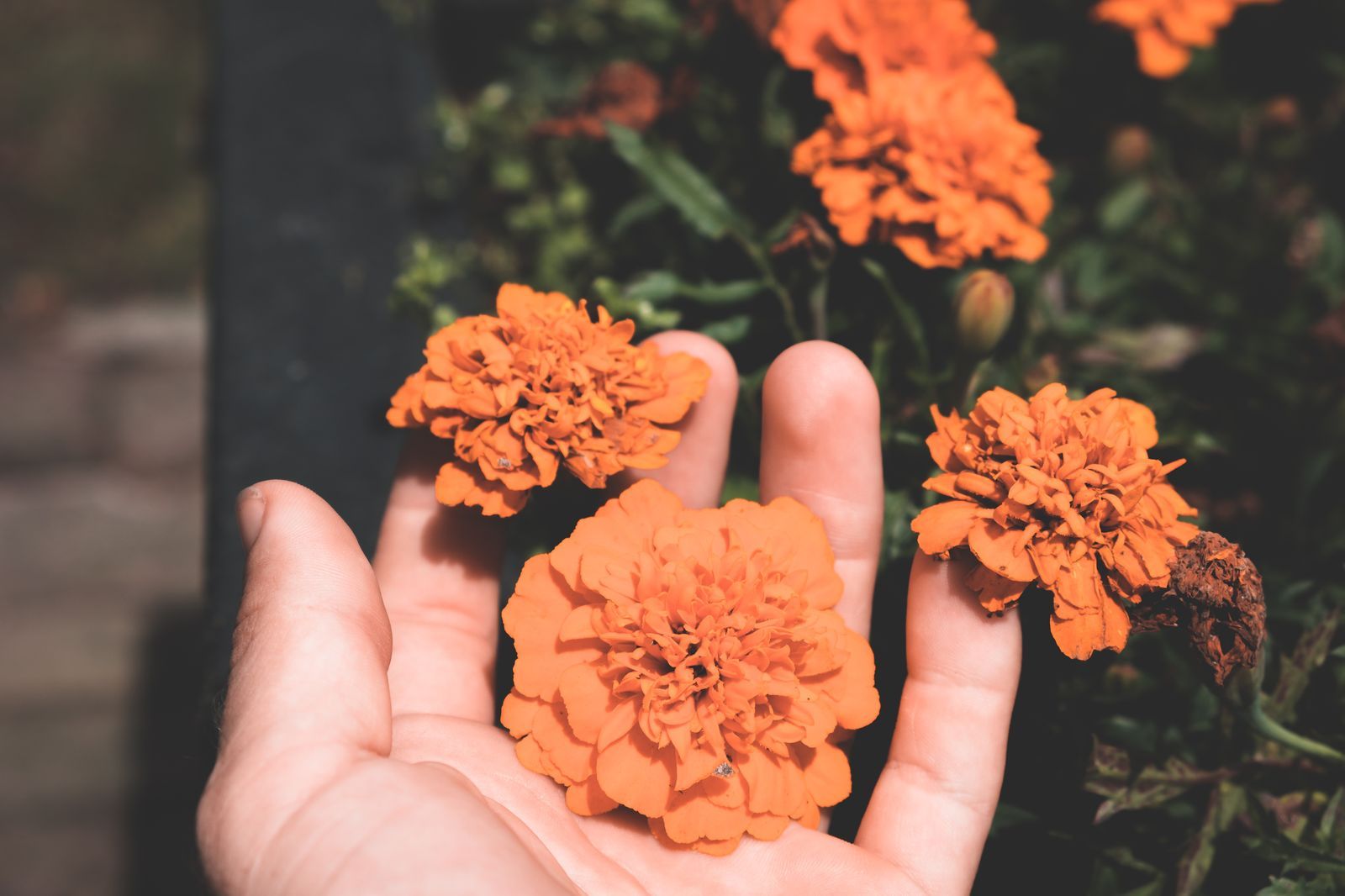
Photo: Lachlan Ross / Pexels
If flowers had a beginner division, marigolds would be its champions and its gateway. They germinate fast enough to reward a child's patience, bloom in a color range that runs from lemon to near red, flower from early summer until frost kills them, and tolerate the exact conditions beginners provide: ordinary soil, irregular attention, and a sunny spot chosen for convenience. They are also, not coincidentally, one of the most lied about plants in the garden, credited with pest repelling powers they mostly do not have. This guide covers the growing, which is easy, and tells the truth about the folklore, which is more interesting.
There are three marigolds in most gardens, and choosing between them is the only real decision. French marigolds are compact, 6 to 12 inches tall, covered in small flowers, the edging and container plant. African marigolds, also called American, are the tall ones, up to 3 feet, with pompon blooms the size of a child's fist. Signet marigolds are the delicate cousins, mounds of tiny flowers with lacy foliage and a citrus scent, and the only ones whose flowers are commonly eaten. All three grow by the same rules below.
The Marigold Season Checklist on this page runs from sowing to the last deadheading of fall. Marigolds ask so little that a checklist may seem like overkill, until October, when the gardener who kept up the two small habits in it is still picking flowers and the neighbor's bed has gone to seed and sadness.
Interactive tool
Marigold Season Checklist
Check off each step as you finish it. Your progress stays on this page.
0 of 6 complete
0% done
Step 1: Sow After Frost, a Quarter Inch Deep
Marigolds are warm season annuals, killed by frost and impatient of cold soil. Direct sow them in the garden after your last spring frost, once soil has warmed past about 65 degrees, at a depth of about a quarter inch, the Wisconsin Extension guidance carried by the guides that cite it. In warm soil the seed germinates in 5 to 7 days, one of the fastest and most reliable germinations in the flower garden, which is why marigolds are the seed given to children: the plant keeps the appointment the packet promises.
To get earlier flowers, start seed indoors about 6 weeks before the last frost, which matches the North Dakota State University Extension H1139 table this site's planners use, and transplant out after frost when nights are mild, H1139 sets marigold transplants at about 3 weeks after the frost date, the cautious side, because a chilled marigold seedling checks its growth and sulks. Bought transplants in cell packs are the third road and a perfectly good one; marigolds transplant easily at any size, including already in bud.
Whichever road you take, the plants go into the sunniest ground you have. Marigolds in shade grow leggy, flower sparsely, and mildew. In full sun they are nearly self sufficient. Ordinary soil suits them, at a pH around 6 to 7, and poor soil suits them better than rich: marigolds fed heavily grow leaves at the expense of flowers, the classic annual bargain, so compost at planting is plenty and fertilizer is usually a mistake wearing a helpful face.
Step 2: Space for Air, 8 to 12 Inches by Type
Spacing is where marigold beds quietly succeed or fail. French and signet types go 8 to 10 inches apart; the tall African types want about 12 inches, per Wisconsin Extension guidance. The numbers look generous for small plants in May and correct by July, when each plant has become a mound. The point of the space is air. Marigolds crowded cheek to cheek hold damp, still air in their foliage, and damp still air is the entire invitation that powdery mildew and botrytis need. A bed spaced for airflow stays healthy with no spraying, no powder, and no intervention, which is the kind of pest control this plant actually offers.
Water at the base, about 1 inch a week including rain, the garden standard, and let the soil surface dry between waterings once plants are established. Marigolds are moderately drought tolerant for an annual, another beginner friendly trait, and they resent wet feet and wet foliage far more than they resent a dry weekend. Mulch between plants once they are up, keeping it off the stems, and the bed's water needs drop further.
Step 3: Deadhead Weekly, Pinch Once
Two small habits separate a marigold bed that blooms until frost from one that fades in August. The first is deadheading: snapping or snipping off spent flowers before they set seed. A marigold that sets seed has completed its purpose and slows its flowering to a trickle; a marigold whose spent blooms are removed keeps replacing them, because the plant's drive to reproduce has nowhere else to go. Once a week, walk the bed with a coffee in one hand and remove the faded heads with the other. It takes minutes and it is, genuinely, the whole secret of the four month marigold display.
The second habit happens once, early: pinch the growing tip of each young plant when it is 6 to 8 inches tall, the same branching trick basil obeys. A pinched marigold forks into a bush; an unpinched one can grow up a single stem and flop. The pinch costs the first flower a week and buys a plant shape that carries fifty.
Leave the last flowers of fall standing if you want seed: marigold seed is the easiest in the garden to save, dry heads crumbled onto paper, stored in an envelope, viable and true enough to type for next year's bed. A plant this willing to continue itself deserves the paperwork.
Choosing Seed: Types, Colors, and One Warning
Seed shopping for marigolds is a pleasure with a single trap in it. The pleasure: dozens of varieties across the three types, from lemon yellow French dwarfs to striped and bicolor forms to the tall African pompons in orange and cream, nearly all of them inexpensive and nearly all of them true to their pictures. Buy by height first, matching the type to the job, French and signet for edges and pots, African for the back of a bed or a cutting row, and by color second, because the growing will be identical and the display is the point.
The trap is the word hybrid on the packet, which matters only if you intend to save seed. Open pollinated and heirloom varieties grow the same plants from saved seed year after year. Hybrids, bred from two parent lines, give you this year's plant exactly as pictured and next year's seedlings as a lottery, often pleasant, sometimes scraggly, never identical. Neither is a mistake; they are different purchases. The beginner saving a first envelope of seed should start from an open pollinated variety and learn the saving habit on a plant that keeps its promises, then experiment with hybrid seed saving later, eyes open, as the gamble it is.
One more shopping note: marigold seed keeps well, two or three years in a cool dry drawer with only gradual loss of germination, so a packet bought generously is not wasted on a small bed. Sow the extras thickly and thin, or share them. Seed this cheap and this willing is meant to be given away.
The Pest Question, Answered Honestly
Now the folklore. Marigolds are widely said to repel pests, to protect tomatoes, to guard the garden by scent alone, and the truth is narrower and more useful than the legend. The documented effect is specific: certain French marigolds, grown densely as a cover crop for a full season, roots in the ground, suppress root knot nematodes in that soil, a finding from agricultural research that home guides inflated into a force field. A row of ornamental marigolds beside your tomatoes does not do this. The nematode effect needs the roots, the density, the species, and the season.
What a row of marigolds genuinely does is still worth having. The flowers feed pollinators and hoverflies for months, and hoverfly larvae eat aphids, which is pest control with an actual mechanism. The plants are largely unbothered themselves, though slugs love the seedlings, spider mites find them in hot dry spells, and earwigs chew the petals cosmetically. Plant marigolds because they bloom for four months on neglect, because they edge a bed like a lit path, because children and beginners succeed with them. Those are reasons enough, and unlike the force field, they are true.
Marigolds in Containers and Along Edges
Marigolds are the rare flower that performs identically in the ground and in a pot, which makes them the beginner's container plant as much as a bedding plant. French and signet types suit pots best, their compact mounds spilling slightly over a rim; a single African marigold in a large pot becomes a specimen, tall enough to anchor a patio corner. The container rules are the garden rules with the watering tightened: pots dry faster than beds, so a potted marigold in high summer may want water every few days rather than weekly, judged by the soil's surface and the pot's weight in your hand. Drainage holes are not negotiable; marigolds in a pot that cannot drain are marigolds rotting on schedule.
Deadheading matters even more in containers, where the display is the whole plant and every spent head shows. It also matters along edges, the marigold's classic post: a path or bed edged in French marigolds reads as intentional from the street only while it is in full flower, which is to say, only while someone walks it weekly removing the dead. Fortunately the job pairs naturally with the walk itself, coffee in one hand, and many gardeners find it the most pleasant five minutes of the gardening week.
One container caution deserves its sentence: potted marigolds beside a front door in a hot climate can cook in a small dark pot in full afternoon sun. The plant tolerates heat in the ground, where roots share the earth's cool mass; in a pot, the root ball itself bakes. Choose a pot of decent size, in a light color where summers are fierce, and the plant will repay the consideration with the same four months of flowers it gives the beds.
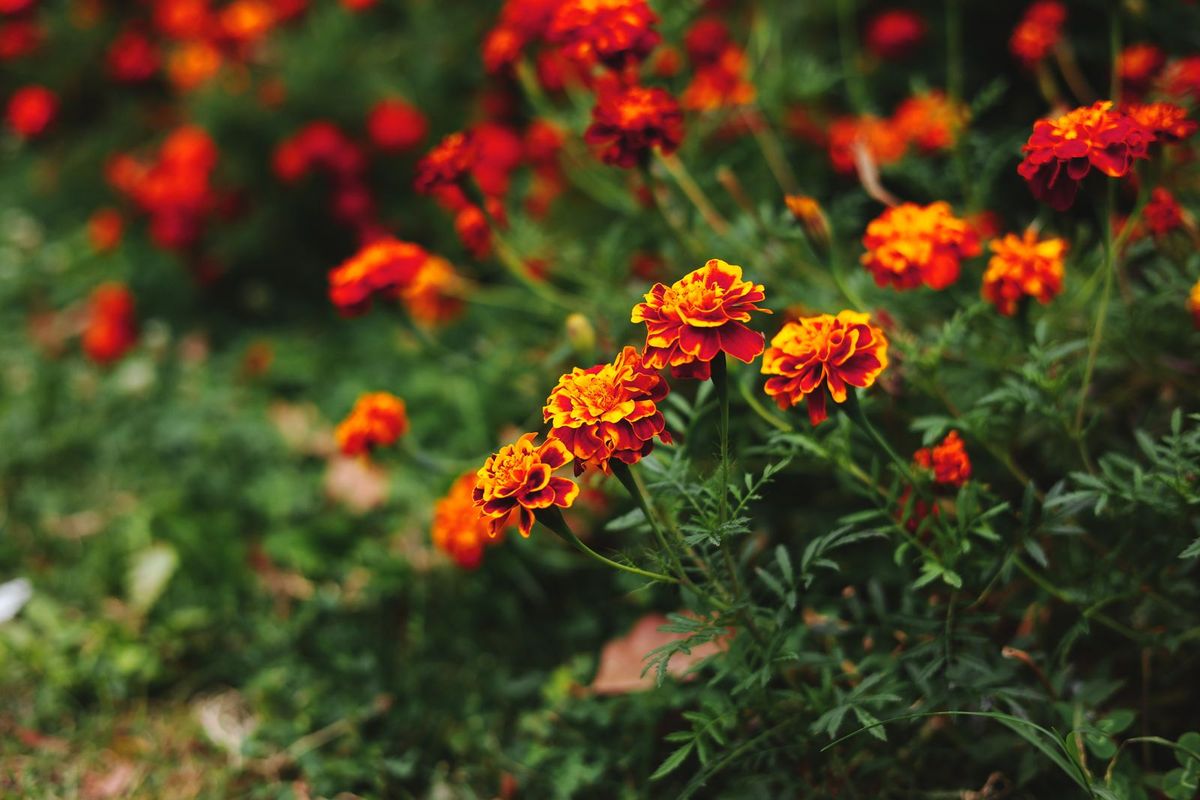
Bright orange and red French marigolds blooming in a summer garden
Frequently Asked Questions
When should I plant marigolds?
Direct sow after your last spring frost, once the soil has warmed past about 65 degrees, at about a quarter inch deep; germination takes 5 to 7 days in warm soil. For earlier blooms, start indoors about 6 weeks before the last frost per North Dakota State University Extension H1139, or buy transplants and set them out after frost, on the cautious side of it.
How far apart should marigolds be spaced?
French and signet marigolds go 8 to 10 inches apart, and tall African types about 12 inches, per Wisconsin Extension guidance. The space is for airflow: crowded marigolds hold damp air in their foliage and invite powdery mildew, while a bed spaced for air stays healthy all season with no spraying at all.
Do marigolds really repel pests?
Only in one specific, documented way: certain French marigolds grown densely as a full season cover crop suppress root knot nematodes through their roots. A decorative row beside your tomatoes does not create a pest force field, whatever the catalogs imply. Marigolds do feed pollinators and hoverflies, whose larvae eat aphids, and they bloom for months on neglect, which are honest reasons to plant them.
Why did my marigolds stop blooming in midsummer?
Almost always because they set seed. A marigold allowed to ripen seed slows flowering to a trickle. Deadhead weekly, removing spent flowers before they seed, and the plant keeps replacing them until frost. Heavy feeding causes the other version of the problem: lush leaves and few flowers. Marigolds bloom best on ordinary soil and a light hand.
How much water do marigolds need?
About 1 inch a week including rain, watered at the base rather than over the foliage, with the soil surface allowed to dry between waterings once plants are established. Marigolds tolerate drought better than most annuals and resent wet foliage and soggy soil, which invite the mildews that are their main disease trouble.
Can I save marigold seed for next year?
Yes, and it is the easiest seed in the garden to save. Let the last flowers of fall dry on the plant, crumble the heads onto paper, pick out the slender dark seeds, and store them dry in a labeled envelope. They germinate readily the next spring. Plants grown from saved seed of hybrid varieties may vary a little from their parents, which most gardeners count as a feature.
Photo credits: Lachlan Ross (Pexels); Ivan Georgiev (Pexels). Photos are served from this site; follow the credit to the library page for the original.