Every other container crop on this site can be fixed mid season with water, feed, or a bigger pot. Onions cannot, because the most common onion failure is decided before planting: bulbing is triggered by day length, and a variety bred for the wrong latitude will grow beautiful green tops forever and never make a bulb. Short day onions bulb under 10 to 12 hours of daylight and belong to the South, roughly below 36 degrees latitude. Long day onions need 14 to 16 hours and belong to the North. Intermediate day types cover the band between. That classification is this article's first section because it outranks every other decision, and it is the piece most quick guides to onions in pots omit entirely. After it come the container rules, which invert the usual instinct: onions are shallow rooted and wide feeding, so width matters more than depth, and spacing is not a fixed number but the dial that sets bulb size. Run the checklist above as the build.
How to Grow Onions in Pots: Day Length First, Width Over Depth, and Spacing as a Size Dial
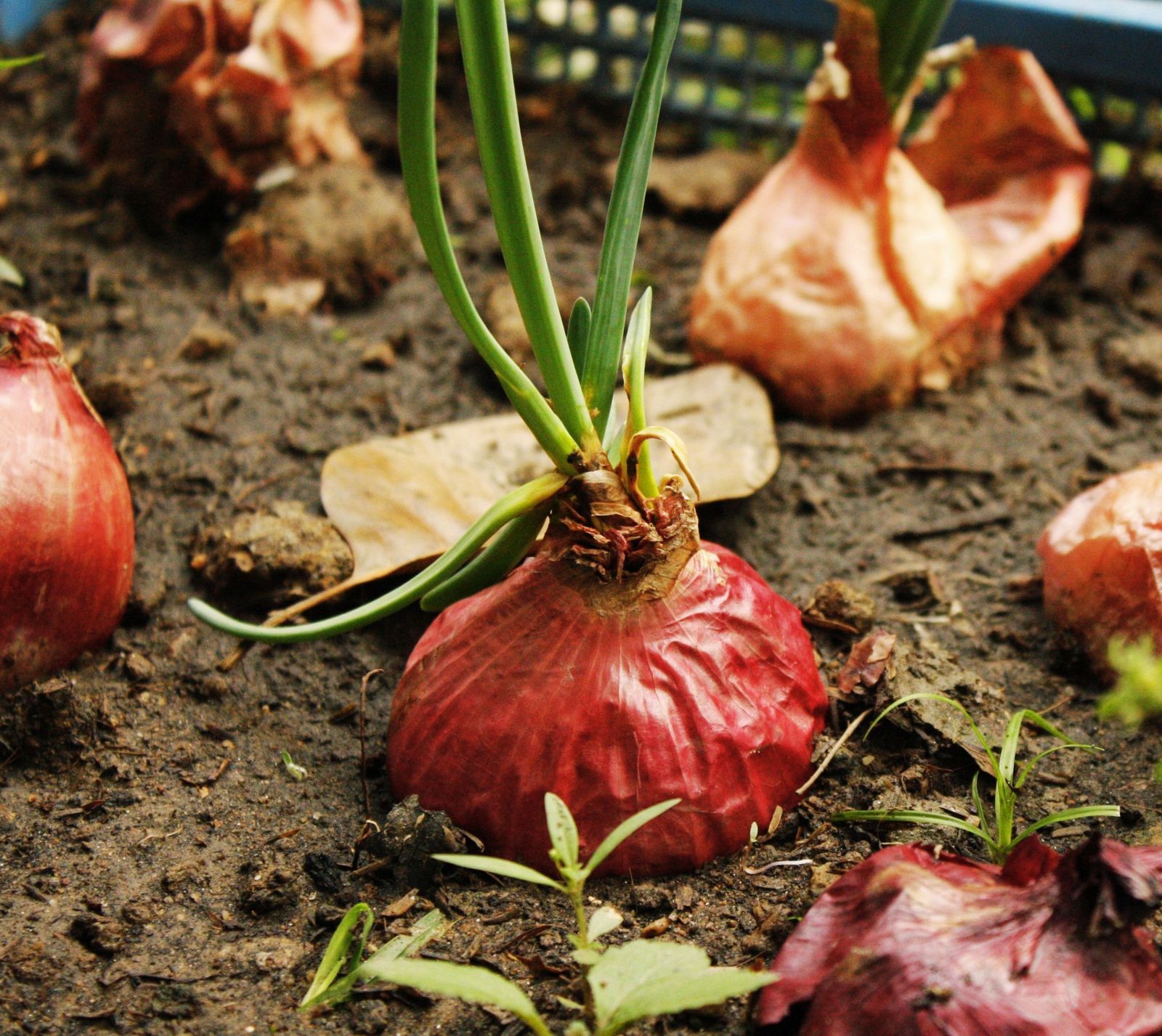
Photo: Halimatu Sa'diah - Koruch / Pexels
Onion Pot Checklist
Check off each step as you finish it. Your progress stays on this page.
0 of 8 complete
0% done
Day Length First: The Decision That Cannot Be Fixed Later
An onion plant measures night length and starts bulbing when its threshold arrives, and the threshold is bred into the variety, not negotiated by care. Plant a long day variety in the deep South and the trigger never fires before the season ends; the plant gives scallions until it gives up. Plant a short day variety in the North and it bulbs at the first modest day length while still small, yielding a pot of marbles. So buy by latitude, honestly assessed: below about 36 degrees, short day; above about 40, long day; between them, intermediate day varieties are bred exactly for you. The same logic governs whether you start from seed, sets, or transplants. Seed offers the full variety range and the truest day length choice, started indoors 8 to 10 weeks before transplanting. Sets, the small dormant bulbs sold in nets, are fast and forgiving but come in generic types whose day length class is often unlabeled, which is a real risk for a crop decided by class; buy sets whose class the seller states. Transplants from a reputable grower, sold in bunches by named variety, split the difference and suit pots especially well.
The Container: Width Over Depth, Sun Over Everything
Onion roots are shallow and fibrous, working the top several inches of soil and spreading sideways, so the pot they want is a wide one: a broad tub, trough, or window box style container, 10 to 12 inches deep, as wide as your space allows. Depth beyond a foot buys the crop nothing, while width buys bulbs directly, since each plant's feeding territory is a disc of surface. A 12 inch wide pot holds a ring of onions at full bulb spacing; a long trough holds a row and suits a balcony better. Drainage is non negotiable, and the mix should be a loose, fertile potting mix that never crusts, because the bulb forms half above the soil line and a hard surface fights it. Full sun is the other container rule: onions want 6 or more hours of direct light, and a shaded pot grows tops at the expense of bulbs. Watering is the even moisture pattern, checked at the surface and never allowed to swing, because a dry check during bulbing sizes the bulb down permanently, while a swamp rots the shallow roots. Feed with a nitrogen rich fertilizer every few weeks until bulbing begins, then stop; late nitrogen grows necks that cure badly.
Spacing as a Size Dial: 4 Inches for Bulbs, Tighter on Purpose
The results for onion spacing sprawl from 2 to 6 inches, and unlike many sprawls this one is honest, because onion spacing is a dial, not a rule. The plant will fill the room it is given: at 4 inches apart in the pot, with the fertility and water to match, you get full size bulbs, and 4 inches is the standard for a storage onion crop. At 2 to 3 inches the same plants mature smaller, which is a defect for storage onions and the entire point for pearl onions, pickling onions, and bunching scallions pulled young. The widest figures, 5 to 6 inches, buy exhibition size for growers chasing it, at a pot efficiency no balcony should pay. Decide what you are harvesting before you space: a pot of storage bulbs at 4 inches, a pot of scallions at 1 to 2 inches harvested progressively, or the mixed system experienced growers run, sowing tight and thinning by eating, so the pot starts as a scallion patch and finishes as a bulb row at final spacing. Sets plant 1 inch deep with the point up; seed is sown shallow and its seedlings, grass thin at first, are trimmed to a few inches tall indoors to keep them stocky and upright until transplant.
Harvest and Cure: Top Fall Is the Signal
An onion tells you it is finished more clearly than almost any vegetable: its tops fall over at the neck when bulbing is done, typically 90 to 120 days from transplant depending on variety and season. Let most of the row fall on its own, then lift the bulbs gently on a dry day rather than pulling them green. The pot grower's harvest advantage is total: the whole container can be tipped out onto a tarp, and no bulb is speared by a fork or left behind in the bed. Curing decides whether the harvest keeps. Spread the bulbs with their tops on in a warm, dry, airy place out of direct sun for 2 to 3 weeks, until the necks are tight and dry and the skins papery, then trim roots and cut tops to an inch. Short day and sweet types are bred for eating, not keeping, and store for a month or two at best; long day storage types, cured well, keep for months. Green onions and scallions skip the whole drama and are cut as needed from the pot. Day length class first, a wide pot in full sun, spacing chosen as the size dial, and a patient cure: onions in pots reward the grower who decides in the right order.
Frequently Asked Questions
What size container do onions need?
A wide, shallow one: 10 to 12 inches deep and as wide as your space allows, because onion roots are shallow and spread sideways. A 12 inch pot holds a ring of bulbs at the 4 inch storage spacing; a long trough suits a balcony row. Depth beyond a foot adds nothing. The container needs genuine drainage holes, a loose fertile mix, and the sunniest position you have, at least 6 hours of direct light, or the tops grow at the bulbs' expense.
Why are my onions not forming bulbs?
Almost always the day length class. Bulbing is triggered by day length and the trigger is bred into the variety: long day onions need 14 to 16 hours and belong in the North, short day onions bulb at 10 to 12 hours in the South below about 36 degrees latitude, and intermediate types cover the middle band. A variety planted outside its band grows tops indefinitely or bulbs tiny. No feeding or watering change fixes class; buy named varieties whose class matches your latitude, and be wary of unlabeled sets.
How far apart should onions be planted in pots?
Four inches apart for full size storage bulbs, and treat the number as a dial rather than a rule. At 2 to 3 inches the bulbs mature smaller, which is exactly right for pearl and pickling onions, and at 1 to 2 inches you have a scallion patch harvested young. Five to 6 inches buys oversize bulbs at poor pot efficiency. A good system sows tight and thins by eating the thinnings as green onions, ending the season at the 4 inch bulb spacing.
Should I grow onions from seed, sets, or transplants?
Seed gives the widest variety choice and the surest day length class, started indoors 8 to 10 weeks before transplanting, with seedlings trimmed to keep them stocky. Sets are the fastest and most forgiving start, planted 1 inch deep, but their day length class is often unlabeled, a real risk in a crop decided by class. Named transplants from a reputable grower split the difference and are an excellent pot choice. Any of the three works if the class fits your latitude.
When are onions ready to harvest?
When the tops fall over at the neck on their own, usually 90 to 120 days from transplant. Lift the bulbs gently on a dry day, a pot can simply be tipped out, and cure them with tops on in a warm, dry, airy spot out of direct sun for 2 to 3 weeks until the necks are tight and the skins papery. Sweet and short day types keep only a month or two; well cured long day storage types keep for months.
Photo credits: Halimatu Sa'diah - Koruch (Pexels); Şeydanur Nesil (Pexels). Photos are served from this site; follow the credit to the library page for the original.