How to Grow Peppers in Containers: the 5 Gallon Verdict in a 2 to 10 Gallon Argument
By the Windchime Walker editorial team
Photo: Richa Varshney / Pexels
Ask how big a pot a pepper needs and the sources start an argument: 2 gallons, 5 gallons, 8 to 10 gallons, all published, all defensible, none of them explaining what the gallons are buying. This page has the argument in the open, because the answer decides the whole container pepper season. The short version: the small numbers keep a plant alive, the large numbers describe a plant that thrives untended, and 5 gallons for one plant is the working standard where a home grower's season actually succeeds. The rest of the page is the system around that pot: sun, water, heat, and the end of season move that most container growers never learn.
Our how to grow peppers guide owns the in ground crop and its bed spacing. This page owns the pot: the pepper on the patio, the balcony, and the doorstep.
Interactive tool
Pepper Pot Checklist
Check off each step as you finish it. Your progress stays on this page.
0 of 9 complete
0% done
The Pot Argument, Settled by Reservoir Logic
An NC State container table allows peppers at a 2 gallon minimum. A University of Maryland container guide puts peppers at 8 to 10 gallons. Oregon State, the Maryland pepper growing page, and Alabama guidance converge near 5 gallons for one plant. The numbers disagree because they are answering different questions. Two gallons is a survival minimum for a small or dwarf variety under daily attention. Eight to 10 gallons is a recommendation for a large plant expected to cruise through weekends unattended in a hot climate. Five gallons is the working compromise the convergent sources describe: enough mix to hold a real water reservoir, enough root room for a full size plant of most varieties, still movable by one person when a storm or a frost threatens. Dwarf and patio varieties are the honest exception, content in 3 to 4 gallons because the plant itself is small. Whatever size you choose, the non negotiables are drainage holes, fresh potting mix rather than garden soil, and one plant per pot; two peppers in a 5 gallon pot is not a bargain, it is two half peppers competing for one reservoir. Fabric grow bags at 5 to 7 gallons are an excellent format here, air pruning the roots and breathing in heat, at the price of drying a little faster than a solid pot.
Sun and Heat: the Pepper's Home Climate
Peppers are a heat crop, and containers are a heat opportunity. Give the pot the sunniest spot you own, 6 to 8 hours of direct sun at minimum and more is better, against a wall that reflects warmth if your climate is marginal. The pot itself is a climate tool in a way a bed is not: a dark colored pot in a cool spring warms the root zone and pushes early growth, and the same pot can be moved to chase sun as the season turns or to escape a late frost in a way no bed plant can. Transplant out only when nights are reliably warm, above about 50 degrees F, because peppers sulk and stall in cold soil and cold air in a way tomatoes forgive and peppers do not; a plant set out too early often never catches the one set out two weeks later. In genuinely hot climates the rule inverts for midsummer: afternoon shade during heat waves keeps blossoms on the plant, as the blossom drop section explains.
Water: the 2 to 3 Inch Check and the July Rhythm
Peppers want consistent moisture, neither drought nor swamp, and the container check is deeper than for most crops: water when the mix is dry 2 to 3 inches down, then water thoroughly until it drains. In the shoulder seasons that may be every few days; in July, a fruiting plant in a 5 gallon pot in full sun may need water daily, and in a heat wave, a morning drink and an evening check. This is the reservoir argument made practical: the 2 gallon pot in July is a twice a day emergency, the 5 gallon is a daily rhythm, the 10 gallon is every other day. Mulch the pot surface once the plant is established, an inch or two of straw or shredded bark, which flattens the moisture swings that cause blossom drop and cracked fruit. Feed steadily rather than heavily: a balanced fertilizer at half strength every 2 weeks, or a slow release worked in at planting, because container peppers are fed entirely by you and the mix starts with almost nothing. Blossom end rot on peppers, the dark sunken patch on the fruit's end, is in containers almost always a watering consistency problem rather than a calcium shortage in the mix; steady the rhythm before buying supplements.
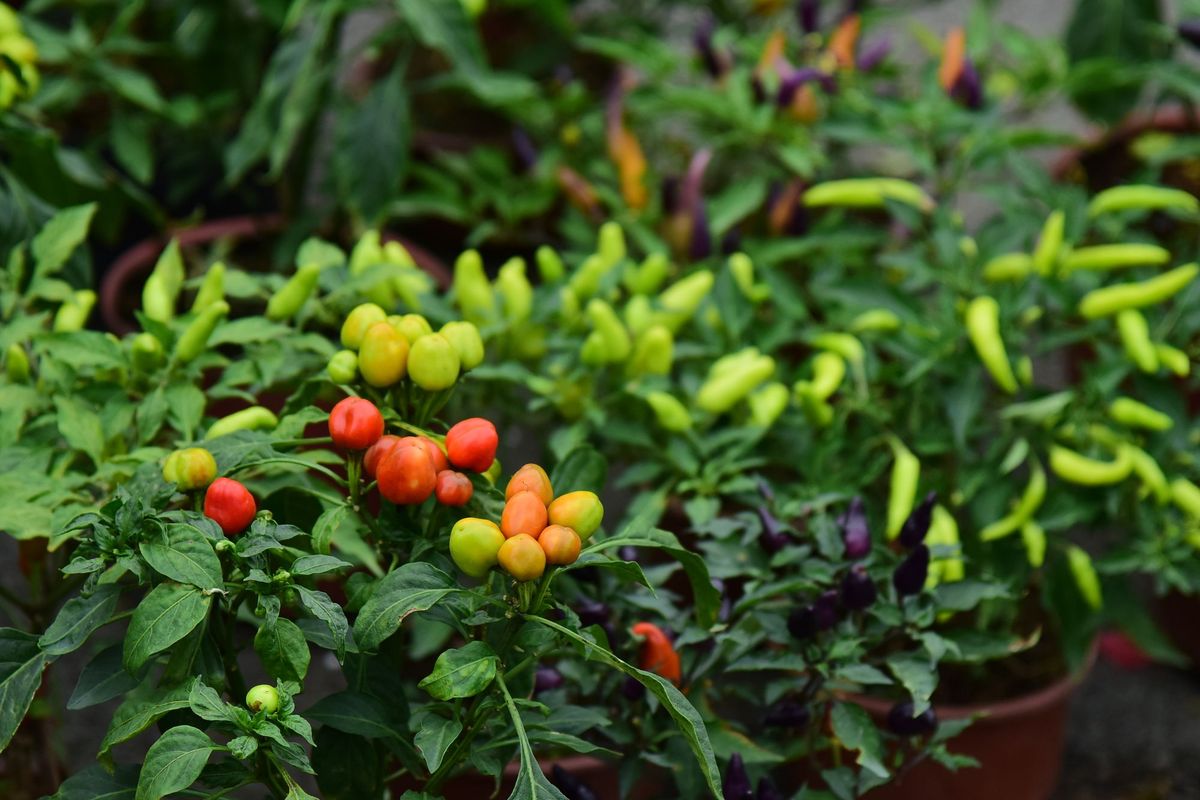
Colorful chillies fruiting in pots in the sun
Blossom Drop in Heat Waves: Diagnosis, Not Panic
Every container pepper grower meets the morning the plant has shed a scatter of blossoms overnight, and the first instinct, fertilizer, water, worry, is mostly wrong. Blossom drop in peppers is a temperature report: nights too cold in spring, and more commonly in containers, days above about 90 degrees F with hot nights, when pollen stops working and the plant sheds flowers it cannot set. The plant is not dying and the season is not lost; it is waiting. The container answers are placement and water: move the pot where it gets morning sun and afternoon shade during the heat wave, hold the moisture rhythm dead steady, and mist nothing. When temperatures moderate, the same plant sets fruit heavily, and the peppers that form in the cooler weeks of late summer are often the best of the year. Blossom drop with yellowing leaves and wet mix is a different report, overwatering, and drop with curled leaves and dry mix is thirst; but drop on a healthy green plant in a heat wave is the weather, and the correct response is patience plus shade.
Staking, Harvest, and the Rhythm of Picking
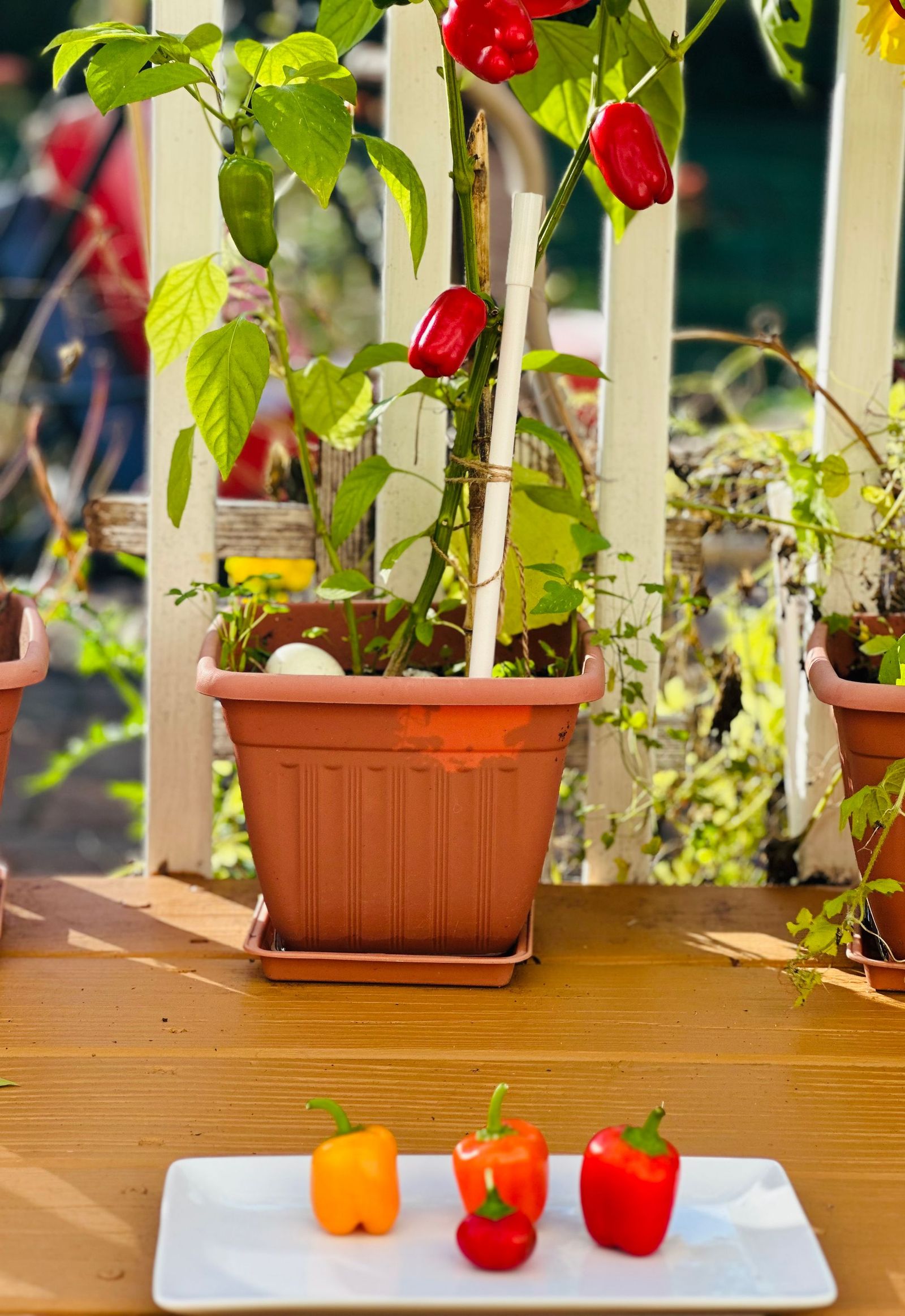
A loaded pepper plant in a pot is top heavy in a way a bed plant is not, because the pot can tip. Set a stake or a small cage at planting time, not after the first storm, and tie the main stem loosely as it grows. In wind exposed spots, group pots together or set the pepper pot inside a larger empty pot as a ballast sleeve. Harvest is a rhythm, not an event: peppers picked regularly keep setting, and most varieties can be picked at any size, green or fully colored, with colored fruit asking the plant for weeks of extra work per pepper. The practical pattern is to pick some green for cooking through the season and let a share ride to full color, knowing the colored ones are the plant's expensive fruit. Hot peppers forgive almost any picking pattern and dry beautifully at season's end, which makes a single hot pepper plant the highest value pot on many patios.
Overwintering: the Move Nobody Tells Beginners
A pepper is a perennial where winters allow, and a container plant can simply be brought in. Before the first frost, pick the fruit, prune the plant back by about a third, check it thoroughly for aphids, and bring it to your brightest window or under a light. Indoors it will drop leaves, slow down, and look unimpressive; water sparingly, just keeping the mix from going fully dry, and feed nothing. It is resting, not dying. In spring, when nights warm, move it out gradually over a week, repot into fresh mix or top dress the old, and resume feeding. A second year plant fruits weeks earlier than any seedling, on a root system and trunk a first year plant cannot match. Not every plant is worth the window space; the favorites are: the unusual hot variety you cannot buy as a transplant, the plant that produced perfectly in your microclimate. Try it with one plant the first year. The checklist below runs the whole container season, pot to overwintering, in order.
Variety Choice for Pots: Size the Plant to the Reservoir
The pot argument resolves differently by variety, and choosing the plant is the other half of choosing the pot. Compact and dwarf varieties, the patio bred bells and the small hot types, are engineered for containers: a full harvest on a plant half the size, content in the 3 to 4 gallon range, and forgiving of the smaller reservoir because the canopy drinking from it is smaller too. Full size bells and the long Italian frying types are honest 5 gallon plants, and the superhot peppers, habaneros and their kin, are slow, wide, and thirsty enough to want the same. In short season climates the container itself is a variety extender: a pot that can be moved under cover on the cold nights of May and September buys the plant weeks at both ends of the season, which is often the difference between green fruit and ripe for the slow hot types. The pairing rule to carry away is simple: the plant's mature canopy and the pot's reservoir should be sized for each other, and when in doubt, size the pot for the plant you bought rather than the plant the catalog photographed. The checklist below, which follows, pulls the whole system together, pot, sun, water, and winter, in the order a season runs.
Frequently Asked Questions
What size pot does a pepper plant need?
Five gallons for one plant is the working standard. Published sources range from a 2 gallon minimum in an NC State container table to 8 to 10 gallons in a University of Maryland guide; the article explains the reservoir logic. Dwarf and patio varieties manage in 3 to 4 gallons. One plant per pot, always, with drainage holes.
How often do you water peppers in pots?
When the mix is dry 2 to 3 inches down, then thoroughly until it drains. That is every few days in spring and fall, and daily for a fruiting plant in full sun in July, with an evening check in heat waves. Pot size sets the rhythm: bigger reservoirs, longer intervals.
Why is my pepper plant dropping its blossoms?
Usually temperature. Heat waves with hot nights, and cold nights in spring, both make peppers shed blossoms they cannot set, and a healthy green plant dropping flowers in a heat wave is waiting, not dying. Give afternoon shade during the wave, hold watering steady, and it will set heavily when the weather moderates.
Can I grow peppers in a grow bag?
Yes, and 5 to 7 gallon fabric bags are one of the best formats: they air prune roots, breathe in heat, and fold away in winter. They dry a little faster than solid pots, so check moisture a touch more often, and set them on a surface that can take drainage.
Can a potted pepper survive winter indoors?
Yes. Peppers are perennials without frost. Prune back by a third, bring the pot to a bright window before frost, water sparingly all winter, and move it back out gradually in spring. A second year plant fruits weeks earlier than a seedling, which is why growers overwinter their favorite varieties.
Photo credits: Richa Varshney (Pexels); Sóc Năng Động (Pexels). Photos are served from this site; follow the credit to the library page for the original.