The grow bag is not a soft pot, and treating it as one is why bag potatoes disappoint. Batch 10's container article on this site owns the rigid vessel method, where a fixed volume of mix is filled once and planted. The bag method is a moving system: you start with the sides rolled down and a few inches of mix, plant your seed pieces, and then hill by adding mix and unrolling the bag as the stems grow, building the tuber zone upward all season. The potatoes form along the buried stem, in the dark, layer by layer, which is why a bag filled to the top on day one produces a healthy plant and a mediocre harvest: there was never anywhere for the tower of tubers to form. The standard vessel in the guides is a 10 to 15 gallon fabric bag. The judgments that decide the yield are the seed piece count for your bag's diameter, where the extension sources conflict, and the hilling rhythm keyed to stem height. This page runs both, plus the watering a porous vessel demands and the dump harvest that makes the whole method worth doing.
How to Grow Potatoes in a Bag: The Unroll Hilling System and the Seed Piece Verdict
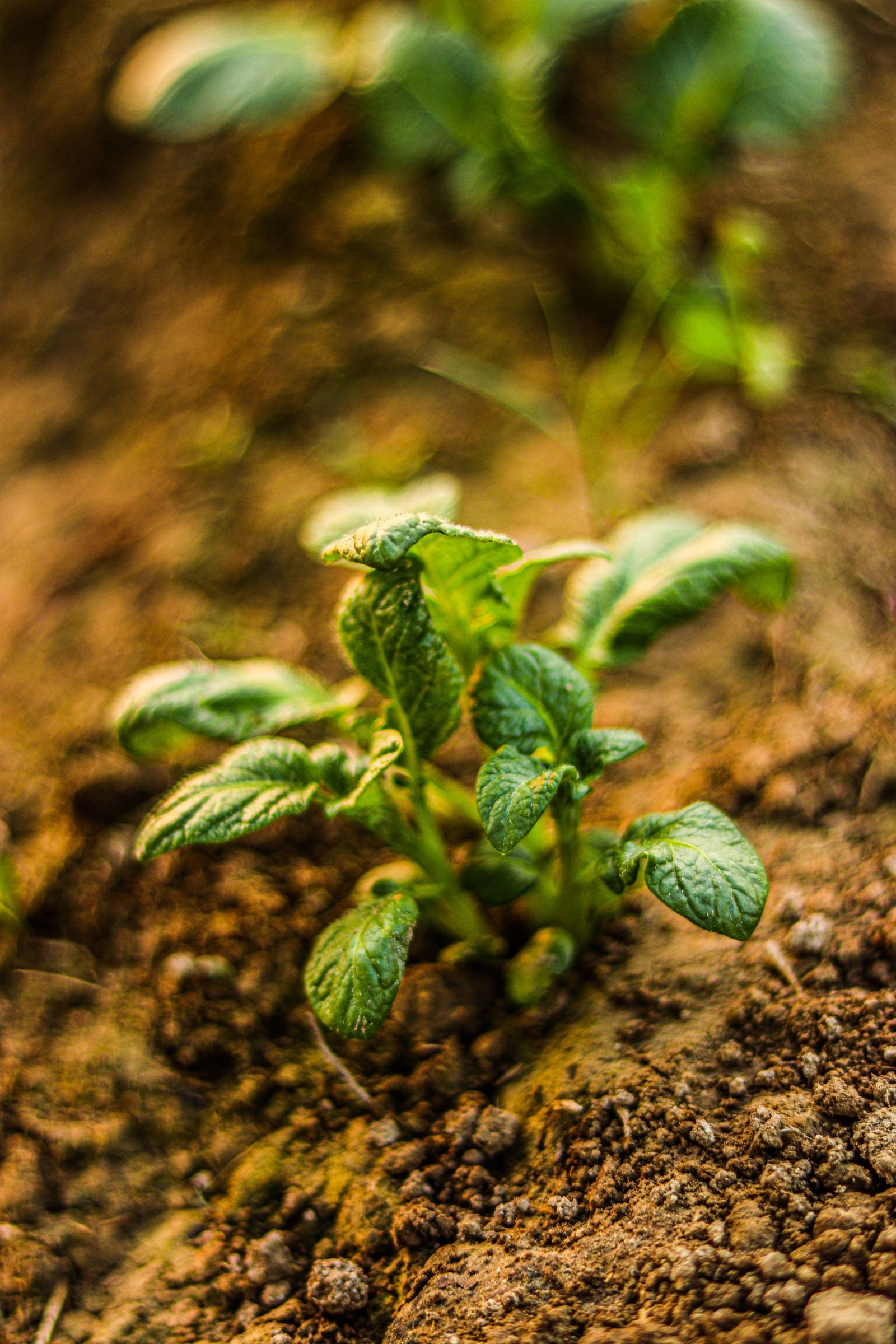
Photo: Swastik Arora / Pexels
Potatoes in a Bag Checklist
Check off each step as you finish it. Your progress stays on this page.
0 of 8 complete
0% done
The Seed Piece Count: A Conflict, Flagged and Settled
Here is the conflict, stated rather than smoothed. University of New Hampshire guidance runs about 5 gallons of medium per plant, and seed piece spacing around 12 inches apart. A UC Cooperative Extension figure in the results runs pieces about 6 inches apart. Those numbers describe different bags and different harvests. Twelve inches apart is the spacing for full size plants in a wide bag, each piece funded by its own column of mix, producing fewer, larger tubers. Six inches is a crowded planting that yields more, smaller potatoes, the new potato harvest, and it only works because the bag's whole volume is root zone with no wasted corners. The verdict for a standard 10 to 15 gallon bag, which is roughly 16 to 20 inches across: three pieces at the wide spacing for a main crop, four at the tighter spacing only if you are deliberately growing small potatoes and will water and feed like you mean it. What neither source sanctions is the common beginner move of emptying a whole bag of seed potatoes into one grow bag. Pieces themselves: cut seed potatoes into egg size chunks with at least 2 eyes each, a day ahead, and let the cut faces dry and callus before planting, which is the cheap insurance against rot in a moist bag.
The Unroll Ladder: Hilling Keyed to Stem Height
The build runs on a ladder, and the rungs are stem heights. Start with the bag's sides rolled down to about a third of its height. Put 4 inches of mix in the bottom, set the pieces eyes up, and cover them with about 3 inches of mix. Water it in. When the stems reach 6 to 8 inches tall, add mix around them until only the top few inches of growth show, and unroll the bag one stage to hold the new depth. Repeat at every 6 to 8 inches of new stem until the bag stands at full height and full depth, usually three or four hillings across the early season. What you are building is buried stem, because potatoes form on stolons that grow from the buried portion, and every hilling adds a storey to the tuber tower. Two disciplines keep the ladder honest: hill with mix or a mix and straw blend, not with garden soil, which brings disease into a clean system, and keep the growing tips always above the new layer, because a fully buried plant stalls. Once the bag is full and the plants flower, the building phase is over; the rest is water and waiting.
Water, Feed, and the Acid Note
A fabric bag breathes through its whole surface, which is its virtue for roots and its cost for water: it dries faster than any rigid pot, from the sides as well as the top. In summer, check daily and expect to water deeply several times a week, keeping the mix evenly moist through tuber set and bulking, the stages where a dry swing costs size. Mulching the top of the full bag helps, and standing the bag on soil or mulch rather than hot concrete slows the side drying. Feed at planting with a balanced fertilizer worked into the mix, and once more at the second hilling; potatoes are hungry, and a bag is a closed pantry. Then the note that surprises people: Cornell's potato guidance puts scab suppression at an acid soil pH of about 4.8 to 5.5, because common scab, the rough corky patching on tuber skins, thrives in neutral soil and fades in acid conditions. Most container mixes land near the mild end of that range on their own. Do not lime a potato bag, whatever your garden habit, and if scab has been your problem in the ground, the bag with fresh acid leaning mix is itself the fix.
The Dump Harvest
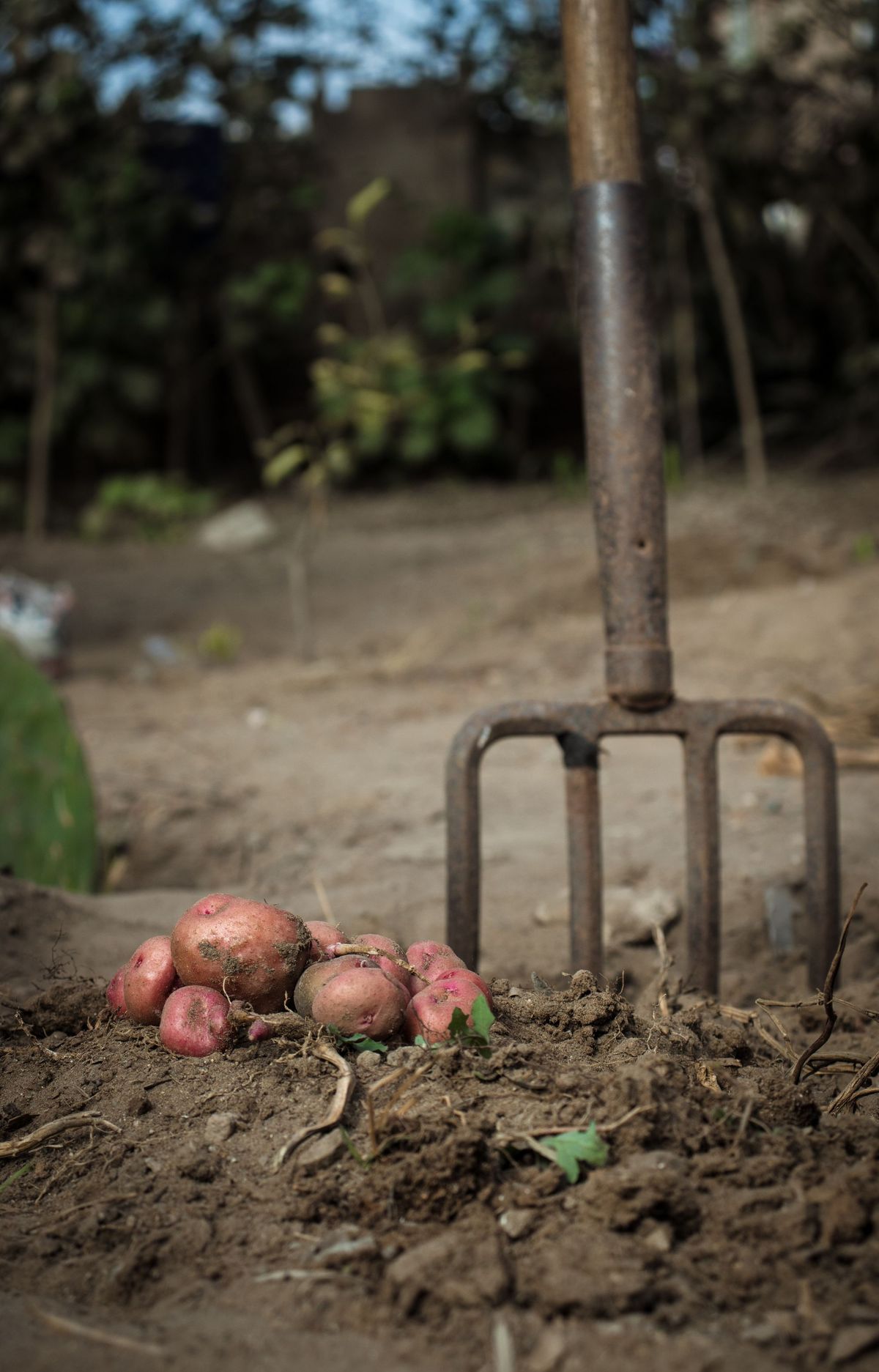
The harvest is the method's payoff, and it is genuinely different from digging. When the vines yellow and die back, stop watering and wait about 2 weeks if you want skins that hold in storage, less if you are eating them as new potatoes that week. Then lay a tarp beside the bag, tip the bag onto it, and pick the tubers out of the loose mix by hand. No fork, no speared potatoes, no treasure left behind in the bed, and a child can do the finding, which is why this method converts people. Sift the spent mix onto a vegetable bed or into compost; it has one season of potato in it and should not grow potatoes or their relatives next year, the rotation rule that applies to bags as much as beds. Yield expectations, honestly set: a well run 15 gallon bag returns a modest harvest, a few pounds of potatoes, not a sack. What it returns them from is a patio corner, a driveway edge, or soil too poor or diseased to dig, and it returns them clean, undamaged, and found to the last tuber. Roll the bag down, hill on the ladder, water like the vessel breathes, and dump it on the tarp: that is the whole bag system.
Frequently Asked Questions
How many seed potatoes go in a grow bag?
For a standard 10 to 15 gallon bag, three pieces at wide spacing for a main crop. The sources conflict and this page flags it: University of New Hampshire guidance runs about 5 gallons of medium per plant with pieces about 12 inches apart, while a UC Cooperative Extension figure runs about 6 inches apart. Twelve inches funds full size plants and larger tubers; 6 inches is a crowded planting for smaller, new style potatoes. Pieces are cut to egg size with at least 2 eyes each and cured a day so the cuts callus.
How do you hill potatoes in a bag?
By unrolling. Start with the sides rolled down, 4 inches of mix, pieces set eyes up under 3 inches of cover. Each time the stems reach 6 to 8 inches, add mix until only the top few inches show and unroll the bag one stage to hold it. Repeat to full height, usually three or four hillings. Potatoes form on stolons along the buried stem, so each hilling adds a layer of tuber zone. A bag filled completely on day one skips the ladder and produces a plant with a fraction of the harvest.
How often do you water potatoes in a grow bag?
Check daily in summer and water deeply several times a week. Fabric breathes through its whole surface, so a bag dries faster than a rigid pot, from the sides as well as the top. Keep the mix evenly moist through tuber set and bulking, when dry swings cost tuber size, and stand the bag on soil or mulch rather than hot concrete to slow the drying. Once the vines die back at season's end, stop watering entirely; the harvest clock, not the plant, is running then.
When do you harvest potatoes from a bag?
After the vines yellow and die back. For new potatoes eaten at once, you can tip the bag about 2 weeks after flowering and take what you find. For storage potatoes, wait until the tops are fully dead, then leave the tubers about 2 more weeks in the drying mix so their skins set, before dumping. The harvest itself is the method's reward: tip the bag onto a tarp and pick the tubers out by hand, with no fork damage and none left behind.
What soil should I use in a potato grow bag?
A container mix or a mix and compost blend, fresh each season. Do not use garden soil, which carries the diseases the bag method is partly designed to escape, and do not reuse last year's potato mix for potatoes. Keep it on the acid side: Cornell guidance puts scab suppression at a soil pH around 4.8 to 5.5, since common scab thrives in neutral soil. Most fresh container mixes land in a suitable range unaided. Above all, never lime a potato bag, whatever the rest of your garden needs.
Photo credits: Swastik Arora (Pexels); Erick Ayaucan (Pexels). Photos are served from this site; follow the credit to the library page for the original.