How to Grow Potatoes in a Container: The Fill System, Sized Honestly
By the Windchime Walker editorial team
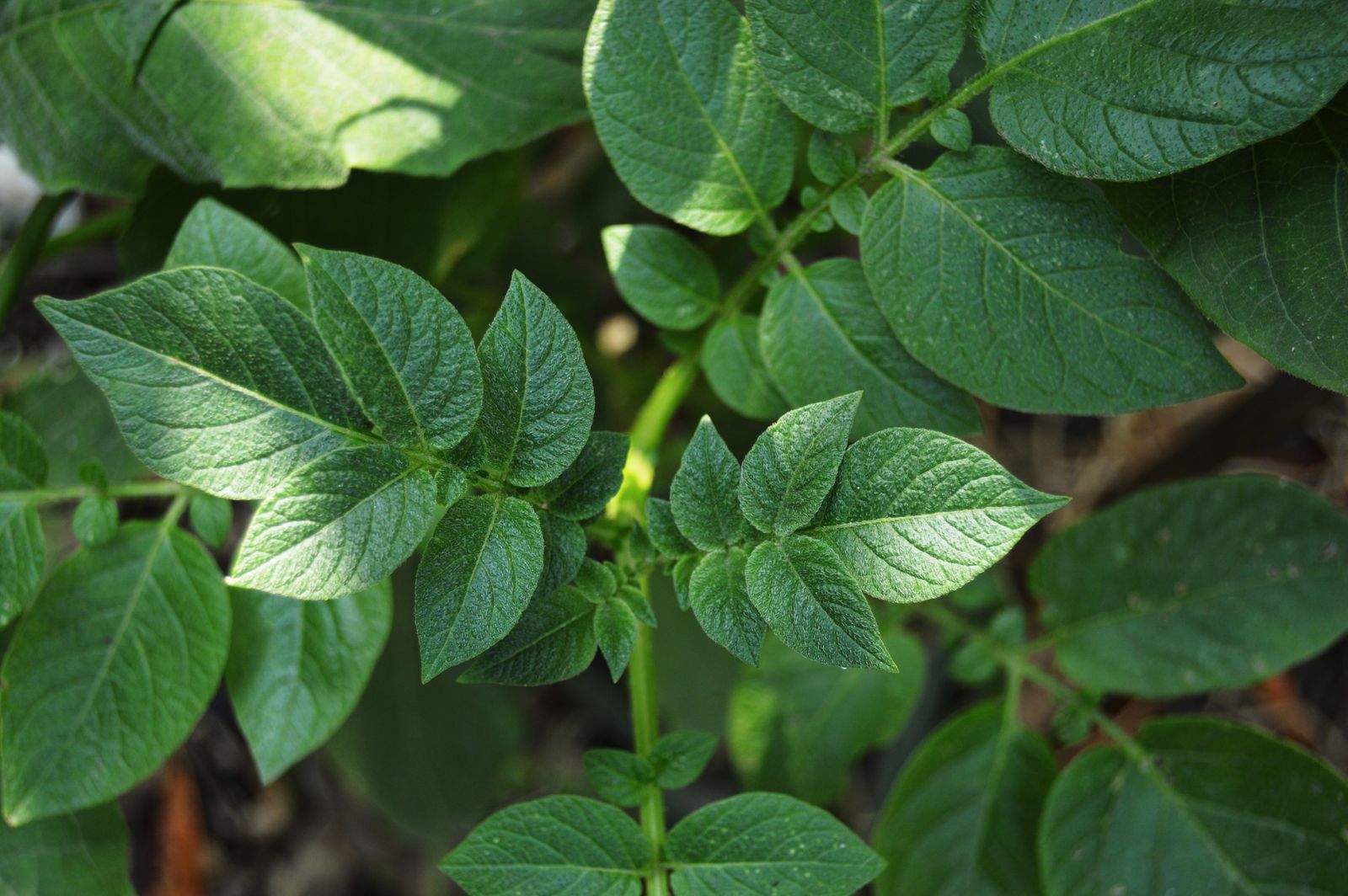
Photo: Miguel Á. Padriñán / Pexels
Growing potatoes in a container is not the in ground crop in a smaller space. It is a different technique, the progressive fill, and it works because of a quirk of potato anatomy: tubers form along the buried stem, so a container lets you keep burying stem and keep making tuber zone all season. The argument every guide has is about container size, so let us settle it on the record. Ten gallons per seed potato is the floor most guides agree on. Fifteen to twenty gallons is where the consistent harvests are. The Royal Horticultural Society's small end, one seed potato per 30 cm pot, grows a meal rather than a crop. This page adopts 15 to 20 gallons as the working standard for a real harvest, treats 10 gallons as the minimum for grow bags, and explains the reasoning below rather than averaging the three into a meaningless middle.
Our how to grow potatoes guide owns the in ground season. This page owns the pot, and it is a crop system, not a repeat of our general container method pages.
Interactive tool
Container Potato Checklist
Check off each step as you finish it. Your progress stays on this page.
0 of 8 complete
0% done
Choose the Container and the Variety Type Together
The fill system only pays if the variety cooperates, because potato varieties set tubers two ways. Determinate and most early varieties set their tubers in one layer, roughly at the depth the seed was planted, and then stop; burying their stems deeper buys little. Indeterminate and many late varieties keep setting tubers along the stem as it is buried, which is the behavior the fill exploits. So the first decision is a pairing: an indeterminate variety in a tall container, 15 to 20 gallons, filled in stages, or a determinate early in a 10 gallon bag filled most of the way at planting. Grow bags earn their popularity honestly here: they are cheap, they drain and breathe, their handles matter at harvest, and they fold away in winter. Rigid pots hold moisture more evenly and look better on a patio. Either works if the drainage is real and the volume is honest; what fails is the 5 gallon bucket with three seed potatoes in it, which produces three plants competing for a volume that feeds one.
The Fill Schedule, Stage by Stage
Start with 4 to 6 inches of potting mix in the bottom of the container. Set the seed potatoes on it, sprouts up, one per 10 gallons of final volume, two in a 20. Cover with 3 to 4 inches of mix and water it in. Then the rhythm begins: when the stems reach 6 to 8 inches above the surface, add 3 to 4 inches of mix around them, leaving the top leaves exposed, and repeat each time they grow another 6 to 8 inches, until the mix reaches within an inch or two of the rim. For an indeterminate variety in a tall pot that is three or four fills across the spring. For a determinate, one modest fill is enough and the rest is ceremony. Use a light mix for the fill, potting mix cut with compost, not garden soil, which compacts in containers and sheds water. Keep the seed potatoes themselves whole if they are egg sized, or cut larger ones into chunks with at least two eyes each and let the cuts dry a day before planting, the standard cure that keeps rot out of the system.
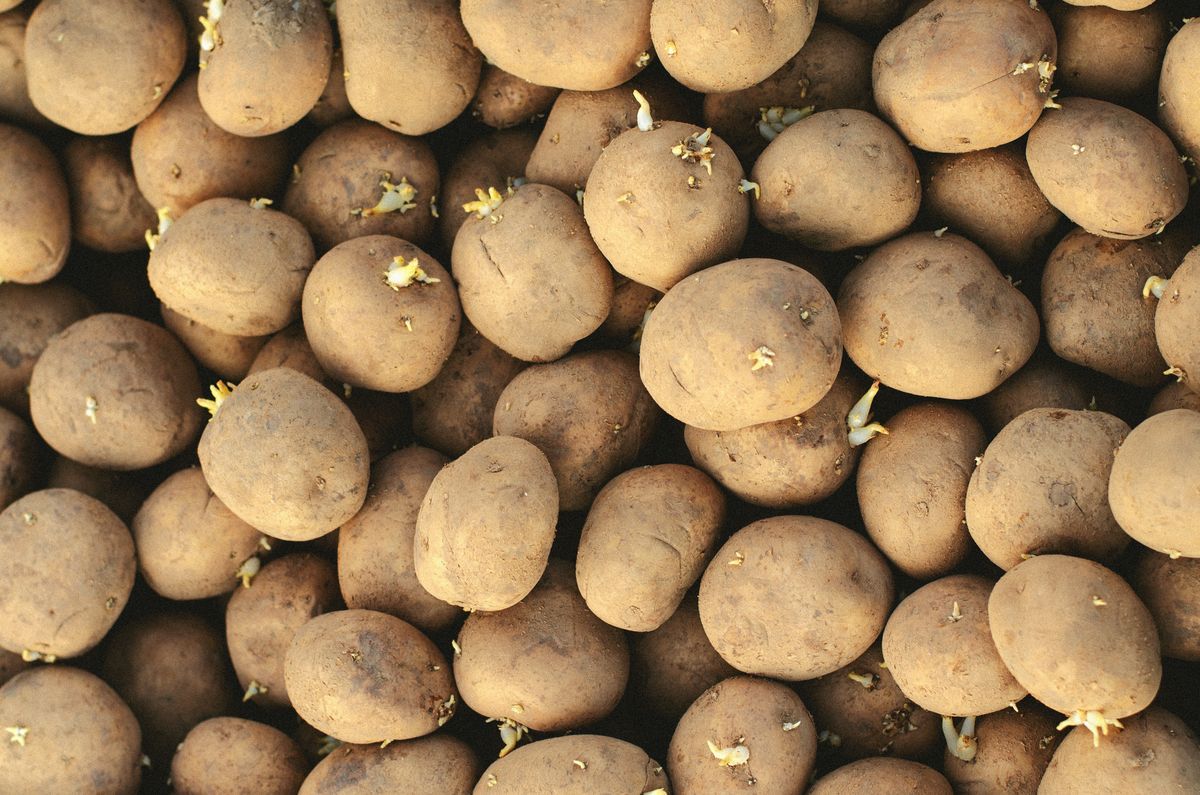
Sprouting seed potatoes in close-up, ready for planting
Watering by Fill Stage
A container potato's thirst scales with its canopy, and the fill stages are the calendar. At planting and the first fill, keep the mix evenly moist but modest; the seed potato carries reserves and a swamp at this stage rots it. Through the middle fills, as the leaf canopy builds, water deeply whenever the top couple of inches dry, which in a fabric bag in June can be every other day. At full canopy in hot weather, a 15 gallon container of potatoes can want a gallon or more a day, and this is the stage where container crops are lost to a dry weekend. The end of the season reverses the signal: when the foliage yellows and starts dying back, the tubers are sizing and their skins are setting, and you ease the water off. Two weeks after the foliage has died back completely, the crop is ready. A container that dries hard at this stage is fine; a container kept wet grows scabby, soft tubers that store badly.
Harvest: The Tip Out, and What a Good Yield Looks Like
Harvest is the container method's party trick: lay a tarp, tip the container onto it, and pick the tubers out of the loose mix with your hands. No fork wounds, no tubers left behind in the bed, and children regard the whole thing as a treasure dig. Judge the yield honestly: a well run 15 to 20 gallon container returns roughly 3 to 5 pounds of potatoes, sometimes more from a vigorous indeterminate, and the 10 gallon bag returns about half to two thirds of that. Cure the harvest in shade with air moving for a few days so the skins toughen, brush off the loose mix rather than washing, and store cool and dark. The spent mix is not waste and it is not reusable for potatoes or their tomato family next year in the same pot, because the family's diseases persist in it; retire it to the ornamental beds or the compost and start the next crop in fresh mix. That rotation rule is the one piece of in ground discipline the container does not exempt you from.
Varieties That Earn Their Container
Variety choice decides container harvests more than any technique after it. For the fill system, look for indeterminate or late varieties described as vigorous: many heirloom and maincrop types behave this way, and seed catalogs increasingly flag container suitability outright. For the single fill system in bags, the proven container performers are the early and determinate types sold for patio growing, bred to set a compact crop on a compact plant. Chitting, sprouting the seed potatoes in light for a few weeks before planting so the shoots emerge short, green, and sturdy, is worth the counter space in containers especially: a chitted seed starts growing the day it is planted, and in a system built on staged fills, an even, fast start means every plant in the container reaches each fill stage together. Set the seed potatoes in an egg carton, eyes up, in a bright cool room, and plant when the sprouts are a half inch to an inch long and dark green rather than pale and spindly. One more container option the in ground grower rarely gets: the late crop. A second container planted in July with an early variety, sheltered as the nights cool, produces new potatoes toward the holidays in mild climates, a trick that works precisely because the container can be moved to the warm wall and under cover.
Troubleshooting the Container Crop
The container concentrates the crop's problems where you can see them, which is its diagnostic gift. Plants that yellow early from the bottom are usually hungry or waterlogged; in a bag that drains, bet on hunger and feed with a balanced liquid fertilizer, because containers leach. Tubers that surface green have been exposed to light by mix settling or washing away; cover them with more mix the day you see them, since green tubers are bitter and not for eating. Scab, the rough corky patching on the skin, tracks with dry swings and alkaline mix, and is cosmetic on the plate but a storage liability. A plant that wilts at noon and recovers nightly in the final fill stage is not diseased; it is a large canopy on a finite reservoir telling you the daily drink needs to arrive earlier in the day. Read the container as an instrument panel and most of its messages are about water and feed, the two things the container made your job in the first place.
Frequently Asked Questions
What size container do potatoes need?
Ten gallons per seed potato is the floor; 15 to 20 gallons is the working standard this page adopts for a consistent harvest. The RHS small end, one seed per 30 cm pot, grows a meal rather than a crop. Volume is the yield ceiling, so when in doubt, size up.
How many seed potatoes go in one container?
One per 10 gallons of volume: one in a 10 gallon bag, two in a 20 gallon container. Crowding three into 5 gallons is the classic failure, producing plants that compete for water and feed and yield marbles.
What does hilling or filling do in a container?
Tubers form along the buried stem. Adding 3 to 4 inches of mix each time the stems grow 6 to 8 inches creates new tuber zone for indeterminate varieties, which keep setting along the stem. Determinate and early varieties set one layer, so for them one modest fill is enough.
How often do I water container potatoes?
By stage: evenly moist at planting, deeply whenever the top couple of inches dry through the middle fills, up to a gallon or more a day at full canopy in hot weather, then easing off as the foliage yellows and dies back. The canopy size, not the calendar, sets the thirst.
When are container potatoes ready to harvest?
About two weeks after the foliage has died back completely. Tip the container onto a tarp and pick the tubers out by hand. Expect roughly 3 to 5 pounds from a well run 15 to 20 gallon container, cured in shade for a few days before storage.
Photo credits: Miguel Á. Padriñán (Pexels); Tamara Elnova (Pexels). Photos are served from this site; follow the credit to the library page for the original.