How to Grow Sweet Potatoes: Start with Slips, Finish with the Cure
By the Windchime Walker editorial team
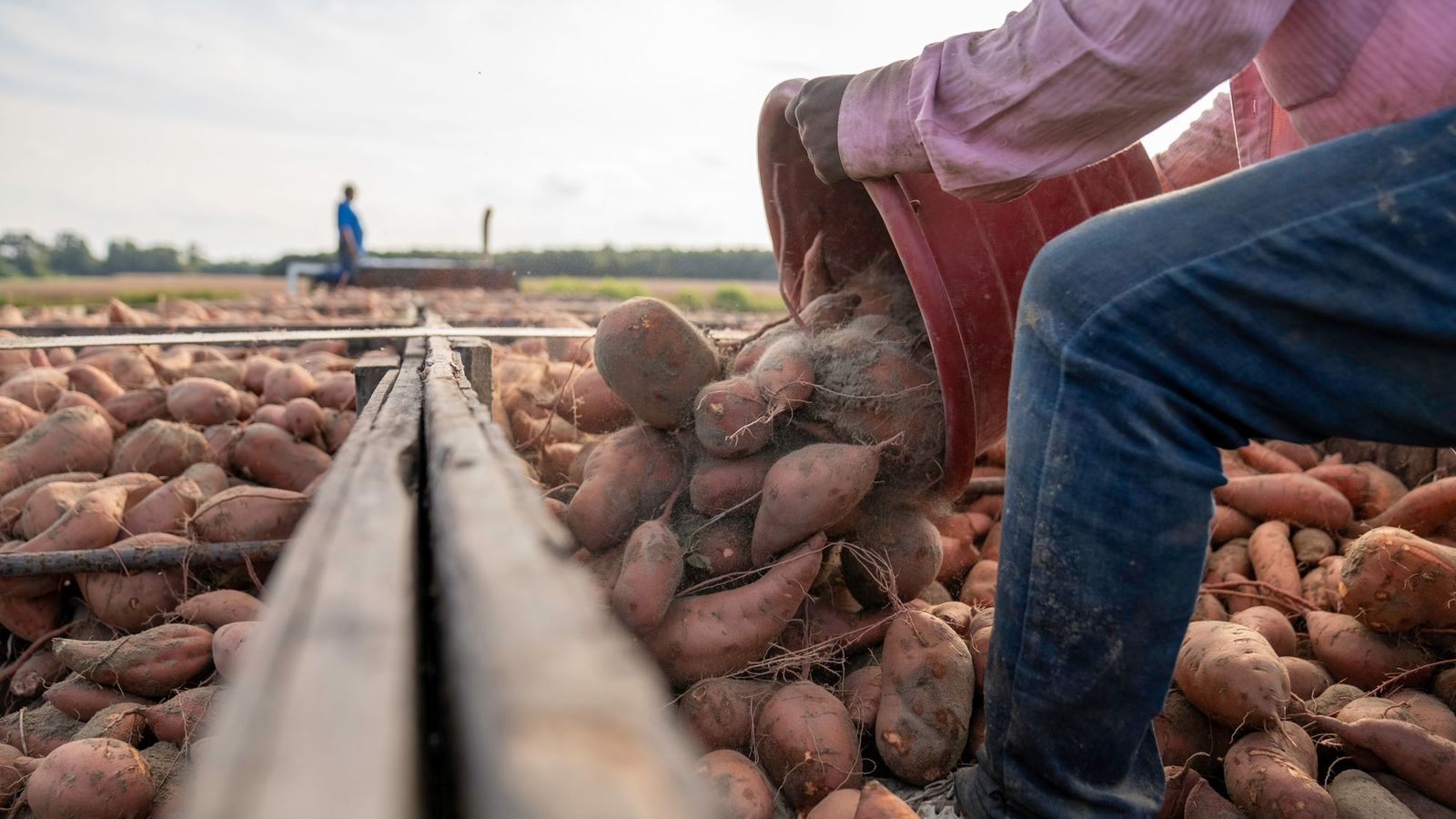
Photo: Mark Stebnicki / Pexels
Sweet potatoes break the first rule beginners learn from Irish potatoes, so let us break it cleanly at the start: you do not plant a sweet potato. You plant a slip, a sprouted cutting grown from a sweet potato root, and the root in the ground at harvest is a new root the slip made, not the one you started with. Everything about this generous, heat loving crop follows from that: a calendar counted backward to make slips, a planting that waits for genuinely warm soil, a summer of vines that mostly look after themselves, and a cure at the end that turns a starchy root into the sweet vegetable you actually want to eat.
The figures on this page come from two extension sources, named where they differ. Our spacing standard is the University of Georgia Cooperative Extension Circular 963, this site's standard: slips 12 inches apart in rows 36 inches apart, 90 to 120 days. The University of Maryland Extension's sweet potato guide, which we also read in full, plants 12 inches apart in rows 40 inches apart and gives 85 to 120 days, a yield of 15 to 30 pounds per 10 foot row, and the curing figures used below. The row spacing conflict is flagged here, never averaged: the planner on this page keeps the site's Georgia figure of 36 inches, and the Maryland figure stands beside it for gardeners who prefer wider rows for vine room.
Interactive tool
Plant Spacing Planner: The Sweet Potato Row
Sweet potatoes are in the crop list below at the University of Georgia Cooperative Extension spacing of 12 inches between plants in rows 36 inches apart. Enter your row length and count the slips you need before planting day.
8 tomato plants fit this bed
4 plants per row across 2 rows, on a 24 inch grid. Extension spacing for this crop: 24 in between plants, 48 in between rows.
The grid uses the in-row spacing in both directions, the standard square foot layout for raised beds. In open ground, keep the wider row spacing in the note above so you can walk and weed between rows.
Spacing figures: University of Georgia Cooperative Extension, Circular 963, Vegetable Planting Chart, source.
Step 1: Get Slips, Six Weeks Before Planting
A slip is a rooted sprout, 6 to 8 inches long, cut or pulled from a sweet potato root that has been bedded in warm, moist soil or sand to sprout. Growing your own takes about 6 weeks at warm room temperatures (Maryland beds the roots where sprouts develop over roughly 6 weeks before the planting date), so the calendar counts backward: find your planting date (step 2), subtract 6 weeks, and that is the day a healthy, untreated sweet potato from a reliable source goes into a tray of moist mix on a warm windowsill or heat mat.
Buying slips is the beginner's honest shortcut and no failure of character: mail order and garden suppliers sell bundles of slips in spring, shipped to arrive near your planting window. Either way, choose varieties by your season length: the crop needs 85 to 120 days of warm weather by variety (Georgia's chart range, with Maryland in agreement), so short season gardeners pick the fastest maturing varieties and long season gardeners can grow anything. A slip that arrives early waits happily in a jar of water; a slip that arrives late plants fine, with a smaller harvest. The calendar forgives everything except cold soil.
Step 2: Plant Only When the Soil Is Truly Warm
Sweet potatoes are a tropical crop wearing a vegetable costume. Plant slips after all frost danger, once the soil has warmed to about 65 degrees and nights are reliably mild; Maryland's guide is blunt that slips go in after the soil reaches 65 degrees, and slips planted into cold soil sit, sulk, and sometimes rot while Irish potato logic insists spring has come. In most gardens this means planting 3 to 4 weeks after the last frost date, noticeably later than the tomato rush.
Prepare a loose, deeply worked row or ridge: sweet potato roots swell downward and outward, and a ridge of loose soil 8 to 12 inches high gives them room and warms faster than flat ground. Work compost into the ridge before planting. Keep fertilizer modest and balanced; heavy nitrogen grows a magnificent vine and a disappointing root, the family resemblance to overfed Irish potatoes showing again.
Step 3: Set the Slips at the Georgia Spacing
Set slips 12 inches apart along the row, rows 36 inches apart at the Georgia standard in the planner on this page (Maryland publishes 40 inch rows; both are named in the introduction, and the planner keeps Georgia). Bury each slip so that at least half its length, and at least two or three leaf nodes, are underground; roots form at the buried nodes, and a deeply set slip makes more roots than a shallow one. Some gardeners lay slips nearly horizontal with the tip out of the soil, which buries more nodes along the stem; either geometry works if the nodes are buried.
Water the row in thoroughly at planting and keep the soil moist while the slips establish, which takes a week or two of wilting afternoons and recovery mornings. A slip that looks dead at noon and alive at dusk is rooting, not dying; judge it at dawn. Once the vines begin to run, the crop's character changes from nursling to landowner, and your work drops to watering in drought and keeping the vines roughly in their territory.
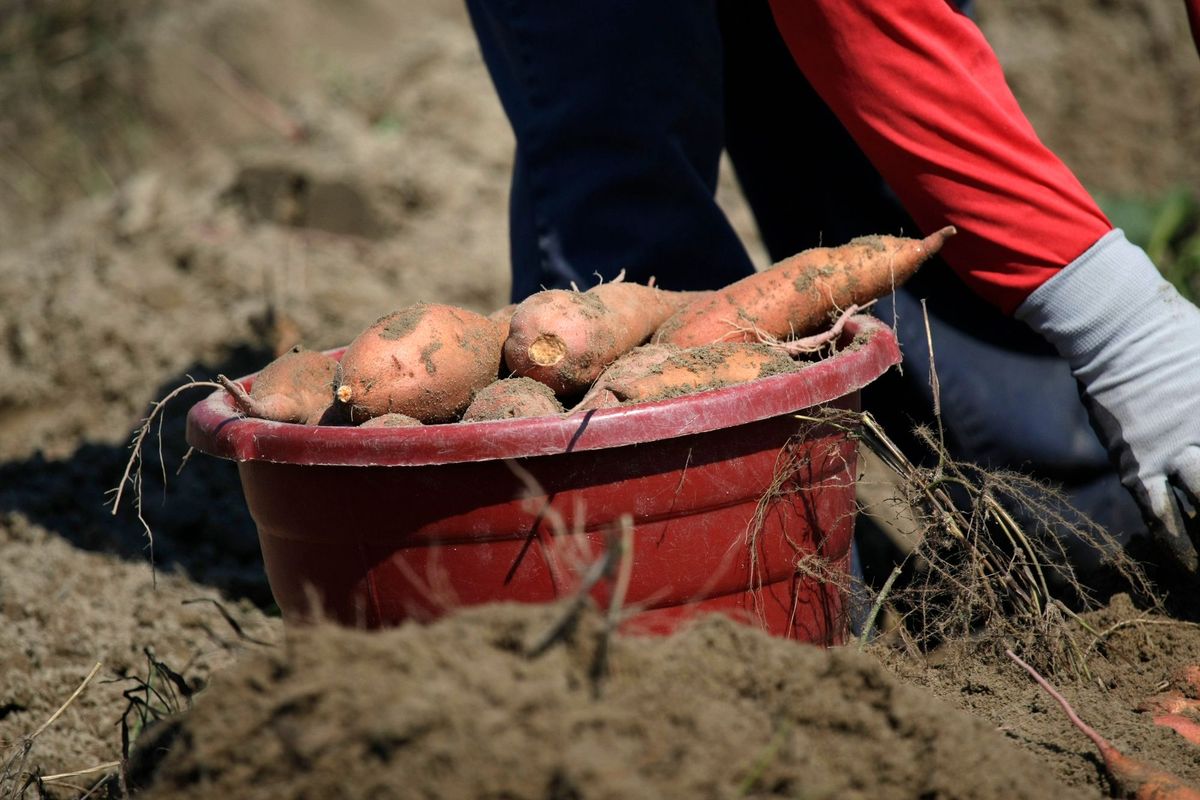
Freshly harvested sweet potatoes heaped in a red bucket in a sunny field
Step 4: Water the First Two Months, Then Mostly Watch
Maryland's guide flags the crop as drought sensitive in its first 50 to 60 days, while the root system is building, and that is the watering window that matters: about 1 inch of water a week, steady, through the first two months. After the vines cover the ground, the living mulch shades the soil, holds moisture, and the established plants tolerate dry spells that would have checked them in June. Deep, occasional watering beats daily sprinkles throughout, as it does for most of the garden.
Let the vines run. Sweet potato vines root at their nodes where they touch moist soil, which anchors the plant and can set extra small roots along the vine; most gardeners leave them, some lift vines occasionally to keep the energy in the main hill. Either approach harvests fine. What the vines must not do is climb the fence into the neighbor's yard or swallow the path entirely, and a weekly redirection walk handles that with more grace than a July rescue mission.
Step 5: Harvest Before the Soil Cools
Harvest when the roots reach size, checked by digging one hill carefully at the early end of the variety's day range, and always before the soil cools toward 55 degrees or frost threatens, because chilling injures the roots and ruins their keeping quality. The vines blacken at the first light frost, which is nature's deadline notice: dig promptly after it. Maryland's yield figure, 15 to 30 pounds per 10 foot row, tells you what a good row returns, and explains why a short row satisfies most households.
Dig on a dry day with a fork, starting well outside the hill and working in, because sweet potato roots wander further from the stem than beginners expect and fork spears are the crop's traditional wound. Handle the roots like eggs: their skins are tender at harvest and every bruise and cut is a storage rot waiting for a warm room. Brush off loose soil without washing, and do not leave the harvest baking in the sun or sitting in a cold night; the roots go straight to the cure.
Step 6: Cure, the Step That Makes Them Sweet
A freshly dug sweet potato is a starchy, bland root; the sweetness is manufactured in the cure. Maryland's figures: cure at about 85 degrees with high humidity, 80 to 90 percent, for 5 to 10 days. In a home, that is a warm room, a bathroom with the roots in a covered box near a heat source, or a spot near the water heater, with a damp towel over the crate to hold humidity. During the cure, wounds heal over, skins toughen, and starch converts to sugar; the difference between a cured and uncured root at the table is the difference between a vegetable and a dessert ingredient.
After curing, store the roots at 55 to 60 degrees, in a cool room, a basement corner, or a closet on an outside wall, never in the refrigerator, whose cold injures them and turns the flesh hard and off flavored. Cured and stored properly, sweet potatoes keep for months, improving the household's winter more than almost any other single crop. Eat the damaged and small roots first, check the store monthly, and remove any root that softens so it cannot take its neighbors with it.
Growing Sweet Potatoes in Containers and Short Seasons
The crop's warmth hunger makes it a surprisingly good container plant: a large pot or grow bag in the sunniest spot warms faster than garden soil, extends the season at both ends, and turns harvest into tipping the container onto a tarp. Use a container of at least 10 to 15 gallons per plant, a loose potting mix, and water faithfully, because containers dry fast in the heat this crop loves. Yields per plant run smaller than a good ridge in the ground; the trade is warmth and convenience, and in a short season it is often the winning trade.
Short season gardeners stack every advantage: the fastest varieties, slips started early indoors, black plastic mulch over the ridge to bank heat, and containers for the coldest shoulders of the season. The non negotiable remains the soil temperature at planting and the frost deadline at harvest; between those two fixed points, the crop is flexible, forgiving, and generous, which is why gardeners who succeed once tend to plant it every year after.
Choosing Varieties for Your Kitchen and Climate
Sweet potato varieties are bred for different work, and a minute at the catalog saves a season of mismatch. The moist, orange fleshed types are the bakers and casserole makers, sweet and soft when cooked; the drier, paler fleshed types hold their shape in stews and fries and are preferred in many traditional cuisines. Skin color, copper, red, purple, or tan, is mostly a market signal and tells you less than the flesh description on the label. Match the variety's days to your season first (the 85 to 120 day range across sources is wide, and the short end exists precisely for northern gardeners), then match the flesh to your kitchen, then let color please your eye.
Vine length is the third filter, and the one space short gardeners must not skip: standard varieties run long and will colonize a small garden's paths by August, while bush and short vine types bred for containers and small plots stay in their territory. The catalog states the habit; believe it. A short vine variety in a small garden outyields a standard variety there, because it can be tended, watered, and harvested without a weekly wrestling match, and because its roots all stay in the prepared ridge instead of wandering into the paths where the soil is compacted and the harvest is spears and regrets.
Save your own planting stock once you have a variety you love: hold back a few of the best roots at harvest, store them with the eating stock, and bed them for slips next spring on the six week calendar. A variety propagated from your own garden adapts, in the small way of a few seasons, to your soil and your timing, and the slip supply becomes free and punctual. It is the same inheritance logic as the rosemary cutting: the gardener's best plants become a line, carried forward by hand, and sweet potatoes, generous in everything else, are generous in this too.
Frequently Asked Questions
What is a slip, and where do I get one?
A slip is a rooted sprout grown from a sweet potato root. Grow your own by bedding a root in warm, moist mix about 6 weeks before planting, per University of Maryland Extension, or buy bundles of slips from garden suppliers in spring. Never plant grocery roots whole the way you would Irish seed potatoes.
When do I plant sweet potatoes?
After all frost, once the soil reaches about 65 degrees, typically 3 to 4 weeks after the last frost date. Cold soil stalls and can rot the slips. Expect 85 to 120 days to harvest by variety; Georgia Circular 963 gives 90 to 120, Maryland 85 to 120.
How far apart do sweet potatoes go?
Slips 12 inches apart. Rows are 36 inches apart at this site's University of Georgia Circular 963 standard, which the planner uses; the University of Maryland publishes 40 inch rows. We flag the difference rather than average it, and either width grows the crop if the in row spacing holds.
How much will I harvest?
The University of Maryland Extension gives 15 to 30 pounds per 10 foot row. A short row is a serious harvest, which is why most households plant less sweet potato than they first imagine and still store roots for months.
What is curing, and can I skip it?
Curing is holding the fresh roots at about 85 degrees and 80 to 90 percent humidity for 5 to 10 days, per Maryland Extension. It heals wounds, toughens skins, and converts starch to sugar. You can eat uncured roots, but they are bland and keep poorly; the cure is where the sweetness comes from.
How do I store sweet potatoes?
After curing, hold them at 55 to 60 degrees in a cool room or basement corner. Never refrigerate them; cold injures the roots and ruins the flesh. Stored properly, cured roots keep for months. Eat damaged roots first and check the store monthly.
Photo credits: Mark Stebnicki (Pexels); Mark Stebnicki (Pexels). Photos are served from this site; follow the credit to the library page for the original.