How to Grow Tomatoes for Beginners: One Plant, Done Right
By the Windchime Walker editorial team
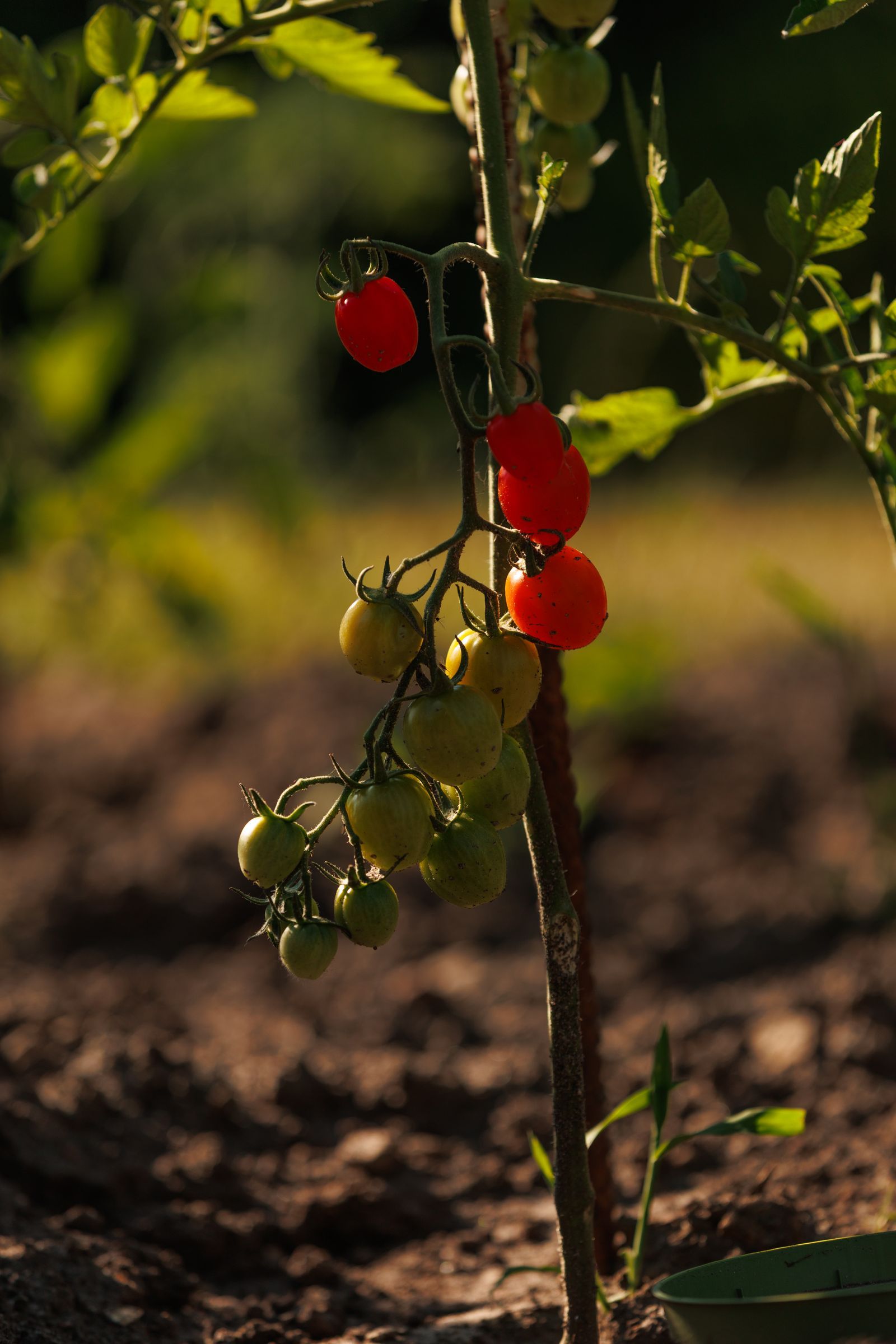
Photo: Robin Heidrich / Pexels
Most tomato guides are written for people who already grow tomatoes. They debate suckering technique, compare feeding programs, and tour forty varieties, and the true beginner, who wants one plant and a ripe tomato in August, drowns politely by page two. This page is the opposite: one or two plants, the easy route defended at every fork, and an honest list of what to skip in year one. Our full tomato guide on this site owns the complete crop program when you are ready for year two. This page owns your first plant.
The standards here are the ones this site uses everywhere: plants 24 inches apart in rows 48 inches apart per University of Georgia Cooperative Extension Circular 963, and the seed timing from North Dakota State University Extension H1139, sown indoors 6 weeks before last frost and set out 2 weeks after it, which matters below mostly as the reason you are allowed to skip it.
Interactive tool
Plant Spacing Planner: Room for Your First Tomatoes
Tomatoes are in the crop list below at the University of Georgia Cooperative Extension spacing of 24 inches between plants. Enter your bed size and see how much room one or two plants honestly take before you buy transplants.
8 tomato plants fit this bed
4 plants per row across 2 rows, on a 24 inch grid. Extension spacing for this crop: 24 in between plants, 48 in between rows.
The grid uses the in-row spacing in both directions, the standard square foot layout for raised beds. In open ground, keep the wider row spacing in the note above so you can walk and weed between rows.
Spacing figures: University of Georgia Cooperative Extension, Circular 963, Vegetable Planting Chart, source.
Step 1: Buy a Transplant, and Feel No Guilt
Starting tomatoes from seed is a lovely skill and a terrible first assignment, because it adds six weeks of indoor seedling management before the garden part even begins. Buy a transplant. Choose a stocky, dark green plant about as tall as your hand span, with a stem thicker than a pencil and no flowers or fruit on it yet; a plant already flowering in a small pot is a plant that has been stressed into desperation, not an early start. One plant is a legitimate garden. Two is abundance. The beginner who grows one plant well learns the whole crop; the beginner who plants eight learns crowd management and despair.
Step 2: Choose a Type That Forgives
Two choices forgive beginners. A cherry tomato produces early, produces constantly, splits its failures across hundreds of small fruit instead of staking your hopes on six big ones, and keeps going when the weather misbehaves. A determinate bush type grows to a fixed, manageable size, ripens its crop in a concentrated window, and fits a cage and a smaller garden. Indeterminate slicers are magnificent and are year two's project: they are vines with ambitions, and they will ask you questions about pruning and support that this page is deliberately postponing. Whatever you choose, a variety described as disease resistant earns its premium in most gardens, and the letters after its name are a resistance code your garden center can decode for you.
Step 3: Plant Deep, Cage the Same Day
Tomatoes do the trick no other common vegetable does: they root along a buried stem. So plant deep, removing the lowest leaves and burying a third to a half of the stem, and the plant builds a root system proportional to its ambitions. Set the plant out when nights are reliably warm, about 2 weeks after your last frost per the H1139 calendar, into the sunniest ground you have, 6 to 8 hours of direct sun at minimum, with compost worked in. Space at 24 inches between plants if you plant more than one. Then, the same day, not next weekend, install the support: a sturdy cage around the plant while it is small enough to fit through it. Every tomato grower has once tried to fit a cage over a four foot plant in July. It is a rite of passage you are hereby excused from.
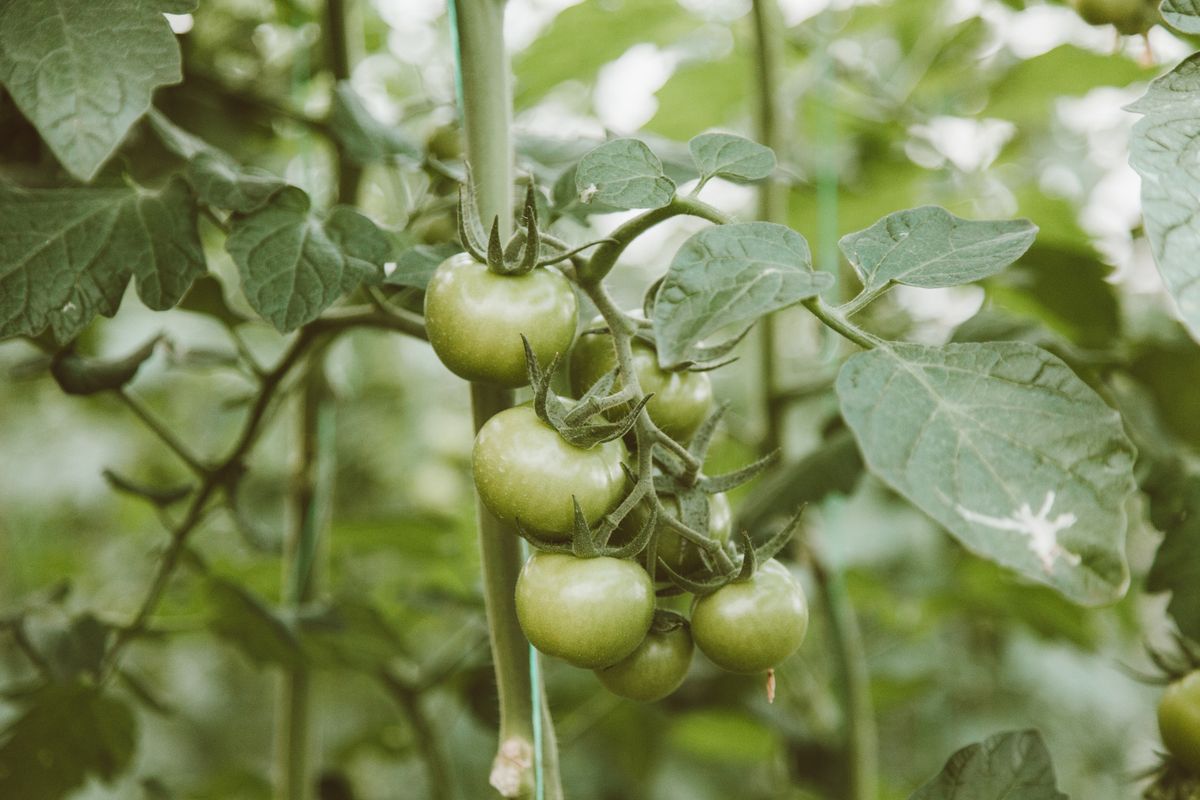
Unripe tomatoes growing on the branch in sunlight
Step 4: Water Evenly, Which Is the Whole Secret
If this page has one technical lesson, it is this: tomatoes want even moisture, deeply delivered, about an inch a week counting rain, and the common beginner disasters are mostly water rhythm failures wearing disguises. Blossom end rot, the black leathery patch on the bottom of the fruit, is a calcium delivery problem caused by roots cycling between dry and soaked, not usually a soil calcium shortage; the cure is steady water and mulch, not a supplement. Cracked fruit follows a dry spell broken by a flood, when the plant pumps water into fruit whose skin cannot stretch fast enough. Mulch the plant well once the soil is warm, 2 to 3 inches kept clear of the stem, and water at the base in the morning, deeply and then not again until the soil asks. A tomato on an even rhythm is a calm plant, and calm plants make unblemished fruit.
Step 5: The Small Amount of Feeding and Pruning You Actually Need
Feed lightly: compost at planting does most of the work, and one side dressing of balanced fertilizer or compost as the first fruit sets is the beginner program entire. Heavy nitrogen grows a magnificent green bush with a rumor of tomatoes. Pruning, year one version: for a determinate plant, do almost nothing, because its fruit grows on the growth you would be removing. For a cherry, remove the suckers that crowd the cage's center if airflow disappears, and otherwise let it be the fountain it wants to be. Pinch nothing in a panic, cut nothing you cannot name, and wash your hands and tools after handling any diseased looking leaf, which is the one piece of tomato hygiene that matters from day one.
The Honest List of Year One Skips
Skip starting from seed, and buy the transplant. Skip the suckering debates, the leaf pruning systems, and the single stem training; they are refinements for growers chasing perfection. Skip the fertilizer collection; compost and one balanced feed cover year one. Skip spraying schedules; your pest program is observation, picking off the occasional hornworm (look for the droppings, then follow them up), and removing any leaf that looks diseased, into the trash, not the compost. Skip saving seed, grafting, and the heirloom versus hybrid argument entirely. Every one of these is a fine topic, in year two, for a gardener who has eaten a tomato they grew and wants more. Year one's curriculum is one plant, deep, caged, watered evenly, and picked ripe.
Picking, and the Definition of Ripe
A tomato is ripe when it is fully colored for its variety and yields slightly to a gentle squeeze, and it is at its best picked in the morning and eaten the same day, never refrigerated if you can help it, because cold dulls the flavor you did all this work for. Fruit picked at the breaker stage, just blushing, will finish on a counter and tastes nearly as good, which is a useful trick when birds or cracking threaten a ripening cluster. By season's end you will know the things no guide can tell you: how your sun actually falls, how your soil holds water, and how many tomato plants your household honestly eats. Most beginners discover the answer is fewer than they feared and more than one. That is year two's planting plan, and you have earned it.
The First Month, Week by Week
Week one is establishment: the plant may wilt at noon while its roots settle, which is transplant shock and usually passes; water deeply at planting and keep the soil evenly moist, and a temporary shade cloth on a brutal afternoon is kindness, not coddling. By week two the plant should be standing tall all day and putting out new leaves from its center, the sign the buried stem is rooting. Week three is visible ambition: the cage begins to earn its keep, and you guide the first stems to grow up inside it rather than out through the bars at ground level, because a stem that escapes low becomes a stem you fight all season. Week four brings the first flowers, and with them the beginner's hardest lesson in tomato time: flowers are promises, not fruit, and the first ripe tomato is still weeks away. Use the month to install the habits rather than chase the harvest: the morning walk with the watering can's judgment, the glance at leaf undersides, the mulch check after heavy rain. A tomato plant's first month decides its root depth, its support, and its water rhythm, which is to say it decides August in May. Gardeners who feel they did almost nothing in the first month, while doing those small things faithfully, are the ones writing the success stories.
When Things Look Wrong: A Beginner Triage
Yellow lower leaves in the first weeks usually mean transplant adjustment or a hungry start; remove the worst, confirm the watering is even, and wait before treating. Curling leaves on a hot, windy afternoon are the plant protecting itself and typically flatten by morning; curling that persists with dry soil is a watering order. Spots and blights arrive later in the season for most gardens, and the beginner protocol is containment, not cure: remove affected leaves into the trash, wash hands and tools, water only at the base, and let the plant outgrow what it can, because a tomato with a third of its foliage lost to a tidy gardener's panic was healthier before the help. Fruit with a green shoulder that never colors is a variety and heat quirk, edible and unimportant. A plant that sets flowers and drops them in a heat wave is waiting out the weather with you; fruit set resumes when nights cool. Read this triage in the spirit it is written: most beginner tomato drama is weather, water rhythm, or patience, and the plant in front of you is tougher than the internet's alarm suggests. Grow the one plant, watch it closely, and let it teach you its language. That fluency, more than any variety or product, is what year two is built on.
Frequently Asked Questions
Should a beginner start tomatoes from seed or buy plants?
Buy a transplant in year one. Seed starting adds 6 weeks of indoor work before the garden begins (the H1139 schedule: sow indoors 6 weeks before last frost, set out 2 weeks after). Pick a stocky, dark green transplant with a thick stem and no flowers yet. Seed starting is a year two skill.
What is the easiest tomato for a first timer?
A cherry tomato or a determinate bush type. Cherries produce early and constantly, spreading your luck across hundreds of fruit. Determinate types stay a manageable size and ripen in a concentrated window. Save the big indeterminate slicers, with their pruning and support demands, for year two.
Why do I plant a tomato deep?
Tomatoes root along buried stem, so planting a third to a half of the stem underground builds a much larger root system. Remove the lowest leaves, bury the stem, and water in. Almost no other common vegetable does this; tomatoes are the famous exception.
How far apart do tomato plants go?
Twenty four inches between plants in rows 48 inches apart, at the University of Georgia Cooperative Extension Circular 963 standard this site uses. The spacing planner on this page is preset to those figures. One plant needs no row at all, just its circle of sun and its cage.
What causes the black patch on the bottom of my tomatoes?
Blossom end rot, which is a water rhythm problem: roots cycling between dry and soaked cannot deliver calcium to the fruit steadily, even in soil with plenty of calcium. The fix is even watering, about an inch a week, plus 2 to 3 inches of mulch to buffer the swings. It is rarely cured by adding calcium.
How much sun and water does one tomato plant need?
Six to eight hours of direct sun at minimum, more being better, and about an inch of water a week counting rain, delivered deeply at the base and kept even. Evenness matters more than volume: steady moisture prevents blossom end rot and cracked fruit.
Photo credits: Robin Heidrich (Pexels); ROMAN ODINTSOV (Pexels). Photos are served from this site; follow the credit to the library page for the original.