Growing tomatoes in pots is not a smaller version of growing them in the ground. It is a different system with one variable that decides almost everything: volume. A pot is a water battery, a nutrient pantry, and an anchor, all in a few gallons, and the published pot size advice sprawls because the sources are quietly describing different plants. Clemson Extension puts a tomato in a 14 to 20 inch container or a 5 gallon bucket. UW Madison specifies 5 gallons and 12 to 18 inches deep. Iowa State allows 2 gallons for cherry types and 4 for standard. The University of Maryland runs full size plants at 8 to 10 gallons and 12 to 16 inches deep, one per pot. Some guides push indeterminate varieties to 15 to 20 gallons. Every one of those numbers is right for the plant its author pictured, and this page's first job is the verdict that sorts them. Against this site's ten published container articles the bar is set deliberately high: this page owns the tomato specific constraints, the type decision, the deep planting, the support timing, and the feeding cadence, not generic container method.
How to Grow Tomatoes in Pots: The Pot Size Verdict and the Full Season System
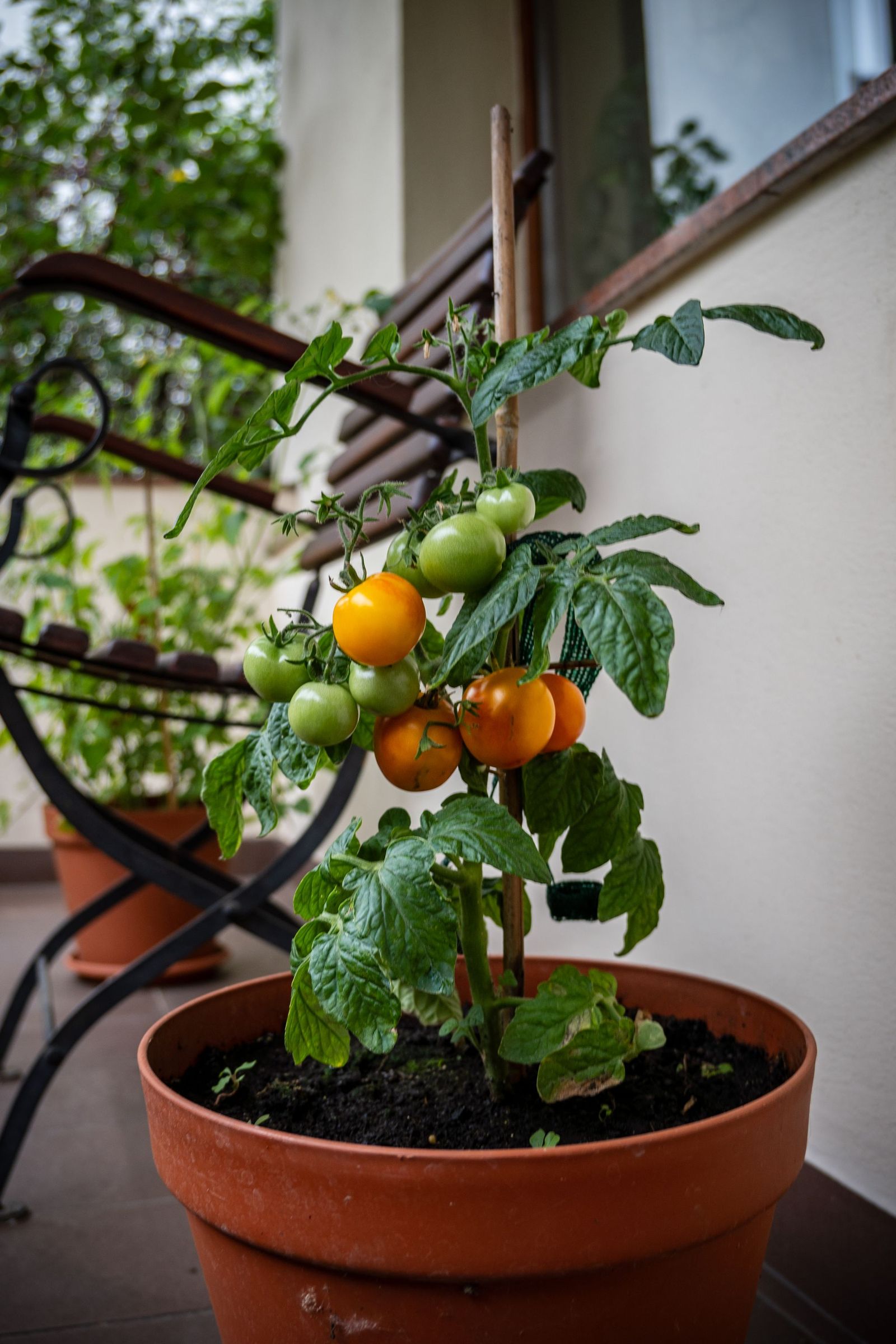
Photo: Michał Robak / Pexels
Tomatoes in Pots Checklist
Check off each step as you finish it. Your progress stays on this page.
0 of 8 complete
0% done
The Pot Size Verdict, by Plant Type
Decide the type first, because the type sizes the pot. Determinate tomatoes grow to a set height, set their fruit in a concentrated window, and stop; they are the patio plant, and the verdict for them is a 5 gallon pot as the floor, which is where Clemson and UW Madison land. Indeterminate tomatoes vine until frost, growing 6 feet or more with a root system to match, and the verdict for them is 10 gallons or more, Maryland's 8 to 10 being the honest minimum and the 15 to 20 gallon guides describing what a truly unrestricted plant wants. Cherry types are the exception that explains Iowa State's small numbers: a cherry in 2 to 4 gallons will fruit, heavily for its size, because the plant and its fruit are both small, but it will drink daily and forgive nothing. One plant per pot at every size above the cherry class; two tomatoes in one pot is two half starved plants and half the harvest of one. Fabric grow bags count fully as pots here and breathe better than plastic in heat, at the cost of faster drying. Whatever the material, drainage holes are not optional, and a saucer that holds water under a tomato in July is a root rot appointment.
Planting Deep, and Support Before Roots
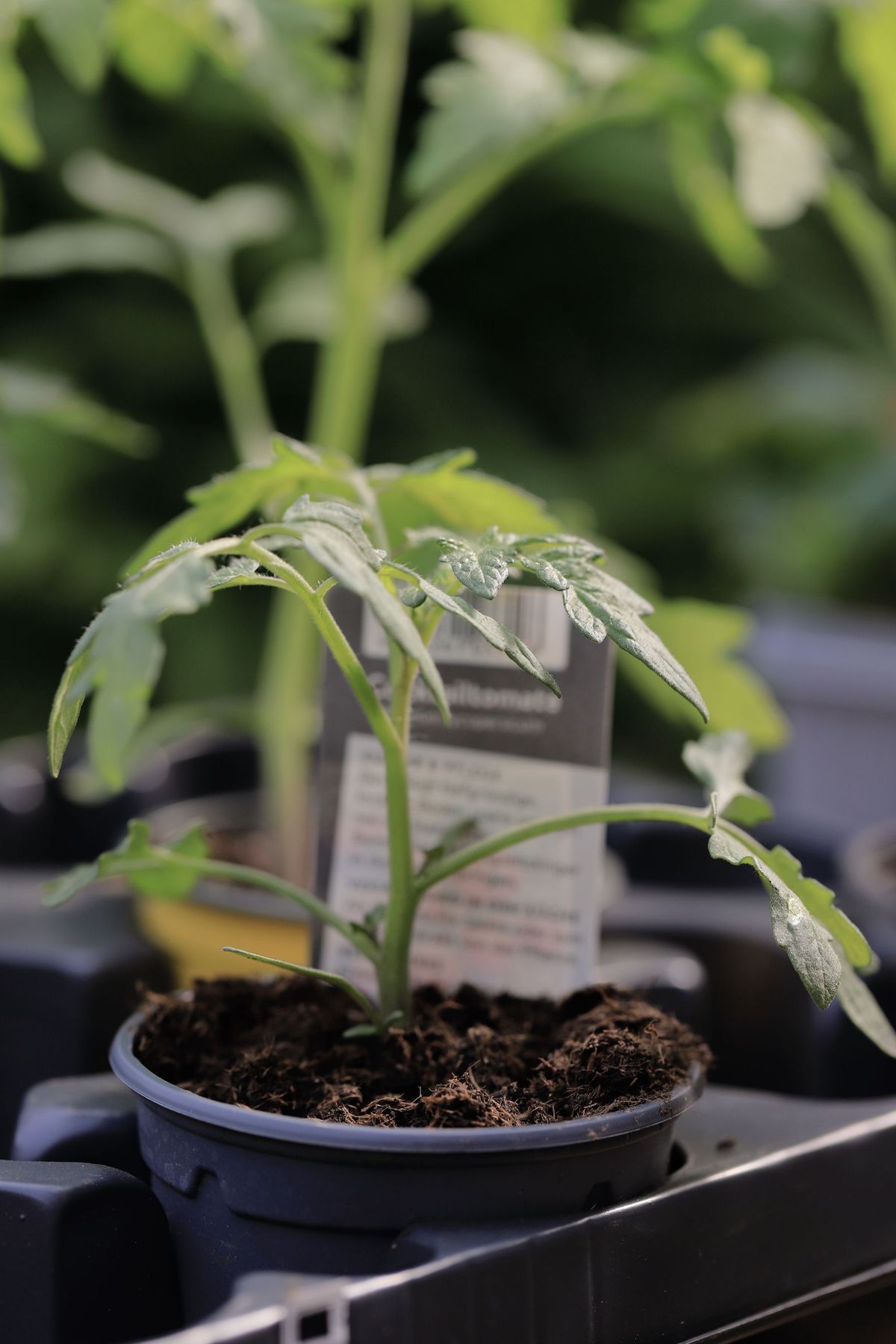
Tomatoes do the thing almost no other vegetable does: they root along their buried stem, so you plant them deep, stripping the lower leaves and burying the seedling up to its first true leaves, converting a leggy transplant into a stocky plant with roots along its whole buried length. In a pot this matters doubly, because the root system is the harvest. Fill with soilless container mix, not garden soil, which compacts in a pot and drains badly; mix in a slow release fertilizer at planting if your feeding plan is minimal, though the cadence below assumes you will feed. Then install the support now, today, before the roots fill the pot: a cage pressed in or a stake tied loosely, because driving a stake through a root filled pot in June severs the roots you spent May growing. This is the step beginners postpone and the one the whole season's structure hangs on. An indeterminate in a 10 gallon pot with a tall cage or a single stake and twine is a system; the same plant tied to a chair in August is a rescue.
Water and Feed: The Rhythm a Small Volume Forces
A potted tomato in summer drinks like an athlete. Check daily, and in heat expect to water daily, twice on the worst days for a big plant in a 5 gallon pot, always at the base, always until water runs from the drainage holes. The rhythm matters as much as the amount: blossom end rot, the black leathery patch on the fruit's bottom, is a calcium transport failure driven by wet dry swings, and pots swing harder than any bed. Mulch the pot's surface with 2 inches of straw to slow the top, and keep the swings narrow. Feeding is the second rhythm the small volume forces. A bed tomato mines a cubic yard of soil; a pot tomato lives on what you give it, and the guides converge on a balanced liquid feed every 1 to 2 weeks once flowering starts, at label strength or a touch under, because a pot both starves and salts faster than soil. Pale growth and purple tinged leaves in a watered pot are hunger, not thirst. Suckers, the shoots in the leaf axils, are a choice on indeterminates: prune to one or two main stems for airflow and fruit size in a pot's tight footprint, or let a determinate be entirely, since its fruit comes on the growth you would be removing.
The Season's Back Half, and the Reset
By midsummer the system is mostly defense. Watch for the foliage diseases that pots do not prevent, early blight working up from the lowest leaves: strip affected leaves, keep water off the foliage, and keep the plant's base clear for air. A pot can be moved, which is the container grower's one superpower: chase the sun as the season shifts, pull the plant under an eave before a hailstorm, and at the first frost warning, harvest everything with color and let the green fruit ripen indoors rather than losing the plant's last month in one night. When the plant is done, the reset is part of the method, not an afterthought: dump the mix onto a bed or into compost rather than reusing it for tomatoes, because soil borne disease carries over in a pot's small volume, scrub the pot, and store the cage. Note what the season taught you in the checklist above: the variety's real size against its catalog claim, the pot size verdict for next year, the watering frequency your hottest week demanded. The growers who succeed with pot tomatoes are not doing anything exotic. They sized the pot to the type, planted deep, caged on day one, and kept two rhythms, water and feed, without swings. That is the whole system, and it fits on a balcony.
Pruning in a Pot: The One Stem Decision
Pruning matters more in a pot than in a bed, because the root volume is capped and every leaf the plant carries is a water bill the pot must pay. For indeterminate varieties, the working standard is one main stem, two at most: pinch each sucker, the shoot that grows from the angle between a leaf and the stem, while it is under 2 inches, once a week on the same round as the water check, and the plant's energy goes to height, fruit, and the airflow that keeps foliage disease out of a crowded canopy. Let the suckers run for a month and the pot holds a bush the roots cannot supply, which shows up as blossom drop and small fruit no feeding fixes. Determinate and patio types invert the rule: they are bred to stop at a set size and fruit on their side growth, so prune them almost not at all, removing only the leaves that touch the mix and any yellowed growth at the base. Whichever type you grow, keep the bottom 6 inches of stem clear of leaves; splash from the mix surface onto low foliage is the main disease route in containers, and a bare lower stem plus the mulch layer on the mix closes it.
Frequently Asked Questions
What size pot does a tomato plant need?
By type. Determinate tomatoes: 5 gallons minimum, the Clemson and UW Madison standard, in a container 14 to 20 inches across. Indeterminate tomatoes: 10 gallons or more, with the University of Maryland at 8 to 10 gallons as the floor and some guides going to 15 to 20 for an unrestricted vine. Cherry types are the exception, fruiting in 2 to 4 gallons per Iowa State, at the cost of daily watering. One plant per pot at every size, and drainage holes always.
Should I plant tomatoes deep in pots?
Yes, deeper than they grew in their cell. Tomatoes root along any buried stem, so strip the lower leaves and bury the seedling up to its first true leaves. The buried stem becomes root, the plant stands stockier, and in a pot the extra root system is the difference between a plant that keeps up with summer drinking and one that wilts daily. This is a tomato specific trait; most other vegetables are planted at their original soil line and resent burial.
How often do I water tomatoes in pots?
Check daily in summer and water at the base until drainage runs whenever the top inch or two of mix is dry. In heat, a large plant in a 5 gallon pot may need water twice a day; a 10 gallon pot buys margin. The rhythm matters more than the volume: wet dry swings cause blossom end rot even when the weekly total is adequate, so mulch the surface and keep the moisture even. A pot that wilts by noon every day is telling you it is too small, not that you are lazy.
How often should I feed a potted tomato?
Every 1 to 2 weeks with a balanced liquid fertilizer once flowering begins, following the guides' convergence, because a pot's small soil volume holds almost no nutrient reserve and every watering leaches some away. A slow release fertilizer mixed in at planting can carry the early season, with liquid feeding taking over at bloom. Pale, slow growth in a correctly watered pot is hunger. Stop feeding as the last fruit ripens; late nitrogen grows leaves the frost will take anyway.
Can I reuse the potting mix next year?
Not for tomatoes, and not for their relatives. Soil borne diseases that tomatoes carry, the wilts and blights, persist in the mix, and a pot's small volume concentrates the risk. Dump used tomato mix onto ornamental beds or into the compost, scrub the pot before refilling, and start the next tomato in fresh soilless mix. The mix itself is not wasted, since it improves bed soil; it is simply retired from tomato duty, which is the cheap insurance a container grower buys every spring.
Photo credits: Michał Robak (Pexels); Christina & Peter (Pexels). Photos are served from this site; follow the credit to the library page for the original.