How to Grow Watermelon: Room to Run and Three Signs of Ripe
By the Windchime Walker editorial team
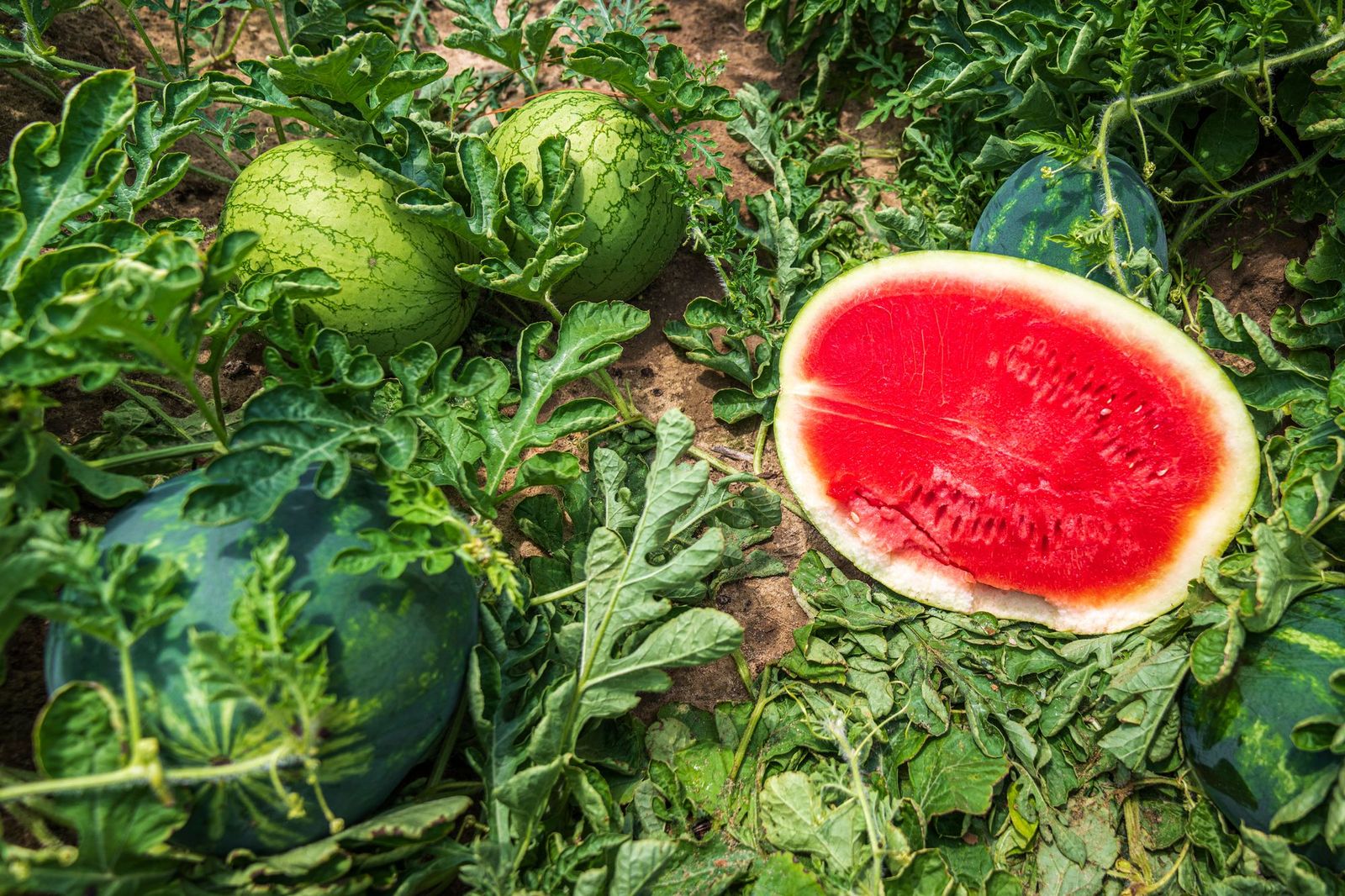
Photo: Mark Stebnicki / Pexels
Watermelon is the crop beginners most want and most often crowd. The vine looks modest in May, a few leaves on a string, and by July it has annexed the path, the next bed, and part of the lawn. The second beginner failure is the opposite sin: after months of patience, the melon gets picked a week early and tastes like sweet cucumber water. Both failures are preventable, and both are prevented before the fruit ever sets, by spacing honestly at planting and by learning the ripeness signs before you need them.
The figures on this page follow the University of Georgia Cooperative Extension Circular 963, this site's standard for watermelon: rows 72 inches apart, plants 36 to 48 inches apart, seed sown 1 to 2 inches deep, and 80 to 90 days from sowing to harvest. Other sources publish tighter spacings, the Almanac tradition of hills much closer together and Southern Living at the snug end of the Georgia range, because they assume different varieties and different amounts of vine pruning. We use the Georgia standard throughout and say so, rather than blending sources into a number nobody published. The Plant Spacing Planner on this page is set to that standard, so the patch you lay out and the patch in this article are the same patch.
Interactive tool
Plant Spacing Planner: The Watermelon Patch
Watermelon is in the crop list below at the University of Georgia Cooperative Extension spacing of 36 to 48 inches between plants in rows 72 inches apart. Enter your patch size and count your hills before you sow.
8 tomato plants fit this bed
4 plants per row across 2 rows, on a 24 inch grid. Extension spacing for this crop: 24 in between plants, 48 in between rows.
The grid uses the in-row spacing in both directions, the standard square foot layout for raised beds. In open ground, keep the wider row spacing in the note above so you can walk and weed between rows.
Spacing figures: University of Georgia Cooperative Extension, Circular 963, Vegetable Planting Chart, source.
Step 1: Choose the Spot and the Type Before the Seed
Watermelon wants the sunniest, warmest ground you have, a full day of direct sun, and soil that drains after rain. It also wants room measured in feet, not inches: at the Georgia spacing, one plant commands a square roughly 6 feet by 3.5 feet, and the vines will use all of it. Choose the patch by walking it at midsummer noon, not by where space happens to be left over in spring.
Then choose the type by your table. Large round types are the classic picnic melons and need the full spacing and the full season. Smaller icebox types ripen sooner, fit smaller patches, and suit households that cannot eat 20 pounds of melon in a weekend. Seedless types carry one hidden requirement: they need a seeded pollinator variety planted nearby, because their own pollen is not viable, and seed catalogs say so on the packet. A beginner who plants only a seedless variety gets vines, flowers, and no fruit, which is the saddest sentence in this article. Plant one seeded plant among the seedless ones and the bees do the rest.
Step 2: Wait for Warm Soil, Then Sow
Watermelon seed sulks in cold ground. Sow after your last frost, once the soil has warmed into the 60 to 70 degree range and stays there; seed sown into cold, wet soil rots more often than it sprouts. Gardeners in short seasons start seed indoors in pots a few weeks before the ground warms, handling the seedlings gently because melon roots resent disturbance, but in most gardens direct sowing into warm soil catches up fast and asks less of you.
Prepare the patch by working compost into the soil and raking it level. If your spring soil warms slowly, a sheet of black plastic mulch laid a week or two before sowing warms the bed and keeps the fruit off damp soil later; it is an old trick and a good one. Mark your rows 72 inches apart with string before you open the packet, because spacing decided by eye in the excitement of planting day always shrinks by August.
Step 3: Sow in Hills or Rows at the Georgia Spacing
Sow seed 1 to 2 inches deep. The traditional arrangement is the hill: a low, wide mound of soil with 4 to 5 seeds sown in a circle on top, the plants later thinned to the strongest 2. Hills warm faster and drain better, which is why the tradition exists. Rows work just as well in a level, well drained patch: sow a few seeds every 36 to 48 inches along the row and thin to the strongest plant at each station once the seedlings have true leaves and a clear winner.
Use the planner on this page before sowing day to count your hills honestly. A 12 by 12 foot patch at Georgia spacing holds about 6 plants, and 6 healthy watermelon plants produce more melon than any household can eat fresh. The beginner's instinct to squeeze in 12 plants produces 12 stunted vines and a harvest of small, bland fruit. Crowding is the one watermelon mistake that cannot be corrected later; thinning later feels wasteful, so it never happens.
Step 4: Water on a Schedule, Then Taper
Watermelon wants about 1 inch of water a week, delivered deeply and evenly, and the critical stretch is from flowering through fruit sizing, when uneven moisture shows up later as hollow heart and split fruit. Water at the base of the plants in the morning, soak the root zone, and then let the surface dry between waterings; a mulch layer, straw or the black plastic from step 2, holds the moisture steady and keeps ripening fruit off wet ground.
As harvest approaches, ease off. In the final week or two before a melon ripens, heavy watering dilutes the sugars the plant has been packing into the fruit, and gardeners who grow for flavor taper the water so the last stretch of ripening happens on the dry side. This is a taper, not a drought: a wilting vine cannot finish a melon. Watch the leaves at noon; brief midday wilt in heat is normal, wilt that lasts into the cool of evening means water now.
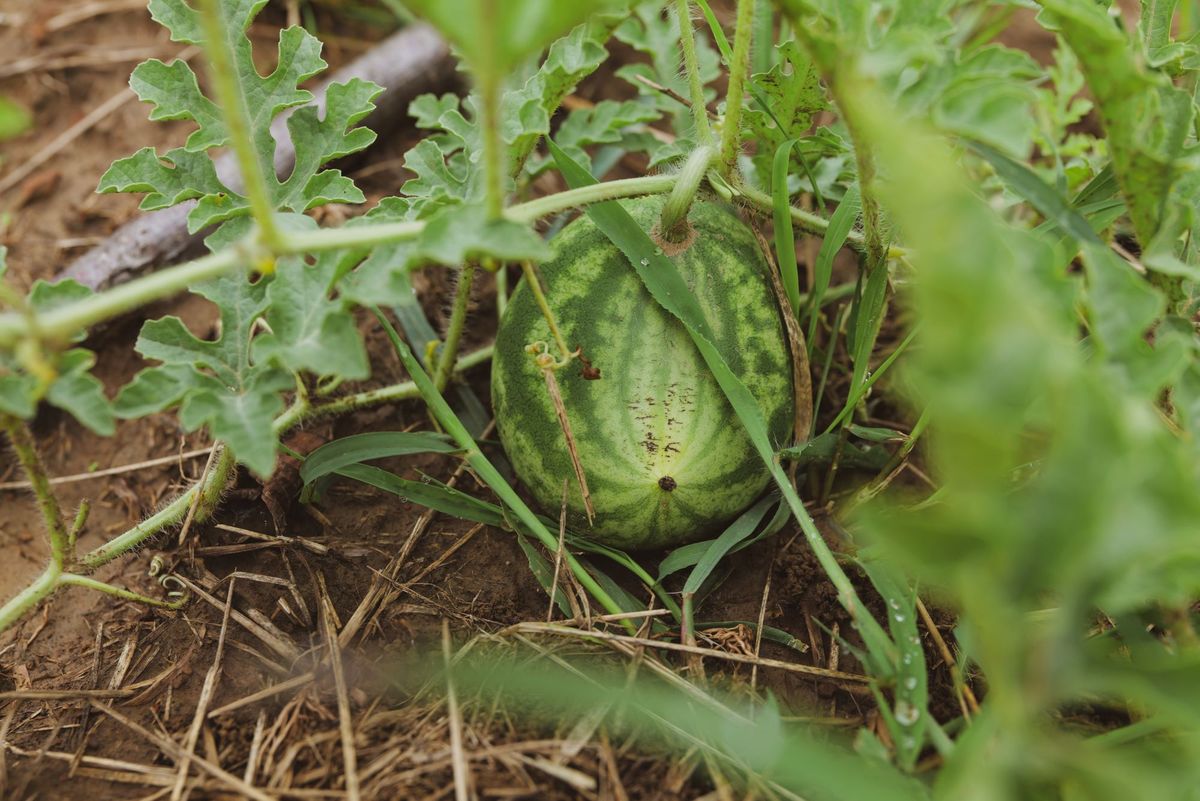
A young green watermelon growing on its vine in a field
Step 5: Feed Lightly and Let the Bees Work
Watermelon is a moderate feeder with one hungry moment. Work compost into the patch before sowing and most soils carry the early weeks; when the vines begin to run in earnest, a side dressing of compost or a balanced garden fertilizer scratched in along the row and watered in gives the plants what fruit set demands. More is not better: heavy nitrogen grows a jungle of leaves and delays fruit, the watermelon version of the magnificent tops and disappointing tubers that plague overfed potatoes.
Pollination is the other middle weeks job, and it belongs to the bees. A watermelon flower opens for a single morning, male and female flowers are separate, and a female flower needs many bee visits in her one morning to set a well shaped fruit. Keep sprays off the patch while flowers are open, water at the base rather than over the blooms, and if your garden is short on bees, know that hand pollination works: pick a male flower, peel back its petals, and dab its pollen onto the center of a female flower, the one with a tiny melon swelling behind it. It takes a minute a day during the flowering stretch and it rescues fruit set in a quiet garden.
Step 6: Let the Vines Run and Mind the Fruit
A watermelon vine is not a tomato; it does not want pruning, tying, or training beyond gentle redirection when a runner heads for the driveway. The leaves are the factory that sweetens the fruit, and every leaf you remove is sugar the melon will not get. Walk the patch weekly, lift any fruit that rests in a damp hollow, and slide a piece of cardboard, a shingle, or a handful of straw under each melon. The dry bed prevents the pale rot spot that ruins the underside of fruit left on wet soil.
For the largest fruit, some growers limit each vine to 2 or 3 melons, removing later set fruit so the plant's effort concentrates. For a first crop, leave the vines alone and accept more, smaller melons; the limiting skill is worth learning in year two, once you know your patch and your household's true melon capacity, which is always smaller than June optimism predicts.
Step 7: Judge Ripeness by Three Signs Together
No single sign is trustworthy, and every veteran grower has thumped a melon confidently and cut into pink disappointment. Use three signs together, and require at least two, preferably all three, before the knife comes out.
First, the tendril: the small curly tendril on the stem nearest the fruit dries and turns brown when the melon is ripe. A green, lively tendril means wait. Second, the ground spot: the patch where the melon rests on the soil turns from white or pale green to a creamy yellow as it ripens. Third, the rind: a ripe melon's skin loses its shine and goes dull, and the surface feels slightly rough rather than slick. The famous thump, a hollow drum sound, is real but takes a season of comparisons to read; treat it as supporting evidence, never the verdict.
When the signs agree, cut the melon free with a knife or pruners, leaving a short stub of stem; pulling tears the vine and can crack the fruit. A ripe watermelon does not improve after picking, which is the whole reason for the three sign discipline: the melon you cut today is the melon you eat.
Watermelon in a Small Garden
The Georgia spacing sounds like a verdict against small gardens, but the crop has honest small space forms. Bush and short vine varieties bred for compact gardens produce icebox sized fruit on vines a fraction of the standard length, and the packet states the vine length, which is the number to shop by. Small fruited types can also climb a strong trellis or fence, with each fruit supported in a sling of cloth or netting once it gains weight, because a ripening melon hanging unsupported will tear itself off the vine. The spacing in the ground can tighten modestly for these types, but the sun, warm soil, and watering schedule stay exactly the same, and the three ripeness signs still rule the harvest.
Containers are the one form to approach with lowered expectations. A very large container, a determined watering habit, and a small variety can produce a melon or two on a hot patio, and for some gardeners that is a fair trade. Know going in that the container crop is a novelty harvest, not a patch harvest, and give the vine its full sun either way.
When Melons Disappoint: A Short Diagnosis
Misshapen or lopsided fruit points to incomplete pollination: each melon needs many bee visits, and a cold, rainy flowering week or a garden sprayed during bloom starves the fruit of them. The fix is next season's (flowers left alone during bloom, sprays kept off open blossoms, and a pollinator plant for seedless types), because the fruit already set cannot be re-pollinated.
Hollow heart, a crack or cavity inside otherwise sweet flesh, follows uneven water during fruit sizing, which is why step 4 insists on even moisture early and a taper only at the end. Pale, bland flesh is usually an early pick wearing a ripe costume, and the three sign rule is the cure. Fruit rotting where it touches the ground is the missing dry bed from step 6. Nearly every watermelon disappointment has its cause in one of the seven steps, which is good news: the crop is not mysterious, it is sequential, and a beginner who runs the sequence gets melons.
Frequently Asked Questions
How far apart do watermelon plants go?
At this site's standard, the University of Georgia Cooperative Extension Circular 963, plants stand 36 to 48 inches apart in rows 72 inches apart, sown 1 to 2 inches deep. Other sources publish tighter spacings for smaller varieties; we use the Georgia standard rather than averaging them, and the planner on this page is set to it.
When should I sow watermelon seed?
After your last frost, once the soil has warmed into the 60 to 70 degree range and stays warm. Cold, wet soil rots the seed. Expect 80 to 90 days from sowing to harvest at the Georgia figures, so count backward from your first fall frost if your season is short.
How much water does watermelon need?
About 1 inch a week, deep and even, with the critical stretch from flowering through fruit sizing. Taper the water in the final week or two before harvest so the sugars concentrate, but never let the vine wilt into the evening.
How do I know a watermelon is ripe?
Require the signs together: the tendril nearest the fruit dried and brown, the ground spot turned creamy yellow, and the rind dull rather than shiny. The hollow thump is supporting evidence only. A watermelon does not ripen further after picking, so the signs matter.
Can I grow watermelon in a small garden?
Yes, with the right type: bush and short vine varieties with icebox sized fruit, or small melons trellised with each fruit supported in a sling. The sun, warm soil, and watering rules stay the same. A large container can produce a novelty melon or two, with modest expectations.
Why did my seedless watermelon make no fruit?
Seedless varieties have non viable pollen and need a seeded pollinator variety planted nearby for the bees to cross pollinate. Plant one seeded plant among the seedless ones. Catalogs note the requirement on the packet, and it is the most common cause of a fruitless seedless patch.
Photo credits: Mark Stebnicki (Pexels); Vladimir Srajber (Pexels). Photos are served from this site; follow the credit to the library page for the original.