Every zinnia seed guide presents two routes, the windowsill and the bed, as if they were equals. They are not, and the plant will tell you so if you watch what it does. Zinnias resent root disturbance more than almost any common annual, and they grow so fast in warm soil that a seed sown directly in the bed after frost routinely catches and passes a transplant that spent weeks in a pot being careful. The direct sow is the default this page recommends: after all frost danger, into soil warming toward 70 degrees, seed a quarter inch deep, up in 3 to 7 days. The indoor route is a calculated trade, earlier flowers bought with transplant risk, and it only pays when it is done the one way this plant tolerates: biodegradable pots, a young transplant, and no root handling. This site's planner carries zinnia at the Colorado State University figure of 4 weeks before last frost, inside the 4 to 6 week range the guides publish. Around those two routes sits the system that turns one packet into a season: the pinch, the succession ladder counted back from fall frost, and seed to flower in about 60 to 90 days.
Home / Flowers and Houseplants
How to Grow Zinnias From Seed: The Direct Sow Default and the Succession Ladder
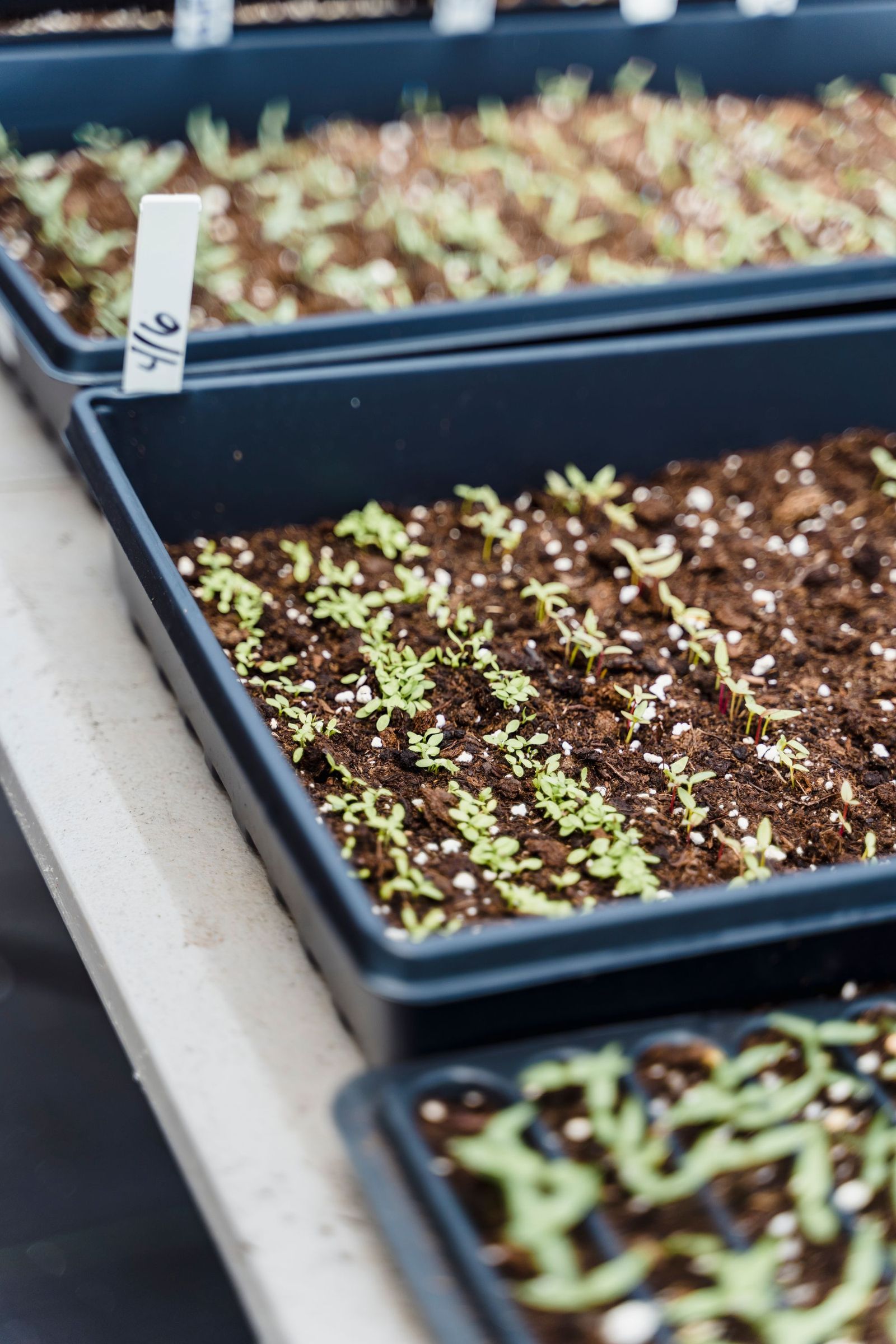
Photo: Greta Hoffman / Pexels
Seed Starting Date Planner: The Zinnia Calendar
Enter your average last spring frost date, then pick zinnia in the crop list. The planner counts back the Colorado State University 4 week indoor head start; for most growers the direct sow described in this article is the route this plant prefers.
Sow tomato indoors: Fri, March 20, 2026
Move seedlings outdoors: Fri, May 15, 2026.
Sow indoors 6 weeks before last frost; set out 2 weeks after last frost.
Week offsets: North Dakota State University Extension, H1139, garden seed starting chart, source. Frost dates are averages: in any given year the last frost can land two weeks either side of the date you type, so keep an eye on the forecast as transplant day approaches.
The Direct Sow: The Route the Plant Prefers
Wait for the real trigger, which is not the frost date alone but warm soil. Zinnias are a heat loving annual; seed sown into cold soil sits, rots, or emerges weak, while seed sown when the soil is near 70 degrees germinates in 3 to 7 days and grows without a check. For most growers that means sowing a week or two after the last frost date, not on it. Sow a quarter inch deep, in rows or broadcast in a prepared bed, and keep the surface evenly moist until the stand is up, the one week of this plant's life when light frequent watering rules, as this site's zinnia watering article details. Thin the stand to 9 to 12 inches apart for standard types, dwarf types closer, and thin early and ruthlessly, because crowded zinnias are the mildew nursery this site's watering page warns about. The thinnings do not transplant well, which is the plant's personality again; compost them and accept it. A direct sown bed reaches flower in about 60 to 90 days from seed depending on type and weather, and it reaches it as a deep rooted, unstressed plant that will stand through August without sulking. That is the baseline every indoor start has to beat, and most do not.
The Indoor Head Start, Done the One Way It Works
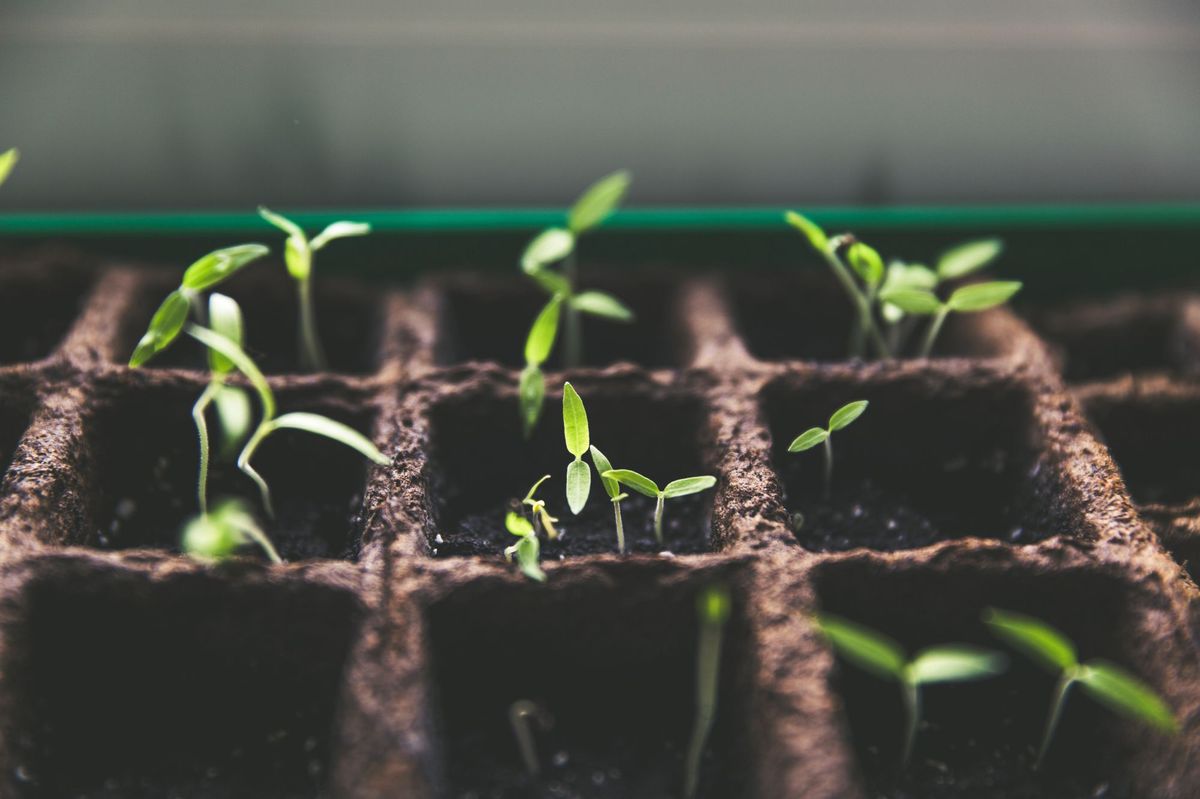
The indoor route has exactly one honest use: flowers 2 to 3 weeks earlier than the direct sow, in a climate with a short season or for a date that matters. Done wrong, it produces a root bound, checked plant that the direct sown bed laps by July. Done right, it follows three rules. Start late: 4 weeks before last frost, the planner's Colorado State figure, not the 6 or 8 weeks impatient growers give it, because a zinnia held too long in a pot is a zinnia ruined. Sow into biodegradable pots, peat, coir, or paper, one or two seeds per pot, so the whole pot plants out and the roots are never touched. And transplant young, at 3 to 4 weeks old, small and still growing fast, hardening off for about 7 days first so the move outdoors is a change of address, not a change of climate. Set the pots at the same spacing as the direct sow, water them in well, and expect them to sit for a few days before growing; that pause is the transplant cost, priced in. If your season is long and your date is flexible, the direct sow wins on labor, plant quality, and usually on total flowers. The windowsill is a tool for short seasons, not a ritual of spring.
The Pinch and the Succession Ladder
Two habits convert a zinnia planting from a moment into a season. The first is the pinch: when a young plant reaches 8 to 12 inches tall, pinch out the growing tip above a leaf pair. Like the marigold pinch on this site, it trades the first flower for a branched plant carrying many, and for cut flower growers it is the difference between one stem and a bouquet machine. The second is succession. A single sowing flowers gloriously and then ages all at once, mildewing and going to seed by late summer. Instead, sow a fresh patch every 2 to 3 weeks through the season, each one young as the last declines, and the bed holds flowers continuously. The ladder has a closing date, and it is arithmetic, not vibes: the last sowing must leave time for 60 to 90 days of growth and flower before the first fall frost, so the guides' rule is to stop sowing about 3 months before that frost. Count back from your frost date, mark the stop on the calendar, and work the ladder backward: a final sowing at the stop date, the one before it 2 to 3 weeks earlier, and so on to the spring start. The planner above will hold the dates against your frost day.
Seed Saving, and the Honest Wrap
Zinnias finish the way they started, generously. Let the best heads dry fully on the plant at season's end, and the seed is free, viable, and close to true for the open pollinated types; hybrids return as a pleasant lottery of their parents' traits. Save from the healthiest, latest flowering plants, because those are the genetics your garden just selected for. Store the seed dry, labeled with the year, and next spring's first sowing costs nothing. Put the whole system together and it is four sentences. Direct sow into warm soil as the default, a quarter inch deep, thinned to a foot. Use the indoor route only with biodegradable pots and a 4 week fuse when the season is short or the date is fixed. Pinch every plant at 8 to 12 inches. Sow again every 2 to 3 weeks until 3 months before fall frost, then stop and let the last patch make your seed. The packet in your hand is not a planting; run on the ladder, it is a summer.
Troubleshooting the Young Stand: Gaps, Legginess, and Damping Off
Three failures account for nearly every disappointing zinnia stand, and each has a spacing or seed depth cause that the next sowing can fix. Gaps in the row, bare stretches between healthy seedlings, usually mean depth or dryness: seed that slipped deeper than a quarter inch in loose soil often never surfaces, and seed at the right depth still fails if the surface dried hard in the first week, which is why this page keeps the seedbed evenly moist until emergence and no longer. Leggy seedlings, tall and pale with wide spaces between leaves, are a light report, not a feeding one: indoor starts stretched toward a window need the light moved closer or the seedlings moved to it, and leggy transplants should be planted a little deeper at setting out rather than fed. Damping off, seedlings pinched at the soil line and toppled overnight, is a fungus of wet, still air; it is prevented by the airy spacing and surface drying this page builds in, and by watering seedlings in the morning so the surface dries by night. None of the three is fixed by reseeding the same way into the same conditions. Read the failure, change the one variable it names, and resow; zinnia seed is cheap, fast, and forgiving of a second attempt made honestly.
Frequently Asked Questions
Is it better to direct sow zinnias or start them indoors?
Direct sow, for most growers. Zinnias resent root disturbance and grow so fast in warm soil, germinating in 3 to 7 days near 70 degrees, that a direct sown bed routinely catches a transplanted one. The indoor route buys flowers 2 to 3 weeks earlier and is worth it in short seasons or for a fixed date, but only done the tolerant way: started just 4 weeks before last frost, grown in biodegradable pots that plant out whole, and transplanted young at 3 to 4 weeks after a week of hardening off.
When should I plant zinnia seeds outdoors?
After all danger of frost, and ideally a week or two past the last frost date, when the soil has warmed toward 70 degrees. Seed sown into cold soil rots or emerges weak; seed sown warm is up in 3 to 7 days. Sow a quarter inch deep and keep the surface evenly moist until germination. Then keep sowing: a fresh patch every 2 to 3 weeks through the season holds flowers continuously, stopping about 3 months before the first fall frost so the last sowing has its 60 to 90 days.
How far apart should zinnias be spaced?
Thin or set standard types 9 to 12 inches apart, with dwarf types closer. Thinning feels wasteful and is actually disease control: crowded zinnias hold humidity in the canopy and powdery mildew follows, which is why this site's zinnia watering article insists on air as much as on base watering. Thin early, while the seedlings are small, and do not try to transplant the thinnings; zinnias resent the disturbance and the pulled seedlings rarely thrive. Compost them and let the spaced plants fill the room.
Should I pinch zinnia seedlings?
Yes, once, when the plant is 8 to 12 inches tall: pinch out the growing tip just above a leaf pair. The plant branches below the pinch and produces many flowering stems instead of a single stalk, which matters most for cutting gardens but improves any planting's shape and total bloom. The pinch delays the first flower by a week or so and repays it all season. Do it on the direct sown bed and on transplants alike, once they are growing strongly after their move.
How long do zinnias take from seed to flower?
About 60 to 90 days, depending on the type and the warmth of the season. Dwarf and small flowered types sit at the fast end; the big dahlia flowered and cactus types take the long end. That number is what sets the succession ladder's closing date: count back roughly 3 months from your first fall frost for the last sowing that can flower properly. It also explains the indoor trade: a 4 week head start does not deliver flowers 4 weeks early, because transplant shock spends part of the gain.
Photo credits: Greta Hoffman (Pexels); Markus Spiske (Pexels). Photos are served from this site; follow the credit to the library page for the original.