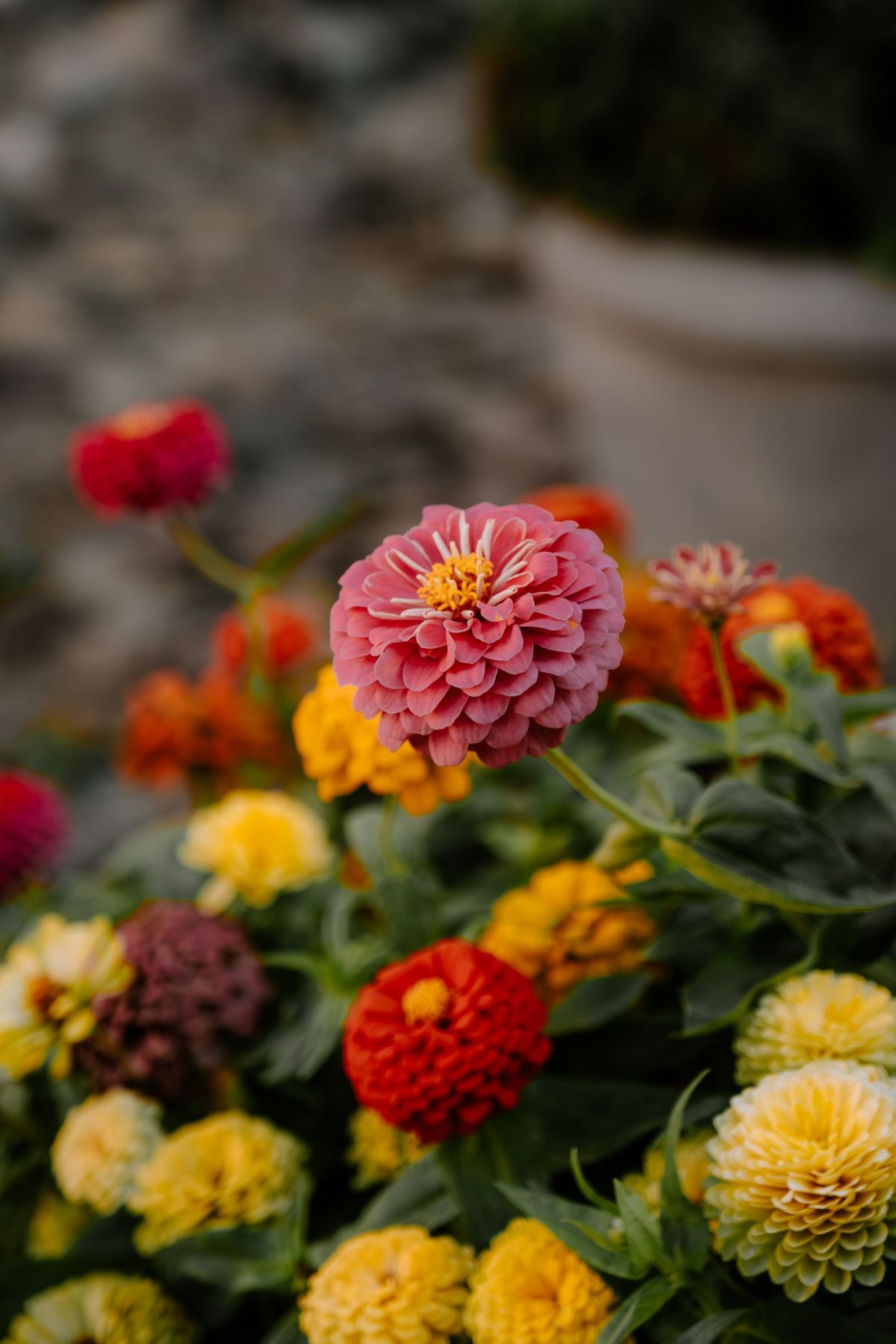
Zinnias are the flower garden's argument for generosity. They are grown to be cut, and the plant responds to cutting the way a generous friend responds to being asked: with more. A zinnia left uncut blooms politely. A zinnia cut twice a week becomes a flower factory that runs from midsummer to frost, filling vases, feeding butterflies, and asking in return only for sun, air, and water delivered at ground level. For a beginner who wants one flower that behaves like a whole hobby, this is the one.
The growing is simple and the rules are few, but they are specific, and most of them come from how the plant evolved: zinnias are Mexican, built for heat, sun, and dry air moving through their leaves. The guidance below follows Clemson Extension's home garden recommendations, which suit the plant's nature: sow it where it will grow, space it for air, water its feet and never its head, and start cutting the moment the flowers are ready.
The Zinnia Season Checklist on this page runs the short season in order: sow, thin, pinch, cut, repeat. Zinnias grow so fast that the checklist's real job is pacing: succession sowings every few weeks, written down in spring, are what stand between a zinnia bed that peaks in July and one still filling vases in September.
Interactive tool
Zinnia Season Checklist
Check off each step as you finish it. Your progress stays on this page.
0 of 7 complete
0% done
Step 1: Direct Sow After Frost, a Quarter Inch Deep
Zinnias dislike transplanting, grow fast enough not to need it, and are best direct sown in the garden after your last frost, when soil has warmed toward 70 degrees, per Clemson Extension. Sow seed about a quarter inch deep, keep the bed moist until germination, which takes about a week in warm soil, and expect the seedlings to grow with a speed that makes most vegetables look thoughtful. Bloom arrives roughly 8 to 12 weeks after planting, depending on variety, and then does not stop.
An indoor start is possible, about 4 weeks before the last frost per Colorado State University guidance, in individual pots to spare the roots, and it buys earlier flowers in short seasons. But understand the trade: the direct sown plants usually catch up, because a zinnia's growth in warm soil outruns the transplant's recovery. Clemson's own framing treats zinnias as a direct sow crop that is usually planted where it will bloom, and most experienced growers agree. The seed is cheap, the germination is reliable, and the packet holds a bed's worth.
Choose varieties by the vase and the border. Tall cutting types, the Benary's Giant and State Fair class, reach 3 to 4 feet and produce the long stems florists want. Mid height types fill beds. The dwarf Profusion and Zahara lines, bred for bedding, bloom in mounds and resist disease better than any of them, at the cost of stems too short to cut. A beginner's bed usually wants both: a back row of giants for the vase, a front of dwarfs for the show.
Step 2: Thin to 8 to 12 Inches, for the Air
Thin seedlings without mercy to their final spacing: dwarf types 8 to 9 inches apart, tall types about 12 inches, per Clemson Extension. This spacing is not about room to grow, though the plants will use it. It is about powdery mildew, the white dusting that is the zinnia's one serious enemy, which arrives earliest and worst where leaves stay wet and air stands still. A zinnia bed thinned for airflow, watered at the base, in full sun, often reaches frost with clean leaves and no spraying. The same bed crowded and overhead watered mildews by August as reliably as the calendar.
Full sun is non negotiable: 6 or more hours, and the more the better. Zinnias in shade stretch, flop, flower late and little, and mildew on schedule. Soil can be ordinary, even lean; rich soil and heavy feeding push soft leafy growth that mildews and flops, while zinnias in average soil grow sturdy and flower with intent. Average garden soil, a little compost at sowing, and no further feeding is the whole fertility program.
Step 3: Pinch Young Plants, Once
When a young zinnia is 8 to 12 inches tall, pinch out its growing tip, the same branching trick used on basil and marigolds. The plant responds by forking into several stems instead of rising on one, which multiplies the flowers and, just as valuable, produces a bush that holds itself up instead of a spire that needs staking. The pinch delays the first flower by a week or so and repays it for four months.
Gardeners growing zinnias purely for cutting sometimes skip the pinch on a few plants to get the earliest long stems, then pinch the rest for the long season. Either way, the pinched majority is the bed's engine. Note what you did in the garden notebook, because by August the pinched and unpinched plants will be visibly different, and the notebook is how a preference becomes next year's plan rather than next year's argument.
Step 4: Water the Feet, Never the Head
Water zinnias at the base, about 1 inch a week including rain, and keep the foliage dry. This is Clemson Extension's central care instruction for the crop and it is aimed squarely at mildew: spores splash from soil to leaf in overhead watering and germinate on leaves that stay wet into the evening. A soaker hose or a watering can aimed at the ground delivers everything the roots want and nothing the mildew needs. Water in the morning when you can, so the inevitable splashes dry in the sun.
Mulch helps twice here: it holds the moisture your watering delivers, and it forms a barrier between the soil, where mildew spores wait, and the lower leaves they want to reach. Keep mulch a little back from the stems. If mildew arrives anyway in a humid August, as it sometimes does despite everything, the plant's top growth usually stays ahead of it and flowering continues; pick off the worst leaves, improve the air by removing a crowded neighbor if you can bear to, and let the succession sowing, next step, carry the display.
Holding Up the Tall Ones: Support Without Fuss
Tall cutting zinnias in rich soil and a wet July can lean, and a bed of leaning zinnias still blooms but cuts awkwardly and mildews faster at its crowded base. The fix used by cutting gardens is corralling, not staking plant by plant: a few stakes around the bed's perimeter with twine run between them at knee height and again at hip height, forming a loose cage the plants grow up through and lean against collectively. Put the corral in when the plants are a foot tall, before they need it, because threading twine through a bed of 3 foot plants in flower is a job that damages stems and tempers in equal measure.
In leaner soil and drier summers many beds never need support at all, which is another quiet argument for the average soil this guide recommends: a zinnia grown slightly hard stands up like a fence post, while a zinnia grown soft and lush needs architecture. Judge your own bed by July. If the plants stand, skip the twine and spend the time cutting. If they lean as a group toward the light or slump after storms, corral the next sowing while it is short, and note the difference in the garden book, because the corralled succession will show you within weeks whether your soil is richer than your zinnias want.
Step 5: Cut Flowers Like You Mean It, and Sow Again
Cutting is harvesting, and zinnias respond to it by branching and blooming more, so the vase and the bed are allies rather than rivals. Cut when the flower is fully open and the stem below it feels stiff; florists use a wiggle test, grasping the stem well below the head and shaking gently, and a flower whose head sits firm on a rigid stem is ready, while one that flops is too young and will wilt in the vase. Cut deep, down to a set of leaves or a branching point, because the long cut is what prompts the plant to throw two new flowering stems from that node. Shallow, timid cuts produce short, weak regrowth and a plant that runs out of architecture.
Strip the leaves that would sit below the waterline, get the stems into water immediately, and recut them under water if they have been carried around the garden while you worked. A zinnia treated this way lasts the better part of a week in the vase.
Then sow again. A fresh sowing every 2 to 3 weeks through early summer, a pinch of seed in a gap or a short new row, keeps young mildew free plants coming as the first sowing ages. This succession habit, more than any variety choice, is what separates a zinnia season that ends in August from one that ends at frost with the vase still full. The last sowing goes in about 8 weeks before your first fall frost; after that, let the standing plants finish, feed the butterflies, and set a few heads aside to dry for seed.
Zinnias and Butterflies: The Second Harvest
A zinnia bed in August is doing two jobs, and the second one flies. Zinnias are among the best butterfly flowers a home garden can plant: flat, open, nectar rich landing pads in bright colors, offered at exactly the height a butterfly prefers, through the exact weeks when monarchs and swallowtails are feeding most heavily. Hummingbirds work them too, and goldfinches descend on the seed heads in fall if you leave some standing. This is not decoration on the guide's argument; it changes how you run the bed. A gardener cutting every flower for the vase is harvesting the whole crop, while a gardener who cuts two thirds and leaves a third standing is running a cutting garden and a refueling station on the same square of soil, and the standing third also sets the seed you will save.
It also argues for restraint with sprays anywhere near the bed. A zinnia's pest list is short, mostly cosmetic leaf chewing and the mildew already covered, and nothing on it justifies insecticide on a flower whose visitors are the point. Accept the nibbled leaf. The butterfly is the dividend, and dividends are not sprayed.
Leave the final seed heads on the plants into fall if you can bear the untidiness: finches will strip them methodically, and the heads you want for next year's seed can be gathered once they are fully dry and brown, crumbled, and stored in a paper envelope like marigold seed. A zinnia bed that feeds a vase in July, butterflies in August, and birds in October has made its case for its square of garden three times over.
Colorful zinnia flowers in pink, yellow, and red blooming in a garden
Frequently Asked Questions
Should I start zinnias indoors or direct sow them?
Direct sow them after your last frost, when soil has warmed toward 70 degrees, per Clemson Extension. Zinnias resent transplanting and grow so fast in warm soil that direct sown plants usually catch up to transplants. An indoor start about 4 weeks before the last frost, in individual pots, is a reasonable option only where seasons are short and early flowers matter.
How far apart should zinnias be planted?
Thin dwarf types to 8 to 9 inches and tall cutting types to about 12 inches, per Clemson Extension. The spacing is disease control: zinnias are prone to powdery mildew, and air moving through the bed keeps leaves dry and healthy. Crowded, overhead watered zinnias mildew by August; spaced ones, watered at the base, often stay clean to frost.
Why do my zinnias get white powdery patches on the leaves?
That is powdery mildew, the zinnia's main disease, and it thrives on wet leaves and still air. Prevent it rather than treating it: space plants for airflow, water at the base and never overhead, water in the morning, and mulch to stop soil spores splashing onto lower leaves. A fresh succession sowing every 2 to 3 weeks also keeps young, clean plants coming as older ones succumb.
Does cutting zinnias really make more flowers?
Yes. A zinnia cut deep, down to a branching point, responds by sending out new flowering stems from that node. Use the wiggle test to time it: a flower on a stem that stays stiff when gently shaken is ready, while a floppy one is too young and will wilt in the vase. Cut twice a week and the plant outproduces an uncut one several times over.
Should I pinch zinnias, and when?
Pinch the growing tip when the young plant is 8 to 12 inches tall. The plant forks into several stems, multiplying flowers and holding itself up without staking. It delays the first bloom by about a week and repays the delay all season. Many cutting gardeners leave a few plants unpinched for the earliest long stems and pinch the rest.
How long do zinnias bloom?
From roughly 8 to 12 weeks after sowing until the first frost, which kills them outright. The display stays strong if you deadhead or cut spent blooms, water at the base, and succession sow every 2 to 3 weeks through early summer so fresh plants replace aging ones. In a well run bed the last vases are cut the same week the frost arrives.
Photo credits: Swapnil Chakraborty (Pexels); Eugenio Felix (Pexels). Photos are served from this site; follow the credit to the library page for the original.