How to Grow Zucchini in Containers: One Plant, One Big Pot, No Exceptions
By the Windchime Walker editorial team
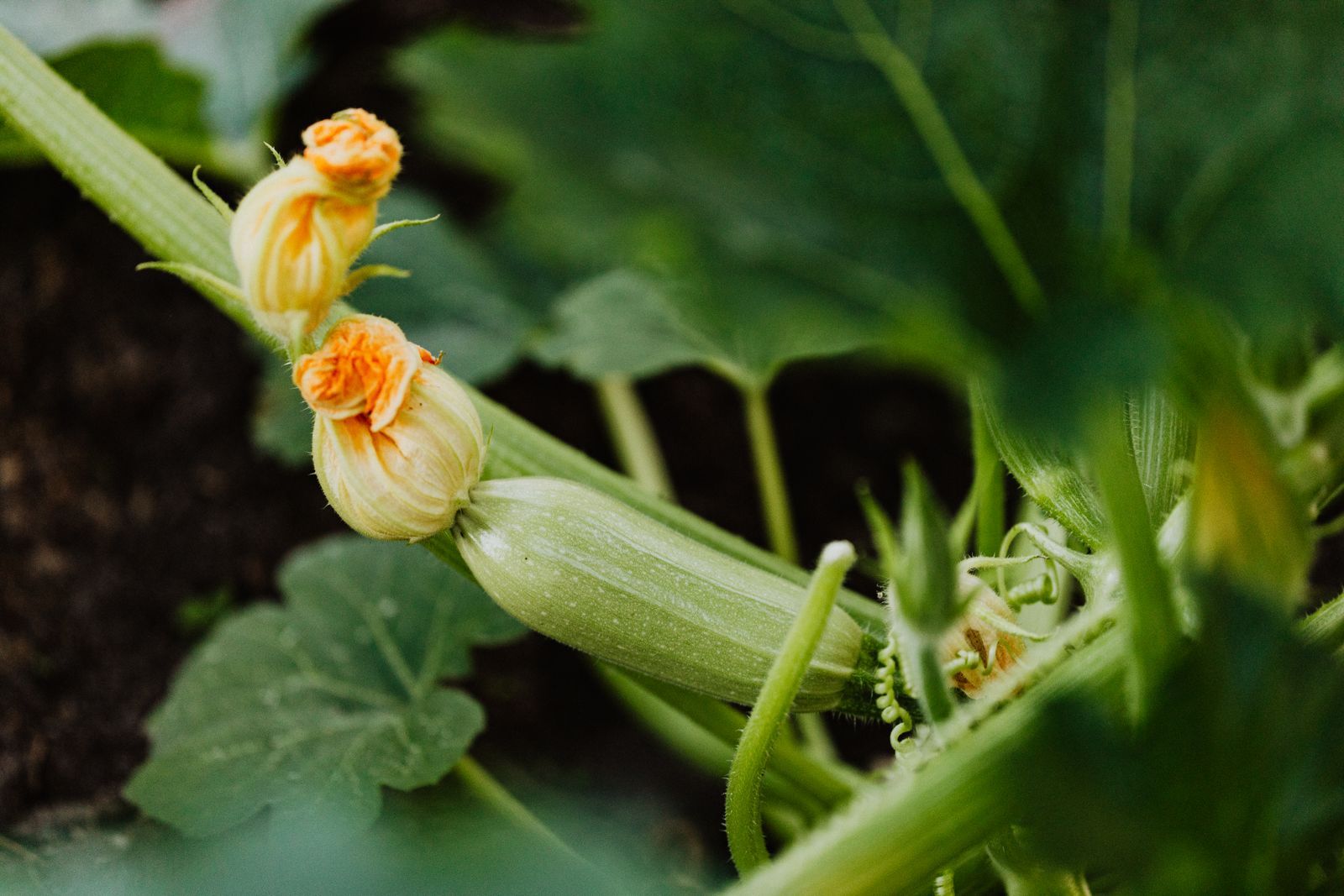
Photo: Kaboompics / Pexels
Zucchini is the vegetable garden's famous overproducer, and in a container it becomes a discipline problem, because everything about the plant wants more: more root room, more water, more food, more bees than a patio reliably provides. The system that works starts with a refusal: one plant per pot, no exceptions, no matter how small the seedlings look in May. Two zucchini in one pot is the most common container failure in the whole vegetable garden, two thirsty giants strangling each other by July. Give one plant a genuinely large pot, a bush variety bred for the job, a watering and feeding rhythm matched to fruiting, and a hand pollination routine for the days the bees skip you, and a container zucchini will out produce most in ground plants.
Our how to grow zucchini guide owns the in ground crop. This page owns the pot.
Interactive tool
Container Zucchini Checklist
Check off each step as you finish it. Your progress stays on this page.
0 of 8 complete
0% done
The Pot and the Plant: Size Is Not Negotiable
Five gallons is the absolute minimum and it behaves like a minimum: a 5 gallon plant in hot weather is a daily watering commitment with no slack. Seven to ten gallons is the working size, enough root volume to buffer a missed day and enough mix to hold the feed the plant burns. Drainage must be real and the pot should sit where its runoff does not stain or pool. Variety choice is the second half of the setup. Choose a bush type bred compact: Bush Baby, Astia, and Raven are the names that recur in container guidance because they hold a mound habit instead of sending out the long vines of the field types. A vining zucchini in a pot is not impossible, it is a trellis project wearing a container costume, and it belongs to a different article. Set the pot in full sun from the start, because moving a 10 gallon pot with a 3 foot plant in it is a two person job you only do once, angrily.
Watering at Fruiting Stage: The Volume Nobody Expects
A zucchini at fruiting is mostly water on the move: the plant transpires through huge leaves all day and pours the take into fruit that can gain visible size overnight. In a container in summer heat that means a deep drink daily, and in a heat wave or a dark pot, twice. The check is the top 2 inches of mix; the drink is a soak until water exits the base. The specific container trap is the sporadic pattern, a flood on Saturday and dust by Wednesday, and it writes its signature on the fruit: blossom end rot, the dark sunken patch at the flower end, is in containers overwhelmingly a water delivery failure, the roots unable to move calcium during the dry swing, rather than a soil calcium shortage. Gardeners dose the pot with calcium while the actual prescription is even water. Mulch the surface with straw to slow the swing, water at the base to keep the big leaves dry, and let the rhythm, not the rescue products, fix the fruit.
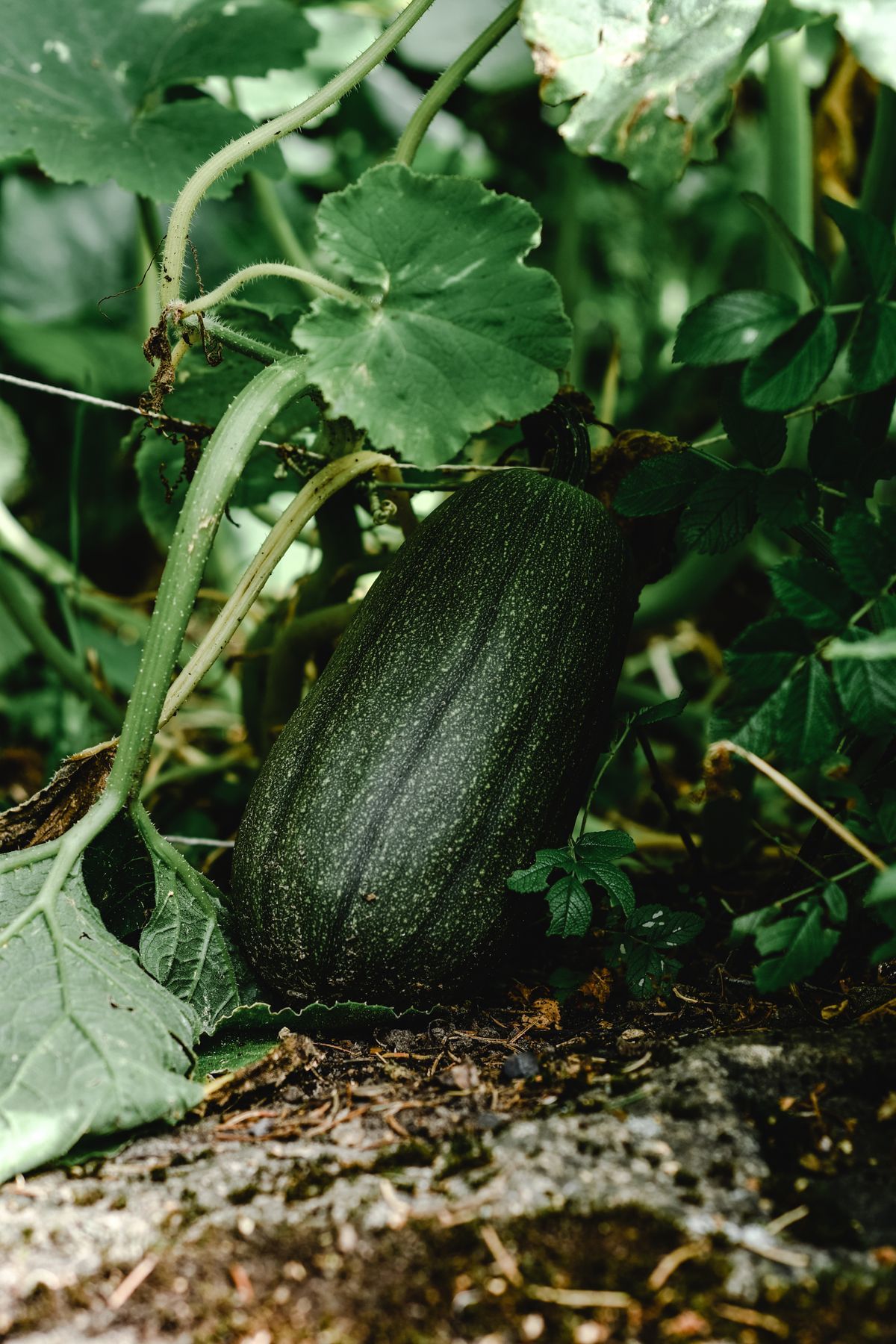
A zucchini fruit growing amid lush green leaves
Hand Pollination: The Patio Grower's Core Skill
Zucchini flowers are single sex and the plant depends on bees to move pollen from the male flowers to the females. On a patio, in a screened space, or in a wet week, the bees may not come, and the symptom is heartbreaking and diagnostic: small fruit that yellow at the tip and rot off at 2 to 4 inches. That is not disease; it is unpollinated fruit aborting. Learn the flowers. The male stands on a straight thin stem. The female stands on a miniature zucchini, the swollen ovary that becomes the fruit if pollen arrives. On a dry morning, pick a fresh male flower, strip its petals, and dab its pollen directly onto the center of an open female, or move pollen with a soft brush from male to female. One male can serve several females. Do it on any morning you see both open and the bee traffic looks thin, and the aborting fruit problem simply ends. Seed savers should note the same routine is how varieties cross when you do not want them to, but for the container grower the lesson is simpler: you are the bee of last resort, and the job takes twenty seconds.
Feeding Every 10 to 14 Days
A zucchini in the ground mines a bed; a zucchini in a pot mines 10 gallons, and it mines them out. Start with a mix carrying compost, then feed on a rhythm once flowering begins: a balanced liquid feed every 10 to 14 days at label rate, watered in. The plant's report on feeding is legible: deep green leaves and steady fruit set mean the rhythm is right; pale leaves and fruit that stalls small mean feed sooner; lush leaves and no female flowers mean the feed is running too nitrogen rich and the plant is making canopy instead of crop. Powdery mildew arrives on most zucchini by late season regardless, and container plants are not exempt: water at the base, space for air, remove the worst leaves, and accept the cosmetic damage while the fruit keeps coming. What ends a container zucchini is rarely mildew; it is thirst, hunger, or an unpollinated week, all three of which are yours to prevent.
Harvest: Pick Small, Pick Often
The harvest rule for containers is stricter than for the ground, because the plant's resources are finite and visible. Pick fruit at 6 to 8 inches, while the skin is glossy and the seeds are small, and pick every day or two in the peak weeks. A fruit left to become a baseball bat is not a bonus; it is a signal to the plant to stop setting new fruit, and in a pot that slowdown is the season quietly ending in July. The daily pick is also your inspection round: aborting fruit tells you to hand pollinate tomorrow, a wilting plant at noon that recovers by evening is asking for a bigger or more frequent drink, and the first mildew spots tell you to open the canopy. Run the checklist above as the season's spine, and the container zucchini stops being the gamble patio growers describe and becomes what it is in the ground, only smaller: the most reliable heavy producer you own.
The Mid Season Reset: Air, Borers, and the Second Plant
By midsummer a container zucchini is a large plant in a small atmosphere, and a reset extends its life. Prune for air: remove the oldest leaves at the base, cutting them at the stem, and any leaf lying on the mix, because the mildew that ends zucchini seasons breeds in the still, damp layer under the canopy. The hollow stems left by pruning are normal anatomy, not damage. Watch for the squash vine borer in the regions it haunts: a plant that collapses suddenly with sawdust like frass at the stem base has a borer in the stem, and container plants, being few and precious, justify the surgery, slitting the stem lengthwise, removing the larva, and mounding mix over the wound to root the plant anew. The strategic answer to both mildew and borers is the second plant: sow a fresh container in early July, and as the spring plant fades under the season's accumulated problems, the July plant, young and clean, takes over production into the fall. Two containers, staggered, out produce one heroic plant nursed through decline, and the rotation is the closest thing container zucchini has to a secret.
A final note on the plant's footprint, because patio space is the container grower's real currency: a healthy zucchini at full spread occupies a circle about 3 feet across, whatever the pot's diameter, and it will shade anything planted within that circle by July. Plan the patio around the circle, not the pot, putting the zucchini at the end of a row or on its own stand, with its companion pots, the herbs and peppers that want the same sun and water rhythm, arranged outside the shade line. Growers who measure the circle in spring keep their other containers; growers who measure the pot spend July rescuing the plants the zucchini ate.
Frequently Asked Questions
What size pot does zucchini need?
Five gallons is the absolute minimum; 7 to 10 gallons is the working size that buffers a missed watering day. One plant per pot, always. Two plants in one container is the most common container zucchini failure.
Which zucchini varieties suit containers?
Compact bush types: Bush Baby, Astia, and Raven are the recurring recommendations. They hold a mound habit instead of vining. A vining variety in a pot becomes a trellis project and outgrows the container's water supply by midsummer.
Why do my young zucchini turn yellow and rot at the tip?
They were not pollinated. Female flowers that receive no pollen abort their fruit at 2 to 4 inches. Hand pollinate on dry mornings: the male flower stands on a thin straight stem, the female on a miniature zucchini. Dab pollen from male to female with the flower itself or a soft brush.
How often should I water a zucchini in a pot?
At fruiting, deeply and usually daily in summer heat, twice in a heat wave or a dark pot. Keep the pattern even: the sporadic flood and drought swing is what causes blossom end rot in containers, far more often than any calcium shortage.
How often does a container zucchini need feeding?
Every 10 to 14 days once flowering starts, a balanced liquid feed at label rate. A pot holds a finite food supply and a fruiting zucchini spends it fast. Pale leaves and stalling fruit mean feed sooner; all leaves and no female flowers mean the feed is too nitrogen rich.
Photo credits: Kaboompics (Pexels); Eva Bronzini (Pexels). Photos are served from this site; follow the credit to the library page for the original.