How to Plant Flower Seeds: Three Sowing Routes and the Depth Rule That Runs Them All
By the Windchime Walker editorial team
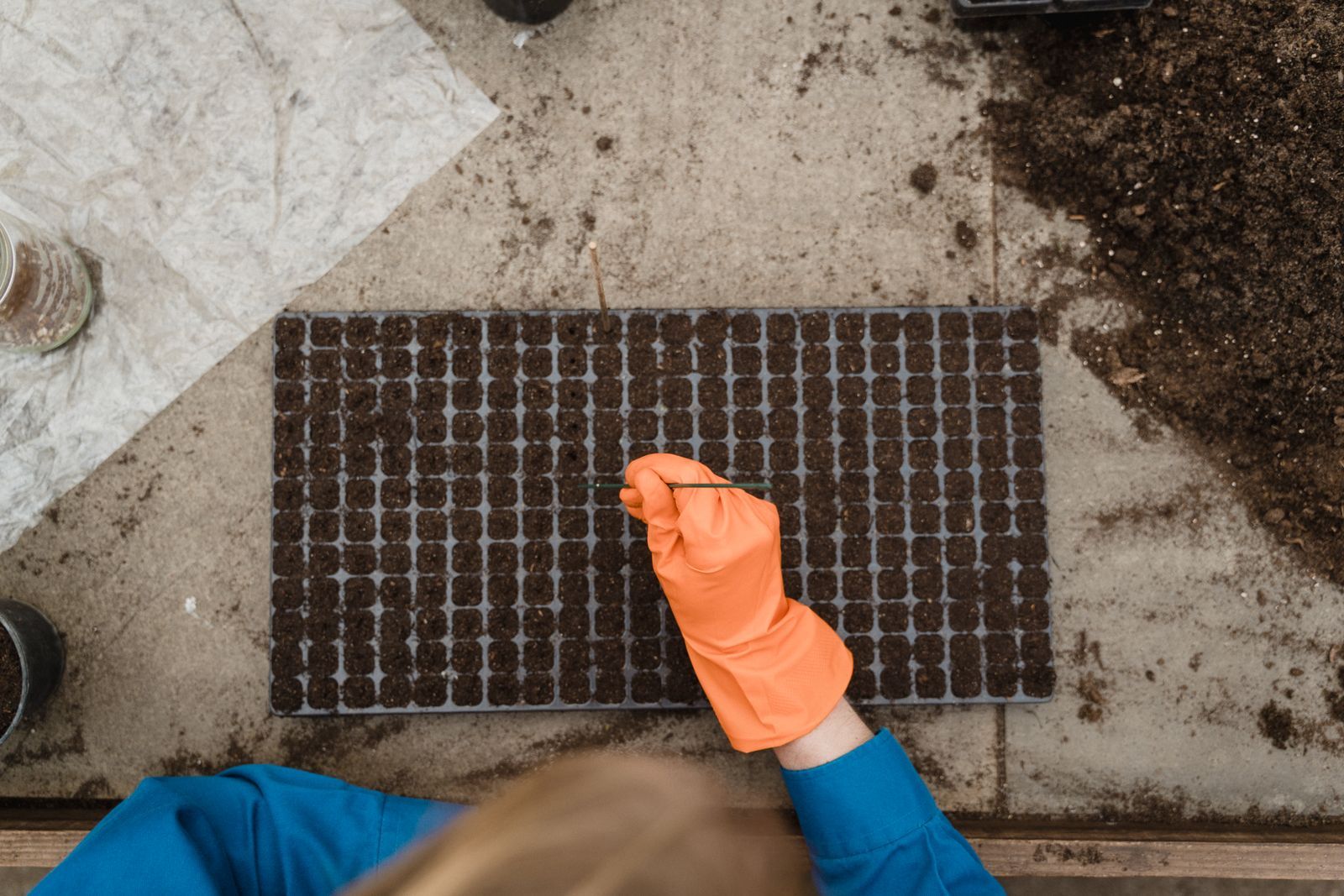
Photo: Tima Miroshnichenko / Pexels
A packet of flower seed carries less instruction than any other purchase in the garden store, a depth, a spacing, and a cheerful picture, and beginners reasonably assume the method is one method. It is three. Some flowers must be started indoors or the season runs out before they bloom; some resent transplanting so deeply that a head start indoors is a handicap; and some will take either road and flower on schedule. This page sorts the common flowers into their routes, gives the one depth rule that governs all sowing, and covers the two disciplines, light for seedlings and the hardening off week, where flower seed projects are actually won and lost.
Our wildflower seed guide owns the broadcast meadow method, and our seed starting chart owns the vegetables. This page owns the individual flower species and their seed craft, indoors and out.
Interactive tool
Flower Seed Sowing Checklist
Check off each step as you finish it. Your progress stays on this page.
0 of 8 complete
0% done
The Depth Rule
Sow a seed at a depth of about 2 to 3 times its own diameter. The rule scales itself: a sunflower seed the size of a fingernail goes an inch down, a zinnia seed a quarter inch, a marigold seed a quarter inch, and the dust fine seeds, petunia, snapdragon, and their kin, are effectively at zero, pressed onto the surface of the mix so light reaches them, because many of the smallest seeds need light to germinate and burying them is a quiet way of throwing them away. Too deep is the beginner's classic error, and it fails silently: the seed exhausts its stored food climbing toward a surface it never reaches, and the pot is blamed on the seed. When a packet gives a depth, the packet wins; when it does not, the rule stands in for it, and for anything you can barely see between your fingers, surface sow and press.
Slow to bloom; need 6 to 12 weeks of head start counted back from last frost
Direct sow only
Sunflower, nasturtium, sweet pea, poppy, larkspur
Taproots or root sensitivity; transplanting sets them back more than the head start gains
Either, gardener's choice
Zinnia, marigold, cosmos, sunflower's dwarf kin excluded, bachelor buttons
Fast and forgiving; indoors buys earlier bloom, direct sowing buys zero fuss
The indoor route is a calendar decision: count back from your last frost by the flower's speed, slow lisianthus and petunia at 10 to 12 weeks, petunia and snapdragon commonly 8 to 10, the either route flowers at 4 to 6. Our marigold and zinnia guides carry those two in full season detail, and this site's seed chart lists their indoor weeks alongside the vegetables, marigold at 6 weeks before last frost by the North Dakota State figure, zinnia at 4 by Colorado State's, with zinnia usually direct sown after frost by Clemson's guidance. The direct route is a root decision: sunflowers drive a taproot straight down from their first week and a potted sunflower is a stunted one, so they are sown where they will stand, after frost, an inch deep, and thinned without mercy.
Sowing Indoors: The Seedling Craft
Use a fine, sterile seed starting mix, moistened before it meets the tray, because dry mix repels the first watering and floats seed to the corners. Sow on the surface or at the rule's depth, label everything with the flower and the date, since all seedlings are identical green twins by week two, and cover the tray to hold humidity until the first sprouts, then uncover the same hour, because the damp still air that hatches seed is the nursery of damping off, the fungal collapse that takes a tray of seedlings at the soil line overnight. Water from below once the tray is going, so the surface stays as dry as the method allows and stems are never battered by a spout.
Then give light like you mean it. The moment seedlings emerge they want 14 to 16 hours of it, from fixtures hung 2 to 4 inches above the leaves and raised as the plants grow. A windowsill, even a bright one, delivers a fraction of this and at an angle, and the seedlings' verdict arrives within days as pale, leaning, stretched stems that no later kindness fully straightens. Leggy is not a phase; it is a light bill coming due. A small fan on a timer, stirring the air so the stems flex and thicken, is the other cheap miracle of the indoor setup.
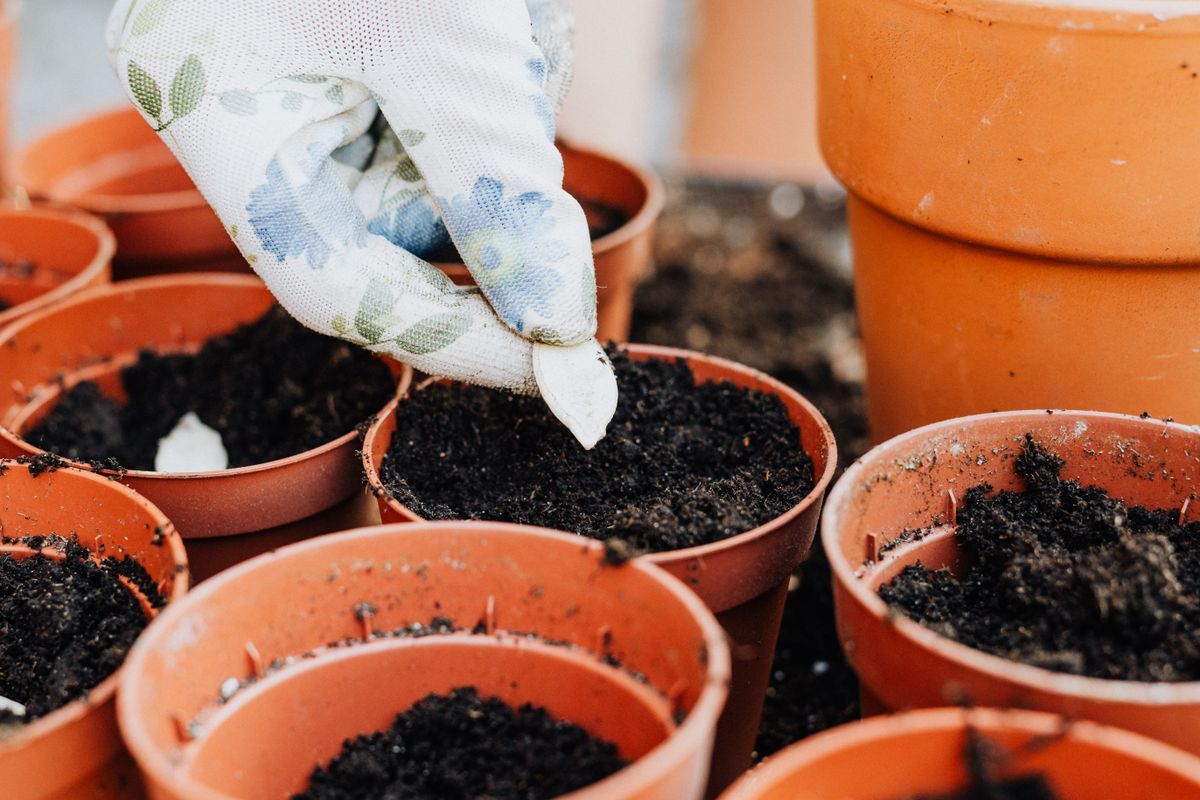
A gloved hand planting seeds in terracotta pots of potting soil
Direct Sowing: The Outdoor Craft
Prepare a fine, raked seedbed, because small seed in cloddy soil falls into cracks and germinates at random depths, which is to say randomly. Sow at the rule's depth, or scatter and rake in lightly for the finest seed, firm the soil over the row so seed and soil are in contact, and water with a gentle rose until germination, keeping the surface evenly moist in a way in ground soil forgives more easily than a tray does. Thin in two passes, as the beets taught, to the packet's spacing: the crowded row of cosmos that nobody thinned flowers late, small, and mildewed, while the thinned row branches and blooms for months. Mark the rows, because a sown bed looks exactly like a weedy bed for its first two weeks, and more flower rows have been hoed by helpful hands than by any pest.
The Hardening Off Week
Indoor starts die at the door more often than anywhere else: a seedling raised in still, soft indoor air and mild light, set straight into wind and full sun, sunburns white and wilts in an afternoon, having never built the wax, the stem strength, or the root pace for outdoor life. Harden off over about a week. Day one and two, an hour or two in shade outdoors, then back in. Middle days, morning sun and longer hours. Final days, full days and a night or two outside, and then the transplant, into soil watered before and after, on a cloudy day or toward evening if the weather gives you the choice. The week feels like pure delay and is the highest value week in the whole indoor project; it is the difference between a transplant that starts growing the day it lands and one that spends two weeks recovering from its first day out.
Germination Troubleshooting
What happened
The likely cause
The fix for the next sowing
Nothing came up at all
Sown too deep, or seed dried out in its first days, or the seed was old
Surface sow the fine seed, cover trays until sprouting, keep the surface evenly moist, and test old seed on a damp paper towel before trusting it
Sprouts appeared, then vanished
Damping off, or a slug and bird harvest outdoors
Sterile mix, uncover at sprouting, bottom water; outdoors, cover the row with light row cover until the seedlings stand
A white mold film on the surface
Still, saturated air over rich wet mix
More air movement, water from below, let the surface dry between waterings; the seedlings usually outgrow it once the fan runs
Patchy, scattered germination outdoors
Seed fell to random depths in cloddy soil, or the bed dried in patches
Finer seedbed, firmer contact, gentler and more frequent watering until the row is up
Seedlings up but pale and drawn
Light, again: too little, too far
Fixtures 2 to 4 inches above the leaves, 14 to 16 hours, from the day of sprouting
The Cold Key: Stratification
A last group of flower seeds refuses the whole warm start, because their germination is keyed to winter. Many perennials, lavender among them, along with larkspur, lupine, and a long list of natives, germinate best after a period of cold, moist conditions, the seed's proof that winter has passed and spring is safe. The packet names the requirement when it exists. Indoors, the refrigerator provides it: seed in a sealed bag with a damp paper towel or in its moist pot, chilled for the packet's stated weeks, then brought into the light and warmth to sprout. Outdoors, autumn and winter sowing lets the weather do the same work for free, which is why the direct sow route for these flowers often means sowing in fall for spring flowers, a calendar that surprises beginners and delights everyone who tries it once.
Frequently Asked Questions
How deep should I plant flower seeds?
At 2 to 3 times the seed's own diameter: an inch for sunflower sized seed, about a quarter inch for zinnia and marigold, and for the dust fine seeds like petunia and snapdragon, pressed onto the surface rather than buried, because they need light to germinate. When the packet states a depth, follow the packet.
Which flowers should I start indoors?
The slow ones: petunia, lisianthus, snapdragon, impatiens, and begonia, counted back 6 to 12 weeks from last frost by their speed. They bloom too late from an outdoor sowing in most climates. Fast flowers like zinnia, marigold, and cosmos can start indoors for earlier bloom or direct sow with equal success.
Which flowers must be direct sown?
Sunflower, nasturtium, sweet pea, poppy, and larkspur, because their roots resent disturbance and a transplanted seedling loses more than the head start gains. Sow them where they will flower, at the rule's depth, and thin them in place.
Why did my seedlings get tall and floppy?
Light, almost every time: too little of it, too far away. Seedlings need 14 to 16 hours with fixtures 2 to 4 inches above the leaves. A windowsill stretches them within days. Stretched seedlings rarely recover their shape fully; the fix is for the next tray, closer light from the first sprout, plus a small fan to stir and strengthen the stems.
What is damping off and how do I prevent it?
A fungal collapse that rots seedlings at the soil line, overnight, in still damp air. Prevent it with sterile mix, uncovered trays the moment sprouts appear, bottom watering, good air movement, and sowing thinly rather than in a crowd. There is no cure for a fallen seedling; prevention is the whole medicine.
When do I transplant indoor flower starts outside?
After your last frost for the tender annuals, and after the hardening off week described on this page, never straight from the shelf to the sun. Hardy types can go out a little before last frost once hardened. Transplant toward evening or on a cloudy day, water before and after, and the plant starts growing instead of recovering.
Photo credits: Tima Miroshnichenko (Pexels); Kaboompics (Pexels). Photos are served from this site; follow the credit to the library page for the original.