How to Plant Radishes: The 30 Day Crop, Run as a Weekly System
By the Windchime Walker editorial team
Photo: Natalia S / Pexels
Every gardener should plant radishes first, because radishes are the crop that pays tuition back in a month. The planting itself is almost insultingly simple, and this page will not pretend otherwise. What separates the gardener who eats radishes all spring from the one who pulls a bunch of hot, woody roots once and never sows again is not the planting; it is the system: small sowings on a rhythm, a pause for the heat that ruins them, a restart for the fall crop that is secretly the best one, and a clear eyed diagnosis when a row fails. This page teaches the planting in five honest minutes and then spends its length where the value is, on the system.
Our standard is the University of Georgia Cooperative Extension Circular 963: radish seed sown at 1 inch between seeds in rows 24 inches apart. Our carrot guide owns the slow root; this page owns the fast one.
Interactive tool
Plant Spacing Planner: The Radish Row
Radishes are in the crop list below at the University of Georgia Cooperative Extension spacing of 1 inch between seeds in 24 inch rows. Enter your row length and plan one short succession sowing at a time.
8 tomato plants fit this bed
4 plants per row across 2 rows, on a 24 inch grid. Extension spacing for this crop: 24 in between plants, 48 in between rows.
The grid uses the in-row spacing in both directions, the standard square foot layout for raised beds. In open ground, keep the wider row spacing in the note above so you can walk and weed between rows.
Spacing figures: University of Georgia Cooperative Extension, Circular 963, Vegetable Planting Chart, source.
The Planting, Step by Step
Prepare a loose, fine bed. Radish roots swell in the top few inches, and they swell straight in soil that is loose, stone free, and raked fine. A cloddy or compacted surface gives you forked, stunted roots and a row that germinates in patches. Work the top 4 to 6 inches, rake it level, and you are done; radishes ask nothing more of the soil than this and resent fresh manure, which forks roots and feeds tops at the root's expense.
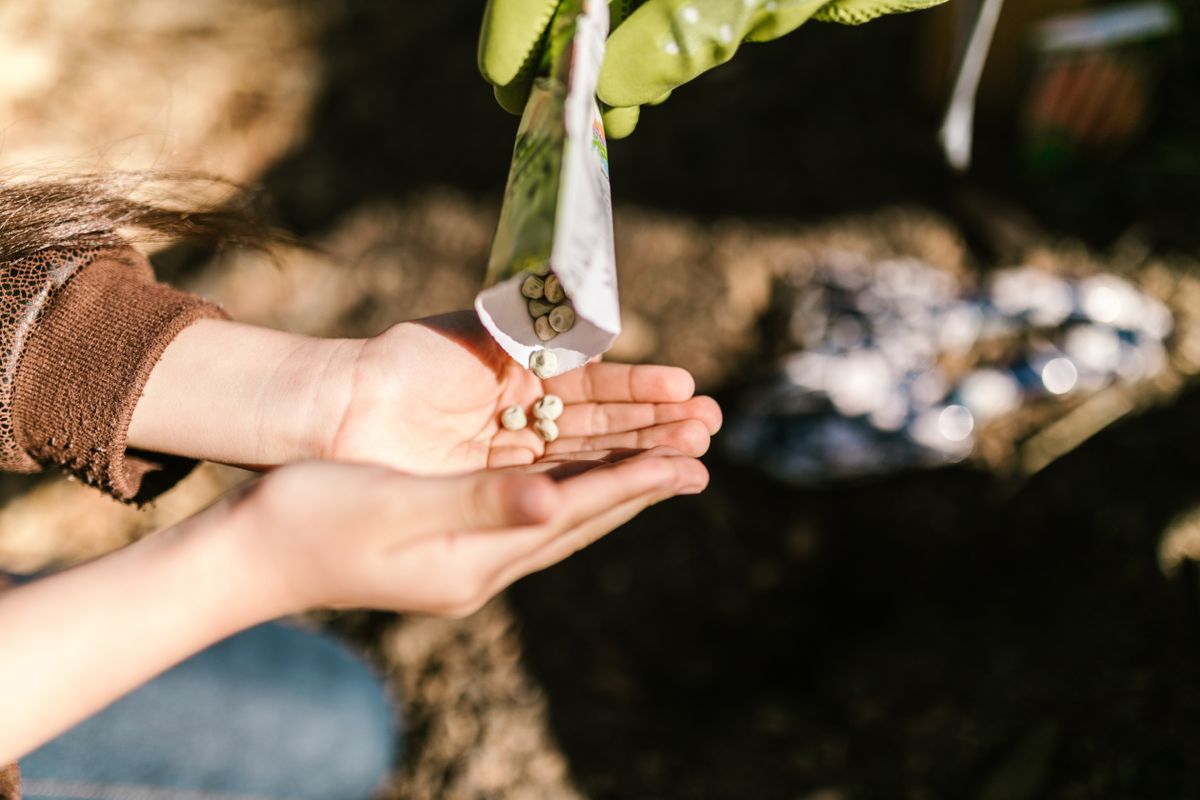
Sow 1/2 inch deep, 1 inch apart. Draw a shallow furrow with a finger, a stick, or the corner of a hoe, drop seed at about an inch apart along it, and cover with 1/2 inch of soil or fine compost. The planner on this page counts a row at the Georgia spacing: a 10 foot row is about 120 seeds, which is the number that makes a packet's contents make sense. In a raised bed, the rows can close to 12 inches or the seed can be scattered in a patch and thinned, since bed soil is worked across its whole surface; keep the inch between seeds as the constant.
Water, and keep it even. Firm the soil over the seed and water gently. Radish seed sprouts in 3 to 7 days in decent warmth, and the row must not crust or dry in that week; a light mulch of fine compost or a strip of row cover holds the moisture. From sprouting to harvest the rule is even water, because the split root failure below is written by a dry week followed by a soaking.
Thin to about 2 inches. When the seedlings stand an inch or two tall, thin them to roughly 2 inches apart so each root has room to swell. The thinnings are edible, peppery little greens, and the thinning is not optional: a crowded row makes the all tops failure on schedule.
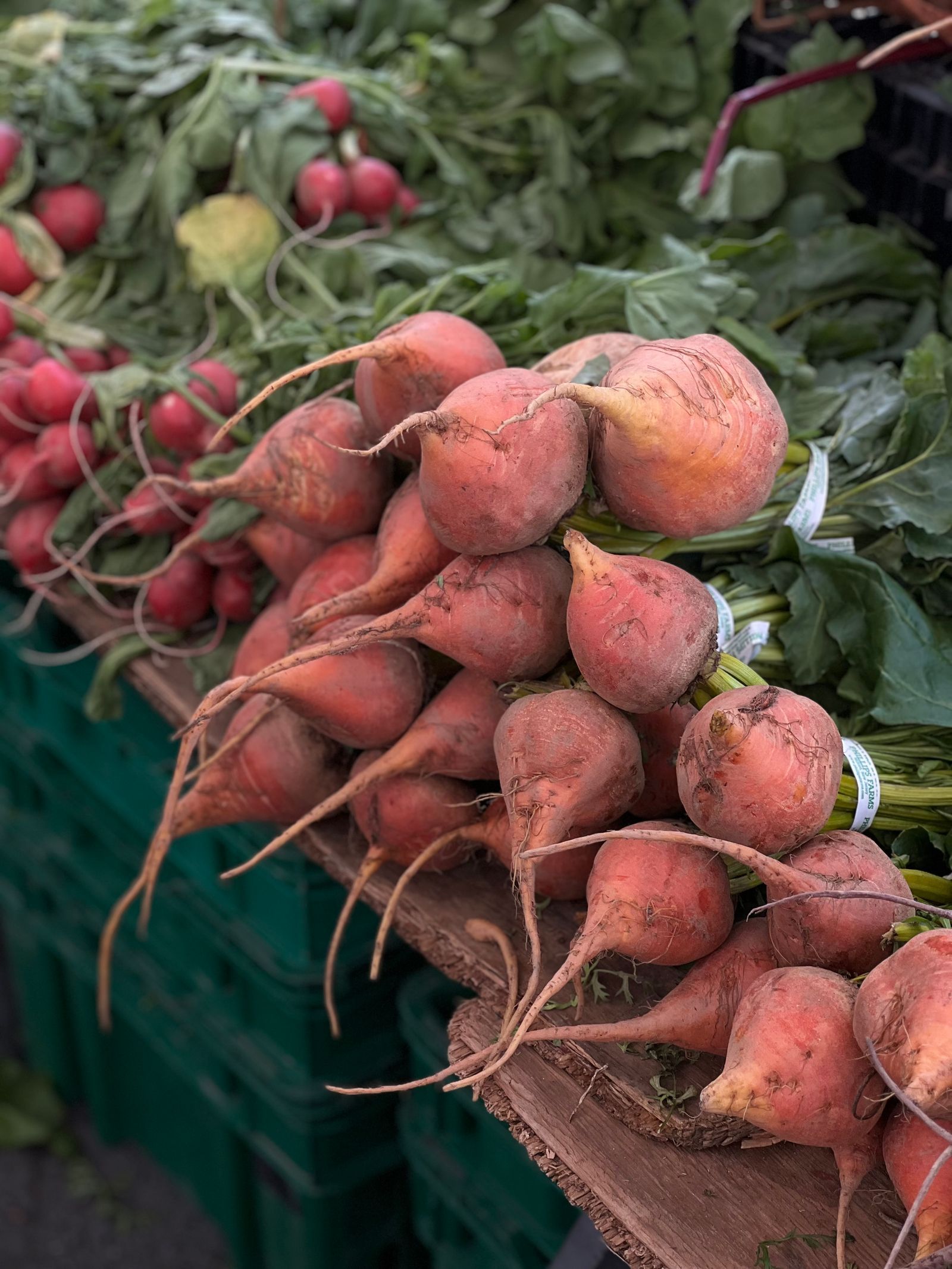
Harvest at 25 to 30 days, promptly. Pull a test root when the shoulder shows at the soil line and the calendar says the variety is due. Radishes wait for no one: a root at its peak on Tuesday is woody and hot by the next Tuesday in warm weather, which is precisely why the succession system below exists.
The Succession System: A Short Row Every Week
The single packet sown all at once is the beginner's radish tragedy: thirty perfect roots on one weekend and none before or after. Run radishes as a rhythm instead. Sow one short row, enough for a week of eating, every 7 to 14 days from your first spring sowing, which can go in 4 to 6 weeks before last frost since radish shrugs at cold soil. Mark each row with its sowing date on a label, because three identical green rows of different ages are a guessing game, and harvest each row inside its week. When a row is pulled, its ground is free for the next sowing or for a slower crop that was waiting for space; radishes are the garden's ideal tenant, in and out before the landlord crops need the room, and they famously share rows with carrots, marking the row and breaking the surface for the slow seed behind them.
Hands pouring seeds from a packet into an open palm over garden soil
The Summer Pause and the Fall Restart
Stop sowing when real heat arrives, and do not apologize for it. Radishes in hot soil and long days bolt, running to flower before the root swells, and the roots that do form are hot, woody, and pithy; this is the plant's nature, not your failure, and no variety fully escapes it. The restart is the crop's best kept secret: sow again from about 6 weeks before first fall frost, into cooling soil and shortening days, and fall radishes grow sweet, crisp, and unhurried, holding in the cold ground better than spring roots ever hold in warming ground. Many gardeners who think they dislike radishes have only ever met the June version of the plant.
The Failure Table
What you pulled
The cause
The fix
All tops, no roots
Crowding, heat, or too much nitrogen
Thin to 2 inches; sow in the cool windows; go easy on fresh manure and high nitrogen feed
Woody, pithy roots
Left too long, or grown through heat
Harvest inside the variety's window; run successions so no row ages out; pause in summer
Split and cracked roots
A dry spell followed by heavy water
Keep moisture even from sowing to harvest; mulch the row
Bolted, straight to flower
Heat and long days
Sow in spring and fall windows only; choose bolt resistant varieties for the edges of the season
Forked, hairy roots
Stones, clods, or fresh manure
Prepare a fine, stone free bed; use finished compost, never fresh manure, in the radish row
Hot enough to hurt
Variety, heat, and slow growth
Faster growth in cool weather with even water mellows heat; try the mild French breakfast types
Varieties and Their Clocks
The 25 to 30 day promise belongs to the standard spring radish, and the family is wider than the promise. Choose the variety for the season and the use, and adjust the succession rhythm to its clock.
Type
Days to harvest
Spacing notes
Best window
Round spring types (the classic red globe)
25 to 30
The standard: sow at 1 in, thin to 2 in
Spring and fall successions
French breakfast (elongated, mild)
25 to 30
Same spacing; pull young, they turn pithy fast
Spring; the mildest for salads
Icicle and long white types
30 to 35
Deeper loose soil matters more than spacing
Spring and early fall
Winter radish and daikon
50 to 70
Thin to 4 to 6 in; these are storage roots, not snacks
Sown in late summer for fall and winter
Black Spanish and the heirloom keepers
55 to 70
Thin to 4 to 6 in; hot, dense, and built to store
Late summer sowing, winter eating
The winter types rewrite the page's rhythm in one respect: they are sown once, in late summer, sized up through the fall, and pulled across the winter, which makes them the radish for gardeners who want the crop without the weekly sowing discipline. Everything else, the depth, the thinning, the even water, the hostility to fresh manure, applies to them unchanged.
Radishes as Row Markers and Bedfellows
The fast root earns a second living as the garden's usher. Carrot seed is slow, small, and sown in rows that vanish; a few radish seeds mixed into the carrot row germinate in days, mark the line for watering and weeding, break the surface crust for the carrots behind them, and are pulled and eaten just as the carrots need the room, a partnership our carrot guide describes from the other side. The same trick serves any slow or fine seed. Radishes also fill the gaps of the spring bed productively, sown between young cabbages and along the edges of beds whose main crop will not need the space for a month, because a crop that finishes in 30 days can live almost anywhere briefly, and bare soil in April is a radish row that has not been sown yet.
Frequently Asked Questions
How deep and how far apart do you plant radishes?
Sow 1/2 inch deep, at 1 inch between seeds in rows 24 inches apart at this site's University of Georgia Extension standard, then thin the seedlings to about 2 inches apart so each root can swell. In raised beds the rows can close to about 12 inches; the inch between seeds and the thinning stay the same.
How long do radishes take to grow?
Sprouts in 3 to 7 days, and roots ready in about 25 to 30 days for standard spring varieties, a little longer in cold early soil and for the big winter types. Radishes are the fastest full crop in the garden, which is why they are run as weekly successions rather than one big planting.
When should I plant radishes?
Sow from 4 to 6 weeks before last frost and continue in short rows every 7 to 14 days through spring. Pause in summer heat, when they bolt and turn woody, and restart about 6 weeks before first fall frost for the sweetest crop of the year.
Why are my radishes all leaves and no root?
The three usual causes are crowding, heat, and excess nitrogen. Thin to 2 inches so each plant has room, sow in the cool spring and fall windows rather than in summer, and keep fresh manure and high nitrogen fertilizer out of the radish row; the plant pours all three mistakes into its leaves.
Can I grow radishes in containers?
Yes, in anything at least 6 inches deep with drainage: a wide pot or window box of loose mix, seed at the same inch spacing, thinned the same way. Containers dry fast, and even moisture is the whole battle, since a dry spell followed by a flood splits the roots in a pot as faithfully as in the ground.
Do radishes need full sun?
They want it in spring and fall, six or more hours, and grow fastest and sweetest with it. In the warm edges of the season a little afternoon shade can stretch the window slightly, but shade is a delay, not a rescue: a radish in deep shade makes leaves and excuses, not roots.
Photo credits: Natalia S (Pexels); RDNE Stock project (Pexels). Photos are served from this site; follow the credit to the library page for the original.