A tulip is planted in about ninety seconds, and everything that decides its spring (the depth, the spacing, whether it was chilled, whether last year's foliage was left to feed it) happens in decisions around those ninety seconds. This page is planting day only, in order: the chill question answered first because it starts months ahead, then the timing, the depth measured the honest way, the spacing chosen by the display you want, and the one rule after bloom that decides whether there is a second spring at all. Season long tulip care is a different book; the planting is this page, and the planting is where tulips are won.
Home / Flowers and Houseplants
How to Plant Tulips: Planting Day, Done in the Right Order
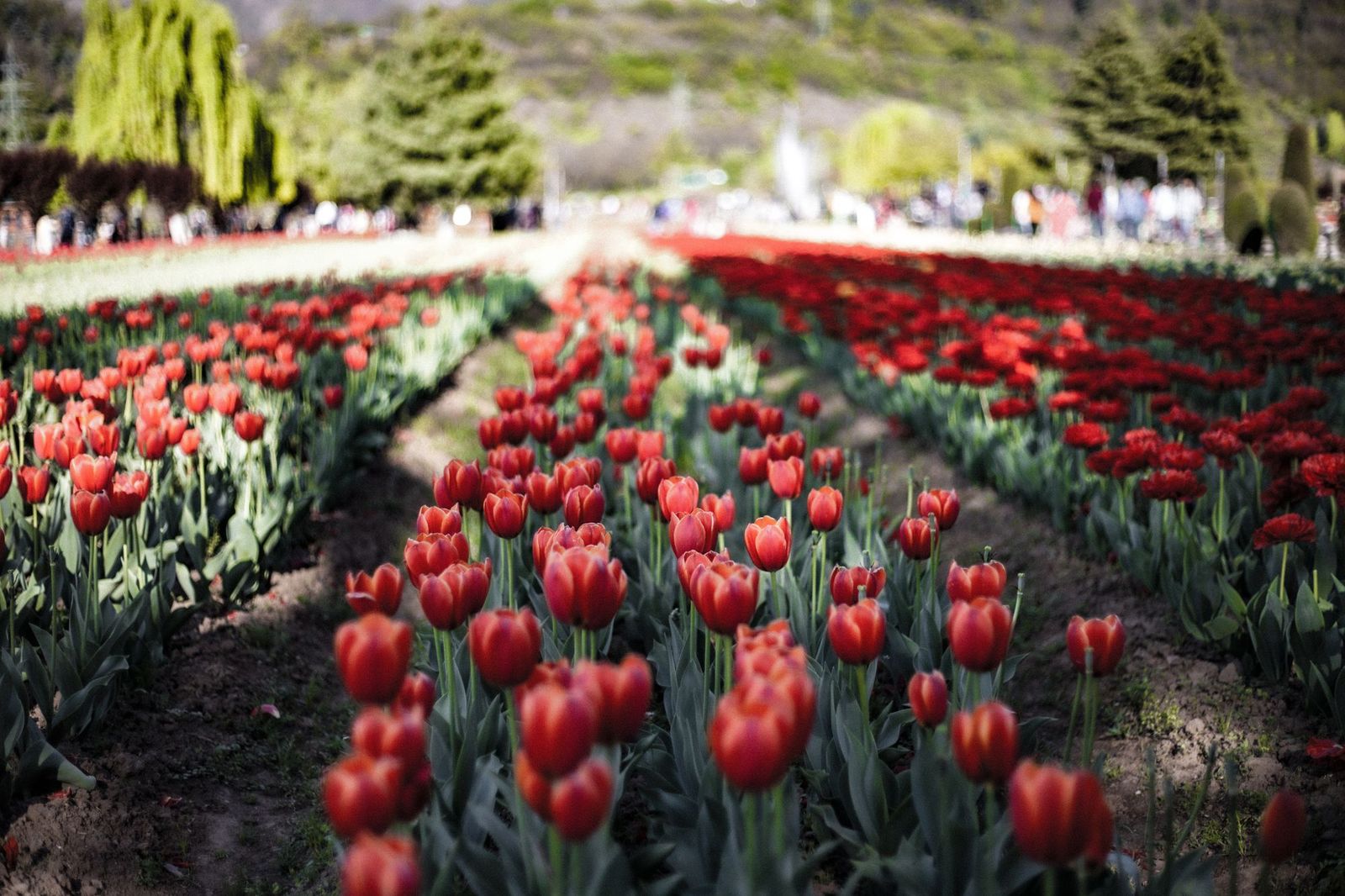
Photo: Sheikh Abrar Ul Haq / Pexels
Interactive tool
Tulip Planting Checklist
Check off each step as you finish it. Your progress stays on this page.
0 of 6 complete
0% done
Step 1: Answer the Chill Question First
Tulips are a cold climate bulb with a non negotiable requirement: a long winter chill, weeks of cold soil, to set and elongate the flower. In cold and temperate gardens, fall planting in the ground provides it naturally. In warm climates where winters are mild, the chill must be manufactured: bulbs are prechilled in a refrigerator at 35 to 48 degrees for 12 to 16 weeks before planting, kept away from ripening fruit (whose ethylene gas damages bulbs), and planted into the coolest part of the local year, to bloom as glorious annuals.
Decide which gardener you are before buying. Cold climate gardeners buy bulbs in fall for fall planting and perennial hopes. Warm climate gardeners buy prechilled bulbs, or chill their own on the calendar above, and plant with annual expectations honestly held. The failure mode is the warm gardener planting unchilled bulbs in October and writing off tulips forever in April; the bulb was not bad, the winter was missing.
Step 2: Time the Planting to Cold Soil
Plant in late fall, when the soil has cooled but not frozen: November is the ideal month across much of the country, later than most beginners' instincts and deliberately so. Tulips planted into warm early fall soil are exposed longer to tulip fire, a fungal disease that spots and twists the foliage, and to the curiosity of rodents; bulbs planted into cold soil sit quietly, root slowly, and wait. The traditional trigger is when nighttime temperatures stay in the 40s and the last leaves are falling.
Buy bulbs as close to planting as you can, firm and heavy for their size, with no soft spots or mold, and store them cool and dry if they wait. If a warm spell or a busy month delays you, plant anyway when you can, even into early winter where the ground still digs; a late planted tulip blooms a little late, while a tulip left in its bag blooms never. The calendar forgives weeks; the bag forgives nothing.
Step 3: Depth by the Three Times Rule
The rule: plant the bulb at a depth of 3 times its own height, measuring from the bulb's base to the soil surface. A standard tulip bulb, about 2 to 2.5 inches tall, lands at 6 to 8 inches deep, which is deeper than most beginners dig and is the point. Depth is not fussiness; a deeply planted tulip stands straight without flopping, is harder for rodents to reach, is insulated from freeze and thaw cycling, and returns more reliably in later years. Shallow tulips bloom once, flop, and vanish, and their gardeners conclude tulips are annuals everywhere.
Dig with a trowel or a bulb planter to the measured depth, checking the first hole with a ruler until your eye learns it. In heavy clay, a little coarse sand or grit under the bulb keeps its base out of a winter sump. Set the bulb pointed end up (the flat end is the base, where the old root scar shows), firm the soil over it, and water the planting in once, deeply, to settle soil against the bulb and start the roots. Planted in groups, the same depth rule applies bulb by bulb; a planting is a hundred small correct acts, which is why tulips reward a methodical afternoon.
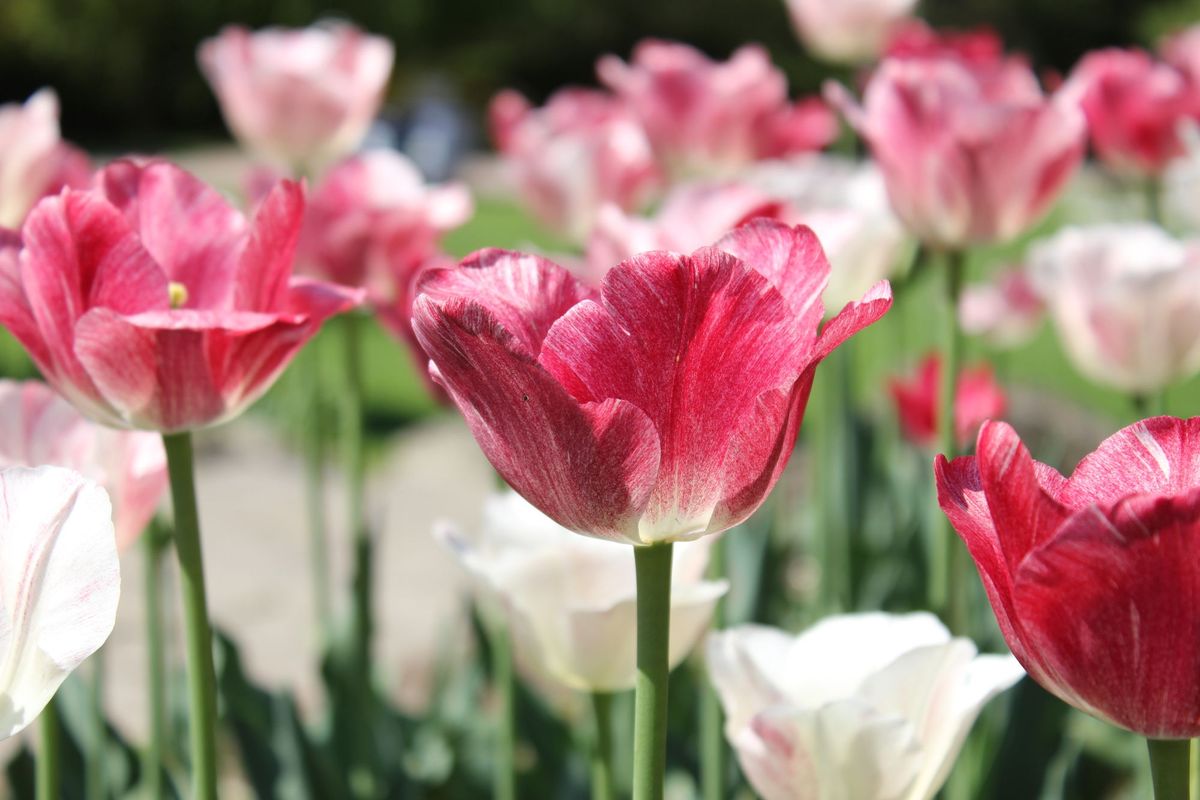
Step 4: Spacing by the Display You Want
Spacing is an aesthetic decision wearing a measurement's clothes. For the classic border drift, space bulbs 4 to 6 inches apart in groups and ribbons, never in single file rows, because tulips read as a plant in companies. For a formal carpet of one variety, tighten toward 4 inches and plant many; the display is density. In pots and containers, bulbs can nearly touch, shoulder to shoulder, because the pot is a one season stage set and the bulbs' whole job is one spring.
Two honest notes on quantity: tulips are at their best massed, and a bag of 10 scattered across a border is invisible, so buy fewer varieties and more of each. And plant in odd numbered clusters and drifts that follow the bed's shape; the eye reads a drift of 15 as a planting and a row of 15 as a queue.
Step 5: Mark, Mulch, and Defend
Mark the plantings before the soil forgets them, because the spring gardener will want to dig exactly where the bulbs sleep, and the fall gardener's memory is a liar. A label at the drift's end or a note in the garden journal with the variety and count saves the April spade accident. Mulch the bed after the ground cools, 2 to 3 inches, to steady soil temperatures; the mulch is about steadiness, not warmth, and it pulls back or stays thin where the shoots will emerge.
Rodent defense, where squirrels and voles are citizens: a layer of sharp grit over the planting discourages digging, chicken wire laid over a fresh bed and removed in spring ends it entirely, and daffodils, which rodents avoid, planted among the tulips lend their protection socially. Tulip bulbs are food in a way daffodil bulbs are not, and the gardener in rodent country plants with a defense budget or plants daffodils.
Step 6: After Bloom, the Foliage Rule
The flowers end; the planting does not. After the petals fall, snap off the spent flower head so the plant does not spend itself on seed, and then leave the foliage standing, untidy and yellowing, for 6 to 8 weeks. Those leaves are next year's flower being manufactured: they photosynthesize the energy down into the bulb, and a gardener who tidies them away at bloom's end has harvested next spring for this spring's neatness. Hide the yellowing among later perennials, braid nothing, tie nothing, just let the leaves work until they yellow fully and pull away with a gentle tug.
Then the honest expectation: many modern tulips, especially the large Darwin and triumph types, return well for a few years and thin gradually, while species tulips and some older types perennialize more stubbornly. Cold climate gardeners treat the great show varieties as a few year investment, top up the drifts with fresh bulbs each fall, and are never disappointed; warm climate gardeners, per step 1, plant the chilled bulbs as annuals and are delighted on schedule. Either way, the gardener who plants in late fall, deep, in drifts, and feeds the foliage, gets the spring the catalogs photograph.
Planting in Pots, Raised Beds, and Drifts
The depth and chill rules travel; the spacing adapts. In pots, plant bulbs nearly touching, in a container at least as deep as the planting rule wants below the bulb plus root room, which means a genuinely deep pot, not a shallow bowl; a pot planted at proper depth, kept outdoors through winter in cold climates or chilled whole in warm ones, gives a dense, jewel box display that borders cannot match for intensity. Water pots through winter whenever the mix is dry, because a pot's soil dries in weather a bed ignores, and a desiccated bulb in a dry pot is as dead as a frozen one.
In raised beds, the soil is loose enough that depth is easy to reach and easy to misjudge; measure the first holes of each session, because loose mix lets the trowel sink an inch deeper than the same effort in ground soil. Beds also warm faster in spring, which slightly advances the bloom, worth knowing when you are timing a drift to a family event. In drifts in open ground, the naturalistic pattern that reads best is a river, wide in the middle of the bed, tapering at the ends, following the bed's own curve; plant the river by scattering a handful of bulbs gently from knee height and planting each where it lands, the oldest trick in the bulb trade, because human beings arranging randomness produce rows without meaning to.
Layering is the advanced move the same hole allows: in a deep planting, bulbs can be set at two levels, the tulips at their full depth and smaller, later bulbs above them, so one station flowers twice in a season. It asks for the depth discipline of step 3 applied twice with a soil layer between, and it is the technique behind the bottomless spring displays in public gardens. A beginner who has run one honest planting day has every skill it needs except the second bag of bulbs.
Tulips with Companions: The Drift Through the Year
A tulip drift occupies its ground for a short spring act, and thoughtful gardeners plant its understudies at the same time. Daffodils, which bloom just before or with the tulips and share the fall planting day, extend the drift's season and lend their rodent immunity to the neighborhood. Later perennials planted over and among the bulbs (hostas, daylilies, hardy geraniums in our perennial plan) rise as the tulip foliage yellows and hide it exactly when it turns untidy, solving the foliage rule's one aesthetic cost without breaking it. Ground covers at the drift's edge do the same work at ankle height. The drift, designed this way, is a relay rather than a solo: bulbs, then foliage plants, then summer perennials, each handing the bed to the next, and the fall planting day that sets the tulips is also the day the whole relay gets arranged. That is the difference between a bed with tulips in it and a tulip planting, and it is decided entirely in the fall, which is why this page insists the season's real work is done with cold fingers.
Frequently Asked Questions
When should tulips be planted?
In late fall, when the soil has cooled and nights stay in the 40s; November is ideal across much of the country. Planting into cold soil reduces tulip fire disease and rodent losses. If you are delayed, plant anyway while the ground digs; a late tulip blooms late, an unplanted one never blooms.
How deep do tulip bulbs go?
Three times the bulb's height, base to surface: about 6 to 8 inches for standard bulbs. Deep planting keeps stems upright, insulates the bulb, deters rodents, and improves return in later years. Shallow tulips flop and fade after one spring.
How far apart should tulips be spaced?
Four to 6 inches apart in borders, planted in groups and drifts rather than rows. Formal carpets tighten toward 4 inches; pots can be planted nearly shoulder to shoulder for a one season display. Buy fewer varieties in larger counts; a drift reads as a planting, a scatter does not.
Do tulips need chilling in warm climates?
Yes. Where winters are mild, prechill bulbs at 35 to 48 degrees for 12 to 16 weeks before planting, away from ripening fruit, and plant in the coolest part of the year. Warm climate tulips are best treated as annuals, planted chilled each year for a reliable spring.
Why can I not cut the leaves after flowering?
The foliage manufactures next year's flower, sending energy down to the bulb for 6 to 8 weeks after bloom. Removing it early starves the bulb and ends the display's future. Snap off the spent flower head, then let the leaves yellow fully before they pull away.
Will my tulips come back next year?
Often, for a few years, in cold climates: the large show types gradually thin, while species tulips persist longest. Deep planting, the foliage rule, and fall top ups of fresh bulbs keep a drift strong indefinitely. In warm climates, plan on replanting chilled bulbs annually.
Photo credits: Sheikh Abrar Ul Haq (Pexels); alex ohan (Pexels). Photos are served from this site; follow the credit to the library page for the original.