How to Plant Wildflower Seeds: Bare Soil, Sand, and Patience
By the Windchime Walker editorial team
Photo: Anna Lupa / Pexels
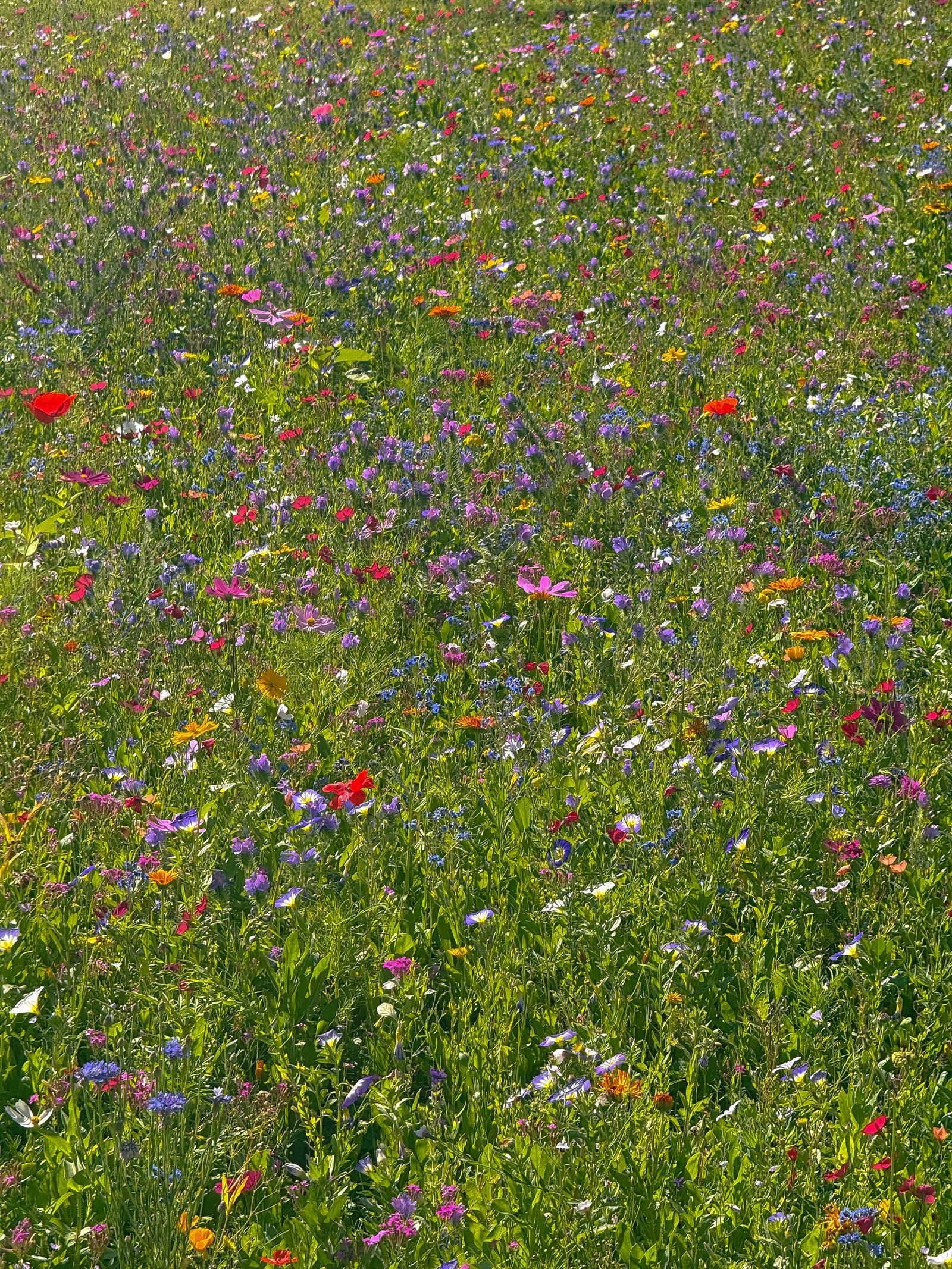
The wildflower meadow on the seed packet, waist high and humming, is a real thing that real gardens achieve. It is just not achieved the way the marketing implies, by scattering seed over whatever ground is available and walking away whistling. Wildflower seed scattered over lawn dies in the grass. Scattered over mulch it dries on the surface. Buried in a rich, fertilized bed it grows a magnificent stand of weeds and a few apologetic flowers. The method that works is almost as simple, but it is specific: bare soil, shallow contact, a measured rate, weeks of moisture, and then a quality the packet cannot sell you, patience, because a wildflower planting is a three year project wearing a one summer costume.
This page gives the planting in full and then the honest expectations, year by year, including the mowing regime that turns a one summer show into a perennial planting.
Interactive tool
Wildflower Sowing Checklist
Check off each step as you finish it. Your progress stays on this page.
0 of 8 complete
0% done
Step 1: Prep Is the Planting, Start From Bare Soil
Wildflowers need what lawns and mulch deny them: seed touching bare soil, with light reaching it. Choose the sunniest ground you have; most meadow mixes are sun plants, and a shady wildflower patch is a contradiction that ends in foliage. Then clear the existing growth completely. Mow or scald the area as short as possible and rake off the clippings and thatch; for a weedy patch, smothering under cardboard or a tarp for several weeks before sowing does the clearing without chemicals. Rake the top inch of soil loose. Do not till deeply: deep tilling is a weed seed raising ceremony, bringing years of buried seed to the light, and the wildflowers will spend their first season competing with everything you woke up. And do not fertilize, at any point, on purpose: rich soil grows grass and leaves, not flowers, and a meadow planting is one of the few gardens that improves with a certain poverty. If your soil is genuinely barren subsoil, the wildflowers are still the right tenants; they were selected by evolution for exactly the ground other plants refuse.
Step 2: Choose the Window, Spring or Fall
Two sowing windows work, and they suit different gardeners. Spring sowing, after the last frost, gives annual flowers the same summer and starts the perennials growing; it demands the most watering discipline in its first weeks. Fall sowing, late enough that seed will not germinate before winter, lets cold and moisture stratify the seed naturally over winter, which many perennial wildflowers actually require to germinate well, and the planting wakes up with the spring rains instead of waiting for you. In cold climates fall sowing is the connoisseur's choice for perennial mixes; in mild climates spring is simpler to supervise. Either way, buy a mix blended for your region rather than a generic national blend: a meadow is local plants or it is a flower bed with extra steps.
Step 3: Mix With Sand and Sow in Two Passes
The rate that recurs across extension and seed house guidance is about 1/4 pound of seed per 500 square feet, which is about 1/2 pound per 1,000 square feet. That is less seed than your instincts want to throw, and more than enough; overseeding buys crowding, not flowers. Wildflower seed is tiny and mixed sizes, impossible to spread evenly by hand alone, so mix it thoroughly with dry sand at about 4 parts sand to 1 part seed. The sand bulks the mix into something a hand can broadcast, and its pale color shows you where you have already sown. Sow half the mix walking the patch in one direction, then the second half in passes at right angles to the first, the same two pass discipline as seeding a lawn. On a windy day, postpone: half your meadow is currently next door.
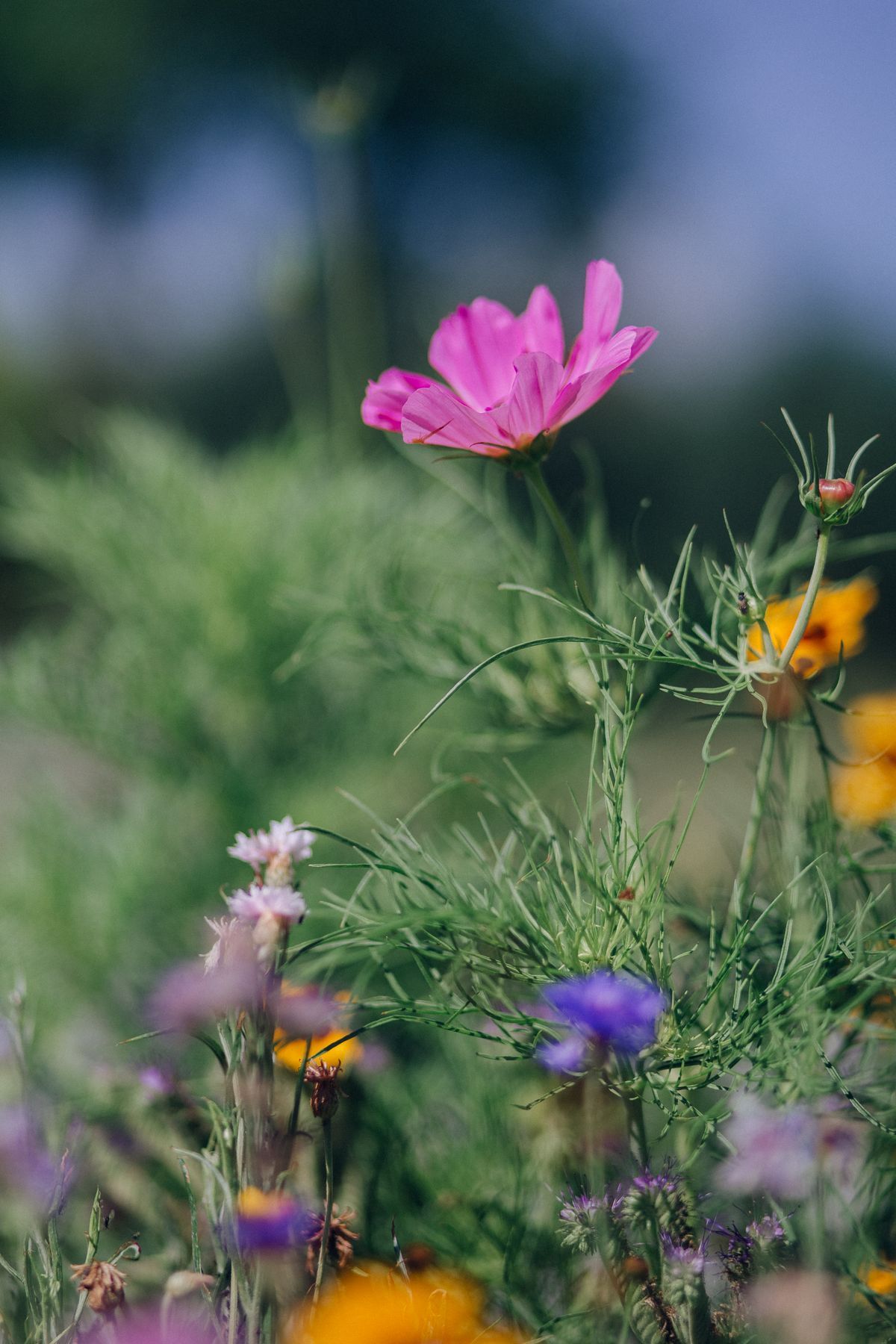
Pink wildflowers blooming in a meadow in spring
Step 4: Press It In, Never Bury It
After sowing, press the seed into contact with the soil: walk the whole patch in flat shoes, or roll it if you own a roller, or tamp a small area with the back of a rake. Do not rake it in and do not cover it with soil or mulch. Many wildflower seeds need light to germinate, and the depth rule is absolute: never deeper than 1/8 inch. Seed scattered and left lying loose on the surface dries and blows; seed buried an inch deep in kindness never sees the light it is waiting for. Pressed into the top skin of the soil is the whole trick, and it takes ten minutes.
Step 5: Keep It Moist for 4 to 6 Weeks
The germination window is the one period when a wildflower planting is needy: keep the seedbed lightly moist for 4 to 6 weeks, watering gently whenever the surface dries, with a fine spray that does not wash the seed into drifts. A spring sowing in a dry spell means daily attention at first; a fall sowing mostly outsources this to the weather, another of its quiet advantages. Once the seedlings are up and growing, back the water off and let the planting harden into the drought tolerant thing it is designed to become. Germination will be uneven, in waves, across weeks; that is the mix working as blended, not a failure to report to the seed company.
The Honest Years: One, Two, Three
Year one looks weedy, and everyone should tell you so. The annuals in the mix flower the first summer and carry the show. The perennials spend year one building roots underground, showing as modest green rosettes that the untrained eye reads as weeds, which is why more wildflower plantings are mowed to death by embarrassed owners in August of year one than by any other cause. Weeds will also arrive, because you prepared bare soil and everything knows it. Pull the obvious thugs, especially anything setting seed you did not plant, and tolerate the shagginess. Your job in year one is protection, not beauty.
Year two is the turn. The perennials wake with root systems a year deep and begin to flower, the annuals self sow into gaps, and the planting starts to read as a meadow rather than an incident. Fill any genuinely bare patches with a light reseeding in fall. The mowing regime begins to matter now, below.
Year three is the packet photo. A mature planting in balance, flowering in succession from spring to fall, holding its own against weeds by occupying the ground completely. From here the maintenance is an annual rhythm, not a project.
The Mow That Makes It Perennial
Once the planting is established, mow once a year, in fall, after the flowers have set and dropped their seed, and rake or clear the cuttings off rather than leaving them to mulch in place. The timing protects the seed crop that renews the annuals and spreads the perennials. The clearing matters as much as the cut: leaving the hay in place fertilizes the soil season after season, and fertility is what tips a meadow back toward grass and weeds. Cut high rather than scalping, since many perennials hold their crowns and overwintering insects in the lower stems, and consider leaving a section unmowed on rotation each year as winter shelter. That single fall mow, done yearly, is the difference between a planting that persists for a decade and a one summer show that faded into lawn with a story attached.
Choosing the Mix: Annual, Perennial, or the Honest Blend
The bag's composition decides your three year story before you open it. An annual heavy mix gives the fullest first summer and the emptiest third year, because annuals live once and rely on their own seed falling on ground that suits them. A perennial heavy mix looks modest in year one, all roots and rosettes, and becomes the meadow of the packet by year three, provided the owner survives year one's appearance without mowing it into a lawn out of embarrassment. The blend most beginners actually want is a true mix of both, annuals carrying the first season while perennials build beneath them, and a reputable regional mix is blended in roughly that spirit. Read the species list on the packet the way you would read a seed label in the grass aisle: named species suited to your region and soil, a high share of flower seed rather than filler grasses unless a grass meadow is the intent, and no species your region lists as invasive wearing a wildflower costume. Cheap national mixes fail in a specific way worth naming: they are blended for everywhere, which means optimized for nowhere, heavy on the few species that grow anywhere and silent on the ones that would have made your patch local. A smaller bag from a regional seed house, at the rate on this page, plants a better meadow than a bargain sack twice its size.
Small Spaces: The Pocket Meadow
Not every wildflower planting is a meadow, and the method scales down better than its reputation suggests. A pocket meadow, a single bed, a hellstrip between sidewalk and street, a sunny corner where the lawn always failed anyway, runs on exactly the same rules: bare soil, lean and unfertilized, the sand mix at the same rate, seed pressed no deeper than 1/8 inch, moisture through germination. The differences are of management, not method. Edges matter more in a small planting, because a crisp mowed frame around a shaggy pocket reads as intention while the same planting unframed reads as neglect to every passerby, including the ones with code enforcement jobs. Height matters too: choose a mix whose mature height suits the spot, shorter blends for the hellstrip and front yard, tall ones for the back fence. And the year one honesty applies at double strength in public view, so plant a small sign if your neighborhood needs one: wildflowers establishing, first year roots, flowers coming. It is remarkable what a five word sign does for a planting's survival, and for its owner's peace at neighborhood gatherings.
Frequently Asked Questions
Why did my wildflower seed not grow?
The three usual causes: seed scattered over lawn or mulch instead of bare soil, so it never touched ground; seed buried or raked in deeper than 1/8 inch, when many wildflowers need light to germinate; or a seedbed allowed to dry out during the 4 to 6 week germination window. The method on this page is built to defeat all three.
How much wildflower seed do I need?
About 1/4 pound per 500 square feet, roughly 1/2 pound per 1,000 square feet. Mix it with dry sand at about 4 parts sand to 1 part seed so it broadcasts evenly, and sow in two passes at right angles. More seed buys crowding, not more flowers.
When is the best time to sow wildflower seed?
Spring after last frost, or fall late enough that seed lies dormant until spring. Fall sowing gives perennial seed the natural cold stratification many species need and outsources the germination watering to winter weather. Spring sowing flowers annuals the same summer but needs 4 to 6 weeks of kept moist soil.
Should I fertilize or till before sowing?
Neither. Deep tilling raises buried weed seed to the light and starts a competition your flowers lose, and fertilizer grows grass and leaves at the flowers' expense. Clear the surface growth, rake the top inch loose, and sow into bare, lean soil. Wildflowers are selected by evolution for poor ground.
Why does my wildflower patch look like weeds in the first year?
Because in year one, it partly is: the annuals flower while the perennials build roots as low green rosettes that read as weeds, and real weeds exploit the bare soil too. Pull anything setting seed that you did not plant, protect the planting, and wait. Year two turns, year three is the packet photo.
How do I maintain a wildflower planting once it is established?
One mow a year, in fall, after seed has set and dropped, cut high, with the cuttings raked off so fertility does not build and tip the balance back to grass. Leave a section unmowed on rotation as winter shelter. That single annual rhythm keeps a meadow perennial for years.
Photo credits: Anna Lupa (Pexels); Nataliya Vaitkevich (Pexels). Photos are served from this site; follow the credit to the library page for the original.