Bell Pepper Plant Spacing: The 24 Inch Georgia Standard, the Tight End Trade, and the Support Pairing
By the Windchime Walker editorial team
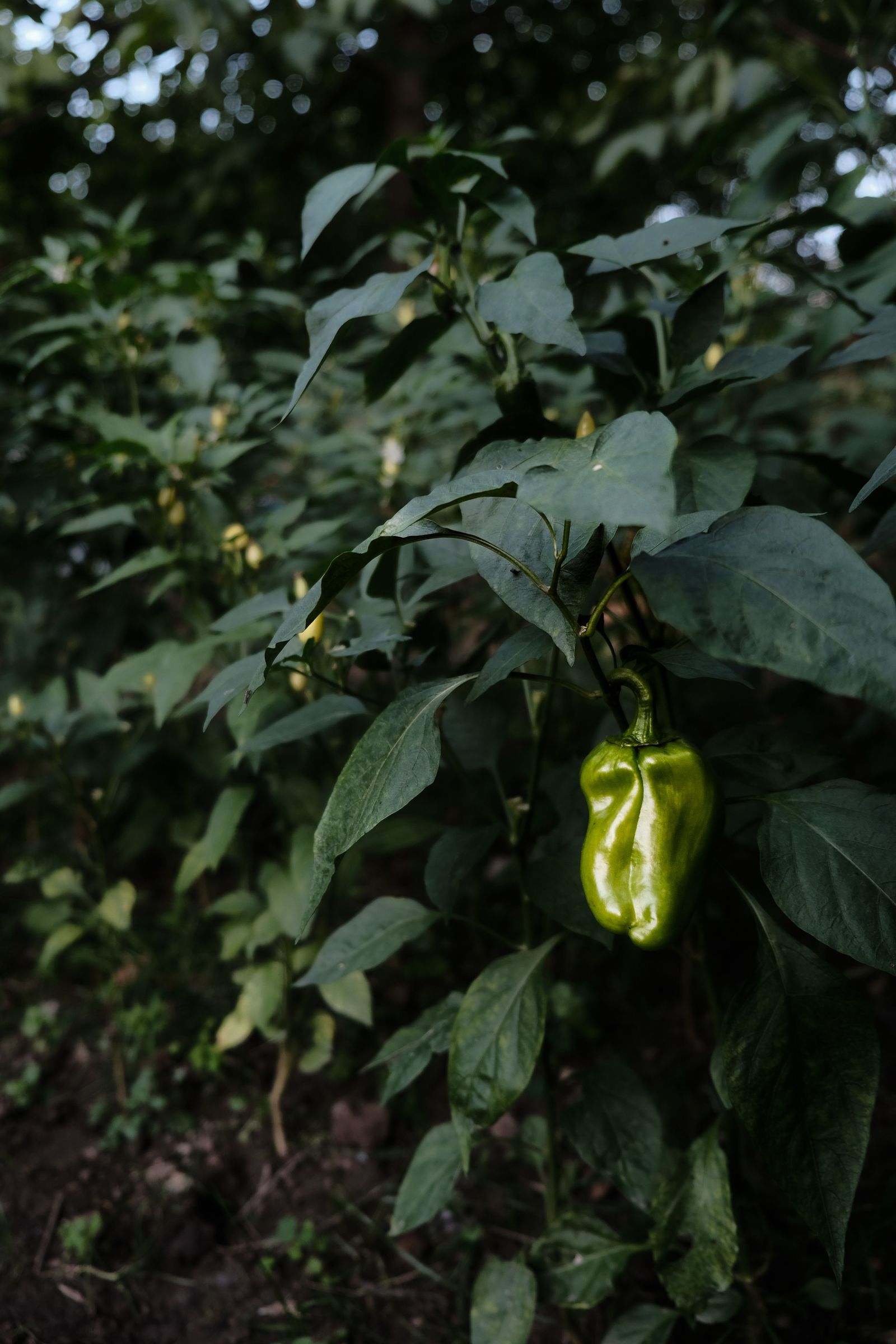
Photo: Emre Gencer / Pexels
A bell pepper plant is a small bush with an outsized appetite for sun and air, and its spacing decides whether the harvest is a few large, thick walled fruit or a crowd of small ones. The University of Georgia Cooperative Extension chart in Circular 963 sets the standard this site's planner runs: transplants set 24 inches apart in rows 36 inches apart, 65 to 80 days to harvest. The results around that standard run tight, 12 to 24 inches between plants in various guides, and the tight end is a real system with real costs rather than an error: more plants per bed, smaller fruit per plant, a canopy that holds moisture and dries slowly after rain. This page runs the Georgia standard as the verdict, prices the tight end honestly, and covers the two systems that ride on the spacing decision, support and sunscald, because a pepper plant's geometry and its trellis are planned on the same day.
Our plant spacing chart owns the multi crop table. This page owns the bell pepper row.
Interactive tool
Plant Spacing Planner: The Bell Pepper Row
Peppers are in the crop list below at the University of Georgia Cooperative Extension spacing of 24 inches between plants in rows 36 inches apart. Enter your bed size and count your plants before you buy transplants.
8 tomato plants fit this bed
4 plants per row across 2 rows, on a 24 inch grid. Extension spacing for this crop: 24 in between plants, 48 in between rows.
The grid uses the in-row spacing in both directions, the standard square foot layout for raised beds. In open ground, keep the wider row spacing in the note above so you can walk and weed between rows.
Spacing figures: University of Georgia Cooperative Extension, Circular 963, Vegetable Planting Chart, source.
The Georgia Standard: 24 Inches, and What the Room Buys
Twenty four inches gives a mature bell pepper, typically 18 to 24 inches across by late summer, room to meet its neighbors without merging into them. That last gap of air is the working part of the spacing: foliage that dries by mid morning after a wet night is foliage that bacterial spot and other leaf diseases colonize slowly, and fruit hanging in moving air colors evenly and rots rarely. The 36 inch row is the picker's corridor and the mulch lane; in raised beds it converts to a grid at the same 24 inch plant spacing without changing the plant's own geometry, which is how the planner lays out a bed. Peppers are always transplanted, never direct sown in temperate gardens, set out after nights hold above 50 degrees F, into warm soil, at the same depth they grew in the pot. The 65 to 80 days on the chart runs from transplant, and it explains the pepper bargain: this is a slow, expensive plant in garden time, which is exactly why its spacing should not be gambled on a crowded experiment. Count the bed with the planner before you buy the six pack; peppers are sold in spring enthusiasm and spaced in summer regret.
The Tight End: 12 to 18 Inches, Priced Honestly
Tight spacing is not wrong; it is a trade, and it should be made with the prices showing. At 12 to 18 inches, a bed carries roughly twice the plants of the standard, and the total yield per bed can rise, while the yield per plant falls and the fruit size falls with it, because each plant's roots and light are halved. For a grower turning peppers into sauce, salsa, and freezer bags, a bed of smaller fruit at higher count is a legitimate win. For a grower who wants thick walled, blocky, slicing peppers, size is the product, and the standard spacing is how it is bought. The disease price is the serious one: a tight canopy stays wet longer, and in humid climates or wet summers the tight bed is where leaf disease starts and spreads plant to touching plant. The compromise many extension minded growers run is 18 inches in the row with the rows kept wide, buying some count while keeping an air corridor between rows. What the tight end must never be is an accident, seedlings planted where they fit rather than where they were planned; run the planner, see both counts, and choose the trade on purpose.
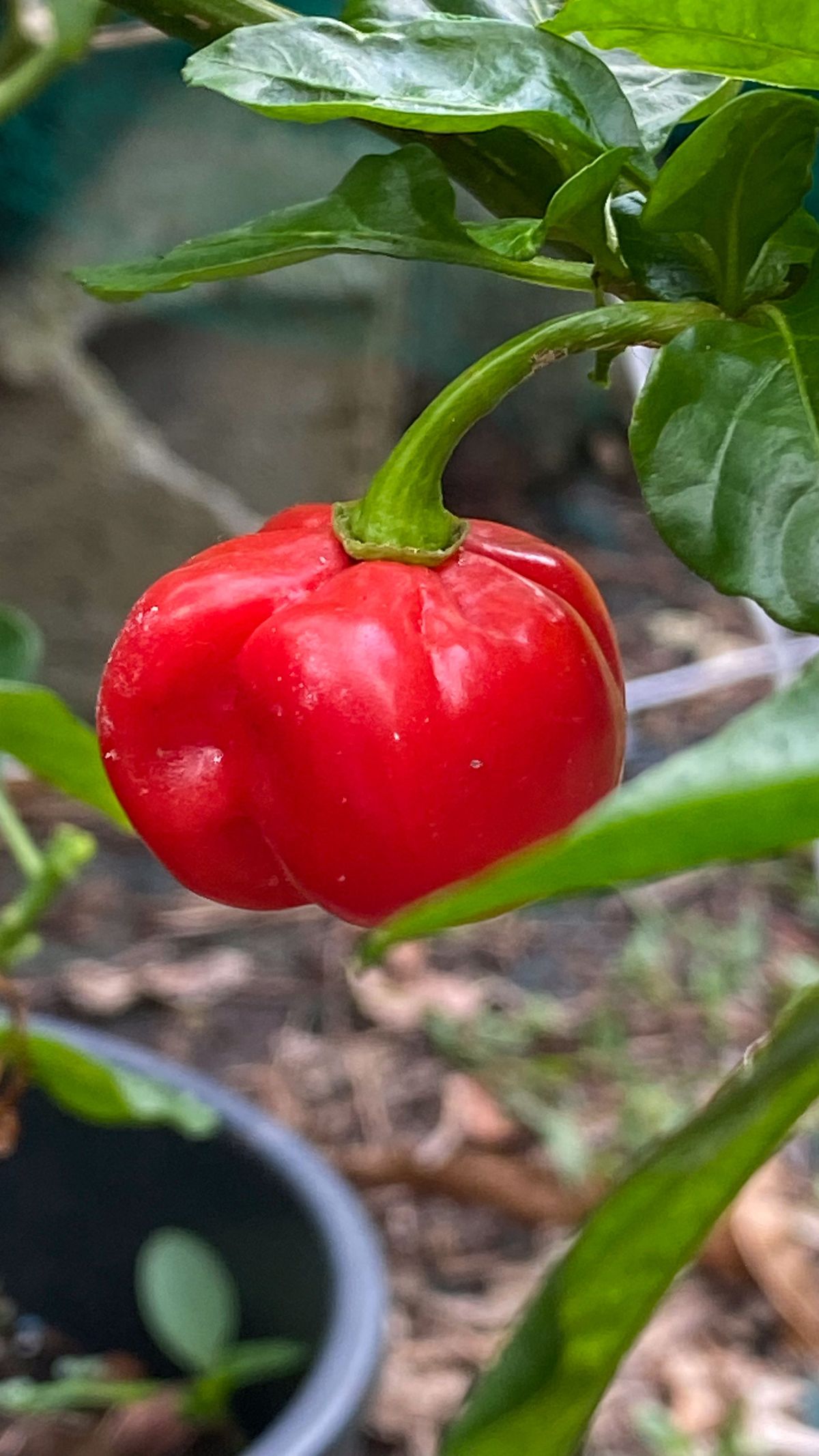
Close-up of a ripe red bell pepper on a plant
Support: Spacing and Staking Are One Decision
A bell pepper loaded with fruit is top heavy on a brittle stem, and a plant that snaps a main branch in an August thunderstorm loses half its harvest in a second. Support is planned with spacing because the system determines the geometry. The Florida weave, two stakes at the ends of a row with twine woven between plants at two heights, only works on a row planted at even spacing, and it is the efficient answer for a full row at the standard. Individual stakes or short cages suit a grid bed. Either way, the first pass goes on when the plants are a foot tall and the fruit load is still a promise; support added late, forced around a loaded plant, breaks the branches it was meant to save. Spacing feeds the decision in the other direction too: a plant given its full 24 inches grows the wide, branching frame that a cage fits, while a tight spaced plant grows upright and narrow and suits the weave. Decide the support when you decide the spacing, buy the stakes with the transplants, and the August storm becomes weather instead of loss.
Sunscald and Shade: The Canopy Is the Fruit's Roof
Pepper fruit sunscalds: a pale, papery, sunken patch on the side of a fruit that sat in direct afternoon sun, which then rots through the damaged skin. The plant's own leaves are the first defense, and spacing and pruning decide whether the roof holds. A plant at the standard spacing, unpruned and fully leafed, shades most of its fruit most of the day. The scalds arrive after anything that strips the canopy: heavy pruning, disease defoliation, or a tight spaced row where the outer plants shade the row's edge and the inner fruit hangs exposed above a thin canopy. The counterintuitive lesson is that peppers want their leaves left alone; the tidy instinct to open the plant up for air can be served by the spacing itself rather than by the pruners. In very hot climates a strip of shade cloth over the bed at the peak of summer is the honest fix, and it is cheaper than the fruit it saves. At harvest, cut fruit with a short stem stub rather than pulling, because a pulled pepper tears the brittle branch the next three fruit are hanging from.
Hardening Off and the First Fortnight
The spacing is set on transplant day, but the plant's survival is decided in the fortnight around it. Transplants raised indoors or bought from a greenhouse bench need hardening off, a week of increasing outdoor hours, before they meet full sun and wind at their 24 inch stations; a soft plant set straight into a bright, breezy bed wilts to the ground by noon and loses days it never quite recovers in a 65 to 80 day crop. Set each plant at the depth it grew in its pot, firm the soil against the root ball, and water the planting hole's worth of soil deeply at setting, because the root ball and the bed dry at different rates for the first weeks and the ball is where the roots still are. A mulch laid once the soil has warmed, not before, holds the moisture even and keeps soil off the lower leaves in rain. The first fortnight's check is the root ball zone at 2 inches, not the bed surface a foot away; water the new plants on that check two or three times a week in dry weather, and step down to the bed's normal rhythm as the roots run out into their full spacing. Peppers set out into cold soil simply sit, purple stemmed and sulking, until warmth arrives, which is the final argument for the calendar gate: nights above 50 degrees F, soil warm, plants hardened, and only then the geometry this page exists to teach.
Frequently Asked Questions
How far apart should bell peppers be planted?
Twenty four inches between plants in rows 36 inches apart, per the University of Georgia Cooperative Extension chart in Circular 963, and that is the spacing in the planner on this page. It gives each plant room to build a full canopy that dries quickly, shades its own fruit, and sizes thick walled peppers. In raised beds, keep the 24 inch plant spacing and lay the bed out as a grid. Set transplants out only after nights hold reliably above 50 degrees F.
Can bell peppers be planted 12 inches apart?
They can, and some growers do it on purpose, but it is a trade: roughly twice the plants per bed, with smaller fruit per plant and a canopy that stays wet longer after rain, which raises leaf disease pressure in humid weather. If your harvest is destined for sauce and the freezer, the count may be worth more than the size. If you want large slicing peppers, hold the 24 inch standard. Eighteen inches in the row is the common middle course.
Do bell peppers need staking or support?
A loaded plant does. Bell pepper stems are brittle, and a branch carrying three or four nearly full size fruit can snap in a storm or under its own weight. A Florida weave along an evenly spaced row, individual stakes, or short cages all work; what matters is installing the support when the plants are about a foot tall, before the load arrives. Support and spacing are planned together, because a full spaced plant grows wide and suits a cage, while a tight spaced plant grows upright and suits the weave.
Why do my peppers get pale papery patches?
Sunscald. The fruit's skin is damaged by direct hot sun where the leaf canopy does not shade it, and the patch later rots. The plant's own foliage is the roof; avoid stripping leaves, let the spacing rather than pruning provide the airflow, and in very hot climates use shade cloth over the bed at the peak of summer. Fruit already scalded should be picked and discarded before the rot spreads to the stem.
How long do bell peppers take to harvest?
Sixty five to eighty days from transplant, per the Georgia chart, with green fruit at the early end and fully colored fruit later, since a pepper colors on the plant over additional weeks. Peppers are never direct sown in temperate gardens; they are started indoors 8 to 10 weeks before transplanting out into warm soil after the last frost and after nights settle above 50 degrees F. A plant picked green regularly keeps setting fruit; a plant left to color everything slows down, which is a harvest rhythm choice, not a spacing one.
Photo credits: Emre Gencer (Pexels); William ZALI (Pexels). Photos are served from this site; follow the credit to the library page for the original.