Bok Choy Plant Spacing: The 8 Inch Standard, the Baby Ladder, and the 40 Day Clock
By the Windchime Walker editorial team
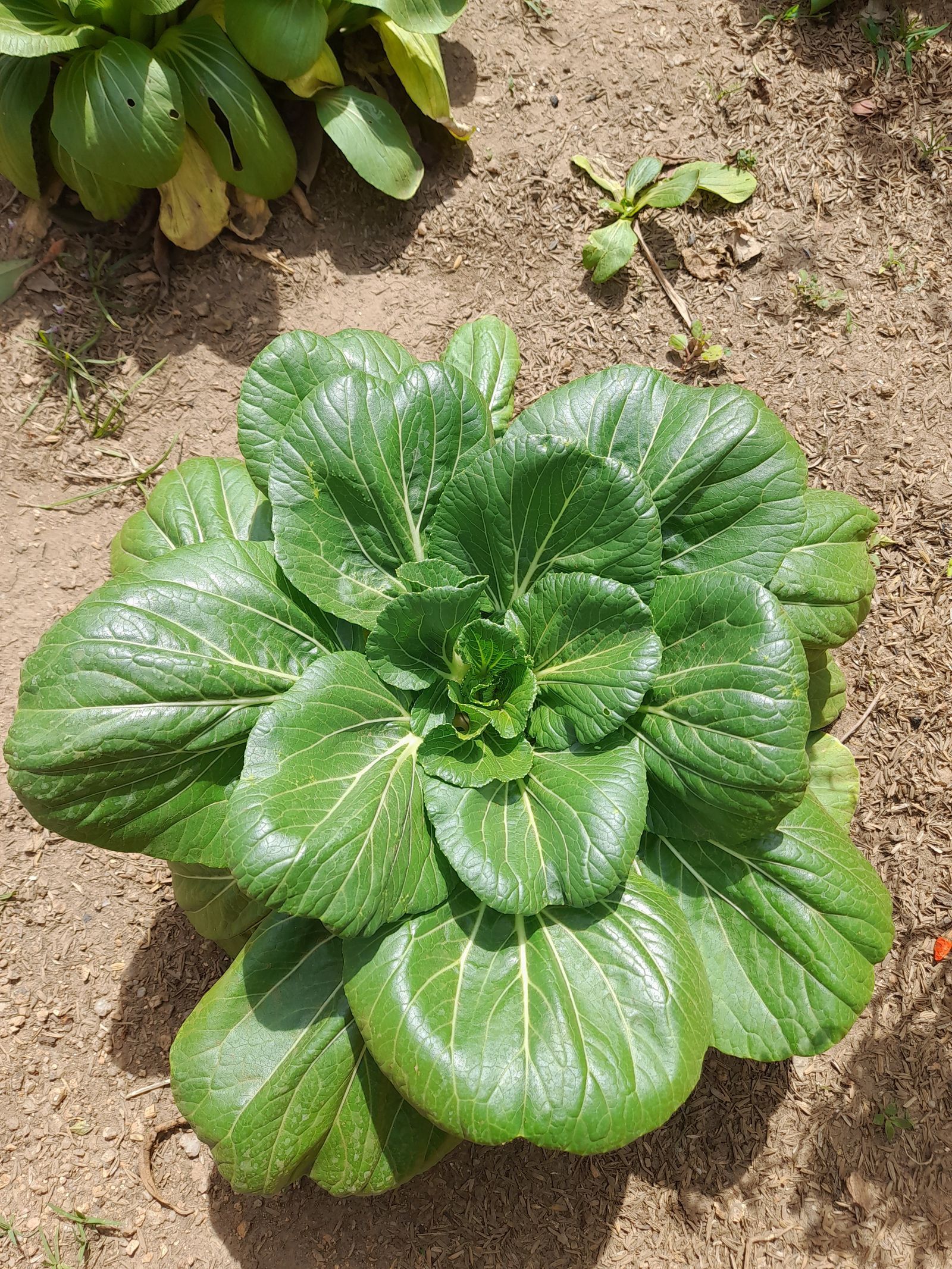
Photo: Lan Nguyen Tran / Pexels
Bok choy is a sprinter wearing a spacing question, and the sprint matters more than the number. This is a crop that goes from seed to a full harvest in 40 to 50 days at its best temperature, bolting rather than heading if it grows up too hot or too cold, and the spacing decision has to be made with that clock running. The UF/IFAS Extension fact sheet on bok choy production, HS1337, read in full for this page, sets the standard this site's planner uses: plants 8 inches apart in rows 12 inches apart, in well drained soil at pH 5.5 to 7.0, harvested at the 10 to 15 leaf stage. The results also carry a tighter baby system at 4 to 6 inches for a cut at 30 to 35 days, and looser figures toward a foot for exhibition size heads. This page runs the IFAS standard as the verdict, teaches the ladder around it, and ties spacing to the two things that actually ruin bok choy: bolting and the disease pressure of a crowded, wet canopy.
Our plant spacing chart owns the multi crop table. This page owns the bok choy row.
Interactive tool
Plant Spacing Planner: The Bok Choy Row
Bok choy is in the crop list below at the UF/IFAS Extension spacing of 8 inches between plants in rows 12 inches apart. Enter your bed size and count your plants before the fast crop fills the row.
8 tomato plants fit this bed
4 plants per row across 2 rows, on a 24 inch grid. Extension spacing for this crop: 24 in between plants, 48 in between rows.
The grid uses the in-row spacing in both directions, the standard square foot layout for raised beds. In open ground, keep the wider row spacing in the note above so you can walk and weed between rows.
Spacing figures: University of Georgia Cooperative Extension, Circular 963, Vegetable Planting Chart, source.
The IFAS Standard: 8 Inches, 12 Inch Rows, and What the Numbers Buy
Eight inches between plants sounds tight for a vegetable that finishes as a vase of white stems a foot across, until you price the alternatives. At 8 inches the canopy closes just as the plants reach harvest size, shading the soil, holding moisture evenly, and suppressing the weeds that a 50 day crop has no time to be hoed around. At 12 inches the same plants stand in open ground, wasting the bed's fastest weeks of the spring and fall to gaps, and the heads size up only modestly larger for the space. The 12 inch rows keep a hoe's width and a harvest path between lines, which is the working compromise between the plant's spread and the grower's feet. Use the planner above to count a bed before you sow: bok choy's speed means a 4 by 8 foot bed at the standard holds a serious quantity of greens, and most households do better sowing a short row every two weeks through the cool window than filling a whole bed on one day and facing forty heads in the same week.
The Baby Ladder: A Different Crop, Not a Compromise
The tighter figures in the results, 4 to 6 inches, sometimes down to 2 to 4 inches in rows for cut leaf production, describe baby bok choy: whole young plants cut at 30 to 35 days, tender enough to halve and sear or drop into soup entire. It is a legitimate and delicious system, and it is not a smaller version of the standard but a different harvest contract. At baby spacing no plant is ever expected to reach the 10 to 15 leaf stage; the bed is a greens factory harvested young and replanted immediately. What you must not do is plant at baby spacing and then change your mind, because a bed thinned too late gives neither crop: plants too crowded to size up, too old to be baby tender. Decide at sowing. The same honesty applies at the wide end, where a foot or more between plants grows the giant individual heads sold as a premium item, at the cost of bed efficiency no home grower needs to pay. The ladder exists; stand on one rung deliberately.
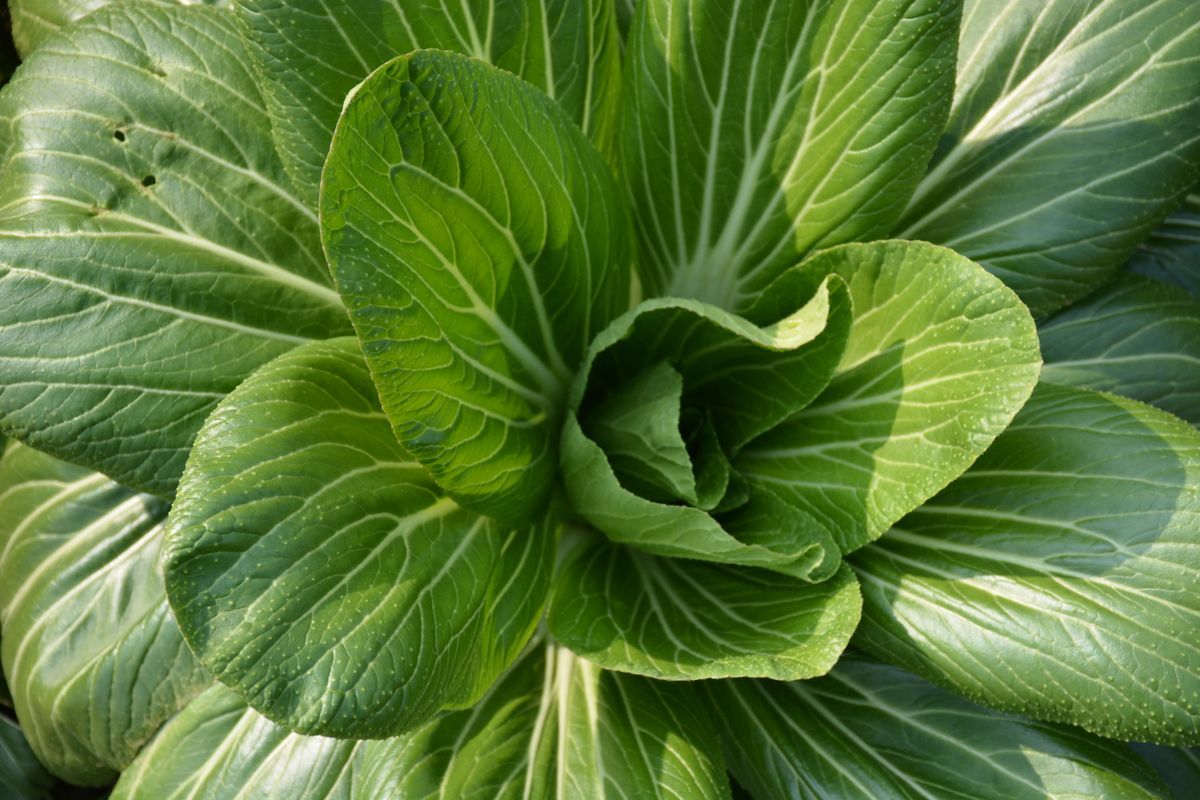
Bok choy plants with white stems growing in a bed
The 40 Day Clock: Bolting Is a Temperature Verdict
Bok choy's best growth, per IFAS, comes at 64 to 68 degrees F, and the plant reads departures as instructions. Cold is the sneakier one: young plants exposed to a sustained chill can be vernalized, primed to bolt the moment warmth returns, which is why the fact sheet's production calendar is a cool season calendar and why northern spring sowings are timed to grow after the hard cold has passed rather than before it. Heat ends the crop the other way, pushing plants to flower and turning stems stringy and leaves bitter. The practical spacing consequence is timing, not distance. Sow so the 40 to 50 day run lands inside the cool window: spring sowings timed backward from the arrival of real heat, fall sowings as the heat breaks, with transplants bought or raised to compress the field time where the window is short. A bolted plant is not rescued by any spacing or watering adjustment; it is harvested immediately for whatever leaves it has, and the next succession goes in. Which is the other calendar rule this crop teaches: bok choy is a succession vegetable. Sow little and often inside the window, and no single failure, bolt, or pest wave costs you the season.
Water, Soil, and the Crowded Canopy Problem
Bok choy is a leaf crop and grows like one: it wants consistent moisture and steady fertility in a well drained bed, pH 5.5 to 7.0 per IFAS, with organic matter to hold both. The spacing connection is airflow. At the 8 inch standard a healthy canopy breathes adequately in open ground, but in humid weather or a sheltered bed the same spacing holds moisture on the leaves and invites the soft rots and leaf spots that race through brassica greens. The defenses are spacing honesty, never tighter than the standard for the full size crop, watering at the base in the morning rather than over the canopy in the evening, and ruthless removal of any plant that collapses with rot before it seeds the bed with trouble. Flea beetles and caterpillars work the crop from the other side, and row cover from sowing day, lifted only at harvest, is the standard organic answer and works at any spacing. Feed steadily rather than heavily: a nitrogen rich side dressing at the halfway point of the run keeps the leaf color and pace the clock demands, while a starved plant stalls, and a stalled bok choy in warming weather is a bolting one.
Harvest: The 10 to 15 Leaf Stage
Harvest by the fact sheet's stage, not by the calendar alone: a plant carrying 10 to 15 full leaves, firm stemmed and glossy, at 40 to 50 days from sowing in good conditions, is a finished bok choy. Cut the whole plant at the base in the morning when the stems are turgid, and use it soon, because the same crisp wateriness that makes it superb makes it a short keeper even refrigerated. Baby plantings come off at 30 to 35 days by the same morning rule. Plants that overshoot the stage in cool weather hold acceptably for a few days; plants overshooting into heat decline by the hour and bolt from the center, visible as the core elongating and loosening. Run the IFAS standard, respect the clock, and keep a succession rhythm inside the cool window, and bok choy becomes what the fact sheet intends: the fastest full vegetable in the garden, planted 8 inches apart and gone in six weeks to make room for its own replacement.
Frequently Asked Questions
How far apart should bok choy be planted?
Eight inches apart in rows 12 inches apart, per the UF/IFAS Extension fact sheet HS1337, and that is the spacing in the planner on this page. It suits the standard full size crop harvested at the 10 to 15 leaf stage, 40 to 50 days from sowing. Baby bok choy is a separate system at 4 to 6 inches, harvested whole at 30 to 35 days. Do not mix the two contracts: a bed sown at baby spacing and left to mature gives neither a good baby cut nor a good full size head.
How long does bok choy take to grow?
Forty to 50 days from sowing to a full size harvest at the 10 to 15 leaf stage under good conditions, with best growth at 64 to 68 degrees F per UF/IFAS. Baby bok choy is faster, 30 to 35 days. Transplants shorten the field time by the weeks they spent in the cell. The calendar only holds inside the cool window; heat and vernalizing cold both push the plant to bolt instead of heading, and a bolting plant should be harvested at once for its leaves.
Why is my bok choy bolting instead of forming heads?
Temperature, almost always. Young plants chilled for a sustained period can be primed to bolt when warmth returns, and plants growing into heat bolt as the season turns. Time sowings so the 40 to 50 day run sits inside the cool window: spring sowings after hard cold has passed, fall sowings as heat breaks. No spacing or watering change unbolts a plant; harvest it promptly and put the next succession in. Steady moisture and fertility help because a stalled plant in warming weather is a bolting plant.
Can bok choy grow in containers?
Yes, and spacing converts simply: one plant per gallon or so of mix at the full size standard, which means a single plant in a 1 to 2 gallon pot or three in a 10 inch wide planter at roughly 8 inch centers. Containers suit bok choy well because the crop is fast and shallow rooted. Keep the mix evenly moist, feed at the halfway point, and run the same cool window calendar; a pot on a hot patio bolts its contents faster than a bed does.
When do I harvest bok choy?
At the 10 to 15 leaf stage per UF/IFAS, typically 40 to 50 days from sowing, when the stems are firm and glossy and the plant is a tight vase. Cut the whole plant at the base in the morning and use it promptly. Baby plantings are cut whole at 30 to 35 days. Watch the center: a core that starts to elongate is bolting beginning, and that plant should be harvested the same day regardless of size.
Photo credits: Lan Nguyen Tran (Pexels); Shiyuan Chen (Pexels). Photos are served from this site; follow the credit to the library page for the original.