Ask five extension services how far apart to plant broccoli and you get a spread from 8 inches to 2 feet, and every one of them is right, because they are answering slightly different questions. Spacing decides two harvests at once: the size of the main head, which grows with room, and the total yield of the bed, which grows with plant count, plus the side shoot harvest that follows the main head for weeks. The University of Georgia Cooperative Extension Circular 963 chart sets this site's standard at 12 inches between plants in 36 inch rows, the yield end of the honest range. This page runs the Georgia standard in the planner, teaches the ladder around it so a grower chasing farmers market heads can step wider with open eyes, and prices the side shoots that the wide spacings leave on the table. Our plant spacing chart owns the multi crop table; this page owns the broccoli row.
Broccoli Plant Spacing: The 12 Inch Georgia Standard, the Head Size Ladder, and the Side Shoot Harvest
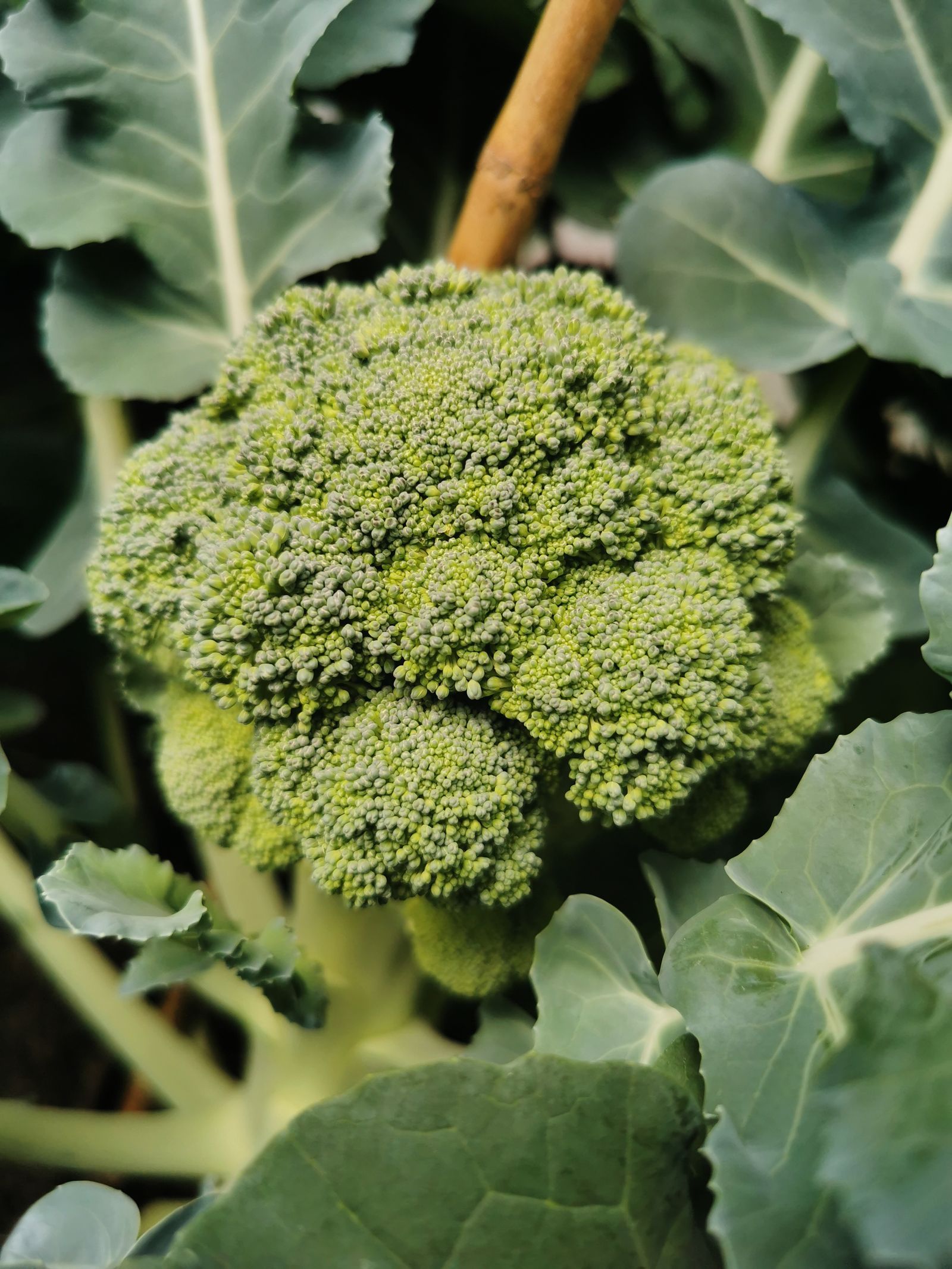
Photo: Karen Laårk Boshoff / Pexels
Plant Spacing Planner: The Broccoli Row
Broccoli is in the crop list below at the University of Georgia Cooperative Extension spacing of 12 inches between plants in 36 inch rows. Enter your bed or row size and count your transplants, then read the head size ladder in this article before you wish you had gone wider.
8 tomato plants fit this bed
4 plants per row across 2 rows, on a 24 inch grid. Extension spacing for this crop: 24 in between plants, 48 in between rows.
The grid uses the in-row spacing in both directions, the standard square foot layout for raised beds. In open ground, keep the wider row spacing in the note above so you can walk and weed between rows.
Spacing figures: University of Georgia Cooperative Extension, Circular 963, Vegetable Planting Chart, source.
The Georgia Standard: 12 Inches, 36 Inch Rows
Twelve inches between plants is the spacing at which a healthy broccoli plant's leaves just meet its neighbors at maturity, shading the soil, holding moisture even, and still leaving the 36 inch row as an air and access corridor. The head that forms at that spacing is a good household head, typically 4 to 6 inches across, and the plant then does the thing wide spacing articles underplay: after the main head is cut, it produces side shoots, small florets on branching stems, for weeks, and a tight bed of many plants produces side shoots in quantity. Count the bed before you set transplants: a 4 by 8 foot bed at the standard holds a serious stand of broccoli, and the planner above lays it out honestly. Set transplants at the depth they grew in the cell, water them in, and hold the grid as the plants size up; broccoli forgives many things, but a grid abandoned at planting becomes a thicket by July.
The Head Size Ladder: What Each Step Wider Buys
The wider extension figures are the same ladder read from the other end. Maryland's 16 to 24 inches and Illinois's 18 to 24 inches buy head size: at 18 inches a plant heads at 6 to 8 inches, and at 24 to 26 inches the largest heads form, the single cut showpieces. What the wide end spends is plant count and the side shoot total: half the plants in the bed means half the shoots after the main cut, and for most home growers the shoots, arriving a few at a time for a month or more, are worth more than one giant head. The tight end of the field deserves a flag rather than a following: Minnesota's 8 to 10 inches appears in the results and will grow broccoli, but the heads run small, the canopy closes early and stays wet, and disease pressure climbs; it is a figure for short season improvisation, not a standard. The honest summary: 12 inches for yield and shoots, 18 inches for balanced heads, 24 inches for the biggest single heads, and the grower's harvest habit, not the plant, makes the choice.
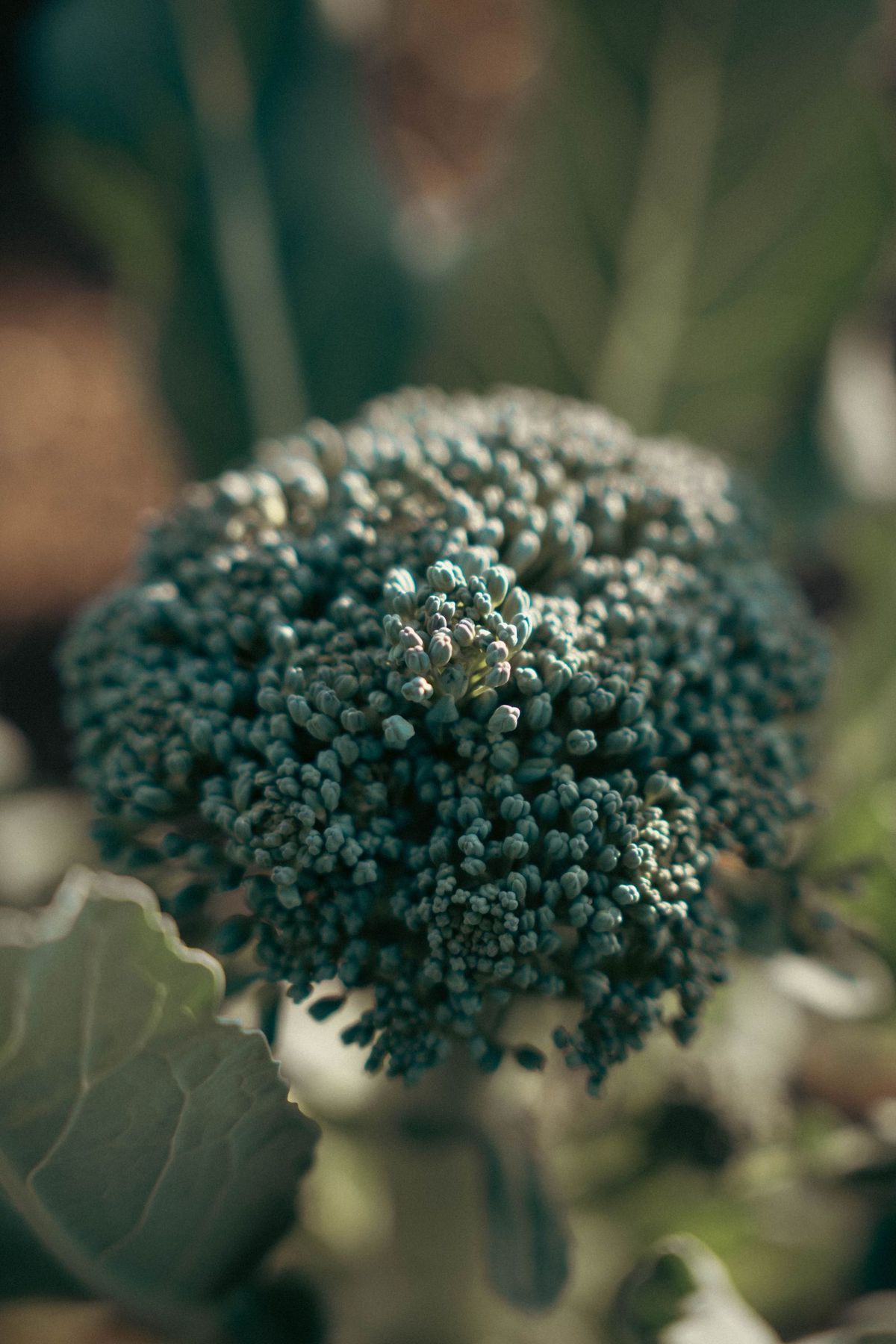
The Side Shoot Economy
After the main head is cut, a broccoli plant is not finished; it is just getting started on its second harvest. Side shoots form in the leaf axils below the cut and size up over the following weeks, each only an inch or two across, but arriving continuously. A plant at the Georgia spacing, slightly checked by its neighbors, channels energy into many shoots; the bed total across a dozen plants is pounds of florets that a wide spaced bed of six plants cannot match, even though each wide plant shoots too. Two habits protect the shoot harvest: cut the main head promptly when the buds are tight and before any yellow shows, because a plant allowed to flower stops shooting, and keep harvesting the shoots every few days, since a shoot left to flower sends the same stop signal. Fed lightly after the main cut and kept watered, a spring planting shoots into early summer, and a fall planting, which heads more sweetly in cool weather anyway, shoots until hard frost.
Beds, Rows, and the Transplant Calendar
The 36 inch row is a field figure, and bed growers convert it the way this site's other spacing pages do: in a 4 foot bed, two rows at the 12 inch in row spacing use the bed fully, with the bed's width doing the work the row spacing does in a field. Broccoli is a transplant crop for most growers, started indoors 4 to 6 weeks before setting out, because direct sown plants race the heat in spring and the head quality suffers. Spring plants go out a couple of weeks before the last frost, since broccoli tolerates light frost and in fact heads poorly in heat; the fall crop, transplanted in midsummer for most regions, is the reliable one, heading as the weather cools. Spacing interacts with the calendar: a fall crop in cooling weather can sit at the tight end happily, while a spring crop racing toward heat benefits from the air of 18 inches. Succession is modest with broccoli; two plantings, spring and fall, beat a row of monthly sowings of a plant that wants cool weather at heading.
After the Head: Side Shoots and the Second Harvest
The spacing work is not finished when the main head is cut, because most broccoli varieties answer the harvest with side shoots, smaller heads produced in the leaf axils for weeks afterward. Those shoots are sized by the same grid that sized the main head: a plant that stood at its full 12 inches keeps producing shoots in usable sizes, while a crowded plant's shoots come in as buttons. This is the second dividend of honest spacing and the reason the planner's count should not be inflated by squeezing, since the crop is not one head per plant but a head plus a tail of shoots, and the tail is where the spacing pays twice. When the shoots finally dwindle to flower size the plant is done; pull it, and the bed turns to its next crop. Fall broccoli runs the identical grid on the identical planner numbers, transplanted in midsummer for the cool season heads many growers rate the best of the year.
Frequently Asked Questions
How far apart should broccoli plants be spaced?
Twelve inches apart in rows 36 inches apart, per the University of Georgia Cooperative Extension Circular 963 chart, and that is the spacing in the planner on this page. It favors total yield and the side shoot harvest. If your goal is the largest possible main heads, step wider, to 18 or even 24 inches, as Maryland and Illinois advise, knowing you are trading plant count and shoots for head size.
Why do some guides say 18 to 24 inches for broccoli?
Because they are optimizing the main head. A broccoli plant given 2 feet grows a head of 6 to 8 inches or more, while a plant at 12 inches heads smaller. Neither is wrong; they are different harvests. Home growers who cook a few florets at a time usually come out ahead at the Georgia standard, where the main heads are household sized and the side shoots keep producing for weeks after.
How many broccoli plants fit in a 4 by 8 foot bed?
At the Georgia standard of 12 inches between plants, laid out as two rows across a 4 foot bed, a 4 by 8 foot bed holds roughly 16 plants, as the planner above shows. That is a lot of broccoli: main heads in season plus a long tail of side shoots. Many households do better with 8 plants and the other half bed given to a succession or a different crop.
Should broccoli spacing change for the fall crop?
Slightly, in the grower's favor. A fall crop heads in cooling weather, with less disease pressure and no race against heat, so the tight end of the ladder performs well. A spring crop that will head as weather warms benefits from stepping toward 18 inches for airflow. The planner standard stays 12 inches; the season argues the adjustment, and the fall argument is usually the stronger crop anyway.
What happens if broccoli is planted too close?
Below about 10 inches the canopy closes early, heads run small, and the wet, still air inside the planting invites disease, while the side shoot harvest, the tight spacing's whole justification, gets spindly. The Minnesota figure of 8 to 10 inches exists in the literature but produces exactly this trade. If a bed is already crowded, thin it without sentiment: one plant at 12 inches outproduces two at 6.
Photo credits: Karen Laårk Boshoff (Pexels); James Collington (Pexels). Photos are served from this site; follow the credit to the library page for the original.