Butternut Squash Plant Spacing: One Vine, 36 by 60 Inches, Honestly Counted
By the Windchime Walker editorial team
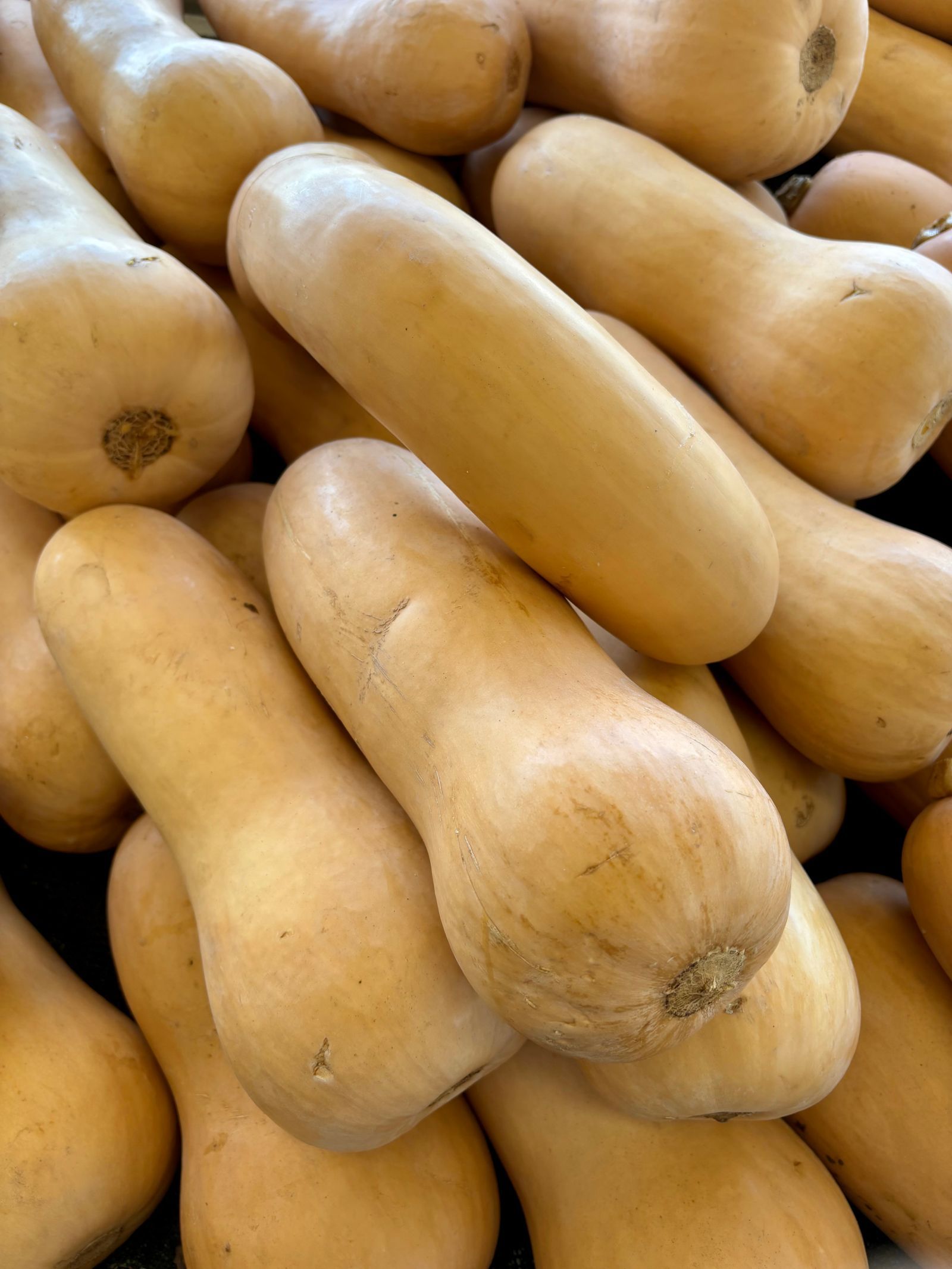
Photo: L. Lum / Pexels
No spacing question in the garden is answered with a wider spread of numbers than butternut squash: 18 inches in one guide, 6 feet in the next, hills a room apart in a third. The sprawl is honest confusion, because butternut is not a plant so much as a territory. One vine runs 10 to 15 feet, roots at its nodes, and covers the ground of a small bedroom, and every source is really answering a different question: how much of that territory do you fence off per plant. This page answers at one named standard, maps the alternatives with their own labels, and counts the footprint before you sow, which is the only moment the decision is free.
Our standard is the University of Georgia Cooperative Extension Circular 963, whose winter squash row names acorn, buttercup, and butternut directly: 36 inches between plants, 60 inches between rows, seed 1 to 2 inches deep, 85 to 120 days to harvest. The Minnesota figures quoted in results match it exactly, which makes Georgia's row the closest thing this sprawling question has to a consensus. Our kabocha squash guide owns the other winter squash at the Illinois hill standard; this page owns butternut, the moschata species, at the Georgia row standard.
Interactive tool
Plant Spacing Planner: The Butternut Patch
Butternut squash is in the crop list below at the University of Georgia Cooperative Extension winter squash spacing of 36 inches between plants in 60 inch rows. Enter your patch size and see the honest footprint of one vine before you sow.
8 tomato plants fit this bed
4 plants per row across 2 rows, on a 24 inch grid. Extension spacing for this crop: 24 in between plants, 48 in between rows.
The grid uses the in-row spacing in both directions, the standard square foot layout for raised beds. In open ground, keep the wider row spacing in the note above so you can walk and weed between rows.
Spacing figures: University of Georgia Cooperative Extension, Circular 963, Vegetable Planting Chart, source.
The Footprint, Counted Honestly
At 36 by 60 inches, the planner allocates 15 square feet per plant, and that number needs its footnote in the open: 15 square feet is the plant's address, not its canopy. A healthy butternut vine spreads over 50 to 80 square feet of ground by late summer, wandering out of its row, across the path, and into the neighboring bed's personal space. The row spacing works because the vines of neighboring plants interleave and share the canopy, and because a gardener trains each vine's main run down its own row rather than letting it wander at random. Plan the patch, not the plant: a single row of four plants at the Georgia spacing wants a strip roughly 12 feet long and a full 8 to 10 feet of width once the vines spread, wherever you decide they are allowed to spread to. Gardeners who plant butternut by the address and are surprised by the canopy lose paths, lawn edges, and occasionally a smaller crop to it every year.
The Alternatives, Labeled as Alternatives
System
Spacing
When it is the right answer
This site's standard, rows
36 in between plants, 60 in between rows
Ground growing in a real patch, vines trained along the row
Trellised
18 to 24 in between plants, rows 4 to 6 ft
Small gardens; fruit supported in slings as it sizes
Bush varieties
About 3 ft in every direction
Compact bred types; read the packet, true bush butternuts exist
Hills, large vining standard
Hills 5 to 6 ft apart, rows 8 to 12 ft
The Cornell pattern for maximum vines in open ground
None of these is the Georgia figure being wrong. They are different systems: the trellis trades ground for air and labor, the bush varieties trade yield per plant for order, and the hill system gives each plant a territory closer to its natural canopy. Choose the system first, then take its spacing whole, rather than mixing a trellis plant spacing with ground rows and wondering why August is a jungle with no path through it.
Sowing and the Long Season
Butternut is a warm season crop with a long fuse: 85 to 120 days from sowing to harvest means most gardens sow after last frost into warm soil, or start seeds indoors two weeks ahead using the derived cucurbit timing on this site's seed chart, transplanting with great care for the roots. Sow seed 1 to 2 inches deep, two or three seeds at each station, and thin to the strongest plant when the first true leaves open; in the hill system, sow four or five per hill and thin to the best two or three plants, the pattern our kabocha guide uses at its Illinois standard. Soil wants to be at least 70 degrees F for eager germination; seed in cold soil rots at exactly the pace the gardener's hopes do. Once running, the vine asks for deep weekly water at the base, a mulch to keep fruit off damp soil, and a board or a pad of straw under each sizing fruit where it rests, which keeps the rind clean and the slugs honest.
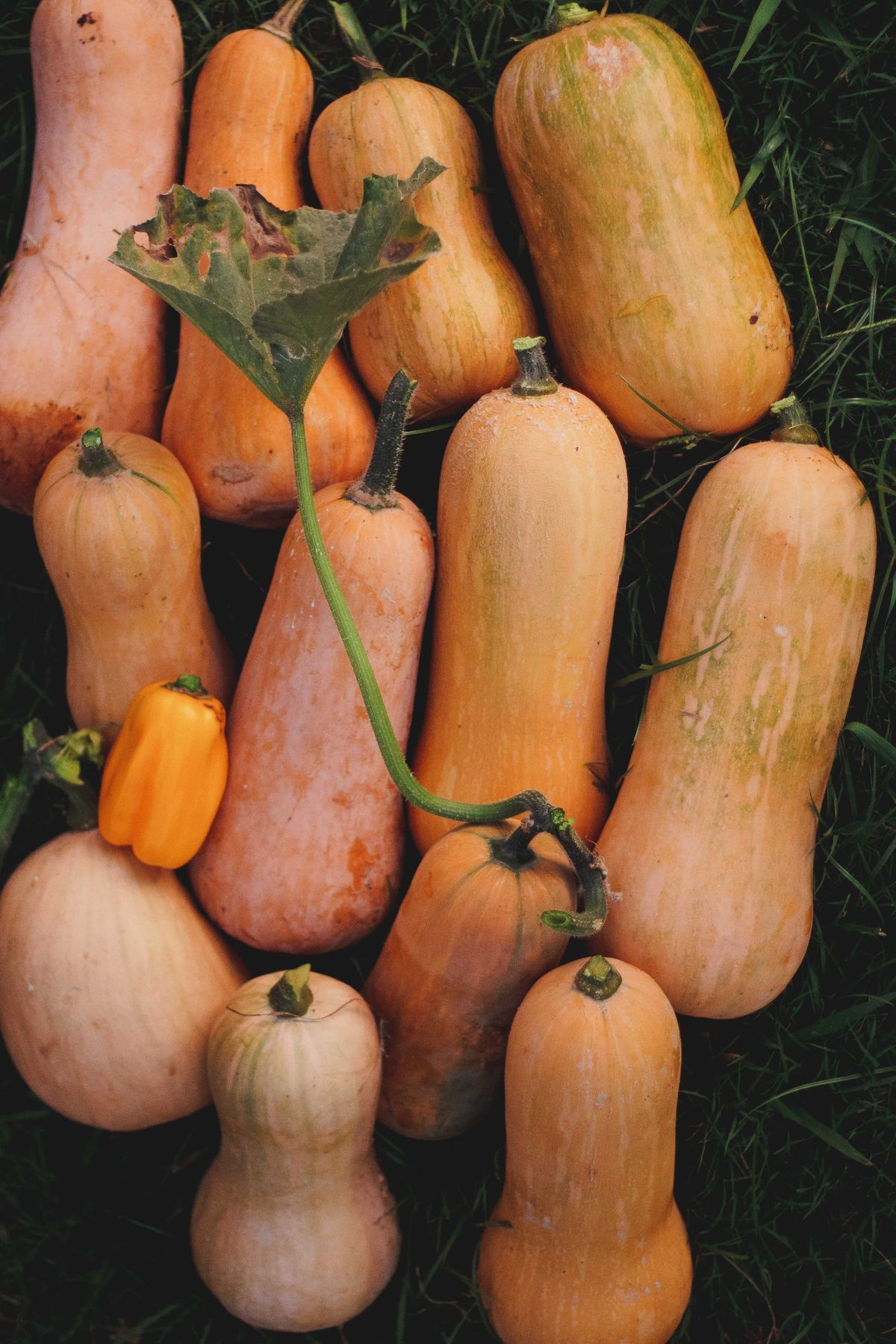
Harvested butternut squash of different sizes piled together
The Vine Borer and the Mildew: The Two Watches
The squash vine borer is butternut's signature enemy, a moth whose larva tunnels the main stem near the base and can wilt a thriving vine in a week. Butternut, as a moschata squash, resists it better than the zucchini family does, one of its quiet virtues, but resistance is not immunity: watch for the sawdust like frass at the stem base in early summer, and know that a vine that has rooted at its nodes, as a ground grown butternut freely does, can survive losing its original base, which is one more argument for the ground system at the Georgia spacing. Powdery mildew arrives on the leaves in late summer almost everywhere; it costs the plant its looks and some of its finish, and the practical defenses are air, spacing that lets the canopy dry, watering at the base, and accepting that a vine which has already sized its fruit can afford its September complexion.
Harvest, Cure, and Storage
Harvest when the rind is hard, matte, and an even tan, when a thumbnail cannot dent it, and when the stem has begun to dry and cork; an under ripe butternut with a glossy, soft rind will not sweeten in storage, because butternut's sweetness is finished on the vine and merely concentrated after it. Cut with an inch or two of stem attached, never carry by the stem, and cure the harvest in a warm, airy place, around 75 to 85 degrees F, for about 10 days, which heals the rind's small wounds and sets the squash up to keep. Stored then in a cool room at about 50 to 55 degrees F, a cured butternut holds for two to three months and often longer, which is the whole reason the plant earns its territory: one vine at the Georgia spacing can return a winter of soup from a patch of ground that asked for one afternoon of sowing in May.
Training the Vine: One Direction Discipline
The Georgia spacing works because the gardener, not the vine, chooses where the canopy goes, and the discipline is weekly and gentle. Once a week through the fast growth of early summer, walk the row and lift each vine's growing tip, redirecting it along the row or into the territory you have assigned it, before it roots down in the wrong place; a tip moved weekly is a suggestion the plant accepts, while a vine moved after a month has rooted at its nodes and tears. Let side shoots fill the row's width but turn back any runner that crosses into a path, a lawn you intend to keep, or a smaller crop's light, because a butternut does not know where its welcome ends and will smother a pepper row in a fortnight of good weather. Where a fruit sets in a bad place, on a path or dangling at a bed edge, move it young onto its straw pad inside the territory, or remove it entirely; a vine carrying a dozen fruit needs none of them in the walkway. This ten minutes a week is the whole management cost of the ground system, and it is what the trellis alternative trades away for slings and ties. Either way, the lesson of the spacing is the same: butternut ground is allocated by the gardener in May, or it is allocated by the vine in August, and the vine is the more generous allocator.
Frequently Asked Questions
How far apart should butternut squash be planted?
At this site's standard, the University of Georgia Extension winter squash figure: 36 inches between plants in rows 60 inches apart, with the understanding that each vine's canopy will spread well beyond its station. Trellised plants go 18 to 24 inches apart with fruit slings; bush varieties about 3 feet in every direction; the wide Cornell hill pattern runs 5 to 6 feet between hills in rows 8 to 12 feet apart.
How much space does one butternut plant really take?
Its station at the standard spacing is 15 square feet, but a healthy vine covers 50 to 80 square feet of ground by late summer. Plan the patch for the canopy: a row of four plants wants a strip about 12 feet long and 8 to 10 feet wide once the vines spread and are trained along the row.
Can I grow butternut squash on a trellis?
Yes, and it is the standard small garden answer: space plants 18 to 24 inches apart in rows 4 to 6 feet apart, train the vines up a strong fence or panel, and support each fruit in a sling of cloth or net as it gains weight, because a full size butternut will tear its own vine down by August if the stem carries it alone.
When should I sow butternut squash?
After last frost, into soil at about 70 degrees F or warmer, counting back from your season: the crop needs 85 to 120 days, so short season gardens start seed indoors about two weeks before transplanting, carefully, or choose it only with a long enough summer. Seed sown in cold soil rots rather than waits.
How do I know when butternut squash is ripe?
The rind is hard and matte tan, resists a thumbnail, and the stem is drying and corky. Glossy, easily dented rind means under ripe, and under ripe butternut never sweetens off the vine. Harvest before hard frost, which damages the rind and shortens storage life.
How long does butternut squash keep?
Cured for about 10 days in warmth, around 75 to 85 degrees F, then stored cool at about 50 to 55 degrees F, a sound butternut keeps two to three months and often more. Check stored fruit monthly and use any with soft spots first; one rotting squash will recruit its neighbors.
Photo credits: L. Lum (Pexels); Carolina Jorquera (Pexels). Photos are served from this site; follow the credit to the library page for the original.