Cabbage Plant Spacing: The Head Size Rule Behind the Conflicting Numbers
By the Windchime Walker editorial team
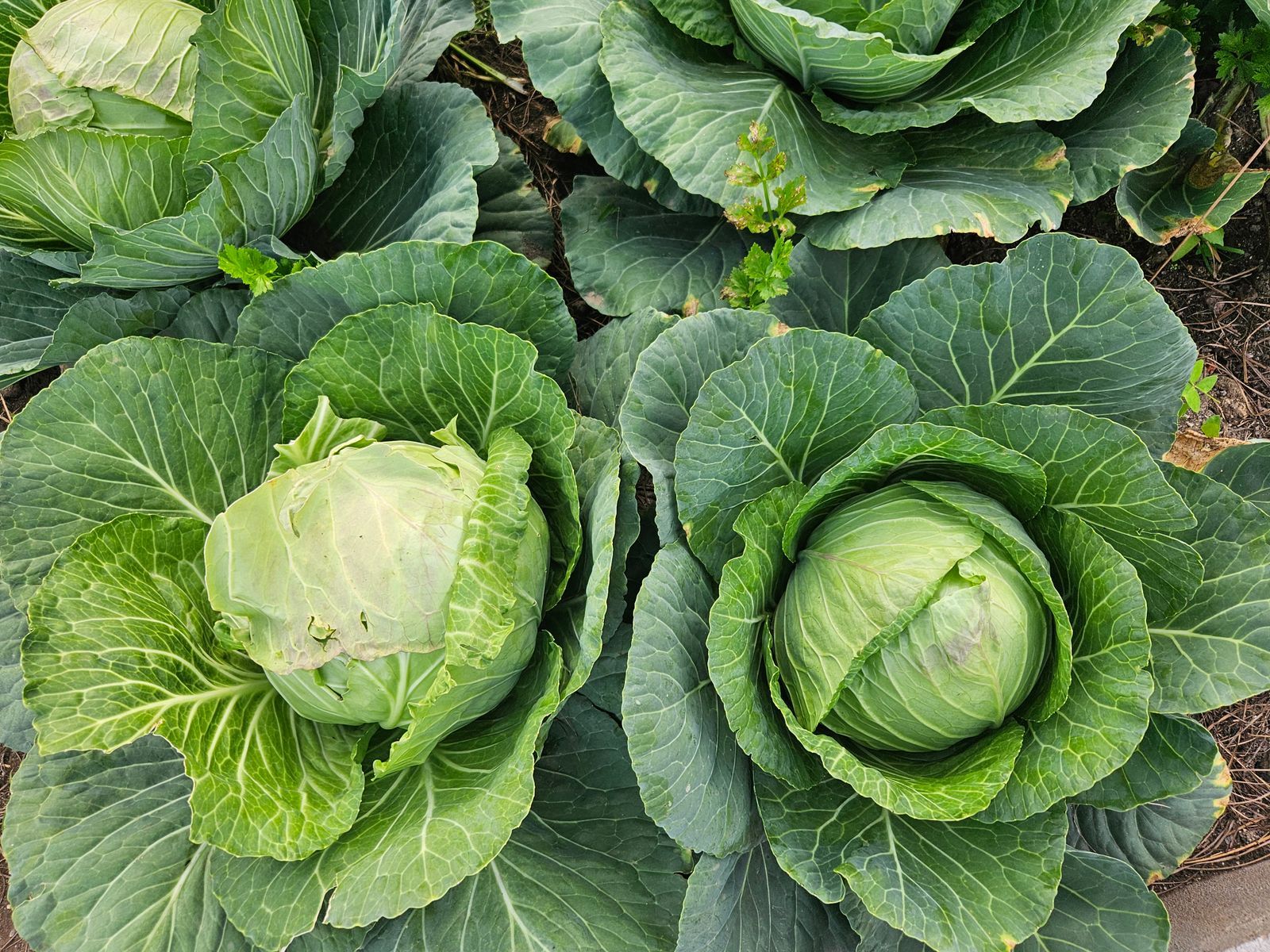
Photo: Zacharie Dusingizimana / Pexels
Cabbage has the most argued spacing in the vegetable garden, and uniquely, everyone in the argument is right. The Georgia chart says 12 inches, the mid Atlantic extensions say 15 to 18, and the difference is not an error to be resolved but a decision to be understood: a cabbage grows to fill the space it is given, so spacing is how you choose the size of the head you harvest. This page keeps this site's cited standard in the planner, names the competing figures and their sources honestly, and teaches the head size rule that lets you pick your spacing on purpose instead of inheriting one by accident.
Our standard is the University of Georgia Cooperative Extension Circular 963: cabbage at 12 inches between plants in rows 36 inches apart, grown from transplants. Our plant spacing chart carries the full vegetable list; this page owns cabbage, its spacing decision, and its cool season calendar.
Interactive tool
Plant Spacing Planner: The Cabbage Bed
Cabbage is in the crop list below at the University of Georgia Cooperative Extension spacing of 12 inches between plants in 36 inch rows. Enter your bed size and count the transplants for the head size you are growing.
8 tomato plants fit this bed
4 plants per row across 2 rows, on a 24 inch grid. Extension spacing for this crop: 24 in between plants, 48 in between rows.
The grid uses the in-row spacing in both directions, the standard square foot layout for raised beds. In open ground, keep the wider row spacing in the note above so you can walk and weed between rows.
Spacing figures: University of Georgia Cooperative Extension, Circular 963, Vegetable Planting Chart, source.
The Figures, All Named, None Averaged
Source
Between plants
Between rows
What it grows
University of Georgia Extension, Circular 963 (this site's standard)
12 in
36 in
Compact to standard heads, densely planted
University of Maryland and Virginia Tech Extension
15 to 18 in
30 to 36 in
Standard to large heads
University of Minnesota Extension
15 to 18 in
24 to 30 in
Standard heads in tighter rows for beds and northern gardens
The planner on this page runs the Georgia figure, 12 by 36. Notice what the table really shows: the sources agree on the range of the decision, 12 to 18 inches, and disagree only on the default. Georgia's 12 inches is the intensive choice, more heads per bed of a modest size. The 15 to 18 inch figures grow the big storage heads. Neither is the correction of the other, and the gardener's job is not to find the true number but to choose the head.
The Head Size Rule
A cabbage plant expands until its outer leaves meet resistance, from a neighbor, a bed edge, or the end of the season, and then it heads. Crowd it and the head forms early and small; space it and the plant builds a bigger frame and a bigger head, if the season is long enough to fill it. So the spacing decision is really three decisions wearing one coat. Early, compact varieties bred for small heads belong at 12 inches, where their nature and the spacing agree. Standard round varieties for fresh eating belong at 12 to 18, chosen by the size your kitchen uses; a household that eats cabbage as slaw and stir fry is better served by more, smaller heads than by a few giants. The big late storage types, the ones bred to keep for months, earn 18 inches and more, because a storage head crowded small is the worst of both worlds. Read your variety's mature size on the packet, and let it, plus your appetite, set the number inside the sources' shared range.
In a raised bed, the in row spacing holds and the rows can close up: bed gardeners commonly run rows at 18 to 24 inches, the Minnesota pattern, because the soil is worked across the whole bed and nobody walks between the rows. Keep the plant spacing honest and the bed yields heads in a grid that looks impossibly lush by midsummer and is, in fact, the plan working.
The Season: A 10 Week Start and a Cool Head
Cabbage timing on this site comes from the seed chart's North Dakota State figures: sow indoors 10 weeks before last frost, and set out 3 weeks before last frost, because cabbage is hardy and wants to head up in cool weather. That early start surprises beginners, who meet cabbage transplants in stores in spring and assume a quick crop; the plant they are buying began its life in the depths of winter. Harden the transplants for a week, set them slightly deeper than they grew in the pot, up to the first leaves, which firms the stem against the top heavy weeks ahead, and water them in well. A fall crop counts the other way: sow or set out so the heads mature into cooling weather, roughly 10 to 12 weeks before first frost for most varieties, because a cabbage that heads in the cool sweetens, and one that heads in August heat sulks, splits, and feeds every cabbage worm in the county in the meantime.
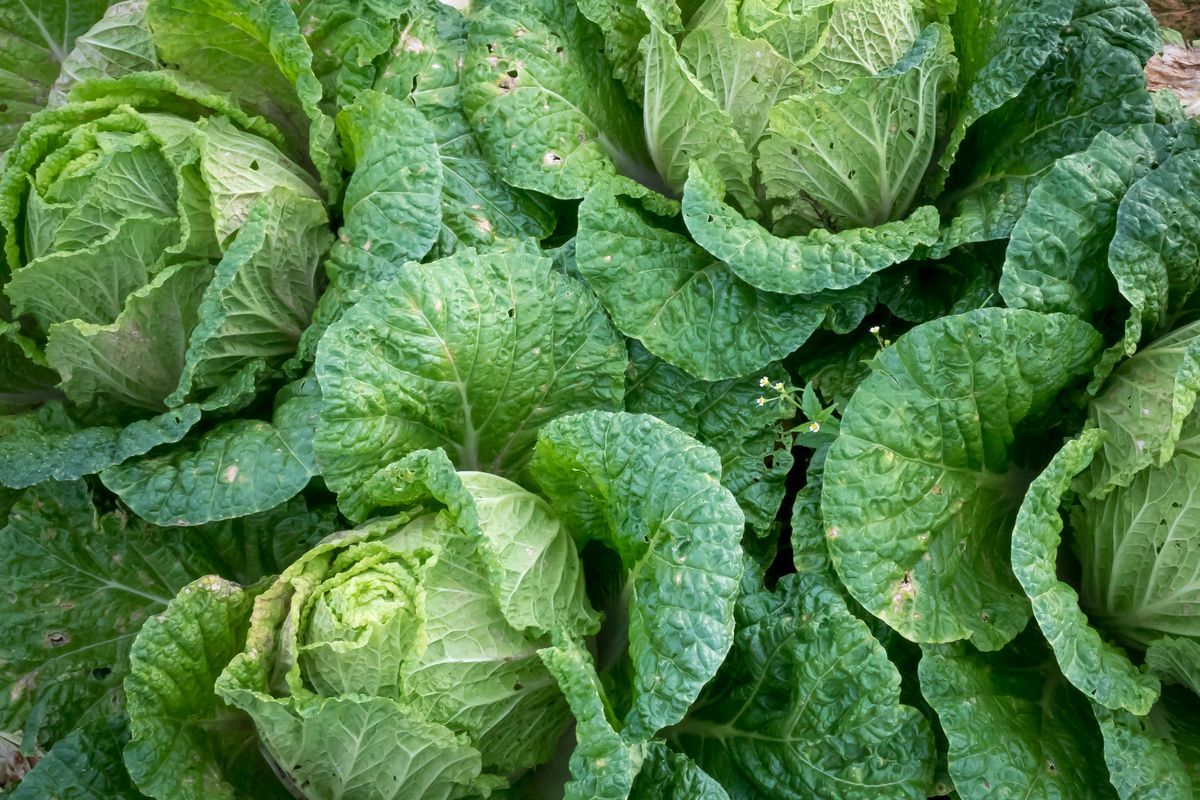
Leafy green cabbage plants growing in an outdoor garden
Growing On: Feed, Water, and the Two Enemies
Cabbage is a hungry, thirsty crop growing a dense ball of leaves: work compost in before planting, side dress with nitrogen when the plants are half grown, and keep water even at about an inch a week. Uneven water near maturity is the splitting trigger: a head that has grown slowly through a dry spell and then drinks deeply after rain can split overnight, and the fix is prevention, steady moisture, plus the harvest discipline of taking a ripe head promptly rather than admiring it for a fortnight.
The two enemies are the cabbage worm, the green caterpillar of the white butterfly, and the weather at the edges. The worm's honest organic answer is the bed cover: light row cover from transplant day keeps the butterfly from laying, and our garden bed cover guide runs that system in full. Hand picking works in a small bed if it is daily. Heat is the other enemy, and it is managed by the calendar rather than by effort: spring crops race to head before summer, fall crops are timed to head after it, and a cabbage asked to head through the hottest month is a crop planted on the wrong date, not tended with the wrong technique.
Harvest and the Second Crop
Cut the head when it is firm and solid to a squeeze, with a knife at the base, leaving the outer leaves and the stump in the ground. A spring stump, left and watered, often sprouts a loose cluster of mini heads, a small second harvest gardeners call cabbage sprouts, which is free food from a plant you already paid for. For storage types, heads keep for weeks in the cold and months in a root cellar setup, hung or wrapped, which is the entire argument for growing the big late varieties at their wide spacing: the garden keeps feeding the kitchen long after the bed is frozen.
Varieties by Spacing: The Packet Decides
Cabbage type
Character
Spacing to plant
Early compact types
Small heads, fast, bred for tight gardens
12 in, the Georgia standard, in 36 in rows or a bed grid
Standard round green
The all purpose fresh eating head
12 to 18 in by the size your kitchen uses
Savoy types
Crinkled leaves, wide rosettes
15 to 18 in; the rosette is broader than the head suggests
Red types
Dense, slightly smaller heads, slow
12 to 15 in
Late storage types
The giants, bred to keep for months
18 in and beyond; crowding them wastes their breeding
The table is the head size rule wearing its working clothes: the variety's mature size, printed on the packet, sets the number inside the sources' agreed range. What the table also shows is why the published charts could not agree: a chart written around early compact types and a chart written around storage types are both accurate field notes on different crops wearing one name. Your packet knows which cabbage you are growing. Let it arbitrate, and cite Georgia, Maryland, or Minnesota as the standard your choice happens to match.
The Succession and the Second Sowing
One sowing of cabbage is a harvest; two sowings are a supply. The spring crop, started indoors on the 10 week count, heads in early summer and is eaten fresh. The fall crop, sown in early summer and set out to head into the cooling weather, is the keeper: sweeter, slower to split, less worm ridden as the butterfly pressure fades, and the one that fills the cold storage. Between them, a small midsummer sowing of an early compact type at the tight Georgia spacing fills the gap for gardens with the season to spare. Each crop is spaced by the same rule, because the rule was never about the calendar. It is about the head you intend to cut, and a gardener who has chosen the head has already chosen the spacing.
Frequently Asked Questions
How far apart should cabbage be planted?
At this site's standard, the University of Georgia Extension figure: 12 inches between plants in rows 36 inches apart. Maryland and Virginia Tech publish 15 to 18 inches, and Minnesota 15 to 18 in tighter rows. The right choice inside that range is the head size you want: closer for compact heads, wider for large storage heads.
Why do cabbage spacing recommendations differ so much?
Because spacing chooses head size, and the sources are writing for different default harvests. A cabbage fills the space it is given, so a chart aimed at intensive beds of modest heads says 12 inches and a chart aimed at big storage heads says 18. Neither is wrong; they are answering slightly different questions.
When do I start cabbage seeds?
Sow indoors 10 weeks before your last spring frost and set the transplants out 3 weeks before it, per the North Dakota State figures on this site's seed chart. Cabbage is hardy and wants to grow in cool weather. For a fall crop, time sowing so heads mature about 10 to 12 weeks later, into the cooling fall.
Can cabbage grow in a raised bed?
Yes, and beds suit it: loose, rich, evenly moist soil is cabbage's whole wish list. Keep the plant spacing at 12 to 18 inches by your head size goal and close the rows to 18 to 24 inches, since nobody walks between them. Expect the bed to look very full by midsummer; that is the crop, not crowding.
Why did my cabbage head split?
Almost always a water surge at maturity: a dry spell followed by heavy rain or deep watering makes the inner head grow faster than the outer leaves can stretch. Prevent it with even watering, mulch, and harvesting heads as soon as they are firm rather than leaving them to size up one more week.
How do I keep cabbage worms off without spraying?
Cover the bed with light row cover from transplant day so the white butterfly cannot lay eggs on the leaves; it is the most reliable organic control and the reason covers earn their storage space. In a small uncovered bed, daily hand picking works, and a biological spray based on Bt is the standard backup, applied where the young caterpillars feed.
Photo credits: Zacharie Dusingizimana (Pexels); Quang Nguyen Vinh (Pexels). Photos are served from this site; follow the credit to the library page for the original.