Eggplant Plant Spacing: 24 Inches in 36 Inch Rows, and the Whole Warm Season Around It
By the Windchime Walker editorial team
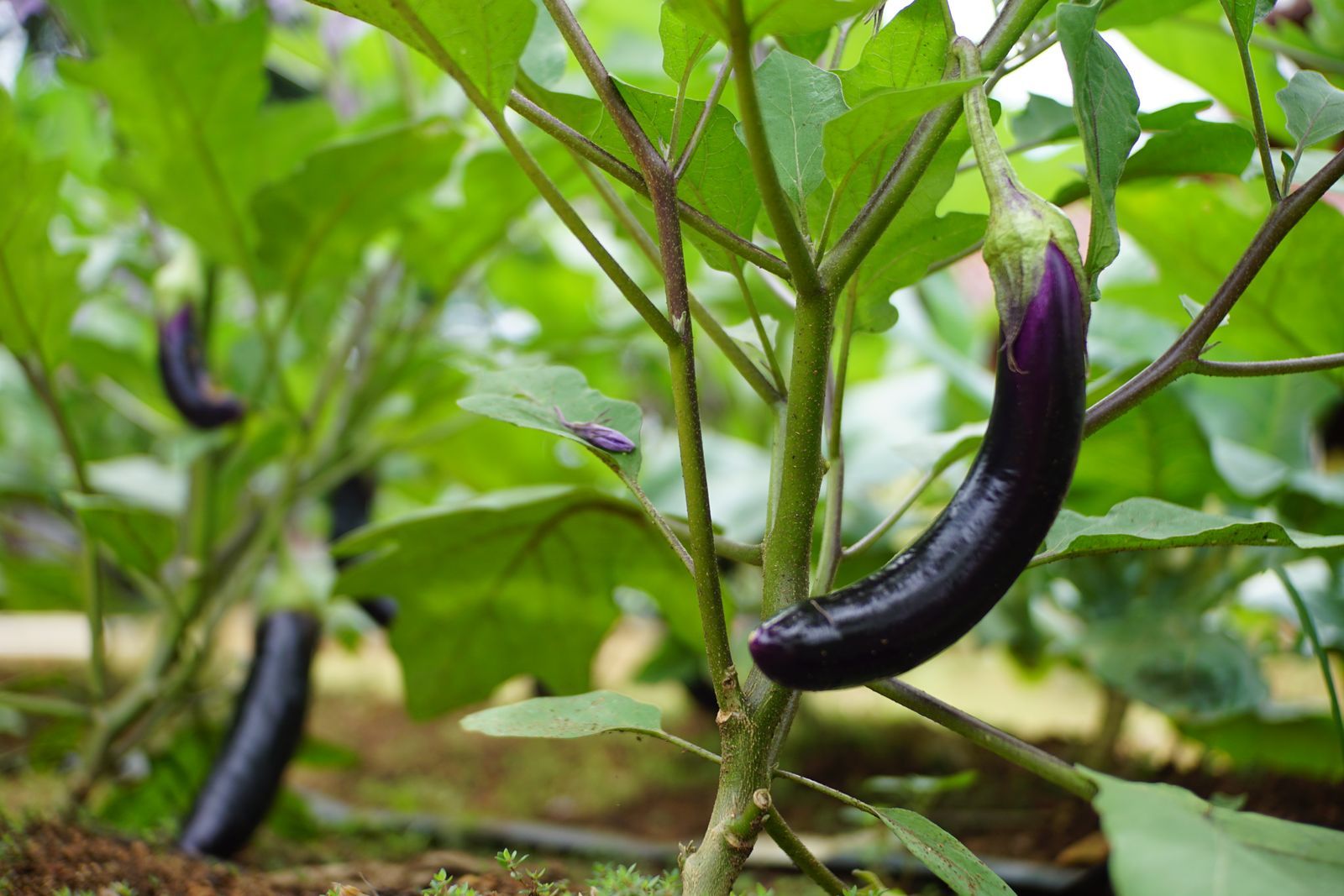
Photo: Agung Sutrisno / Pexels
Eggplant spacing is where the internet's disagreement is widest in this batch: 18 inches, 18 to 24, 24, 24 to 30, each published with total confidence. The spread has a cause, and it is not carelessness. Eggplant is a bush that keeps growing all season, so the right spacing depends on how large your variety gets and how long your season lets it grow, and sources writing for different gardens answer differently. This page plants its flag at one named standard, tells you the other standard by name, and gives you the whole warm season around the number, because eggplant spacing is really a season long commitment of garden space to the hungriest, warmest loving plant in the bed.
Our standard is the University of Georgia Cooperative Extension Circular 963, read in full for this batch: eggplant at 24 inches between plants in rows 36 inches apart, grown from transplants. Our plant spacing chart owns the whole vegetable list at this same standard; this page owns eggplant, its full season, and its one honest disagreement.
Interactive tool
Plant Spacing Planner: The Eggplant Row
Eggplant is in the crop list below at the University of Georgia Cooperative Extension spacing of 24 inches between plants in 36 inch rows. Enter your bed or row size and count your transplants before you buy them.
8 tomato plants fit this bed
4 plants per row across 2 rows, on a 24 inch grid. Extension spacing for this crop: 24 in between plants, 48 in between rows.
The grid uses the in-row spacing in both directions, the standard square foot layout for raised beds. In open ground, keep the wider row spacing in the note above so you can walk and weed between rows.
Spacing figures: University of Georgia Cooperative Extension, Circular 963, Vegetable Planting Chart, source.
The Spacing, and the Flagged Conflict
Figure
Between plants
Between rows
Source
This site's standard
24 in
36 in
University of Georgia Extension, Circular 963
The tighter figure
18 in
30 to 36 in
University of Minnesota Extension, as quoted across grow guides
We flag the difference rather than average it, because 21 inches is nobody's recommendation. The planner on this page runs the Georgia figure, 24 by 36, and the honest way to choose is by plant size: the Georgia spacing suits the big, long season bushes, standard globe and Italian types in a warm climate with months to spread. The Minnesota 18 inch figure suits compact varieties and short northern seasons, where the plant simply never reaches Georgia size before frost ends the argument. Match the spacing to the bush your variety becomes in your season, and cite whichever standard you follow with a clear conscience. What neither source permits is crowding below their figures: an eggplant shaded by its neighbor fruits late, small, and bitter, and hosts every flea beetle in the county in its stressed lower leaves.
In a raised bed worked as a grid, keep the 24 inch in row spacing and let the rows close to the bed's width; a 4 foot bed takes two rows comfortably, and the plants will meet over the middle by August, which is the plan working, not failing.
The Season Starts Indoors, 8 Weeks Early
Eggplant is the slowest common start in the garden. Sow indoors about 8 weeks before last frost, the North Dakota State timing this site's seed chart carries for its warm season kin, at 1/4 inch deep, and give the seed what it demands: warmth. Germination wants soil at 75 to 85 degrees F, and at room temperature the same seed can sit for three weeks and emerge sulking, if at all. A heat mat or the top of a warm appliance is not fussiness with this crop; it is the difference between seedlings and a story. Grow the starts on bright and warm, and hold them until the garden is truly warm, because the transplant rule below matters more than the calendar.
Setting Out: The Warm Night Rule
Eggplant goes outside on a temperature rule, not a date: when nights hold reliably above about 50 degrees F and the soil has warmed, which in most gardens is one to two weeks after the last frost, alongside the peppers and after the tomatoes have already gone in. A plant set into cold soil and cold nights does not die; it stalls, purple tinged and motionless, sometimes for weeks, and a later planted seedling in warm soil overtakes it. Harden the starts off for a week, set them at the same depth they grew in the pot, water them in deeply, and put a stake or cage in at planting, because a three foot bush loaded with fruit in August will not accept one politely then.
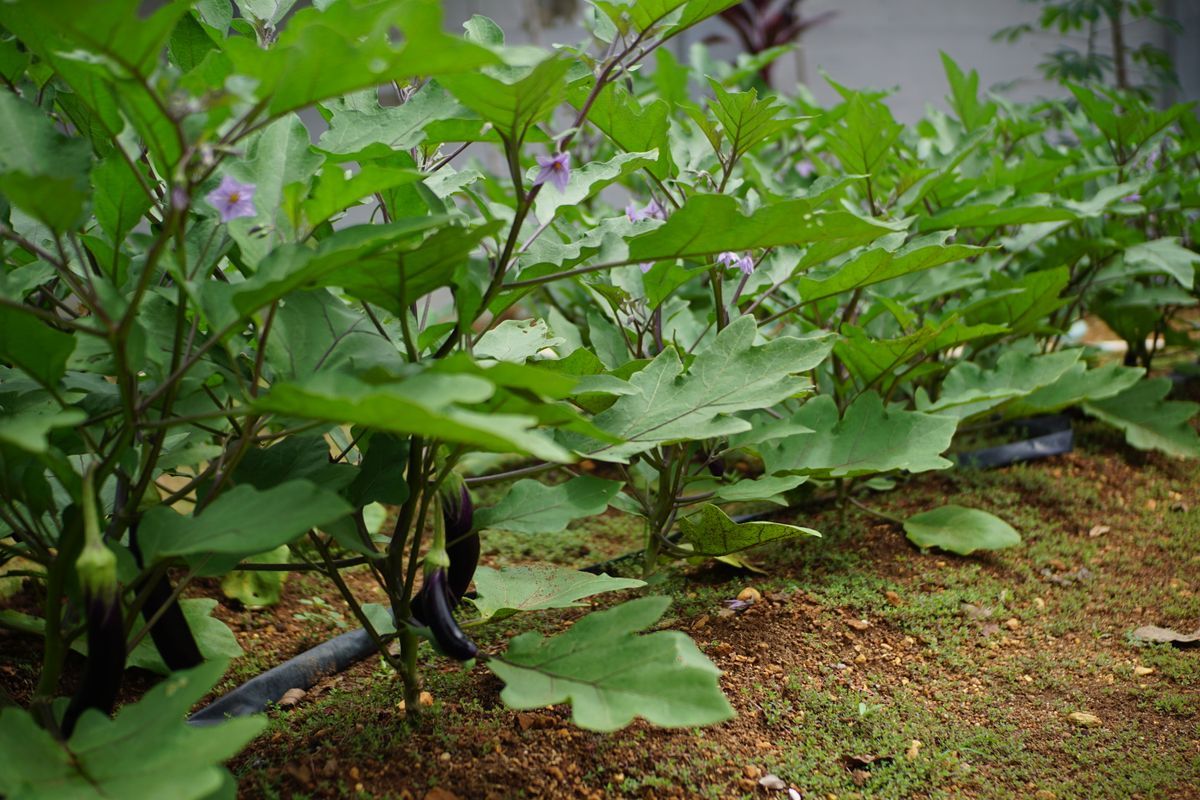
Eggplant plants with broad green leaves growing in a garden row
Feeding, Water, and the Flea Beetle
Eggplant is a heavy feeder wearing a long season: work compost into the bed before planting, and side dress with a balanced feed when the first fruits set, then again a month later. Water deeply and evenly at the base, about an inch a week and more in heat waves; fruit that grows through drought comes out bitter and seedy, and blossom drop in a heat wave is the plant rationing what it cannot supply. Mulch once the soil is warm, never before, since cold soil under early mulch delays the very warmth this crop is waiting for.
The pest of the first month is the flea beetle, which peppers young leaves with tiny holes and can skeletonize a small transplant. The defense is the garden bed cover: light row cover over hoops from transplant day until the plants are large and flowering, by which point they outgrow the damage. Plants that survive their first month flea beetled but growing usually do; plants defoliated in their first week often do not, which is why the cover goes on at planting, not at the first sign of holes.
The Harvest: Clip, Never Pull
Georgia's chart allows 75 to 90 days to harvest, and the first fruit is ready when its skin is glossy, firm, and springs back from a thumbnail's gentle pressure. Harvest by clipping the stem with pruners or scissors, never by pulling or twisting, which tears the plant's branches and wounds the stem where disease enters. A fruit left too long turns dull, then bitter, and its ripening seeds tell the plant to stop, so picking young and often is also a yield strategy: a plant picked twice a week keeps setting fruit, while a plant carrying one giant seedy trophy retires. In a warm season the 24 inch spacing pays its rent here, in a bush you can walk around, pick clean, and keep picking until frost.
Varieties by Size: Matching the Plant to the Spacing
The Georgia figure assumes the standard bush, and the variety on your seed packet tells you whether to take it whole or reach for the flagged Minnesota alternative. Use this table as the translation.
Eggplant type
Mature size
Spacing to use
Standard globe (the supermarket shape)
Large, 3 to 4 ft bushes
Georgia standard, 24 in by 36 in
Italian and oval types
Large, similar to globe
Georgia standard, 24 in by 36 in
Asian long types
Tall and narrower, heavy bearing
18 to 24 in in 36 in rows; the trellis or stake earns its keep
Compact and container bred types
18 to 24 in plants
The Minnesota figure, 18 in, or one plant per large pot
Small fruited and ornamental types
Medium, sprawling
18 to 24 in; give the sprawl a direction
The principle under the table is the one this page opened with: spacing is a commitment of territory to a bush whose final size is printed, in code, in the variety description. Read the packet's height and spread before you read any chart, ours included, and let a compact variety in a short season take the tighter figure without guilt, while a globe type in a long hot summer takes every inch Georgia offers and then asks about the path.
A Note on Rotation
Eggplant sits in the nightshade family with tomatoes, peppers, and potatoes, and it shares their soil borne diseases, verticillium wilt above all. Do not follow eggplant with its cousins in the same ground for at least three years, and do not plant it where a wilted tomato died last season, however convenient the bed. The spacing decision and the rotation decision are the same decision seen from two ends: both are about giving a long season, disease prone bush enough room, in space this year and in time across years, to finish its season healthy.
Frequently Asked Questions
How far apart should eggplants be planted?
At this site's standard, the University of Georgia Cooperative Extension figure: 24 inches between plants in rows 36 inches apart. The University of Minnesota figure of 18 inches between plants is the flagged alternative, suited to compact varieties and short seasons. Choose by the size your variety reaches in your climate, and do not split the difference.
Can I grow eggplant in a raised bed or container?
Yes. In a raised bed, keep the 24 inch spacing and run two rows in a 4 foot bed. In a container, one plant per pot of at least 5 gallons, with the compact varieties doing best, and expect to water daily in summer heat; container eggplants fruit well when fed steadily.
Why are my eggplant seedlings so slow?
Almost always temperature. Eggplant seed germinates slowly below 75 degrees F and the seedlings grow slowly in a cool room even after they emerge. Warmth at sowing, 75 to 85 degrees F soil, and a warm, bright growing spot fix it; patience fixes the rest, because this crop's 8 week indoor start exists precisely because it is slow.
When should I transplant eggplant outside?
When nights hold above about 50 degrees F and the soil is warm, typically one to two weeks after last frost. Eggplant set out into cold nights stalls for weeks and is overtaken by later plants set into warmth, so waiting is the faster strategy with this crop.
Why are my eggplants bitter?
Heat, drought, and age, in some combination: fruit grown through water stress or left on the plant past its glossy prime turns bitter and seedy. Water evenly, pick young and often by clipping, and a variety suited to your climate removes most of the problem.
Do eggplants need support?
Most full size plants do by midsummer: a loaded bush flops, and fruit resting on soil rots and hides pests. A stake or a tomato cage installed at planting, before the roots spread, supports the plant without the root damage of staking a grown bush.
Photo credits: Agung Sutrisno (Pexels); Agung Sutrisno (Pexels). Photos are served from this site; follow the credit to the library page for the original.