Collard Greens Plant Spacing: Room for the Leaf by Leaf Harvest
By the Windchime Walker editorial team
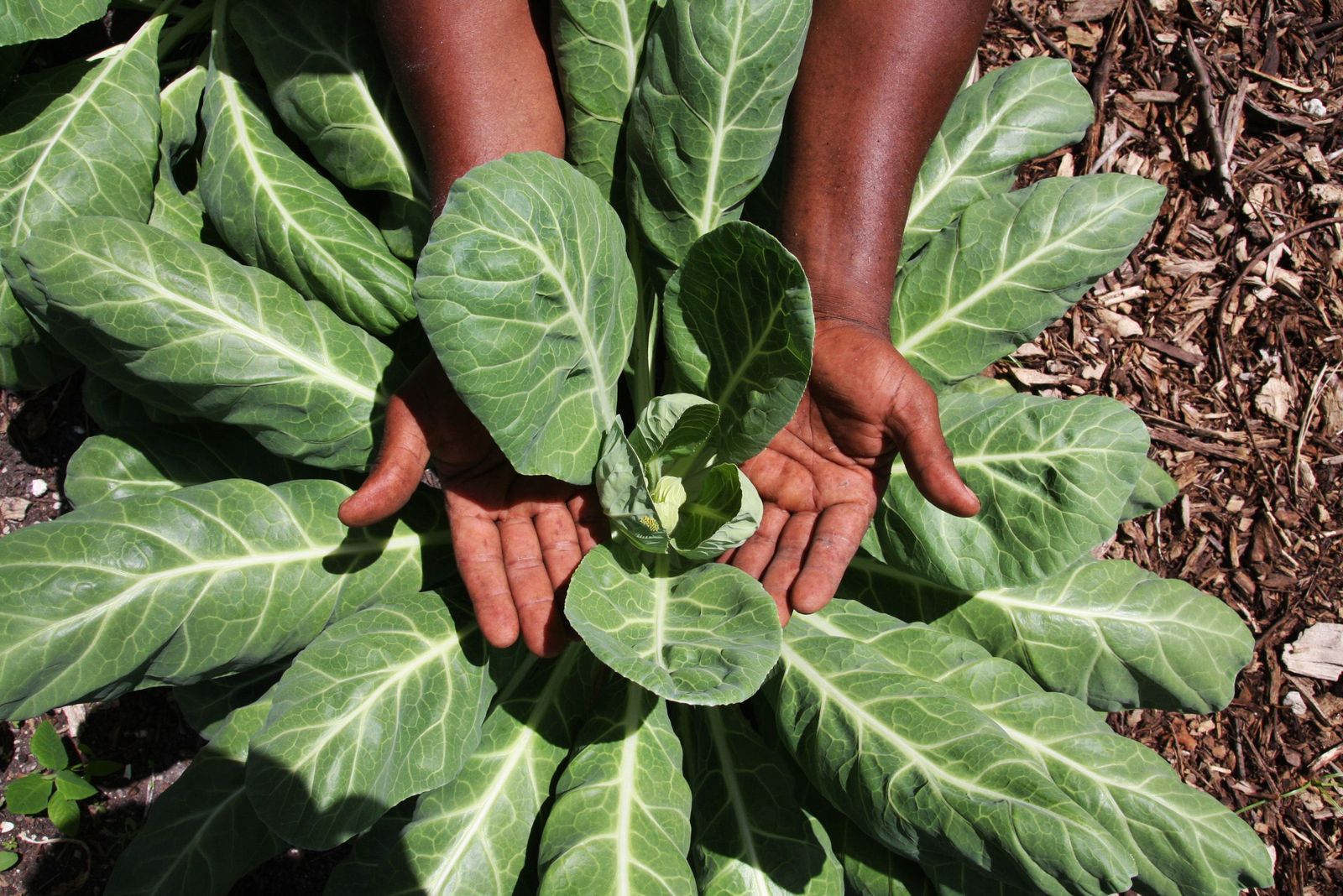
Photo: Roberto Montoya / Pexels
Collards are the longest harvest in the greens patch: one planting, picked leaf by leaf, can produce from early summer past the first frosts, and the plant gets big doing it. That is why the spacing question sprawls from 6 inches to 2 feet across the sources, and why the answer has to be built from the harvest, not quoted. The anchor for this page is the University of Georgia Cooperative Extension's Circular 963 vegetable planting chart, read in full for this article: collards at 8 to 16 inches between plants, in rows 36 inches apart, seed at half an ounce per 100 feet of row planted half an inch deep, with 55 to 85 days to harvest, and cultivars Blue Max, Georgia Southern, and Hevi-Crop named on the chart. NC State Extension's guidance supplies the logic that makes the range intelligible: spacing follows harvest size, with young plants picked at 2 to 4 inches, half grown at 10 to 15 inches, and full grown plants at 15 to 18 inches. Clemson HGIC's in row range of 6 to 18 inches and UF/IFAS's 12 to 24 inches with rows at 24 to 36 inches are the same system seen from other states: the earlier and smaller you pick, the tighter you may plant.
Our plant spacing chart owns the multi crop table. This page owns the collard row.
Interactive tool
Plant Spacing Planner: The Collard Row
Collard greens are in the crop list below at the University of Georgia Cooperative Extension Circular 963 spacing of 12 inches between plants, the middle of its 8 to 16 inch range, in rows 36 inches apart. Enter your bed size and count your plants before you set them out.
8 tomato plants fit this bed
4 plants per row across 2 rows, on a 24 inch grid. Extension spacing for this crop: 24 in between plants, 48 in between rows.
The grid uses the in-row spacing in both directions, the standard square foot layout for raised beds. In open ground, keep the wider row spacing in the note above so you can walk and weed between rows.
Spacing figures: University of Georgia Cooperative Extension, Circular 963, Vegetable Planting Chart, source.
The Planner Standard: 12 Inches in 36 Inch Rows
The planner above carries collard greens at 12 inches between plants, the middle of the Circular 963 range of 8 to 16 inches, in rows 36 inches apart as the chart specifies. One conflict has to be flagged honestly: a University of Georgia home gardening summary quotes collard rows at 30 inches, while the Circular 963 chart itself says 36. This page follows the chart, because the chart is the university's planting reference of record and because the wider row suits the plant collards become: a mature collard is a waist high fountain of large leaves, and you will walk that row with a harvest basket for months. In a raised bed where no one walks between rows, the row figure converts to a grid: run the same 12 inch plant spacing in both directions and the bed math in the planner still holds, with the understanding that a full grown fall plant will crowd a 12 inch grid by design, which the harvest ladder below manages.
The Harvest Size Ladder
Spacing is a decision about which collard you are growing, and there are three. The young plant harvest: sow or set plants tight, as close as the NC State 2 to 4 inch figure for whole young plants, and pull entire plants small for a quick mess of greens; this is really a thinning harvest and belongs to a densely sown spring row. The half grown harvest: plants at 10 to 15 inches, picked whole or cut hard, the market gardener's bunching size, giving a fast turnover in a short season. The full grown harvest: plants at 15 to 18 inches, or the chart's 16 inch top end, grown as permanent fixtures and picked leaf by leaf from the bottom up for months; the plant grows upward like a small palm as you strip it, and a fall plant at this spacing can stand 3 feet tall with a trunk. Most home growers want the third plant and plant for the first, which is why home collard rows so often disappoint: set your final spacing for the harvest you actually intend, and if you want both, sow the row dense in spring, thin it as a young plant harvest, and let the survivors stand at final spacing into fall.
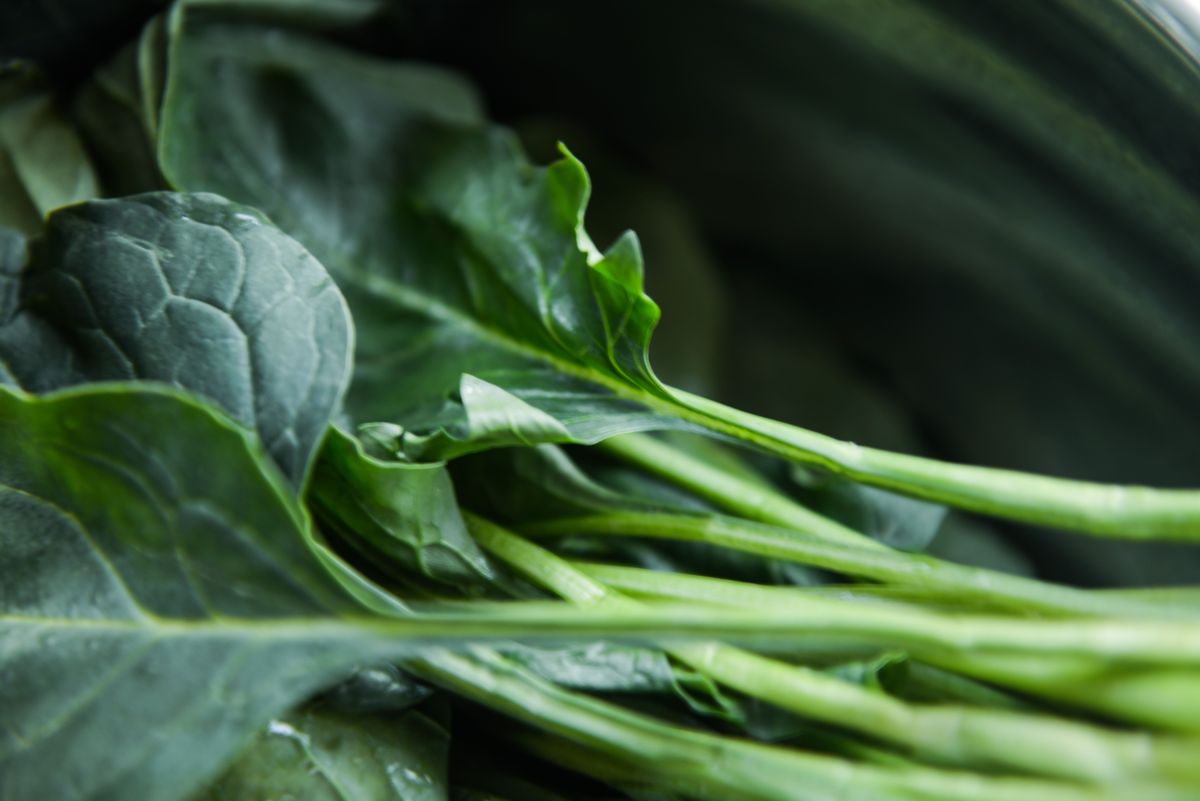
Fresh organic collard greens in close up
Seed, Depth, and the Transplant Option
Circular 963 gives the sowing figures: half an inch deep, half an ounce of seed per 100 feet of row. Collards are usually direct sown for spring and fall crops, but they transplant as willingly as their cabbage cousins, and transplants buy two advantages worth having: you set the final spacing exactly, plant by plant, with no thinning waste, and you can start fall plants in a shaded nursery bed during summer heat, when a direct sown row would struggle to germinate in hot soil. Set transplants at the depth they grew in the flat, water them in well, and space them on the ladder's final rung from day one. For direct sowing, sow a few seeds per station at your chosen final spacing and thin to the strongest seedling, which spends a little seed to buy the precision of the transplant method without the nursery work.
The Fall Crop: Where Wide Spacing Pays
If collards have a season, it is fall. The plant tolerates heat well enough to grow through summer, but its flavor transforms in cooling weather, and a light frost sweetens the leaves noticeably, which is why southern growers time the main crop to mature into autumn. The fall crop is also the long crop: plants set out in late summer pick from early fall until hard freezes finally stop them, and in mild winters they can stand for spring regrowth. That duration is the argument for the wide end of the range. A plant that will be harvested for 4 or 5 months should get its full 15 to 18 inches and the air that comes with it, because crowded fall collards in damp weather invite the fungal leaf spots that end rows early. Feed the long crop once mid season with a nitrogen side dressing, keep it watered through dry spells at about an inch a week, and mulch the row to hold moisture and keep soil off the lower leaves you will be eating.
Walking the Row: Harvest Mechanics
The leaf by leaf harvest is a technique, and spacing serves it. Pick the lowest, largest leaves first, snapping or cutting them at the stem, and work upward as the plant grows, always leaving the central growing point and a crown of younger leaves untouched. A plant harvested this way produces continuously, and a row at full spacing lets you walk both sides and reach every plant without crushing its neighbor. Never strip more than about a third of a plant's leaves at one picking, and harvest in the morning when leaves are turgid and sweetest. Plants that outgrow their welcome in spring, bolting as days lengthen, come out whole; the row that replaces them in late summer is the fall crop, sown on the same spacing doctrine. Sow by the chart, space for the harvest you intend, and give the fall plants their full room: that is the collard system.
Frequently Asked Questions
How far apart should I plant collard greens?
For the standard leaf by leaf harvest, 12 inches between plants in rows 36 inches apart is this page's working standard, the middle of the University of Georgia Circular 963 range of 8 to 16 inches. Go tighter, 8 to 10 inches, for plants you will pick half grown or pull young, and wider, 15 to 18 inches, for full grown plants you intend to harvest for months into fall, following the harvest size ladder in NC State Extension's guidance. In raised beds, the same spacing works as a grid in both directions.
How deep should collard seed be planted?
Half an inch deep, per the Circular 963 chart, at half an ounce of seed per 100 feet of row. Collard seed is a brassica seed, small and vigorous, and it germinates in about 4 to 10 days in warm soil. In hot late summer soil, the bigger risk is the surface drying out before emergence; a light mulch or shade cloth over the row until seedlings appear, plus steady watering, solves it. Thin direct sown rows to your final spacing while the plants are small, and eat the thinnings.
Why do some sources give collard rows at 30 inches and others at 36?
Because both figures circulate from the University of Georgia itself: a home gardening summary quotes 30 inch rows, while the Circular 963 vegetable planting chart specifies 36 inches. This page follows the chart, the planting reference of record, and notes the difference rather than splitting it. In practice the row width matters less than the in row spacing: it sets how comfortably you can walk and harvest the row, so gardeners in beds can compress rows freely while keeping plants at their chosen in row distance.
Can I grow collards in a raised bed or container?
Yes to both, with spacing adjusted to the space. In a raised bed, run a 12 inch grid, or 16 inches for plants you will carry into fall, and expect the plants to fill it completely by season's end. In containers, one plant per pot of at least 5 gallons, because a full grown collard is a large plant with a thirst to match; keep it watered evenly and feed monthly. Container and bed plants follow the same leaf by leaf harvest, bottom leaves first, growing point untouched.
When should I plant collards for a fall harvest?
Count back from your first fall frost using the chart's 55 to 85 days to harvest, and sow or set transplants so the plants size up as the weather cools; for most gardens that means sowing in mid to late summer. Fall is the premium season for this crop: cooling nights and a light frost sweeten the leaves, and plants at full spacing will pick from early fall until hard freezes stop them. A spring sowing works too and gives an early summer crop, but plan to pull those plants when they bolt and replace them with the fall row.
Photo credits: Roberto Montoya (Pexels); Cats Coming (Pexels). Photos are served from this site; follow the credit to the library page for the original.