Kohlrabi Plant Spacing: Four Inches, a Three Inch Harvest Window, and the Giant Exception
By the Windchime Walker editorial team
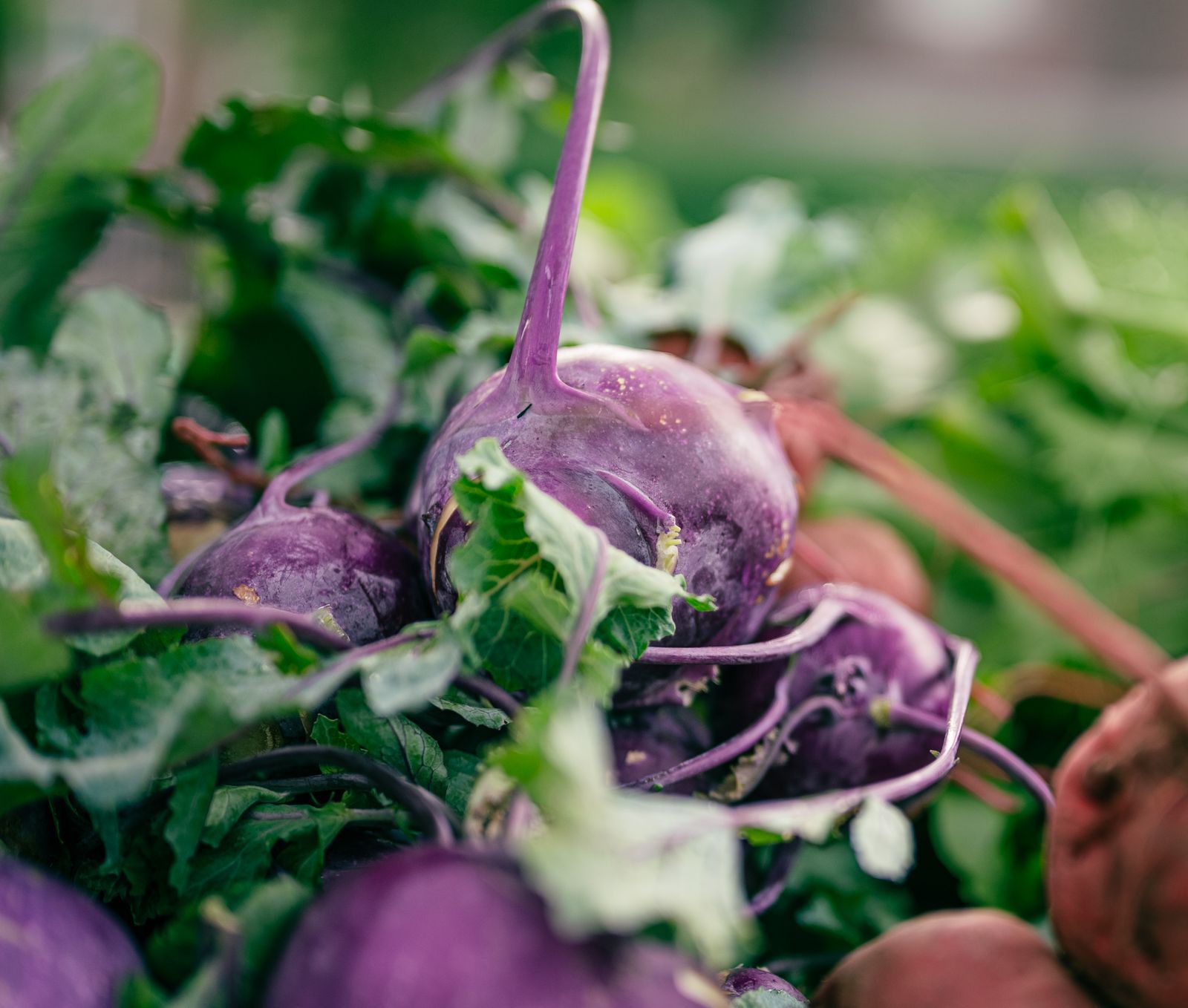
Photo: Chris F / Pexels
Kohlrabi spacing sprawls across the guides, 4 inches here, 9 to 12 there, because the crop is forgiving enough to grow at all of them and good at only some. This site's standard comes from the University of Minnesota Extension's kohlrabi guidance, read in full for this page: sow seed 1 inch apart, thin seedlings to 4 inches between plants, set transplants 4 inches apart, and thin giant types to 12 inches. Minnesota gives no row spacing, so the rows on this page come from the Virginia Cooperative Extension cole crops table, which puts kohlrabi in rows 15 to 18 inches apart; the planner uses 18. What disciplines the choice is the harvest: kohlrabi is picked when the swollen stem reaches 2 to 3 inches across, and past that window it turns tough, woody, and bitter. Spacing a 35 to 45 day crop with a three inch harvest window is a decision about speed and uniformity, not about how much room the plant wants.
Our plant spacing chart owns the multi crop table. This page owns the kohlrabi row.
Interactive tool
Plant Spacing Planner: The Kohlrabi Row
Kohlrabi is in the crop list below at the University of Minnesota Extension spacing of 4 inches between plants, in rows 18 inches apart per the Virginia Cooperative Extension cole crops table. Enter your bed size and plan for a 2 to 3 inch harvest window.
8 tomato plants fit this bed
4 plants per row across 2 rows, on a 24 inch grid. Extension spacing for this crop: 24 in between plants, 48 in between rows.
The grid uses the in-row spacing in both directions, the standard square foot layout for raised beds. In open ground, keep the wider row spacing in the note above so you can walk and weed between rows.
Spacing figures: University of Georgia Cooperative Extension, Circular 963, Vegetable Planting Chart, source.
The Standard Layout, and the Sowing That Produces It
Direct seed in mid April to early May for the spring crop and again in July for fall, per Minnesota, at 1/4 to 1/2 inch deep. Sow at 1 inch spacing and thin to 4 inches as soon as the seedlings are large enough to handle, because kohlrabi grows fast and a crowded row falls behind in days, not weeks. Transplants, started indoors for an earlier start, go out at the same 4 inch spacing. The planner above counts both ways: enter your bed or row length and it returns plant counts at 4 inches in 18 inch rows. Four inches sounds tight for a plant whose leaves spread wider, and it works because the harvest organ is the stem at ground level, not the canopy: the leaves can overlap and shade the row, which keeps the soil cool and moist, while the bulbs swell in their own 4 inch allotments below. The giant types are the exception that proves the rule: varieties grown for size are thinned to 12 inches, because a bulb headed for 8 inches or more across needs the ground and the season to get there.
The Sprawl, Flagged: 4 to 12 Inches
Other credible sources land elsewhere, and the differences are worth knowing rather than averaging. Iowa State's guidance runs 6 to 8 inches between plants in rows 18 to 24 inches apart, a more generous layout suited to larger varieties and mechanical cultivation. Purdue thins to 3 to 6 inches with rows at least 18 inches apart, bracketing the Minnesota figure. Bonnie Plants, the transplant producer, recommends 9 to 12 inches, spacing for the big leafy plants its tags picture. The pattern underneath the sprawl: tight spacing, 4 to 6 inches, grows a fast, uniform crop of small bulbs picked young, which is how kohlrabi tastes best; wide spacing grows fewer, larger bulbs and risks the woody side of the window if picking lags. Home gardeners eating their own crop should take the tight end. This page's standard stays at Minnesota's 4 inches, with the row at 18 from the Virginia table, and the planner is set to it.
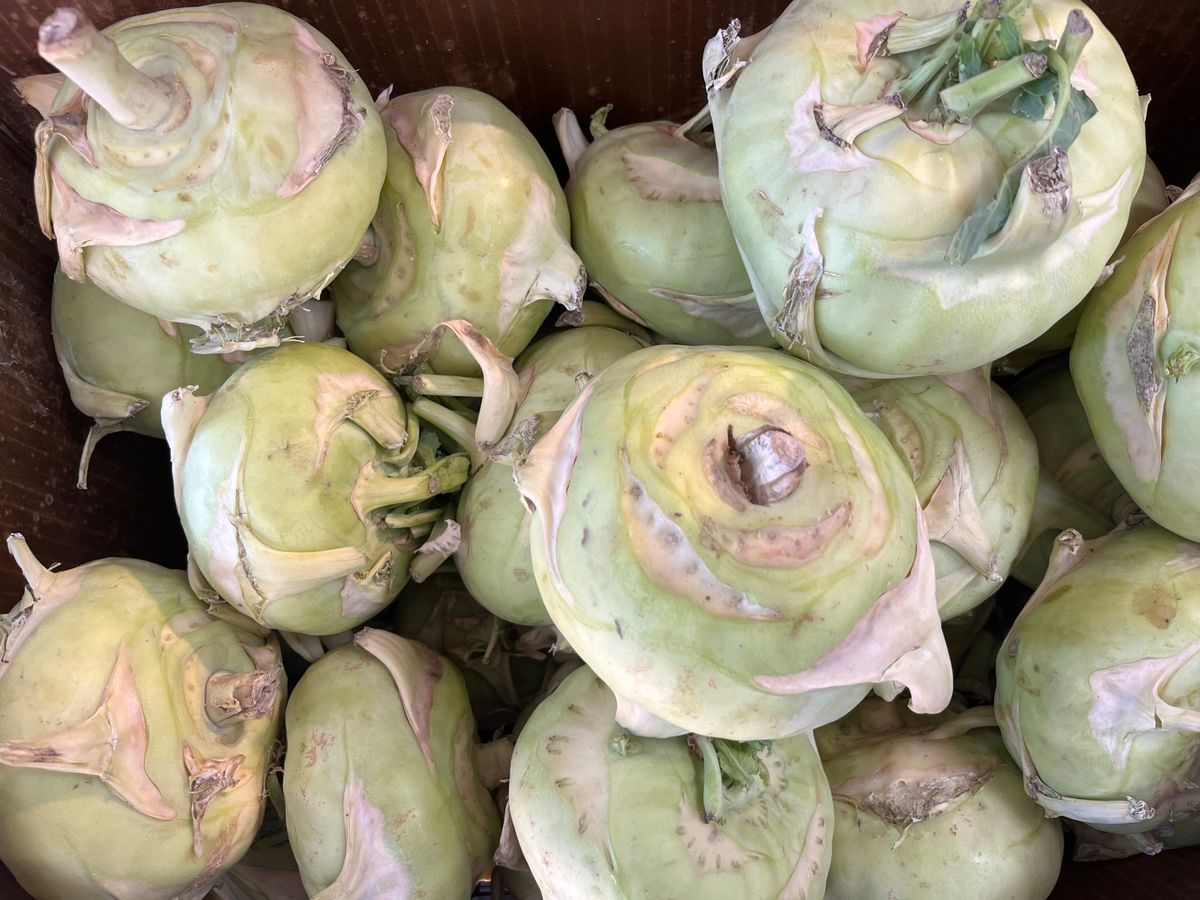
Green kohlrabi bulbs piled at a farmers market
The Harvest Window Is the Spacing Argument
Everything about kohlrabi spacing cashes out at picking. The bulb is at its best at 2 to 3 inches across: crisp, sweet, and mild. Leave it to 4 or 5 inches and the texture turns fibrous; leave it longer in warm weather and it can go woody and bitter enough to compost. A tight, uniform stand reaches the window together, which lets you pick the whole row in two or three passes over a week. A wide or uneven stand straggles, and straggling is how bulbs get missed and go woody. Spring varieties run 35 to 45 days from sowing to harvest, so the whole negotiation between spacing and window happens fast. Succession is the partner technique: sow a short row every 2 to 3 weeks through spring and again in July, rather than one long row that all arrives in the same ten days. The July sowing, maturing into cool fall weather, is often the best crop of the year, because kohlrabi sweetens as the days cool.
Water, Feed, and Soil Around the Row
Minnesota's care figures are simple and they interact with the tight spacing. Give the crop about an inch of water a week; a densely planted row dries the bed evenly and a dry check at bulb swelling is how you get cracked or stunted bulbs. Soil pH between 6.0 and 7.5 suits it, and it wants full sun. Side dress when the plants are about 4 inches tall, per Minnesota, with a balanced feed worked along the row, because a 40 day crop has no time to wait for slow fertility. Keep the bed weeded early; the canopy closes quickly at 4 inch spacing and does the later weeding itself, which is another quiet dividend of the tight layout. And hold the brassica rotation: kohlrabi is a cole crop, kin to cabbage, broccoli, and kale, and the family should not follow itself in the same ground for 4 years where clubroot and the shared diseases build up. The spacing page of a 40 day crop is an odd place for a 4 year warning, but the row you lay out this spring is where next year's broccoli wants to go, and the plan should know it now.
Direct Seed Versus Transplants, and the Variety Notes
Minnesota's guidance covers both starts because the crop runs on both. Direct seeding is the default for the spring and July crops: cheap, fast to sow at 1 inch spacing, and thinned once at 4 inches. Transplants earn their trouble in one situation, the short season garden that wants a head start: start seed indoors 4 to 6 weeks before setting out, plant at the same 4 inch spacing, and the crop reaches its window two to three weeks ahead of the direct sown row, which in a northern spring is the difference between kohlrabi and no kohlrabi before the heat. Handle transplants gently and set them at their original depth, because a kohlrabi checked hard at transplanting sometimes refuses to swell evenly. On varieties: the green skinned types are the mildest and the fastest; the purple types, grown for color, run a few days slower and hold a little longer in the row without turning woody, which makes them the forgiving choice for growers who pick on weekends. The giant storage types are a separate project at their 12 inch spacing, grown for fall harvest and storage rather than for the fresh window, and they should be sown on the July timing so their long season ends in cool weather.
Peeling, Storing, and the Second Life of the Leaves
Harvest handling is part of the crop's value and rarely printed with the spacing. The swollen stem must be peeled before eating at any size past golf ball, because the outer skin is fibrous even when the flesh inside is crisp; peel down to the pale, tender core. In the refrigerator, bulbs with the tops removed keep a week or more, and the July sown fall crop stores longest of all. The leaves are not waste: kohlrabi tops cook like their kale cousins, which they literally are, same species, different selection, and a row thinned and picked steadily produces a side harvest of greens all season. That kinship is the last spacing note on the page: kohlrabi, kale, cabbage, broccoli, cauliflower, and Brussels sprouts are one species in six costumes, they share their pests and diseases, and the rotation Minnesota prescribes, four years away from the family's ground, applies to the row as a family row, not a kohlrabi row.
Frequently Asked Questions
How far apart should kohlrabi be planted?
Thin seedlings to 4 inches between plants, per University of Minnesota Extension, in rows 15 to 18 inches apart per the Virginia Cooperative Extension cole crops table; the planner here uses 4 by 18 inches. Set transplants at the same 4 inches. Giant types are the exception, thinned to 12 inches.
Why do some guides say 9 to 12 inches for kohlrabi?
Wide spacings grow larger bulbs and suit big varieties and show plants, but they slow the crop and risk bulbs passing the tender window. Iowa State runs 6 to 8 inches, Purdue 3 to 6, and Bonnie Plants 9 to 12. For home eating at the sweet 2 to 3 inch size, the tight Minnesota standard wins.
When should I sow kohlrabi?
Mid April to early May for spring and again in July for fall, per Minnesota Extension. Spring varieties mature in 35 to 45 days. Sow short rows every 2 to 3 weeks for succession, because the whole row reaches its harvest window nearly at once.
How big should kohlrabi be when I pick it?
Two to three inches across the swollen stem. Larger bulbs turn tough, woody, and bitter, especially in warm weather. The harvest window is the real reason for tight, uniform spacing: the row reaches the window together and gets picked in a couple of passes.
How much water and feed does kohlrabi need?
About an inch of water a week, soil pH 6.0 to 7.5, full sun, and a side dressing when plants are about 4 inches tall, all per Minnesota Extension. Even moisture matters most at bulb swelling, when a dry spell cracks and stunts the crop.
Photo credits: Chris F (Pexels); Chixpix (Pexels). Photos are served from this site; follow the credit to the library page for the original.