Leek Plant Spacing: Spacing and Blanching Are One System
By the Windchime Walker editorial team
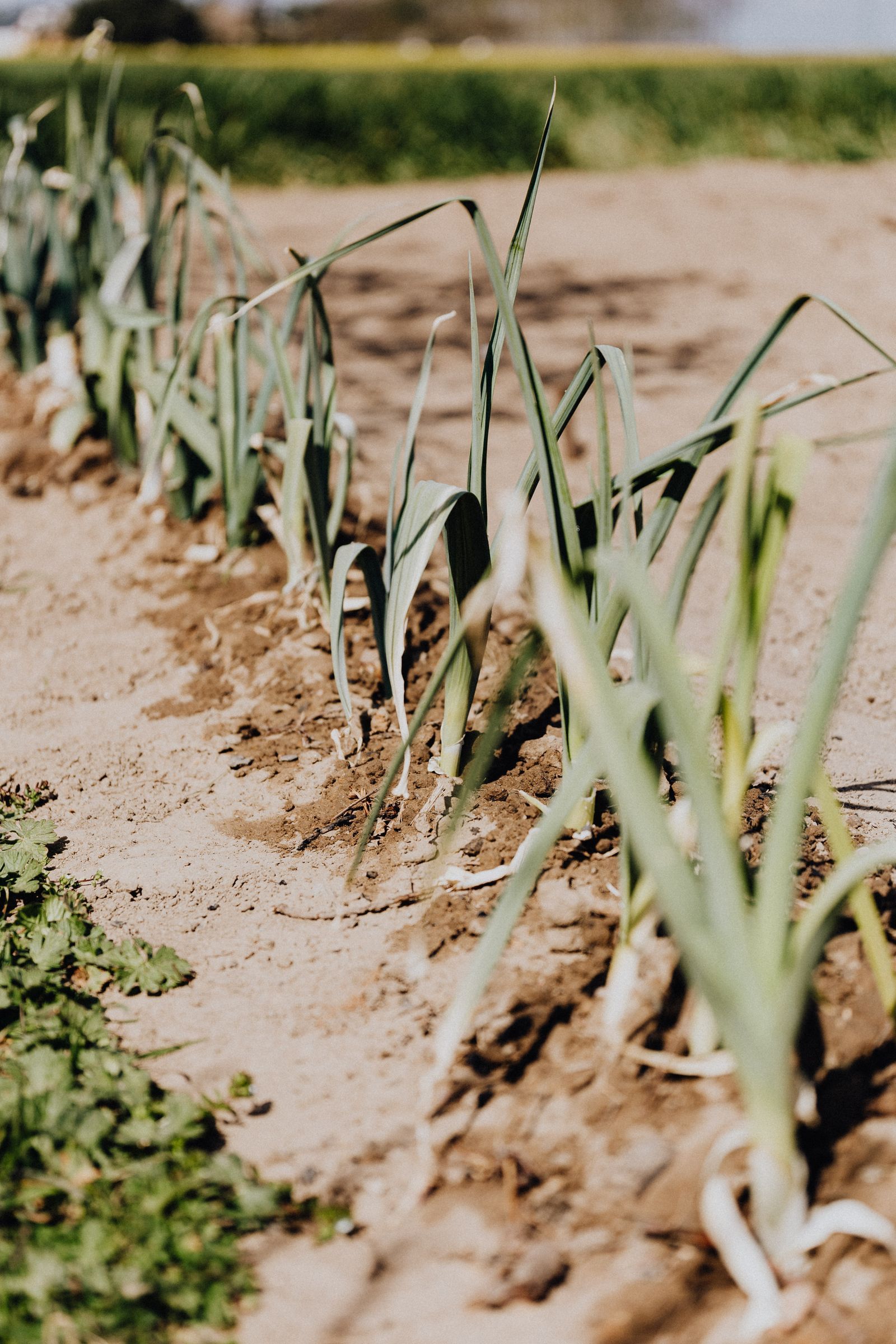
Photo: Kaboompics / Pexels
Ask for leek spacing and most guides give you the retail answer, 6 inches between plants in rows 12 to 18 inches apart, as if the number stood alone. It does not. A leek is sold, cooked, and judged on its white shaft, and the shaft is made by blanching, by keeping light off the stem as it grows, which is a spacing and soil system, not a spacing number. The University of Minnesota Extension's leek guidance, read in full for this page and reviewed in 2026, gives the honest ranges: plant 2 to 6 inches apart, in rows 12 to 36 inches apart, set transplants at the bottom of a 6 inch deep furrow, and fill the furrow in gradually as the plants grow, or hill soil against them, to lengthen the white part. The planner on this page works at 4 inches in 24 inch rows, inside those ranges, and this page explains the system the numbers belong to.
Our plant spacing chart owns the multi crop table. This page owns the leek row and its furrow.
Interactive tool
Plant Spacing Planner: The Leek Row
Leeks are in the crop list below at the University of Minnesota Extension spacing of 4 inches between plants in rows 24 inches apart, inside the published 2 to 6 inch and 12 to 36 inch ranges. Enter your bed size and count your transplants.
8 tomato plants fit this bed
4 plants per row across 2 rows, on a 24 inch grid. Extension spacing for this crop: 24 in between plants, 48 in between rows.
The grid uses the in-row spacing in both directions, the standard square foot layout for raised beds. In open ground, keep the wider row spacing in the note above so you can walk and weed between rows.
Spacing figures: University of Georgia Cooperative Extension, Circular 963, Vegetable Planting Chart, source.
The Furrow Method: Spacing Starts Six Inches Down
Leek transplants go out young, no more than 10 to 15 weeks old, with their roots trimmed to about 1 inch, per Minnesota. Open a furrow 6 inches deep along the row, set the transplants at the spacing along the bottom of it, water them in, and then let the season do the blanching: each cultivation and each rain washes a little soil into the furrow, and you add more deliberately as the stems thicken, until by harvest the furrow has filled to level and the bottom 6 inches of every plant has grown in the dark. That buried length is the white shaft. The alternative, for level beds and no dig growers, is hilling: draw soil up against the stems in two or three passes across the season. Either way, the row spacing has to leave room for the work: rows need the width to hold the furrow and the soil that will fill it, which is the practical reason the extension range runs to 36 inches and the reason this page's 24 inch standard fits a home bed better than the 12 inch retail minimum.
Close Spacing and the Leaf Orientation Trick
Within the row, the 2 to 6 inch range is a real choice with a technique attached. Wide spacing, 5 to 6 inches, grows the thickest individual leeks. Close spacing, 2 to 4 inches, grows more, slimmer leeks per foot of row and works, per Minnesota, when you orient the leaves as you plant: set each transplant so its fan of leaves runs along the row, pointing into the space between rows rather than into its neighbor. Leaves aligned this way shade the furrow instead of each other, and the plants tolerate the tight spacing without the tangle that stalls a randomly set row. Maryland Extension's equidistant system, 5 inches in all directions, and Utah State's 3 to 4 inches in rows 8 to 16 inches apart are the close systems other growers run; Rutgers' commercial guidance, rows 20 to 30 inches with plants 4 to 6 inches apart, is the wide system at field scale. Our 4 by 24 standard sits between: thick enough leeks for the kitchen, a row wide enough to furrow and hill, and a count the planner above can give you for your bed before you order seedlings.
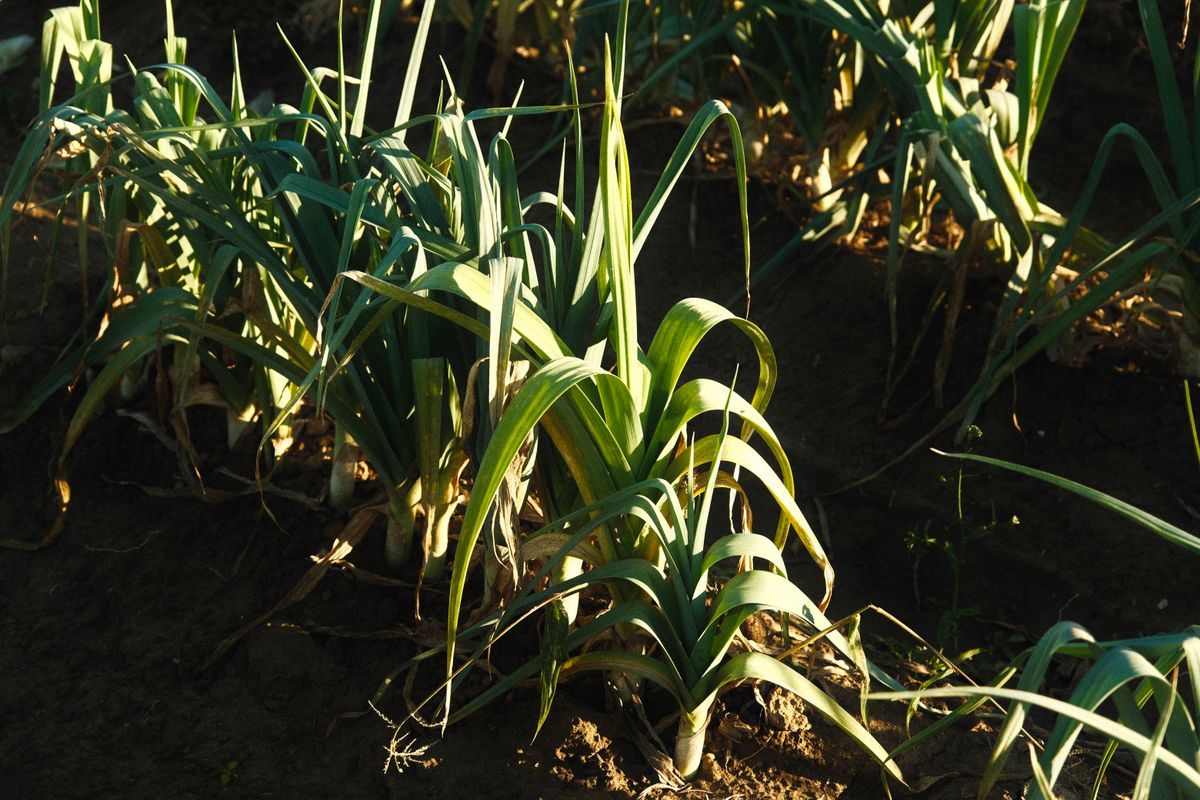
Young leek plants growing in brown garden soil
The Season Is Long: Feeding and Water on a 120 Day Crop
Leeks are among the slowest vegetables in the garden: 120 to 150 days from seed for most varieties, some nearer 90, which is why nearly everyone plants transplants and why the layout decision in spring is still being harvested after the first frosts. Minnesota's care figures: at least 8 hours of sun, about an inch of water a week, and a mid summer side dressing of 1 cup of 10-10-10 per 10 feet of row, placed 6 inches from the plants. The side dressing matters more than it sounds, because a crop that stands in the ground for five months eats steadily, and a leek row that yellows in August is usually hungry, not diseased. Keep the row weeded early, when the grass like seedlings are hard to see and easy to swamp; once the furrow work starts, cultivation and weeding become the same pass. Mulch after the final hilling holds moisture and keeps soil from splashing into the leaf bases, where it wedges and is a nuisance to wash out at harvest.
Harvest: The Quality Standard the Layout Buys
The point of the whole system is measurable at harvest. A quality leek, on Minnesota's standard, has a firm white shaft more than 3 inches long and a stem more than 1 inch wide, and both halves of that standard are layout outcomes: the shaft length is the blanching depth you built, and the width is the in row spacing you chose. Harvest can wait: leeks are hardy, many varieties stand unharmed down to about 20 degrees Fahrenheit, and the row can be lifted as needed into winter, which makes it one of the few fresh vegetables a northern garden picks in December. Lift with a fork rather than pulling, because a leek blanched 6 inches deep has a grip to match. At the end of the season, judge your layout by the shafts: short white parts mean the furrow or hilling was too shallow, thin leeks mean the spacing was too tight for the feeding, and next spring's row gets adjusted on evidence, which is how a spacing page earns its keep.
Starting From Seed, and Choosing the Type
Almost nobody buys leek seed expecting this year's dinner: the 120 to 150 day season means seed sown indoors in late winter, 10 to 15 weeks before the last frost, to produce the transplants this page has been spacing. Sow thickly in a tray or soil blocks, keep the seedlings trimmed to a few inches tall so they grow thick rather than tall and floppy, and set them out when they reach pencil thickness, the size at which they handle the furrow and the root trim without sulking. Purchased transplants follow the same rule; a bundle of thin, grassy seedlings is normal and not a defect. Types split by season. Summer and autumn leeks, the flag types with soft blue green leaves, grow fast and harvest from late summer; they do not stand winter. Winter leeks, darker, thicker, and hardier, are the ones that hold at 20 degrees and lift in December. Match the type to the harvest you planned when you chose the spacing: the wide spaced, deep furrowed, long blanched row is a winter leek's biography, and planting a summer type into it wastes the system's best work.
The Second Year Trap and the Seed Bonus
One warning belongs on every leek page and appears on few: a leek left in the ground into its second spring bolts, sending up a flower stalk that turns the shaft woody and inedible, because the plant is a biennial finishing its life. The winter row must be eaten by early spring, whatever is left, or lifted and used as the stalk forms. The consolation is real, though: a bolted leek left to flower is a handsome allium bloom, beloved of bees, and its seed, saved dry, is next year's late winter sowing, closing the loop the seed section opened. Growers who save leek seed should isolate the flowering plant from other allium seed crops and expect seedlings true to the parent type in a home garden setting. Between the furrow in spring and the flower two summers later, the leek row is the longest commitment in the vegetable garden, which is precisely why its spacing deserves a page of its own: no other crop makes you live with a layout decision for quite so long, or repays a good one so visibly at the December harvest.
Frequently Asked Questions
How far apart should leeks be planted?
University of Minnesota Extension gives 2 to 6 inches between plants in rows 12 to 36 inches apart. The planner here works at 4 inches in 24 inch rows, a middle standard that leaves room for furrow and hilling work. Wide spacing grows thicker leeks; close spacing grows more per foot.
Why are leeks planted in a furrow?
Blanching. Transplants are set at the bottom of a 6 inch furrow, roots trimmed to 1 inch, and the furrow is filled in gradually as they grow, so the lower stem develops in darkness and stays white and tender. Hilling soil against the stems across the season does the same job on level beds.
What is the trick to spacing leeks close together?
Orient the leaves. At 2 to 4 inch spacing, set each transplant so its leaf fan runs along the row, pointing into the between row space instead of into the next plant, per Minnesota Extension. Aligned leaves shade the furrow rather than each other, and the tight row grows evenly.
How long do leeks take to grow?
Most varieties run 120 to 150 days from seed, some about 90, which is why transplants no older than 10 to 15 weeks are the standard start. The crop is hardy, stands through the first frosts, and many varieties tolerate about 20 degrees Fahrenheit, so harvest can run into winter.
How do I know a leek is good quality at harvest?
By the standard the layout was buying: a firm white shaft more than 3 inches long and a stem more than 1 inch wide, per Minnesota Extension. Short shafts mean the blanching was shallow; thin stems mean the spacing was tight or the mid summer feeding was missed.
Photo credits: Kaboompics (Pexels); Mathias Reding (Pexels). Photos are served from this site; follow the credit to the library page for the original.