Lettuce asks a spacing question with a fork in it, because the name covers two crops that share a seed packet shelf and nothing else. A head lettuce is a single harvest object that needs its full footprint to form. A leaf lettuce is a cutting crop, harvested a few leaves at a time or shorn wholesale and regrown, and it produces best crowded well past the head lettuce's comfort. The University of Georgia Cooperative Extension chart sets this site's planner standard at 8 to 12 inches between plants, the tool at 10, in rows 18 to 36 inches apart, and that standard is the head lettuce's number. This page runs both systems honestly: the head footprint in the planner, the leaf ladder beside it, the square foot conversion, and the succession rhythm that governs the crop more than any grid does. The staged idea of lettuce in individual pots folded into the site's lettuce containers guide at this batch's teardown, because the results answer that query with wide shallow troughs, which are that guide's ground; the spacing of the crop itself is this page's.
Lettuce Plant Spacing: The Leaf Row Ladder, the Head Lettuce Footprint, and the Succession Rhythm
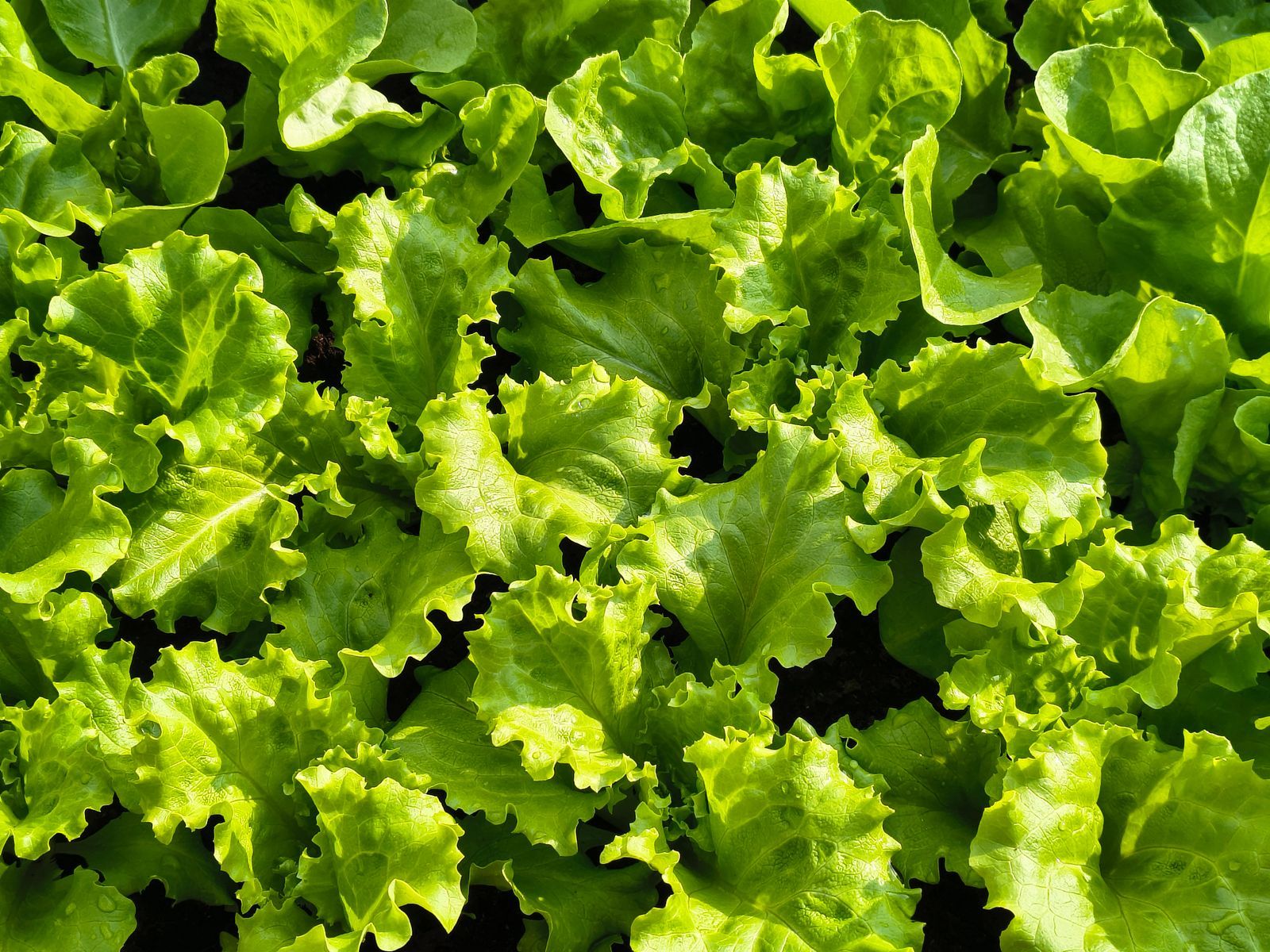
Photo: Teodor Buhl / Pexels
Plant Spacing Planner: The Lettuce Row
Lettuce is in the crop list below at the University of Georgia Cooperative Extension spacing of 8 to 12 inches between plants, the planner at 10, in rows 18 to 36 inches apart. Enter your bed size and plan the leaf row and the head row as the two systems they are.
8 tomato plants fit this bed
4 plants per row across 2 rows, on a 24 inch grid. Extension spacing for this crop: 24 in between plants, 48 in between rows.
The grid uses the in-row spacing in both directions, the standard square foot layout for raised beds. In open ground, keep the wider row spacing in the note above so you can walk and weed between rows.
Spacing figures: University of Georgia Cooperative Extension, Circular 963, Vegetable Planting Chart, source.
The Head Lettuce Footprint: 10 Inches and Room to Form
A head lettuce, butterhead, romaine, or crisphead, is grown for one object, and the object needs the full grid. At the Georgia standard, thinned or transplanted to 10 inches between plants with rows 18 to 36 inches apart in the field pattern, each plant builds its rosette without its neighbors' leaves lying on it, and the head forms clean and whole. Crowd a head lettuce to 6 inches and the rosettes interlock, air stops moving at the base, the lower leaves rot against the soil, and the heads that form are small and loose; the plant does not complain visibly, it simply never becomes the thing it was planted to be. In a 4 foot bed the conversion is the usual one on this site: rows across the bed at the same 10 inch in row spacing, the bed's width standing in for the field's row spacing, and the planner above counts the stand. Transplanted starts are the reliable route for heads, set out at the grid from the beginning; direct sown head lettuce must be thinned to the grid early, which growers reliably postpone past the point where it works.
The Leaf Row Ladder: Thinned to 6 to 8 Inches
Leaf lettuce inverts the logic. It is sown in a row or a band, comes up as a mat, and is thinned in stages to a final 6 to 8 inches, at which point each plant is a loose rosette harvested by taking the outer leaves, or the whole row is cut an inch above the crown and regrows for a second and third cut. At this spacing the yield per foot of row beats the head system handily, and the harvest window is weeks long instead of a single day. The ladder matters as much as the destination: thin first to an inch or two so the seedlings stand apart, eat those thinnings, then to the final figure when the plants are 3 to 4 inches tall. A leaf row left at seedling density gives the familiar lettuce thatch, all stem and bitterness. The square foot conversion is the bed grower's version: 4 leaf plants per square foot, a 6 inch grid, which is the same system drawn as a grid instead of a row, and the planner's standard read at its tight end.
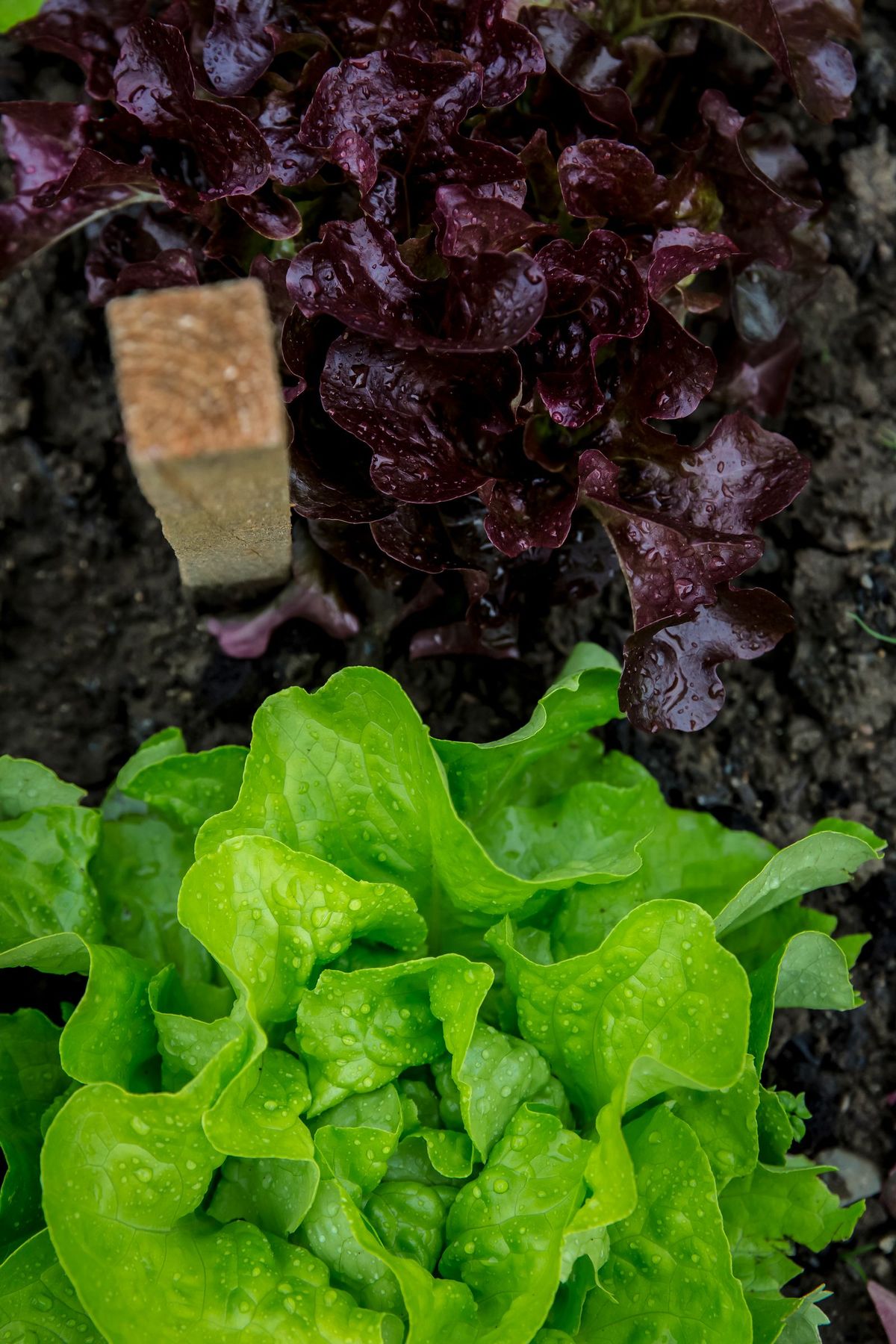
Succession: The Calendar Is the Real Spacing
Lettuce bolts. Heat and lengthening days tell the plant to flower, the leaves turn bitter as the stalk rises, and no spacing prevents it. The crop's answer is succession: a short sowing every 2 weeks through the cool seasons, each sowing small, so that as one row bolts or is cut out, the next is sizing up behind it. This is why the spacing question for lettuce is secretly a quantity question: at succession scale, a 3 foot row at the leaf ladder is a household's right amount, and the planner's count for a full bed usually argues for planting a quarter of it and sowing the rest in fortnightly strips. Spring sowings run from a few weeks before the last frost; the summer gap in hot regions is real, and heat tolerant varieties plus afternoon shade stretch it rather than close it; the fall sowing, timed to mature as the weather cools, is the finest crop of the year and the one worth the full grid. Hold the ladder discipline on every succession, especially the fall one you will be eating longest.
Heat, Bolting, and the Bitter End
Since the calendar governs, the spacing grower's last job is reading the end. A lettuce plant approaching bolting shows it: the center rises and tightens into a cone, the leaves stand more upright, and a cut leaf exudes milky sap and tastes bitter at the rib. Harvest whole heads ahead of it without sentiment; a head taken a day early is salad, and a head taken a day after the stalk moves is compost. Leaf rows forgive longer, since the outer leaves stay usable as the center begins to rise, but the same bitterness arrives. Shade cloth over a summer row buys days, sometimes a week, and watering through a hot spell keeps leaves mild, because a water stressed lettuce bolts faster and tastes it. None of this rescues a spring row in a June heat wave; succession exists precisely because the crop's end is scheduled by weather, and the wise grower has the next strip already green when it comes.
The Third Cut: Knowing When a Leaf Row Is Done
A cut and come again leaf row gives diminishing returns on a schedule the grower can read. The first cut is the full harvest; the second, about 2 weeks later, runs at perhaps two thirds of it; and the third comes in smaller, slower, and tougher, with the crowns sitting higher and the leaves narrowing. After the third cut the row's economics end: pull the plants and resow the strip, because a fresh sowing overtakes a fourth cut within a fortnight and tastes better doing it. Head lettuce has no such ladder, one cut and the plant is finished, which is the deepest operational difference between the two systems on this page. Plan the succession rhythm around it: leaf strips are pulled and resown on roughly a 6 week cycle in good growing weather, and the calendar, as always with lettuce, is the real spacing.
Frequently Asked Questions
How far apart should lettuce plants be spaced?
Head lettuce: 8 to 12 inches between plants per the University of Georgia Cooperative Extension chart, the planner on this page at 10 inches, in rows 18 to 36 inches apart. Leaf lettuce: thinned to 6 to 8 inches and harvested by the cut, which is a different system with a tighter grid. The first question to answer is which crop you are growing; the two numbers belong to two different harvests.
How many lettuce plants fit in a square foot?
Four leaf lettuce plants per square foot on a 6 inch grid, which is the square foot expression of the leaf row ladder. Head lettuce does not convert to the square foot grid honestly: a forming head wants its 10 inch footprint, so a square foot holds one head with room to spare, and planting heads at 4 per square foot produces interlocked rosettes and loose, rotting heads.
When should lettuce be thinned?
In stages for direct sown rows. First to an inch or two apart once the seedlings are up and growing, then to the final spacing, 6 to 8 inches for leaf types and 10 inches for heads, when the plants are 3 to 4 inches tall. Eat the thinnings. A row left at sowing density turns to bitter thatch, and a head row thinned late never forms proper heads, so the second thinning is the one not to postpone.
How do I keep lettuce coming all season?
Succession sow: a short row or strip every 2 weeks through spring and again for fall, each at the crop's proper spacing. Lettuce bolts in heat and lengthening days, and no single sowing, however well spaced, outruns the calendar. Small repeated sowings mean one strip is always at its peak as another finishes, and the fall succession, maturing into cool weather, is the best crop of the year.
Why did my lettuce turn bitter?
Bolting, most likely: heat and long days trigger the flowering stalk, and the leaves load with bitter latex as it rises. A rising, cone shaped center and milky sap in a cut rib confirm it. Water stress speeds the process. Harvest heads at the first sign, since a day early is salad and a day late is compost, and rely on succession sowings and, in summer, shade cloth and heat tolerant varieties to keep mild leaves coming.
Photo credits: Teodor Buhl (Pexels); Markus Spiske (Pexels). Photos are served from this site; follow the credit to the library page for the original.