Mustard Greens Plant Spacing: A Harvest Size Decision
By the Windchime Walker editorial team
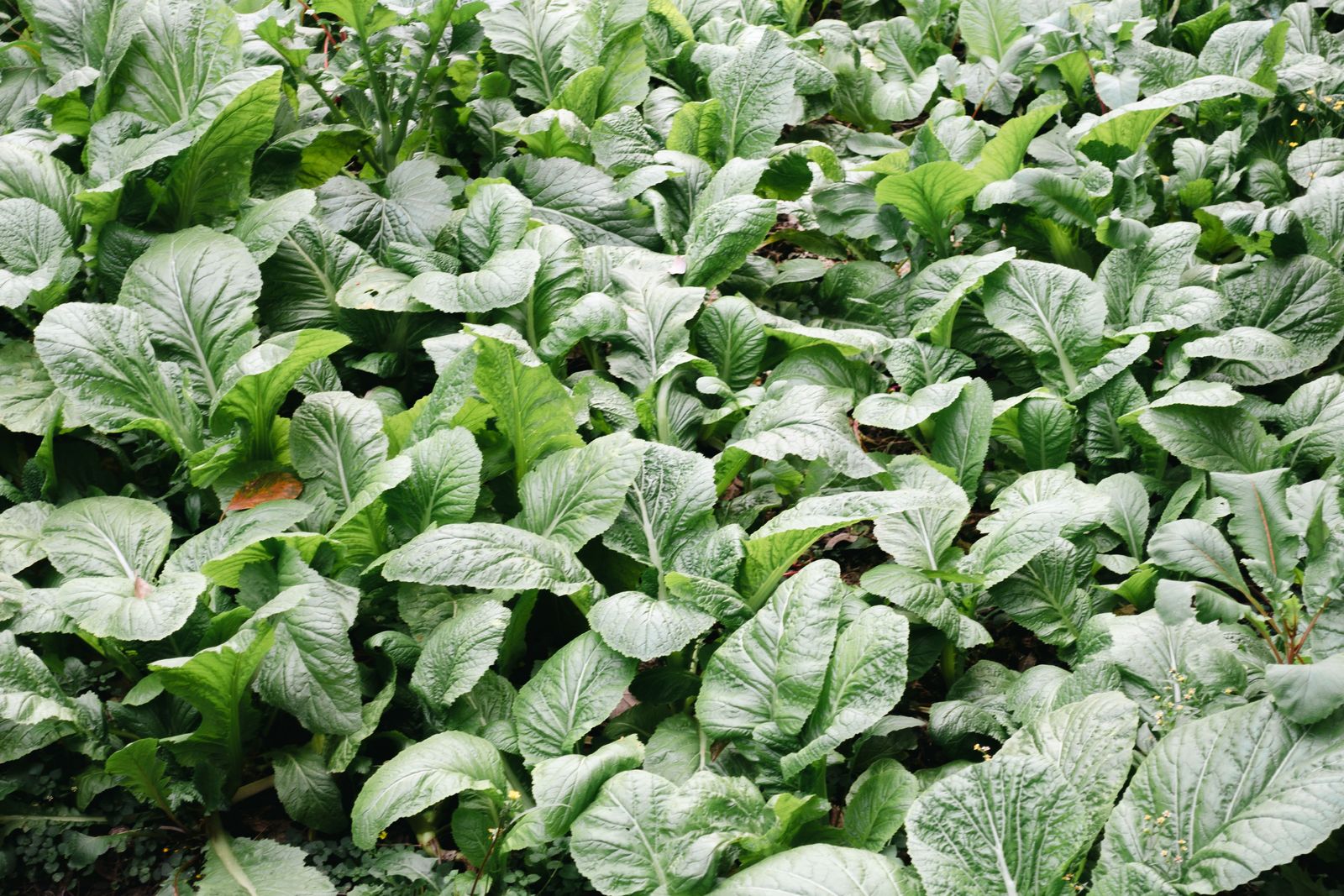
Photo: Markus Winkler / Pexels
Ask five sources for mustard spacing and you get five numbers, because mustard is not one harvest. The same row can be cut as baby leaves at 3 weeks, picked leaf by leaf for two months, or grown out into plants a foot across, and each of those harvests has its own correct spacing. The anchor for this page is the University of Georgia Cooperative Extension's Circular 963 vegetable planting chart, read in full for this article: mustard sown with plants 2 inches apart in rows 18 to 36 inches apart, seed at half an ounce per 100 feet of row, planted half an inch deep, ready in 40 to 50 days. That 2 inch figure surprises growers who have seen 12 inch recommendations, and both are right, at different moments in the row's life. The 2 inches is a sowing spacing for leaf harvest. The wide numbers are final spacings for full size plants. The skill this page teaches is the ladder between them: sow dense, thin progressively, and eat every thinning.
Our plant spacing chart owns the multi crop table. This page owns the mustard row.
Interactive tool
Plant Spacing Planner: The Mustard Row
Mustard greens are in the crop list below at the University of Georgia Cooperative Extension Circular 963 sowing spacing of 2 inches between plants in rows 27 inches apart, the midpoint of its 18 to 36 inch row range. Enter your bed size and plan the thinning ladder before you sow.
8 tomato plants fit this bed
4 plants per row across 2 rows, on a 24 inch grid. Extension spacing for this crop: 24 in between plants, 48 in between rows.
The grid uses the in-row spacing in both directions, the standard square foot layout for raised beds. In open ground, keep the wider row spacing in the note above so you can walk and weed between rows.
Spacing figures: University of Georgia Cooperative Extension, Circular 963, Vegetable Planting Chart, source.
The Planner Standard, and Why It Uses 2 Inches
The planner above carries mustard greens at the Circular 963 sowing spacing: 2 inches between plants, with rows at 27 inches, the midpoint of the chart's 18 to 36 inch row range, following the same midpoint convention this site uses for its other wide range crops. That choice needs its reasoning stated, because a Kentucky State University Extension fact sheet puts mustard plants at 3 inches, and thinning guides across the web converge on 6 to 12 inches. These are not contradictions so much as timestamps. Circular 963 is a planting chart: its number describes the row on sowing day, set dense because mustard seed is cheap, germination is uneven, and the first thinnings are a harvest, not waste. The 3 inch figure is the same idea rounded for transplants and precision sowers. The 6 to 12 inch figures describe where the row ends if you want full size leaves. Our working standard keeps the chart's 2 inches in the planner, because the planner's job is to count seed and plants for the row you are actually sowing, and the thinning ladder below converts that sowing into whatever final spacing your harvest needs.
The Thinning Ladder: Three Harvests From One Row
Here is the system the numbers belong to. Sow the row at 2 inches, half an inch deep, and keep the seedbed evenly moist; mustard germinates fast, in as little as 3 to 10 days in warm soil. First thinning, at 3 to 4 inches tall: pull or snip every other plant, which leaves roughly 4 inch spacing, and eat what you pulled, because baby mustard leaves at this size are the mildest the plant ever produces. Second thinning, a week or two later: take the row to about 6 inches, again eating the thinnings, now as cooking greens. Final spacing is a decision, not a default. If you are picking outer leaves from plants you want to keep producing, leave the row at 6 inches and harvest by the leaf. If you want full, large leaves and big plants for a main crop, go to 10 to 12 inches and give each plant its territory. Square foot gardeners can run the same logic in a grid: the equivalent density for leaf harvest is about 4 plants per square foot, thinned upward as the plants size.
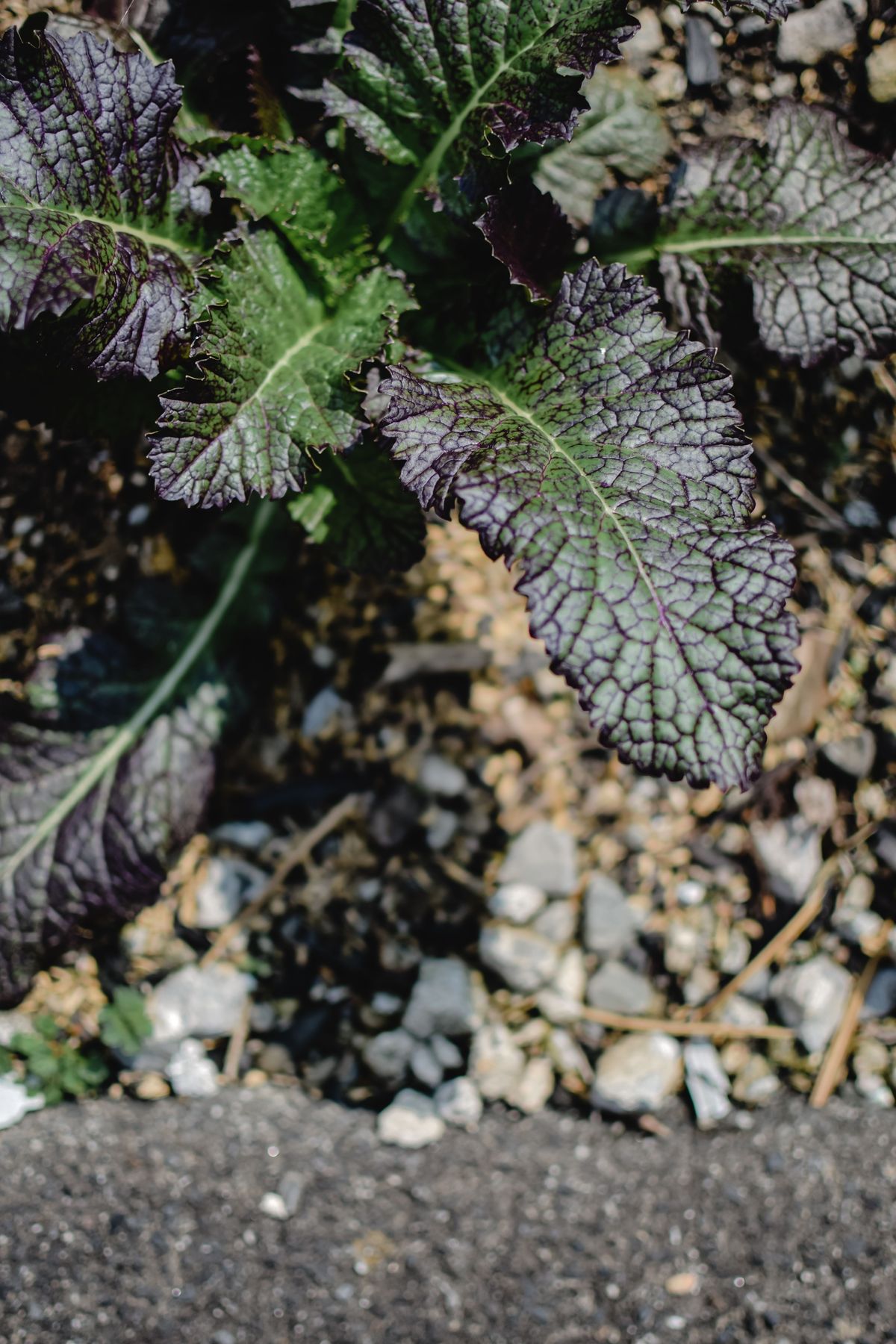
Giant red Japanese mustard leaves in close up
Rows, Beds, and Seed Arithmetic
The chart's row range, 18 to 36 inches, is wide because it spans garden styles: 18 inch rows for intensive beds where you walk between blocks, up to 36 inches for cultivated rows worked with a hoe or a tiller. In a raised bed, forget rows entirely and run the grid: sow in bands or blocks at the 2 inch spacing and thin on the ladder. Seed arithmetic from the same chart: half an ounce of seed per 100 feet of row, which is a great deal of seed, because a mustard seed is tiny and the chart assumes field style sowing with thinning to follow. A packet holds enough for a home row many times over, and mustard seed stays viable for several years kept cool and dry, so buy once and sow in succession. Succession is the real yield trick with this crop: a short row every 2 to 3 weeks from early spring, and again from late summer, keeps leaves coming young and mild, because a single long row ages into strong, hot flavor and then bolts.
Bolting, Heat, and the Flavor Clock
Mustard is a cool season crop with a clock on it. The chart's 40 to 50 days to harvest runs in spring and fall weather; in summer heat the plant bolts, sending up a flower stalk, and the leaves turn sharply hot and bitter as it goes. Spacing interacts with the clock: crowded plants bolt a little sooner under competition stress, which is one more reason the thinning ladder matters, and a row sown for baby leaf can be deliberately crowded and cut young before heat ever becomes an issue. Variety choice works the same lever. The chart names Florida Broadleaf, Southern Giant Curled, Red Giant, and Savannah, a spread of leaf types from smooth to heavily curled to red; the curled and red types are slower to look ragged in a picked row and hold quality well in fall sowings, when cooling weather sweetens the whole enterprise and a hard frost, not heat, is what finally ends the row.
Feeding, Water, and the Rest of the Row
Mustard is a leaf crop, and leaf crops run on nitrogen and even moisture. Work compost into the bed before sowing, and if growth stalls pale in poor soil, a side dressing of a nitrogen leaning fertilizer at thinning time keeps the ladder moving. Water evenly, about an inch a week in the absence of rain, because dry swings toughen leaves and sharpen flavor past what most people enjoy, while a steady supply keeps growth fast and mild. Flea beetles are the crop's signature pest, peppering leaves with tiny holes; a row cover from sowing day prevents nearly all of it and comes off only for thinning and harvest. Harvest leaves from the outside of each plant inward, always leaving the growing center, and a thinned row at final spacing will keep producing until the flavor clock or the weather calls it done. Sow at 2 inches, thin on the ladder, eat every rung: that is the whole mustard spacing system, and the five conflicting numbers you started with were just its five moments.
Frequently Asked Questions
How far apart should I plant mustard greens?
Sow at 2 inches apart in rows 18 to 36 inches apart, per the University of Georgia Cooperative Extension Circular 963 chart, then thin progressively: to about 4 inches at baby leaf size, to 6 inches for leaf by leaf harvest, and to 10 to 12 inches for full size plants. The right final number depends on the harvest you want, not on the seed packet alone. In a raised bed or square foot layout, about 4 plants per square foot is the equivalent sowing density for leaf harvest.
How deep should mustard seed be planted?
Half an inch deep, per the Circular 963 chart, with the seedbed kept evenly moist until germination. Mustard seed is small and fast, emerging in roughly 3 to 10 days in warm soil, but it will not push through a deep burial or a crusted dry surface. In light or sandy soil you can firm the row after sowing to hold moisture around the seed; in heavy soil, cover with a shallow layer of fine compost instead of the native clay so the surface does not seal.
Can I grow mustard greens without thinning?
You can, and for a baby leaf row cut young, crowding is actually the method: sow thickly, cut the whole patch at 4 to 6 inches tall, and resow. What you cannot do is skip thinning and still get full size plants; an unthinned row stalls into a thicket of small, competing plants that bolt early and yield tough leaves. The middle path is the thinning ladder on this page, where every thinning is itself a harvest, so nothing pulled is wasted.
When should I sow mustard greens?
In spring as soon as the soil can be worked, and again from late summer into fall, which most growers find the better season. The Circular 963 chart gives 40 to 50 days to harvest, and the crop wants cool weather for that run: summer heat triggers bolting and turns the leaves hot and bitter. Succession sow a short row every 2 to 3 weeks in the cool windows rather than one long row, and use fall sowings for the mildest, longest picking.
Why do my mustard greens taste too hot?
Heat, age, and thirst, in that order. Leaves from plants grown in hot weather, left to size up old on the plant, or kept dry grow progressively more pungent as the plant defends itself and prepares to bolt. Pick younger, keep the row evenly watered, and shift the main crop into the fall window, when cooling nights mild the flavor noticeably. Variety matters too: the broadleaf types run milder than the curled and red types at the same age, so choose by the flavor you want, not just the leaf you like the look of.
Photo credits: Markus Winkler (Pexels); Eva Bronzini (Pexels). Photos are served from this site; follow the credit to the library page for the original.