Okra Plant Spacing: 12 Inches in the Row, and the Season That Follows
By the Windchime Walker editorial team
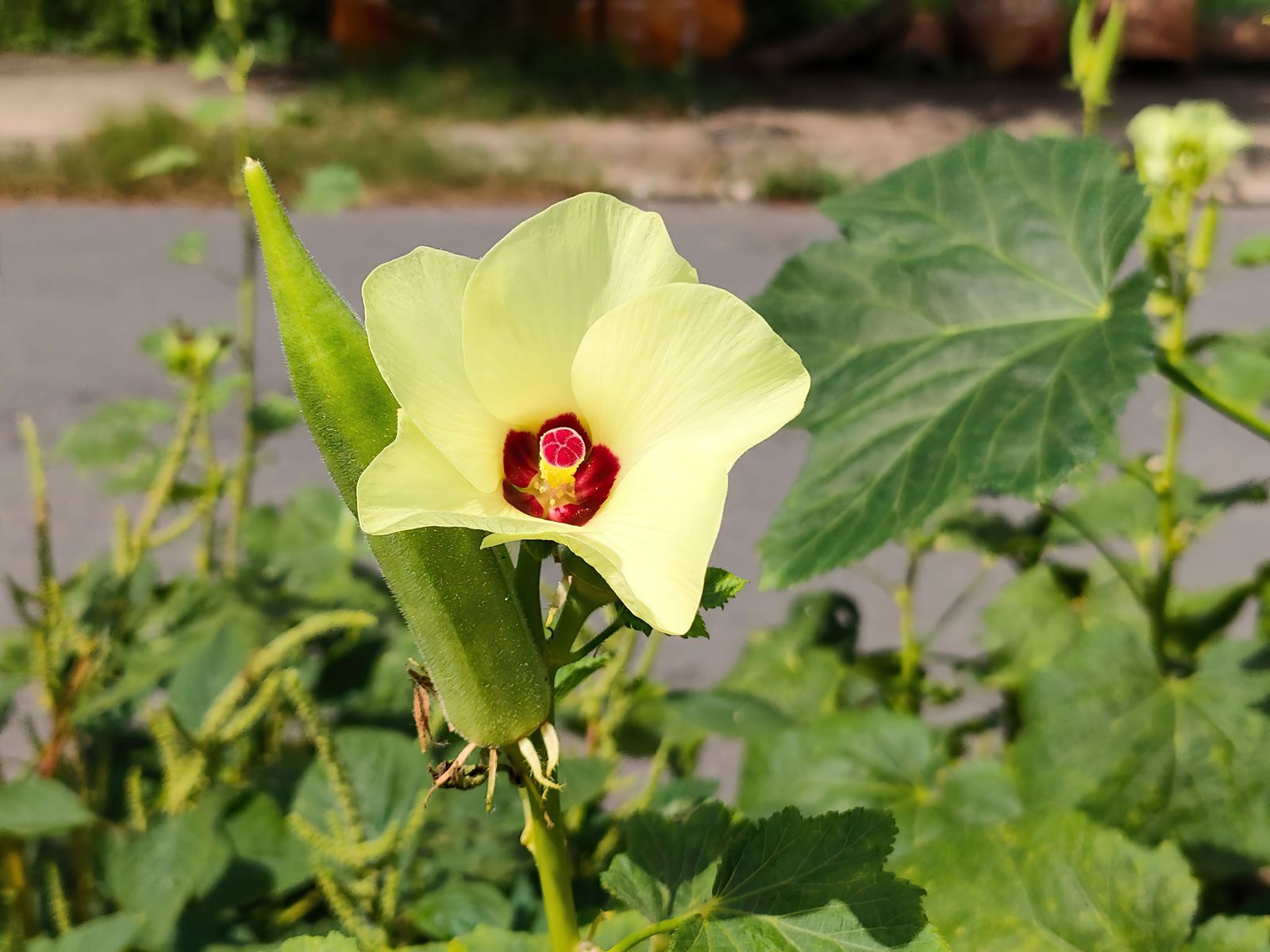
Photo: Phẩm Bùi / Pexels
Okra spacing looks like a small question, and the search results answer it with a shrug of ranges: 12 to 18 inches, rows anywhere from 3 to 5 feet. Behind the shrug are real differences worth understanding, because okra is not one plant size: dwarf varieties stand 3 feet and standard varieties reach 6 or 7, and the row that suits one wastes ground or invites a thicket with the other. This page follows our house pattern for single crop spacing: one named standard, the University of Georgia Cooperative Extension Vegetable Planting Chart, Circular 963, read in full for this batch, with the state guide variants flagged openly, and the full okra season built around the number, because with okra the spacing is the easy part and the harvest discipline is the crop.
Our plant spacing chart owns the multi crop table. This page owns the okra row.
Interactive tool
Plant Spacing Planner: The Okra Row
Okra is in the crop list below at the University of Georgia Cooperative Extension spacing of 12 inches between plants in rows 36 inches apart. Enter your row or bed size and plan the stand your thinning will finish.
8 tomato plants fit this bed
4 plants per row across 2 rows, on a 24 inch grid. Extension spacing for this crop: 24 in between plants, 48 in between rows.
The grid uses the in-row spacing in both directions, the standard square foot layout for raised beds. In open ground, keep the wider row spacing in the note above so you can walk and weed between rows.
Spacing figures: University of Georgia Cooperative Extension, Circular 963, Vegetable Planting Chart, source.
The Standard: 12 Inches Between Plants, Rows 36 Inches Apart
The UGA chart lists okra at 12 inches between plants in the row, rows 36 inches apart, seed sown 1 inch deep, 55 to 65 days to harvest, and names the varieties Annie Oakley II, Burgundy, Cajun Delight, and Clemson Spineless, the last of which is the home garden standard across the South. That spacing is this page's planner setting and the layout the season below assumes. It is written for standard varieties in garden rows: at 12 inches the plants form a hedge you harvest from the row paths, and 36 inch rows give a working path and air movement through a crop that grows in the hottest, most humid weeks of the year, when airflow is disease prevention. In raised beds, translate the standard by its in row figure and bed logic: a single line of plants down a bed at 12 inches, with the bed itself supplying the path the row spacing provided.
The Variants, Flagged and Explained
Two other extension figures circulate in the results, and both are honest answers to slightly different questions. Oregon State's guidance runs wider: rows 36 to 48 inches, plants thinned to 12 to 24 inches, a range written for field conditions and full size plants in a shorter northern season, where each plant gets more room to size up fast. Oklahoma State splits by type, which is the most useful variant of all: rows about 42 inches for dwarf varieties and 48 to 60 inches for standard ones, recognizing that the tall types shade a narrow row's path and each other by August. None of these is wrong, and they are not averaged here. The planner keeps the UGA garden standard. If you are growing a dwarf variety in a small garden, the UGA figures serve you as written. If you are growing a tall standard type in open ground and your summers are long, widening rows toward the Oklahoma figures buys you a harvest path you will be grateful for in September, when the plants are over your head and producing daily.
Fresh okra pods growing on the plant
Sowing: the Warm Soil Crop
Okra seed has two famous traits: it germinates reluctantly in cool soil, and it has a hard coat that slows water uptake. Sow after frost, when the soil is genuinely warm, at least 70 degrees F and ideally warmer; okra planted in cool soil mostly rots, and the chart's 55 to 65 days only starts counting once the plant is up and growing in heat. Sow 1 inch deep per the chart. Two traditional tricks speed emergence: soak the seed in water overnight before sowing, or nick the coat lightly with a file, either of which cuts days off the wait in marginal warmth. Sow thick, 2 or 3 seeds per spot or a seed every few inches down the row, because germination is uneven even in good conditions, and expect to thin. Where the season is short, okra can be started indoors 4 to 5 weeks before set out in peat pots transplanted whole, like its pumpkin cousins, since the roots dislike disturbance; in long season country, direct sowing wins easily and the indoor step is wasted effort.
Thinning to the Standard
Thinning is where the spacing is actually decided, and okra beginners skip it because the seedlings look innocent. They are not: an unthinned okra row becomes a thicket of competing stems, each plant spindly, the pods hidden in foliage where they grow past picking size unnoticed, and the whole row mildewing in its own shade. Thin in two passes. When seedlings reach 3 to 4 inches, thin to one plant every 6 inches, taking the weakest. When they reach about a foot, thin to the final 12 inch standard, again keeping the strongest and straightest. Cut the extras at the soil line with scissors rather than pulling them, because okra roots intertwine and pulling disturbs the keepers. The second thinning feels wasteful, throwing away foot tall plants, and it is the cheapest yield decision of the season: the plants that remain will out produce the crowded row by weight, and every pod on them will be findable at picking size.
Feeding, Watering, and the Height Problem
Okra is a moderate feeder with a deep taproot and real drought tolerance once established, which makes it one of the most forgiving crops of a hot dry summer. Work compost into the row before sowing, and side dress lightly when the plants begin to flower; heavy nitrogen grows leaves at the expense of pods and makes the thicket problem worse. Water deeply but not often: about an inch a week, more in extreme heat, always at the base, and let the surface dry between waterings. The crop's true management problem is vertical. Standard varieties reach 5 to 7 feet, and the pods form up the stem, so late season picking means reaching overhead daily. Two honest answers: grow a dwarf variety where the gardener is shorter than the standard plant, or accept the ladder as part of the harvest kit. Pruning okra back is not a real third answer; a topped plant branches and pods later, and the season lost is worth more than the reach saved.
The Harvest Discipline: 2 to 3 Inches, Daily
Everything above is prologue to the rule that decides whether a gardener loves or hates okra: pick the pods at 2 to 3 inches long, and pick every day at the season's peak, every other day at its shoulders. A pod left to 5 or 6 inches turns woody and fibrous, good for seed and little else, and a plant carrying oversized pods slows its production of new ones, because the plant reads mature pods as its job done. Picked young and often, the same plant produces for months, from midsummer until frost. Wear gloves and long sleeves for the harvest: okra leaves and pods carry fine spines that irritate many people's skin, a fact every okra grower learns once. Cut pods free with pruners or a knife, taking a short piece of stem, rather than snapping them, which tears the plant. The 55 to 65 days on the chart is days to first harvest, not the harvest itself; the harvest is a daily habit measured in weeks, and the cook should be warned, because a producing okra row delivers pods faster than most kitchens expect, which is an argument for pickling and freezing plans made in advance, not in August desperation.
Saving Seed and Closing the Season
Okra is one of the easiest crops in the garden to save seed from, because it is self pollinating and the seed pods are simply the harvest pods grown old. Choose your best plant, straight, productive, and true to type, mark a few pods early, and let them dry on the plant until they are brown and rattling, then shell the seed and store it dry. The discipline the harvest taught applies in reverse: the pods you save are the ones you spent the season training yourself not to leave, so mark them unmistakably, with a ribbon or a painted stake, before the picking rhythm swallows them. At frost the season ends overnight, because okra has no cold tolerance at all; pull the plants once they blacken, and know that the tall stalks are mostly fiber and compost slowly, so chopping them small is a kindness to the pile. The roots can stay in a no dig bed, where they rot in place and leave their channels in the soil. And take the season's note for next year while it is fresh: which variety's height suited your reach, whether the row width gave you a workable path in September, and how many plants fed the household, because okra's spacing decisions, like its harvest, reward the grower who pays attention daily and records what the plants said.
Frequently Asked Questions
How far apart should I plant okra?
At the University of Georgia standard this page follows: 12 inches between plants in rows 36 inches apart, seed 1 inch deep. Oklahoma State's wider rows, about 42 inches for dwarf and 48 to 60 for standard varieties, suit tall types in open ground; the figures are flagged here rather than averaged, and the planner uses the UGA garden standard.
How many okra plants does a family need?
Fewer than instinct says. A healthy plant in full production gives pods daily through the peak, and 4 to 6 plants supply most households that eat okra regularly, with surplus for pickling. Plant more only with a freezing or sharing plan, because the harvest cannot be paused.
When should I plant okra?
After all frost, into genuinely warm soil, at least 70 degrees F. Okra in cool soil rots or stalls, and the 55 to 65 day clock runs from emergence in warmth. Soaking the seed overnight or nicking the coat speeds germination; short season gardeners can start in peat pots 4 to 5 weeks ahead.
Why are my okra pods tough and woody?
They were picked too late. Pods pass from tender to fibrous between about 3 and 5 inches, sometimes in a single hot day. Pick at 2 to 3 inches, daily at peak season, and remove any oversized pods you find even if they go to compost, because leaving them slows the plant's production of new pods.
Does okra need a lot of water and fertilizer?
No, and excess hurts. About an inch of water a week at the base, compost before sowing, and one light side dressing at flowering is the whole program for most soils. Heavy nitrogen makes leaves instead of pods, and constant wet feet in humid heat invites the diseases the row spacing is designed to air out.
How tall does okra get, and can I keep it short?
Standard varieties reach 5 to 7 feet; dwarf varieties about 3 feet. Topping a standard plant delays and reduces production, so the honest fix is choosing a dwarf variety when the gardener's reach matters. Plan harvest access when you choose the variety, not in September.
Can I grow okra in containers or raised beds?
Yes, and it suits both well in warm climates. Give each plant a large container, 5 gallons or more, because the taproot and the top growth both want room, and expect container plants to need water more often than the row. In raised beds, plant a single line down the bed at the standard 12 inches, with the bed's edge serving as the harvest path the 36 inch row provides in the ground.
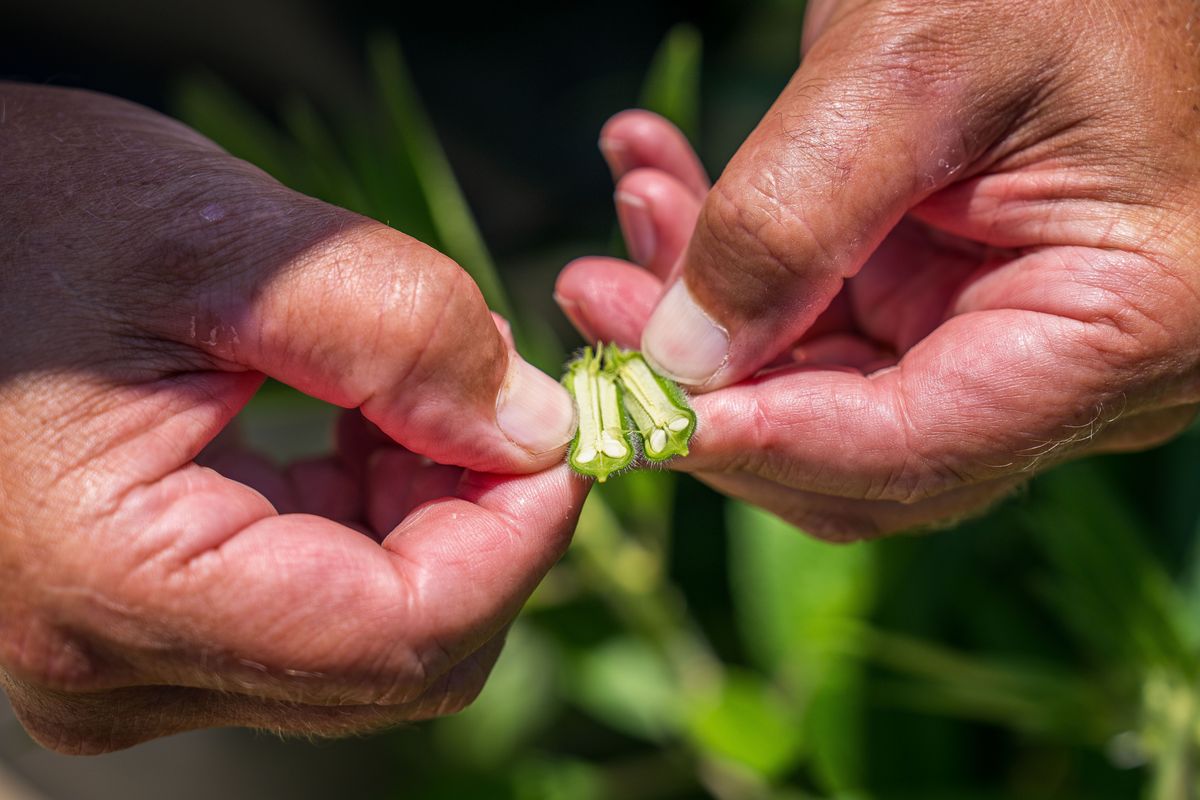
Photo credits: Phẩm Bùi (Pexels); Mark Stebnicki (Pexels). Photos are served from this site; follow the credit to the library page for the original.