Pea Plant Spacing Chart: Spacing by Pea Type, at One Cited Standard
By the Windchime Walker editorial team
Photo: energepic.com / Pexels
Pea spacing looks like a small question until you meet the internet, where published figures range from seeds an inch apart in rows a foot and a half apart to peas given a full garden square each. The confusion is real and it has a cause: peas are not one plant. A bush pea that finishes at 2 feet and a vine pea that climbs past 6 feet cannot share a spacing, and a raised bed grid is not a field row. This page gives the full chart by pea type at one cited standard, names the second published standard honestly where it differs, and puts the planner at the same numbers so the row you sow is the row the chart describes.
Our standard is the University of Georgia Cooperative Extension Circular 963: garden (English) peas and edible pod peas both at 2 inches between plants in rows 36 inches apart, sown 1 to 2 inches deep, 60 to 70 days to harvest. The University of Maryland figures quoted across the web put peas 1 to 2 inches apart in rows 18 to 24 inches apart, a tighter row spacing suited to intensive beds. We flag the difference rather than average it: the planner on this page uses the Georgia row figure of 36 inches, and a gardener working narrow raised beds can follow the Maryland rows with a clear conscience and a citation. What both sources agree on, and what matters most, is the in row spacing of about 2 inches: peas are sown thick and like it.
Interactive tool
Plant Spacing Planner: The Pea Row
Peas are in the crop list below at the University of Georgia Cooperative Extension spacing of 2 inches between plants in rows 36 inches apart. Enter your row length to see how much seed a sowing takes.
8 tomato plants fit this bed
4 plants per row across 2 rows, on a 24 inch grid. Extension spacing for this crop: 24 in between plants, 48 in between rows.
The grid uses the in-row spacing in both directions, the standard square foot layout for raised beds. In open ground, keep the wider row spacing in the note above so you can walk and weed between rows.
Spacing figures: University of Georgia Cooperative Extension, Circular 963, Vegetable Planting Chart, source.
The Pea Spacing Chart
Pea type
Between plants
Between rows
Sow depth
Days to harvest
Support
Garden (English) peas
2 in
36 in
1 to 2 in
60 to 70
By height, see below
Edible pod peas (snap and snow)
2 in
36 in
1 to 2 in
60 to 70
By height, see below
Bush types (finish near 2 ft)
2 in
36 in, or double rows 6 in apart
1 to 2 in
60 to 70
Brush or a short fence
Tall vine types (5 to 6 ft and up)
2 in
36 in, trellis on the row line
1 to 2 in
60 to 70
Full trellis, 5 to 6 ft
All figures are the University of Georgia Cooperative Extension Circular 963 standard used across this site, with support heights from the variety descriptions on the packets themselves: always check your variety's mature height, because the packet, not the chart, knows whether your pea is a bush or a tower. In a raised bed worked as a grid rather than rows, keep the 2 inch in row spacing and set the rows as close as 18 to 24 inches, the Maryland pattern, since a bed's soil is worked across its whole surface and the wide Georgia rows exist for walking and cultivating between field rows.
How to Use the Planner for a Pea Row
The Plant Spacing Planner above is set to the Georgia figures: 2 inches between plants, 36 inches between rows. Enter your row length and it returns the plant count, which for peas is really a seed count question: at 2 inches apart, a 10 foot row takes about 60 seeds, and pea seed is sold in packets that suddenly look small. That count, known before the garden center trip, is the difference between a full row and a row that gives up at 7 feet with a gap that produces nothing but regret.
For a raised bed, enter the bed length as the row and treat each line across the bed as a row; the planner's plant count per row stays honest even when your row spacing follows the tighter Maryland pattern. Sow a short succession row every 2 weeks in spring rather than the whole packet at once if your household eats peas steadily; peas ripen in a rush and a staggered row set spreads the rush across a month.
Sowing: Cool Soil Is the Whole Secret
Peas are a cold soil crop in a garden calendar that mostly waits for warmth. Sow as soon as the soil can be worked in spring, 4 to 6 weeks before your last frost in many gardens, because peas germinate in cool soil and the plants shrug off light frosts that would kill a bean outright. Sow 1 to 2 inches deep, the deeper end in sandy or dry soil, and water the row in if the soil is dry; then wait with more patience than the packet suggests, because cool soil germination is slow and the row that looks empty at day ten is often full at day sixteen.
The season's other end matters as much: peas sulk and stop setting pods when hot weather arrives, which is why the days figure of 60 to 70 is counted against your spring, not your summer. A fall sowing works where falls are long and cool, counted backward so the pods mature before hard frost. Pea seed is large, cheap, and easy for children and stiff fingers to handle, one of the many reasons this crop is the traditional first sowing of the year.
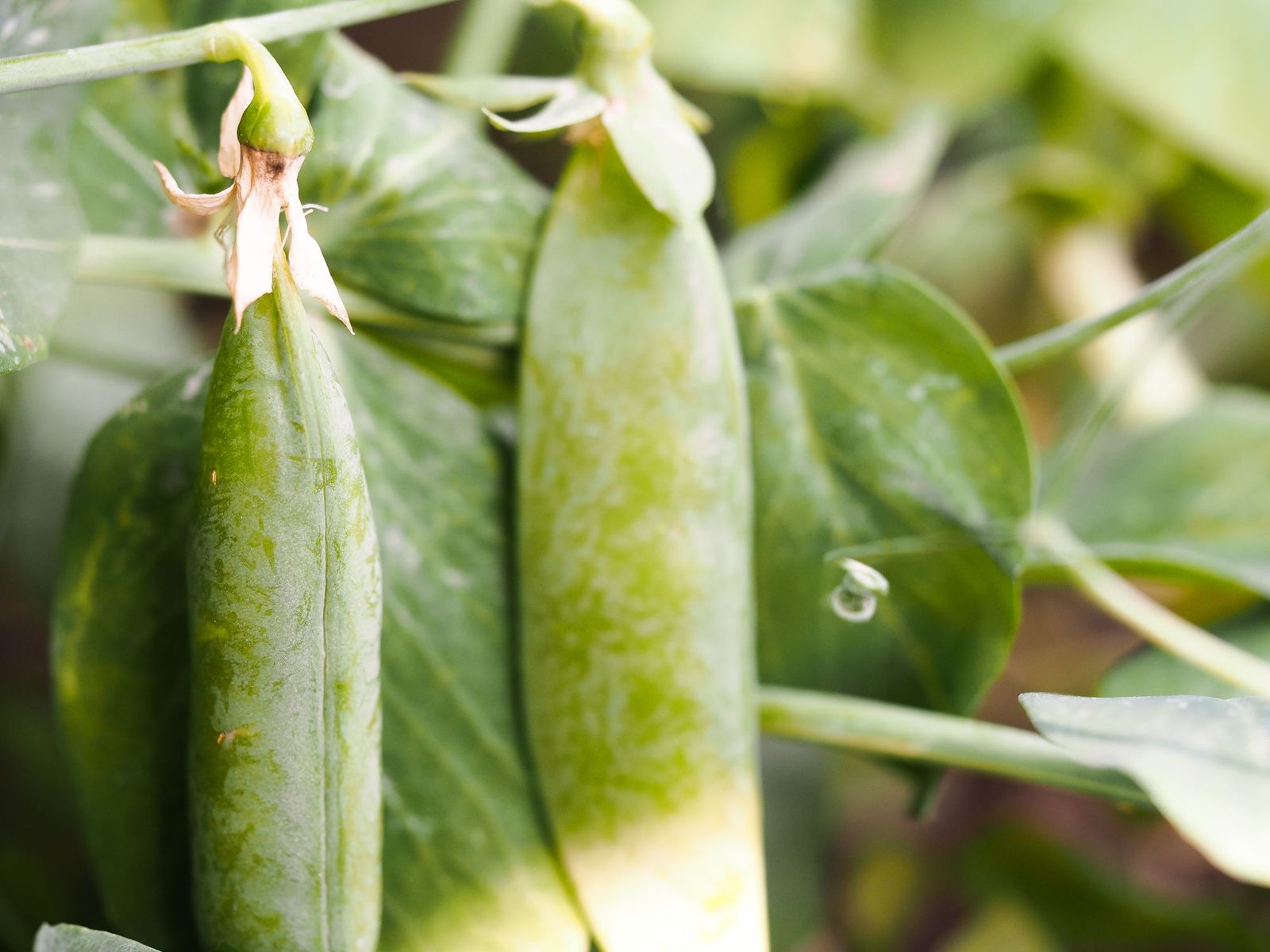
Close view of green peas swelling inside pods on the plant
Support by Height: The Decision the Chart Cannot Make for You
Read the packet's mature height and believe it. Bush peas finishing near 2 feet need only brush support (a few twiggy branches pushed in along the row) or a short section of pea fence to lean on; left unsupported they sprawl, pick dirty, and still crop. Mid height types, 3 to 4 feet, want a real fence or netting and repay it with clean, easy picking. Tall vines of 5 to 6 feet and beyond need the full trellis, netting or wire on posts, standing before the plants reach a foot tall, because peas climb by tendrils that must find their support early; a trellis installed after the flop never quite rescues the row.
Put the support on the row line before or at sowing, sow along both sides of it if the row is a fence line, and let the 2 inch spacing run along each side. Picking from both sides of a supported row is the fastest pea picking there is, and the pods hide less. Our garden trellis guide covers building supports that last; for peas, even a season's worth of brush and string follows the same principle: support early, at the height the packet promises.
Thinning, Watering, and the Honest Pea Routine
Peas at 2 inches are not thinned; the spacing is the final spacing, which makes peas the rare crop where the chart and the sowing are the same act. If your hand sowed thicker in a stretch, leave it: peas tolerate their own company better than most vegetables, shading their own roots, which they like cool. Mulch after the seedlings are up, to keep the soil cool and moist, and water about 1 inch a week, with the flowering and pod filling stretch treated as the critical window, as it is for so many crops.
Pick often and pick young. Garden peas are sweetest before the pods fully swell, snap peas at full size but before the seeds inside bulge hard, snow peas flat. Every pod left to mature tells the plant the season's work is done and slows the next flush; a row picked every two days produces for weeks, and a row picked weekly produces a lecture. The chart got the plants standing; the picking keeps them working.
Peas in Beds, Pots, and the Fall Garden
The chart assumes rows, and peas adapt gracefully to the other geometries home gardeners actually own. In a raised bed, run double rows 6 inches apart down the bed's center with the support between them, plants at the same 2 inch spacing along each row; the bed's edges stay free for a quick crop of radishes or lettuce that finishes before the peas peak, which is the classic intensive pairing and uses the bed's whole calendar. Sow the peas along the support line first, because the support's placement is the bed's fixed decision and the companion rows arrange themselves around it.
Containers grow peas honestly if they are large and the support question is solved: a wide pot of at least 5 gallons, a teepee of canes or a tomato cage for the vines to climb, mix kept evenly moist (pots dry fast, and a pea in a dry pot stops mid pod), and a bush variety chosen deliberately, because a 6 foot vine in a patio pot is a wrestling match. The harvest will be modest, a few handfuls of pods at their freshest, which many gardeners count as the best peas they grow all year precisely because the pot stands by the kitchen door and the pods are eaten standing up, raw, at picking.
The fall garden is the pea's second act where autumns are cool: count backward from your first hard frost by the variety's days plus a margin for the slower growth of shortening days, and sow in late summer so pods fill in the cool of fall. Fall peas dodge the spring rush, the aphids of early summer are gone, and the pods sweeten in cool air the way kale does. In warm fall climates the sowing waits for the heat to break; in cold ones the margin is too thin and spring keeps its monopoly. Either way, the spacing never changes: 2 inches, support by height, and the chart on this page governing every geometry the garden invents.
Saving Pea Seed, and What the Row Leaves Behind
Peas close their season with two gifts most beginners never collect. The first is seed: leave a few of the best pods on the healthiest plants until they dry papery on the vine, shell them, dry the seed a further week indoors, and store it cool and dark; pea seed keeps its vigor well, and a variety that thrived in your soil returns next spring already acquainted with it. Choose the seed bearers early and mark them, because a row picked enthusiastically to the last pod has eaten its own future. The second gift is underground: pea roots carry nodules of nitrogen fixing bacteria, and a finished row cut off at soil level, roots left in the ground, leaves that nitrogen in the bed for whatever follows. Follow peas with a hungry crop (the brassicas and corn of this site's guides are traditional) and the rotation quietly pays. The chart at the top of this page started the row; these two habits are how the row keeps giving after the last pod is picked.
Frequently Asked Questions
How far apart do pea plants go?
Two inches between plants, in rows 36 inches apart, at this site's University of Georgia Cooperative Extension Circular 963 standard, for both garden and edible pod peas. The University of Maryland publishes rows 18 to 24 inches apart for intensive beds; we name both and average neither, and the planner uses Georgia.
How deep do I sow peas, and when?
Sow 1 to 2 inches deep, as soon as the soil can be worked in spring. Peas germinate in cool soil and tolerate light frost; the crop wants to finish before hot weather, so early is the whole strategy. Expect 60 to 70 days to harvest.
Do peas need a trellis?
By height: bush types near 2 feet need only brush or a short fence; mid types want netting or a fence; tall vines of 5 to 6 feet need a full trellis installed at sowing, because the tendrils must find support early. The packet's mature height is the deciding fact.
Can I use this spacing in a raised bed?
Yes, with the bed adjustment: keep 2 inches between plants and tighten the rows to 18 to 24 inches, the Maryland pattern, since bed soil is worked across its whole surface. The planner's per row plant counts stay accurate either way.
Why are my peas flowering but not setting pods?
Heat is the usual answer: peas stop setting as hot weather arrives, which is a sowing date problem to fix next season. Dry soil at flowering also drops pods. Water the flowering row steadily and count the days figure against spring, not summer.
Should I thin peas sown too thickly?
No. Peas at the chart spacing are already at final spacing, and even a thicker stretch crops acceptably, shading its own roots. Leave the row, mulch once the seedlings are up, and spend the effort on picking every two days instead.
Photo credits: energepic.com (Pexels); Kaboompics (Pexels). Photos are served from this site; follow the credit to the library page for the original.