Pumpkin Plant Spacing: The UGA Standard and the Full Season Around It
By the Windchime Walker editorial team
Photo: Mark Stebnicki / Pexels
Pumpkin spacing is the most argued number in the vegetable garden. One guide says hills 4 feet apart, the next says rows 15 feet apart, a third promises 100 square feet per plant, and the beginner with a 10 by 20 foot patch concludes that pumpkins are not for them. The sprawl is real, but it is not a disagreement about the plant: it is several different growing systems, hills, rows, trellised small types, giant competition culture, all quoting their own geometry under one search term. This page does what our other single crop spacing guides do: it picks one named standard, the University of Georgia Cooperative Extension Vegetable Planting Chart, Circular 963, read in full for this batch, builds the whole pumpkin season around it, and explains the hill system honestly as the alternative it is.
Our plant spacing chart owns the multi crop table. This page owns the pumpkin patch.
Interactive tool
Plant Spacing Planner: The Pumpkin Patch
Pumpkins are in the crop list below at the University of Georgia Cooperative Extension spacing of 48 inches between plants in rows 72 inches apart. Enter your patch size and count your plants honestly before the vines make the decision for you.
8 tomato plants fit this bed
4 plants per row across 2 rows, on a 24 inch grid. Extension spacing for this crop: 24 in between plants, 48 in between rows.
The grid uses the in-row spacing in both directions, the standard square foot layout for raised beds. In open ground, keep the wider row spacing in the note above so you can walk and weed between rows.
Spacing figures: University of Georgia Cooperative Extension, Circular 963, Vegetable Planting Chart, source.
The Standard: 48 Inches in the Row, Rows 72 Inches Apart
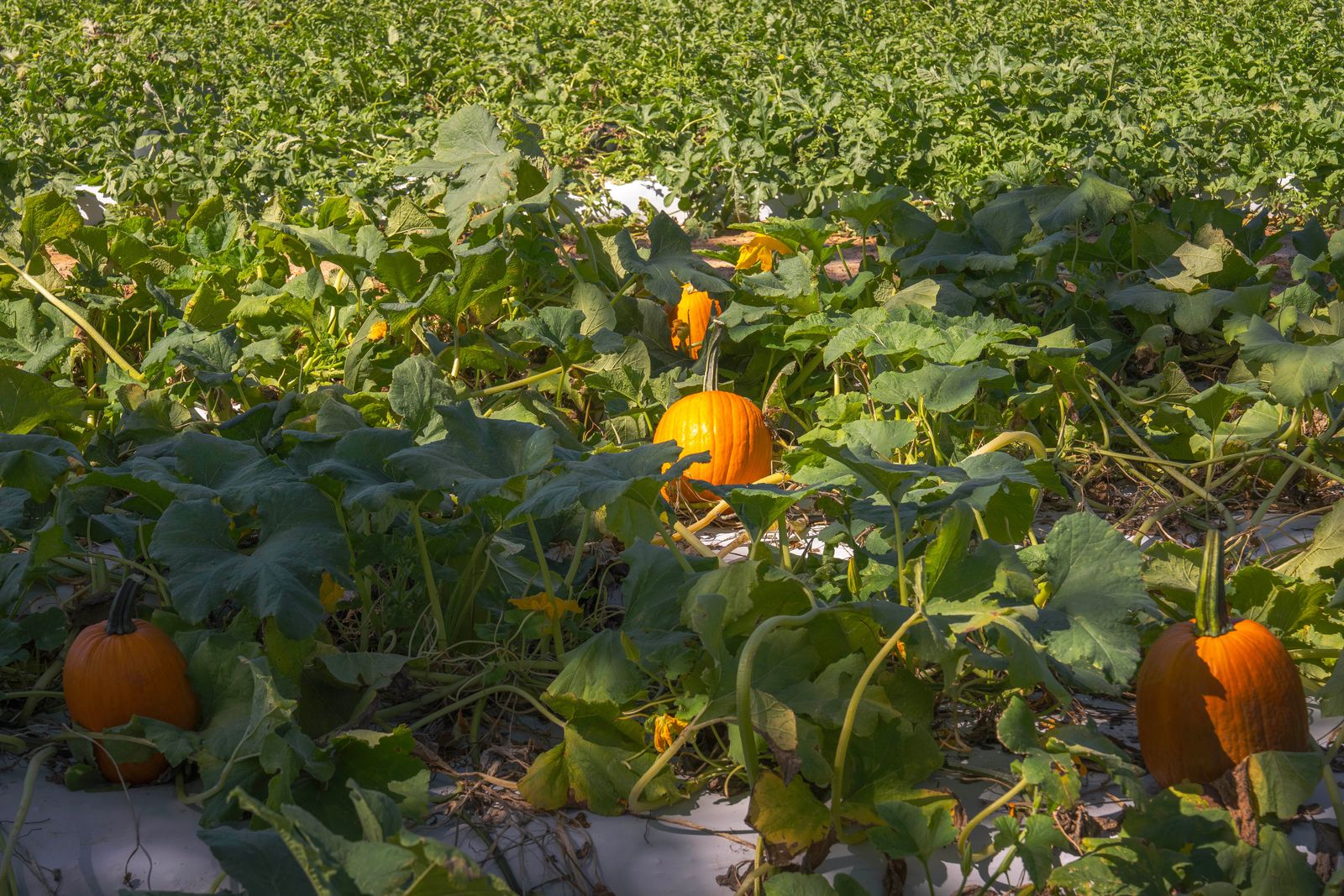
The UGA chart lists pumpkins on a single row covering all types, tiny, pie, small, large, and giant: plants 48 inches apart in the row, rows 72 inches apart, seed sown 1 inch deep, 85 to 120 days to harvest depending on type. That is the spacing in this page's planner and the spacing the rest of the season below assumes. Read it as the chart intends: it is a field and large garden standard for vining pumpkins growing on the ground, and it already contains the plant's ambition. A healthy pumpkin vine runs 10 to 20 feet; at 48 by 72 the vines from neighboring plants meet and interlace into a shared canopy, which is expected and even useful, since the leaf cover shades out weeds and keeps fruit off bare hot soil. What the standard does not promise is tidy access: by August a pumpkin patch is a sea you reach into from the edges, which is why the layout decisions below matter more than the exact inches.
The Hill System, and Why Its Numbers Differ
Most of the other figures in the search results come from hill planting: seeds sown in a group, typically 4 to 6 seeds in a small mound, the mound spacing quoted at 4 to 6 feet within rows spread much wider, then seedlings thinned to 2 or 3 per hill. A hill at 5 feet in rows 10 feet apart is not a tighter spacing than the UGA row; counted per plant it is a similar or larger allowance, organized differently. Hills suit hand tended gardens, let you concentrate compost and water where the plants actually are, and make early care easy because everything is at known points. Rows suit larger patches and any mechanical cultivation. Choose the system by how you will tend the patch, not by which number looked smaller. What you should not do is blend them: hill spacing planted as single plants starves each plant of the shared root zone the hill math assumed, and row spacing planted in hills crowds the mounds.
A pumpkin plant with large leaves in a garden bed
Sowing: Warm Soil, One Inch Deep
Pumpkins are a warm season crop with no frost tolerance at any age. Sow after all frost danger, when the soil has warmed to at least 70 degrees F at seed depth; in cold soil the seed rots or emerges so slowly that beetles and disease find it first. Sow 1 inch deep per the chart, 2 or 3 seeds per planting spot if your seed is old or your germination luck is poor, and thin to the single strongest seedling when the first true leaves open. Where the season is short, start plants indoors 3 to 4 weeks before the set out date in peat pots or other containers that transplant whole, because pumpkin roots resent disturbance; a root bound or torn transplant sulks for the weeks a short season cannot spare. Water the seedbed evenly until emergence, which takes about a week in warm soil, and protect the seedlings in their first days: cutworms and cucumber beetles both work the same shift, and a floating row cover until flowering defends against both, coming off when the bees are needed.
Feeding and Watering a Plant With Ambitions
A pumpkin vine is one of the hungriest and thirstiest things in the garden, and spacing cannot compensate for a starved plant. Work compost into the planting area before sowing, and side dress with a balanced fertilizer when the vines begin to run, keeping fertilizer off the stems and leaves. Water at the base, deeply, about an inch a week and more in heat and while fruit is sizing; overhead watering late in the day invites the powdery mildew that is this crop's signature disease. Mulch under the vines once the soil is warm, with straw or shredded leaves, which keeps fruit cleaner, holds moisture, and slows the weed pressure the canopy has not yet closed over. As fruit sets, choose your ambition per plant: a vine allowed to set every fruit it can makes many small pumpkins; a vine limited to 2 or 3 fruit, with later sets pinched off, pours the same energy into fewer, larger ones. Pie types forgive either choice. Jack o lantern types reward the limited set with size. Giants demand it.
Vine Training: Making the Footprint Work
At the UGA spacing the vines will leave their assigned ground; the grower's job is direction, not containment. As vines run, swing them gently, a little each visit while they are young and flexible, to grow along the row rather than across paths and into neighboring crops. Where a vine insists on the lawn, let it: pumpkins fruit happily on grass, and mowing around one vine for a month is cheaper than the breakage from forcing it back. Set each young fruit on a piece of cardboard, a wood shingle, or a straw pad as it sizes, which keeps the bottom from rotting where it meets damp soil and discourages the insects that work the ground line. Some growers bury a leaf node or two along each vine under a shovelful of soil; the vine roots at the nodes, gains extra water and nutrient reach, and anchors itself against the wind that can roll a patch and twist stems in a storm.
Harvest by Type, at the Chart's 85 to 120 Days
The chart's wide day range is the types speaking. Tiny and pie pumpkins mature at the short end, roughly 85 to 100 days; large jack o lantern types run 100 to 120; giants take the full season and more. Harvest by the fruit, not the calendar: the rind should be hard enough that a thumbnail pressed into it leaves no dent, the color fully developed for the variety, and the stem beginning to cork and dry. Cut fruit free with 3 to 4 inches of stem attached, never carry a pumpkin by its stem, and cure pie and storage types in a warm sunny spot for about 10 days to harden the rind before storage in a cool dry room, where sound fruit keeps for months. A frost that kills the vines does not ruin mature fruit, but bring the harvest in ahead of a hard freeze, and use any immature or damaged fruit first, because it will not keep.
The Honest Small Garden Verdict
If your whole garden is smaller than the footprint one plant wants, the standard is telling you something, and the answer is not to crowd a vining pumpkin into a corner and hope. The answer is a different member of the family: bush and semi bush pumpkin varieties bred for small spaces exist and fruit respectably in a 4 by 4 foot area, and small pie types can be trellised up a strong fence or cattle panel, trading ground footprint for a structure bill. What does not work is a full vining type at half spacing: the vines tangle, mildew moves through the crowded canopy, and the harvest is small fruit and frustration. Respect the 48 by 72, switch the variety, or grow the pumpkin in the one place most gardens have spare: the compost heap's sunny side, where a single plant can run as it pleases and feed like royalty.
The Two Enemies: Mildew and the Vine Borer
Two problems end more pumpkin seasons than spacing ever decides, and both are managed by habits, not sprays, for most home growers. Powdery mildew arrives in late summer as white patches on the leaves and spreads through a dense canopy in humid weather; it rarely kills a plant outright but it strips the leaves that finish the fruit, so the defense is the season long one: water at the base, space for air, and choose resistant varieties where your seed source offers them, then remove the worst leaves as they fail so the plant's energy goes to fruit. The squash vine borer is the assassin: a moth lays eggs at the stem base, the larva tunnels inside the vine, and a healthy plant wilts suddenly in midsummer with sawdust like frass at the base. The defenses are vigilance and surgery: watch for frass, slit the stem lengthwise at the tunnel, remove the larva, and mound soil over the wound so the vine re roots, a rescue that works often enough to be worth the attempt. Growers in borer country also bury vine nodes as described above precisely as insurance, because a vine rooted at several nodes survives losing its original stem. Neither enemy changes the spacing standard; both reward the grower who walks the patch weekly with eyes open.
Frequently Asked Questions
How far apart should I plant pumpkins?
At the University of Georgia standard this page follows: 48 inches between plants in rows 72 inches apart, for all types from tiny to giant. The hill system, 4 to 6 seeds per mound with mounds 4 to 6 feet apart in wider rows, is the legitimate alternative; choose one system and use its geometry whole.
How much space does one pumpkin plant need?
On the ground, plan on the vine running 10 to 20 feet and the patch becoming a shared canopy; the UGA spacing gives each plant about 24 square feet of assigned ground, with vines interlacing well beyond it. Giant types want more and reward limiting each plant to a single fruit.
How deep and when do I plant pumpkin seeds?
One inch deep, per the UGA chart, after all frost danger and once the soil reaches about 70 degrees F. Cold soil rots seed and stalls emergence. In short seasons, start in peat pots 3 to 4 weeks ahead and transplant whole, because the roots resent disturbance.
How many pumpkins grow on one plant?
A healthy vining plant sets many fruit, but size is the trade: leave every set for many small pumpkins, or pinch each vine down to 2 or 3 fruit for larger ones. Pie types work either way; jack o lantern and giant types need the limited set to size up.
When are pumpkins ready to harvest?
At 85 to 120 days by type, and by the fruit's own signs: rind hard enough to resist a thumbnail, full color, stem corking. Cut with 3 to 4 inches of stem, cure storage types about 10 days in warmth and sun, and store cool and dry.
Can I grow pumpkins in a small garden?
Not a full vining type at squeezed spacing, which produces tangle, mildew, and small fruit. Grow a bush or semi bush variety in about 4 by 4 feet, trellis a small pie type on a strong panel, or give one plant an out of the way runway such as the sunny side of the compost heap.
Photo credits: Mark Stebnicki (Pexels); Chris F (Pexels). Photos are served from this site; follow the credit to the library page for the original.