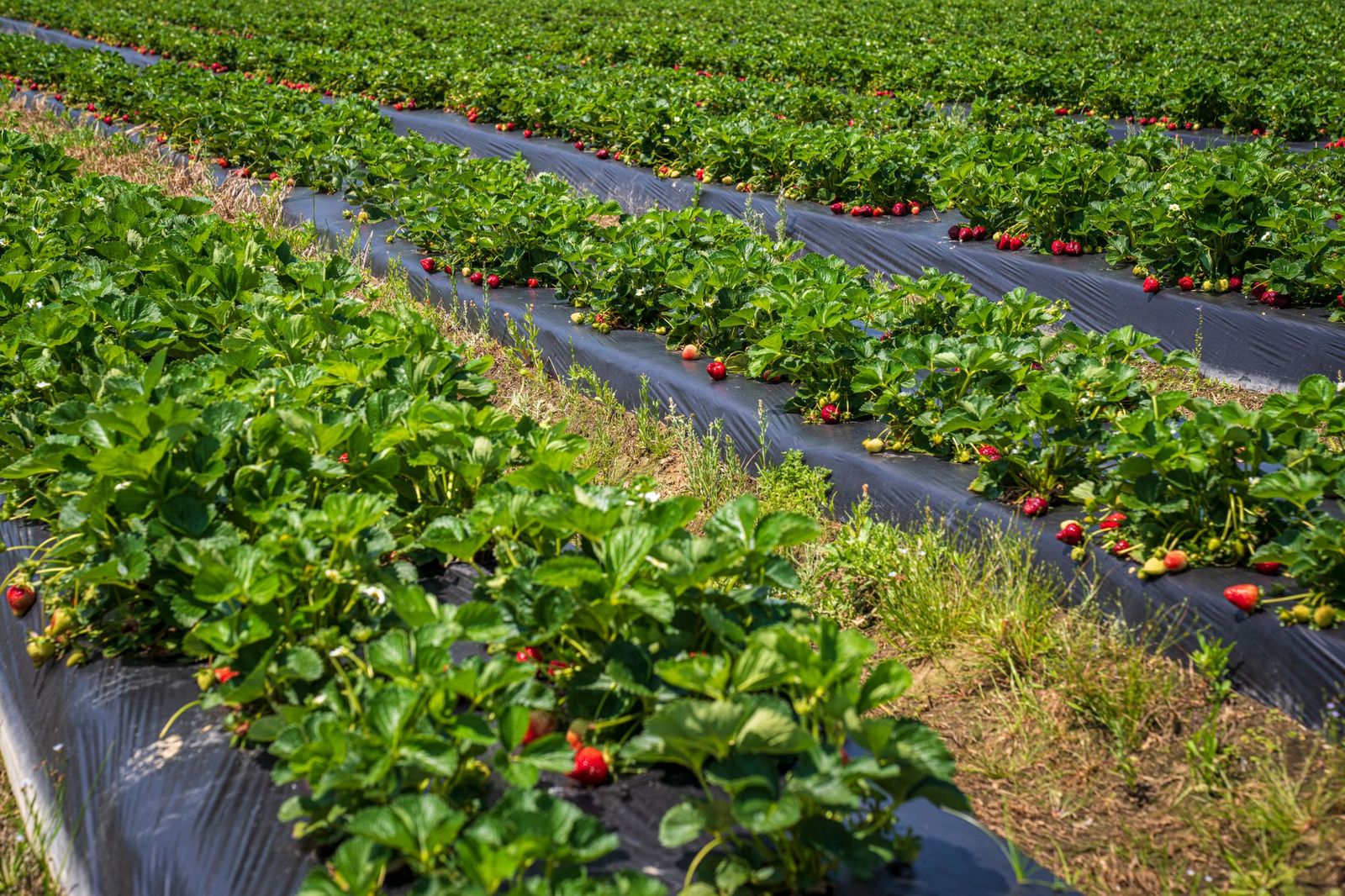
Strawberry Plant Spacing: Choose the System Before the Spacing
By the Windchime Walker editorial team
Photo: Mark Stebnicki / Pexels
Strawberry spacing questions get answered with numbers, and the numbers are wrong half the time, because the asker and the answerer are picturing different systems. Strawberries grow two ways. In the matted row system, used for June bearing types, mother plants are set wide and their runners are allowed to root and fill the row into a mat. In the hill system, used for day neutral and everbearing types, plants are set close and every runner is removed, so each plant stays a single productive crown. Space a matted row like a hill system and you get a crowded thicket; space hills like a matted row and you waste two thirds of the bed. The system comes first. Then the chart is easy.
The figures on this page come from the University of Minnesota Extension's guide to growing strawberries in the home garden, read in full: matted row plants set 18 to 24 inches apart with rows 3 to 4 feet apart; crowns planted with the center of the crown at soil level; about 1 inch of water a week; flowers pinched off for the first few weeks after planting; roughly 4 weeks from flower to ripe fruit on June bearing types; and 4 to 6 inches of straw mulch for winter protection. The Plant Spacing Planner on this page is set to the Minnesota matted row standard, 18 inches between plants in rows 42 inches apart (the middle of the 3 to 4 foot range), so the bed you lay out and the bed in this article are the same bed.
Interactive tool
Plant Spacing Planner: The Strawberry Bed
Strawberries are in the crop list below at the University of Minnesota Extension matted row spacing of 18 to 24 inches between plants in rows 3 to 4 feet apart. Enter your bed size and count your plants before you order.
8 tomato plants fit this bed
4 plants per row across 2 rows, on a 24 inch grid. Extension spacing for this crop: 24 in between plants, 48 in between rows.
The grid uses the in-row spacing in both directions, the standard square foot layout for raised beds. In open ground, keep the wider row spacing in the note above so you can walk and weed between rows.
Spacing figures: University of Georgia Cooperative Extension, Circular 963, Vegetable Planting Chart, source.
The Two Systems, Decided by the Type in Your Hand
Look at the label or the catalog line before anything else. June bearing types (the classic June harvest, one large crop) belong in the matted row system in most home gardens: they runner freely, the daughters are next year's bearing plants, and the wide spacing exists to give the family room. Day neutral and everbearing types (smaller harvests spread across the season) belong in the hill system: their runners are a tax on fruiting, removed all season, and the plants are set close as individual crowns, often in raised beds or containers where the runner patrol is a minute's work.
If the type is unknown (a gift, a bargain flat with a vague label), watch the runners: a plant that throws runners constantly is telling you it is a June bearing type with matted row ambitions. When in doubt, the matted row forgives more; a hill managed plant in a matted row still fruits, while a runnering plant in a hill bed becomes a tangle by August.
The Spacing Chart
System and type
Between plants
Between rows
Runners
Notes
Matted row, June bearing
18 to 24 in
3 to 4 ft
Allowed, guided into the row
Planner standard: 18 in, rows 42 in
Hill, day neutral and everbearing
About 12 in
12 to 18 in, or staggered in beds
Removed all season
Suits raised beds and containers
Container, any type
1 plant per 10 to 12 in pot
n/a
Removed
Crown at soil level, as everywhere
All figures follow the University of Minnesota Extension guide cited above, with the hill system's closer spacing as Minnesota describes for day neutral culture. Whichever system you choose, the crown rule does not change: set the plant so the center of the crown sits exactly at soil level. Buried crowns rot; crowns perched above the soil dry and die. More strawberries are killed by planting depth in their first week than by spacing in their whole lives, and the chart's most important line is that one.
Planting Day: Crown Level, Water, and the Flower Pinch
Dig a hole wide enough for the roots to spread rather than curl, set the crown at soil level, firm the soil around the roots without burying the crown, and water in deeply. Minnesota's guide gives about 1 inch of water a week for the planting, with the establishment weeks kept steadily moist. A mulch of clean straw, once the plants are growing, keeps the fruit off the soil and the soil moisture even, and it is the same material that returns in fall as the winter blanket.
Then perform the act of faith every strawberry guide demands: pinch off the flowers for the first few weeks after planting. A new plant that fruits immediately spends its root building budget on berries and stays small for life; a plant whose first flowers are removed builds crown and root, and fruits heavily from its second flush onward. For June bearing types planted in spring, the discipline usually means no harvest the first year at all, and a full one the second. This is the hardest instruction in strawberry growing and the one that separates the good beds from the sad ones.
Close view of ripe strawberries on the plant in a summer garden
Running the Matted Row Through the Season
In a matted row, runners are staff, not weeds: guide them into the row, spacing daughter plants roughly where the mat is thin, and pin or weight them until they root. Keep the mat to a workable width, about 18 to 24 inches of fruited row with paths between, because an ever widening mat becomes a crowded, disease friendly thicket whose center fruits poorly. After the June harvest, the matted row gets its renovation: mow or clip the foliage (June bearing types only), thin the mat back to strong plants at something like the original spacing, fertilize lightly, and water; the bed then rebuilds for next year. A matted row bed is a multi year planting managed in an annual rhythm, and renovation is the appointment beginners skip and regret.
In the hill system, the rhythm is simpler and stricter: runners off, always, the moment they appear, so the crown's energy goes to fruit; harvest spreads across the season in small pickings; and the plants, worked hard, are often replaced after a year or two as production fades. Neither system is better. They are different contracts with the same plant, and the spacing chart at the top of this page is just the contract written in inches.
Winter: The Straw Blanket
Minnesota's winter instruction is specific: mulch the bed with 4 to 6 inches of straw after the plants have hardened off in late fall, when temperatures have dropped consistently but before severe cold settles in. The blanket's job is not warmth exactly; it is steadiness, preventing the freeze and thaw cycling that heaves crowns out of the ground and tears roots. Pull the straw back in spring as growth starts, into the paths where it becomes the fruit mulch. Gardeners in mild climates skip or thin the blanket; gardeners in cold ones consider it the difference between a bed and a memory. Skipping it is the second most common way a good bed dies, after crown burial, and both deaths happen while the gardener is indoors feeling finished for the year.
The Bed's Life After Year One
A strawberry bed is a small orchard with a planned lifespan, and knowing its arc keeps the spacing decisions sensible. Year one is establishment: plants build crowns, the flower pinch costs you the early harvest, and the matted row fills with rooted daughters. Years two and three are the bed's prime, when the renovated mat fruits at full strength and the hill system's original crowns are still vigorous. From about year three or four, a matted row bed accumulates old, less productive crowns and a rising load of soil borne disease and weeds that renovation can no longer fully reset; the professional answer is a new bed, in a new spot, started from fresh plants or from the old bed's best runners, while the old bed is retired to other crops for several years before strawberries return to that ground.
Rotation matters more for strawberries than for most garden fruits, because the same soil fungi that the crowns tolerate in year one build up under a permanent bed. The gardener who plans the succession in advance (this bed fruits while next year's bed establishes in the bed across the path) never faces a strawberry less year, and never has to nurse a dying bed out of sentiment. Hill system plantings sidestep the whole question by treating the plants as near annuals, replaced on a one or two year rhythm, which is part of why commercial growers favor that contract: the spacing is tighter, the runner patrol is constant, and the bed's lifespan is a decision rather than a decline.
One more spacing consequence hides in the harvest itself: pickability. A matted row kept to its 18 to 24 inch working width, with paths at the row spacing the chart gives, lets you pick every ripe berry from the paths without stepping into the mat and crushing crowns and fruit. Beds allowed to widen into a solid carpet fruit in the middle where no hand reaches, and the unpicked berries rot in place and seed the bed with mold. The row width is therefore not tidiness; it is the harvest. When you lay out the bed with the planner, you are really laying out your own future walking lines, and the gardener who respects them picks more berries from fewer plants than the gardener who let the mat run.
Keeping the Bed's Records
Strawberries repay one clerical habit more than any other in this set of guides: write the variety and the system on the bed's label, with the planting year. The two systems demand opposite runner policies, and a bed whose type has been forgotten gets managed by guesswork, runners stripped from a matted row or coddled in a hill bed, either way costing a season's fruit. The label also starts the rotation clock: a bed that knows its own age gets retired on schedule and replaced from fresh stock in new ground, rather than lingering into the diseased, weedy decline that gives home strawberries a bad name. Three words on a label (variety, system, year) carry the whole management plan, and the gardener who writes them in April makes every later decision on this page correctly without having to remember anything at all.
Frequently Asked Questions
How far apart do strawberry plants go?
It follows the system. Matted row (June bearing): 18 to 24 inches apart in rows 3 to 4 feet apart, per University of Minnesota Extension; the planner uses 18 inches and 42 inch rows. Hill system (day neutral and everbearing): about 12 inches apart, runners removed.
What is the difference between matted row and hill system?
Matted row lets runners root and fill the row into a fruiting mat, suiting June bearing types and multi year beds. The hill system removes every runner so each plant fruits as a single crown, suiting day neutral types, raised beds, and containers. The type in your hand decides the system.
How deep do I plant strawberries?
So the center of the crown sits exactly at soil level. Buried crowns rot; exposed crowns dry out. It is the single most lethal planting error in strawberries and the easiest to avoid: set, check the crown against the soil line, then water in.
Why do I have to pinch the first flowers?
A newly planted strawberry that fruits spends its energy on berries instead of roots and crown. Minnesota's guide directs pinching flowers for the first few weeks after planting; for spring planted June bearing types that usually means no first year harvest and a full second year one.
How long from flower to ripe strawberry?
About 4 weeks for June bearing types, per University of Minnesota Extension, weather depending. Day neutral types fruit in small flushes across the season on roughly the same flower to fruit timing per berry.
Do strawberries need winter protection?
In cold climates, yes: 4 to 6 inches of straw applied in late fall after the plants harden off, per Minnesota Extension, pulled back in spring as growth starts. The mulch prevents freeze and thaw heaving that tears roots and lifts crowns.
Photo credits: Mark Stebnicki (Pexels); Raj Singh Thakur (Pexels). Photos are served from this site; follow the credit to the library page for the original.